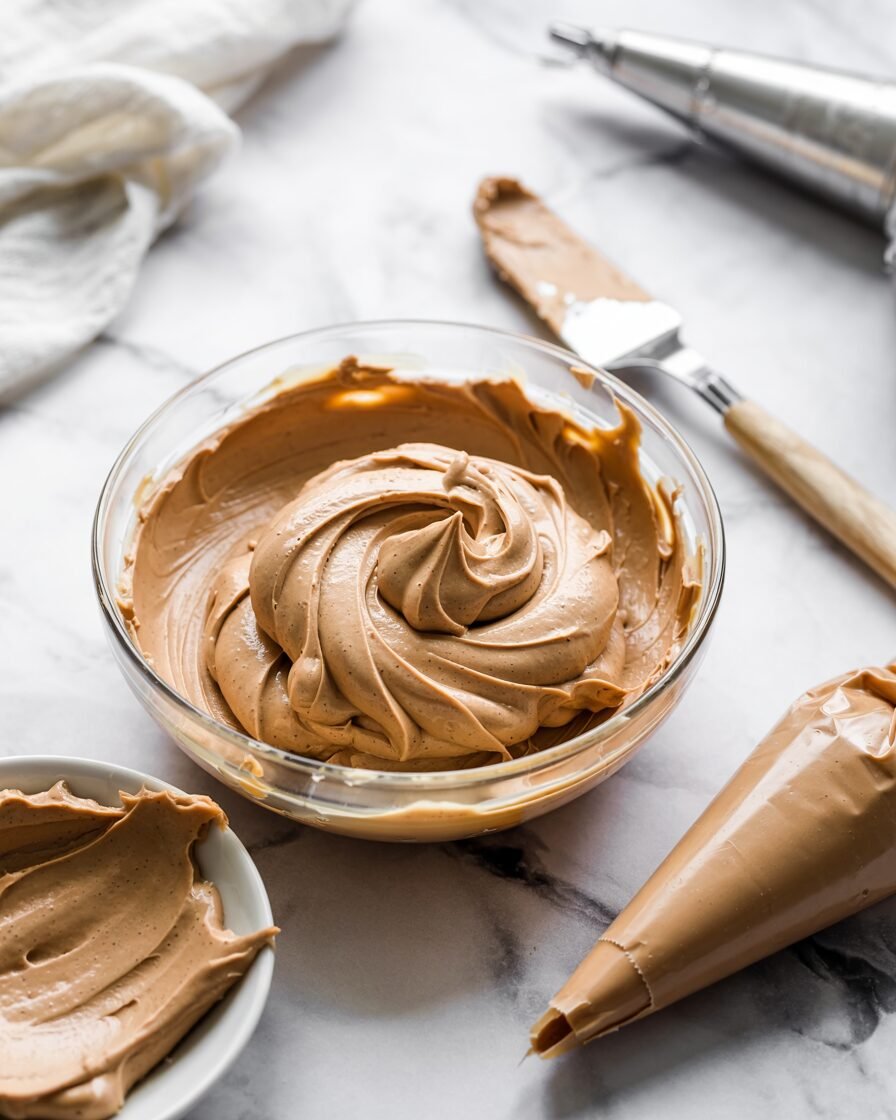
Looking for a frosting that’s creamy, nutty, and not overwhelmingly sweet? This almond butter frosting recipe might become your new favorite. It’s smooth, lightly toasted in flavor, and perfect for cakes, cupcakes, brownies, or even sandwich cookies. Unlike traditional buttercream that can taste sugary and heavy, this frosting balances richness with a subtle almond depth.
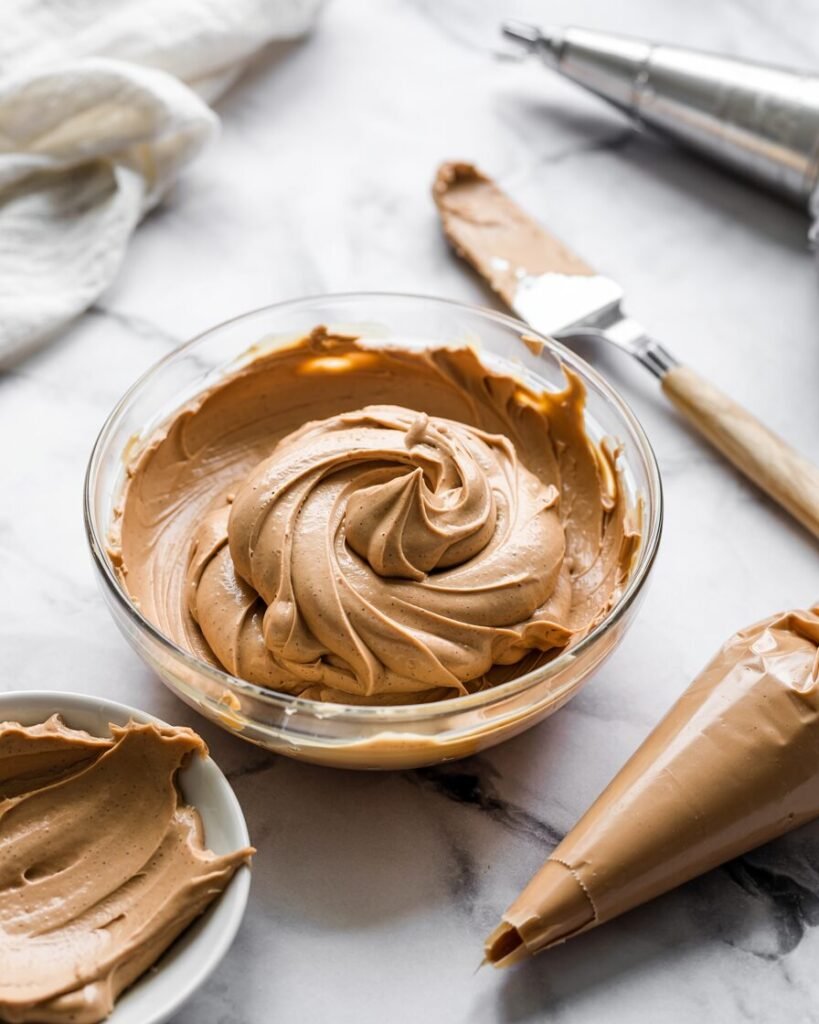
The result: a silky frosting that spreads easily, pipes cleanly, and holds its shape at room temperature.
Pro tip: Warm the almond butter slightly before mixing. It blends faster with the butter and prevents grainy frosting.
Why This Recipe Works
A good frosting isn’t just about sweetness—it’s about structure and emulsion. Here’s why this recipe produces reliable results.
1. Almond Butter Adds Natural Fat and Flavor
Almond butter contains about 50–55% fat, which helps create a naturally creamy frosting. Because it’s less sweet than peanut butter, it allows the nut flavor to stand out without overpowering the dessert.
2. Butter Creates Stability
Softened butter provides the aerated base. When beaten properly, butter traps tiny air bubbles that make frosting light and fluffy rather than dense.
3. Powdered Sugar Stabilizes Texture
Powdered sugar (icing sugar) contains a small amount of starch. This helps the frosting hold its shape for piping and spreading, while preventing separation.
4. Cream Adjusts Consistency
A splash of cream or milk loosens the mixture, making it easier to whip and spread smoothly.
Did you know? Nut butters can sometimes split during mixing. That’s why adding sugar gradually helps stabilize the mixture.
Ingredients
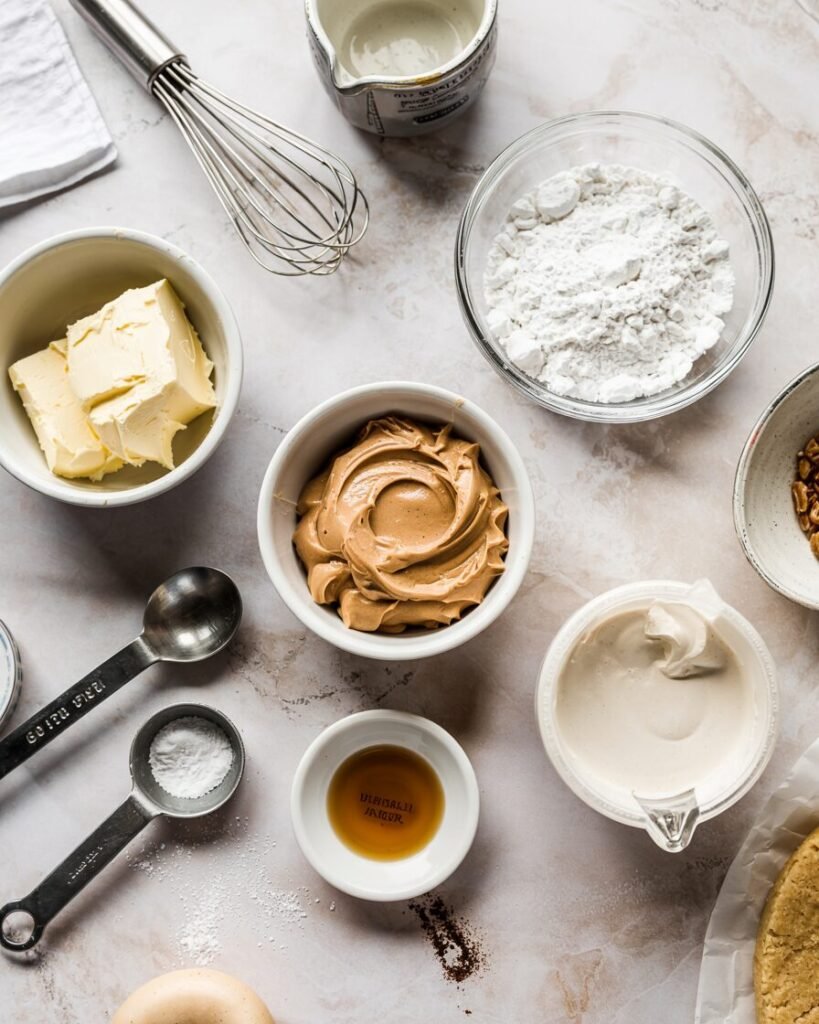
- Unsalted butter — 115 g (½ cup) — base fat for structure and creaminess
- Almond butter (smooth) — 120 g (½ cup) — nutty flavor and additional fat
- Powdered sugar — 240 g (2 cups) — sweetness and structure
- Heavy cream or milk — 30–45 g (2–3 tbsp) — adjusts consistency
- Vanilla extract — 5 g (1 tsp) — enhances flavor
- Fine salt — 1 g (¼ tsp) — balances sweetness
Ingredient notes
- Use smooth almond butter rather than crunchy. Crunchy versions make piping difficult.
- Natural almond butter works best if stirred thoroughly before measuring.
Equipment
Required
- Mixing bowl
- Hand mixer or stand mixer
- Kitchen scale (preferred) or measuring cups
- Rubber spatula
Nice to Have
- Offset spatula for frosting cakes
- Piping bag with tip
- Fine sieve for sifting powdered sugar
Step-by-Step Instructions With Visual Cues
Step 1: Soften and Beat the Butter
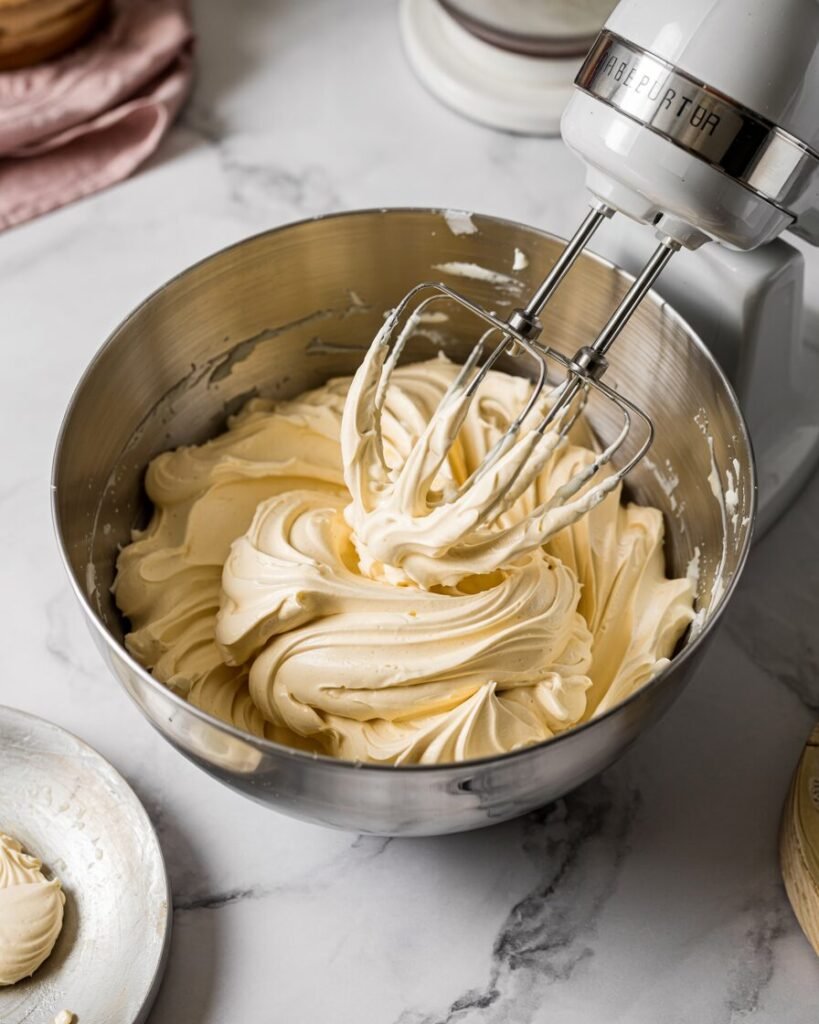
Beat 115 g softened butter on medium speed for 2 minutes.
Visual cue: Butter should look pale, fluffy, and slightly whipped.
Avoid melting butter—it should be soft enough to press but not shiny.
Step 2: Add Almond Butter
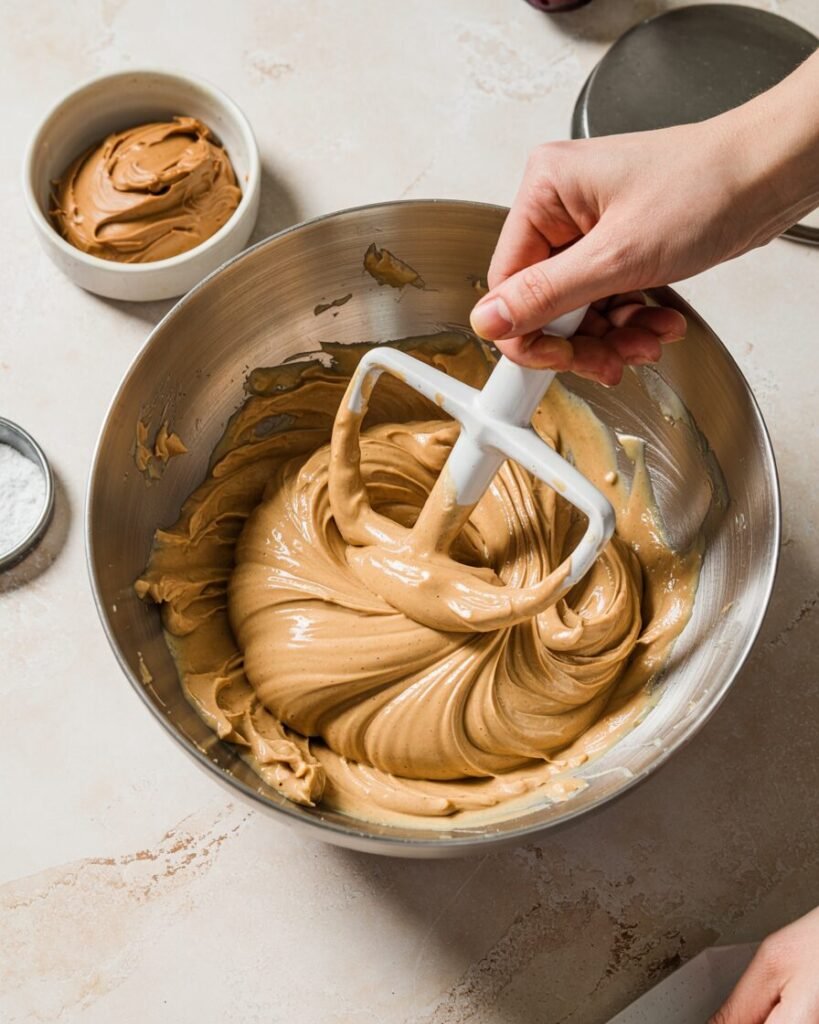
Add 120 g almond butter and beat for 1 minute on medium speed.
Visual cue: Mixture should look creamy and uniform with no oily separation.
If the mixture appears oily, chill the bowl for 5 minutes and beat again.
Step 3: Add Powdered Sugar Gradually
Add 240 g powdered sugar in three additions, mixing on low speed each time.
Time: about 2 minutes total
Visual cue: The frosting thickens and becomes smooth without dry pockets.
Checkpoint: frosting should hold a soft peak when lifted with a spatula.
Step 4: Add Cream and Flavorings
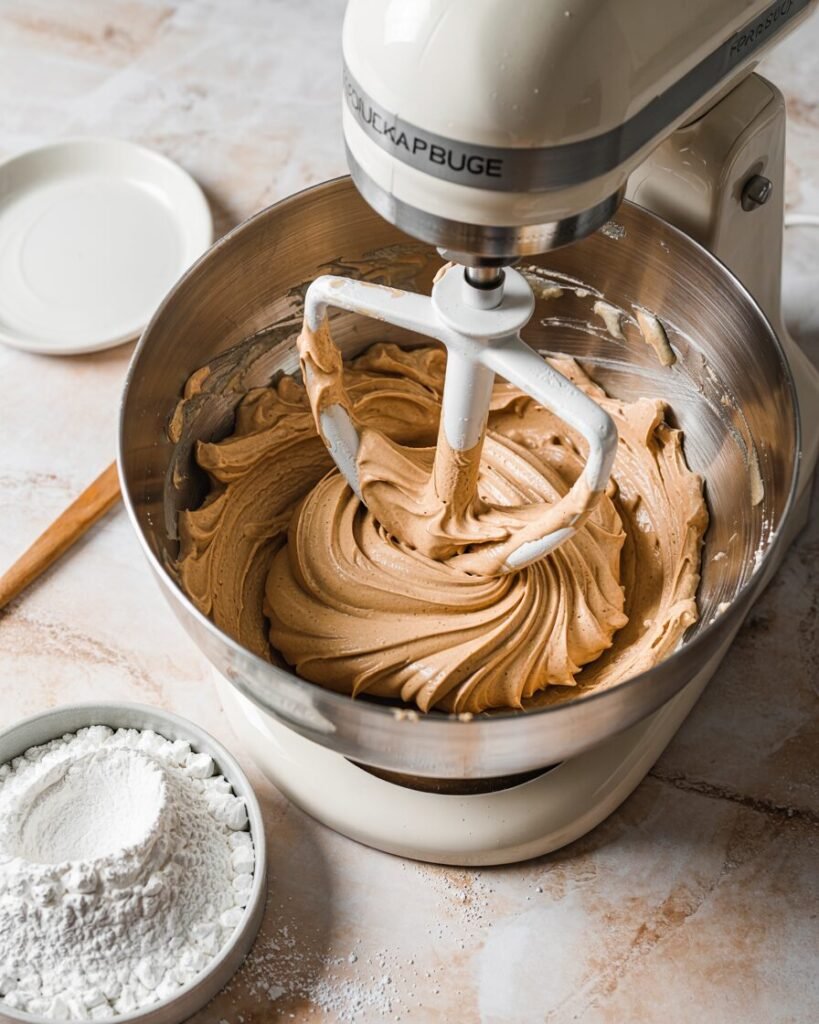
Add:
- 1 tsp vanilla
- ¼ tsp salt
- 2–3 tbsp cream
Beat on medium speed for 2 minutes.
Visual cue: Frosting becomes silky, fluffy, and easily spreadable.
Step 5: Adjust Texture
If frosting is too thick → add 1 tsp cream at a time.
If too soft → add 1–2 tbsp powdered sugar.
Final texture: smooth, pipeable frosting that holds soft peaks.
Troubleshooting Common Problems
Frosting Looks Grainy
Likely cause: almond butter wasn’t fully mixed or sugar not sifted.
Fix: Beat longer or add 1 tsp cream.
Frosting Is Too Soft
Likely causes: warm butter or too much cream.
Fix next time: chill frosting for 10 minutes before using.
Frosting Is Too Sweet
Likely cause: too much powdered sugar.
Fix: add extra 1–2 tbsp almond butter.
Frosting Looks Oily
Likely cause: natural almond butter separation.
Fix: beat mixture after chilling bowl for 5 minutes.
Frosting Won’t Pipe
Likely cause: frosting too warm.
Fix: refrigerate for 15 minutes, then whip briefly.
Substitutions and Variations
Dairy-Free Version
Replace butter with 115 g vegan butter and use plant milk instead of cream.
Lower Sugar Option
Use 180 g powdered sugar instead of 240 g. Texture will be softer.
Chocolate Almond Frosting
Add 20 g cocoa powder and an extra tablespoon cream.
Honey Almond Frosting
Replace 40 g powdered sugar with 2 tbsp honey. Flavor becomes richer and slightly softer.
Scaling the Recipe
| Yield | Butter | Almond Butter | Sugar | Cream |
|---|---|---|---|---|
| 12 cupcakes | 115 g | 120 g | 240 g | 30–45 g |
| 24 cupcakes | 230 g | 240 g | 480 g | 60–90 g |
| 6-inch cake | same as base | same | same | same |
| 8-inch cake | 1.5× recipe | 1.5× | 1.5× | adjust |
Storage, Make-Ahead, and Freezing
Room temperature:
Up to 1 day in a covered container if the room is cool.
Refrigerator:
Store for 4–5 days in an airtight container. Bring to room temperature and rewhip for 1 minute before using.
Freezer:
Freeze up to 2 months in a sealed container.
To thaw:
Move to refrigerator overnight, then bring to room temperature and beat again.
Avoid freezing frosted cakes with delicate decorations—they may lose shape after thawing.
Serving Suggestions and Pairing Ideas
This almond butter frosting pairs beautifully with:
- Chocolate cakes or cupcakes
- Banana bread or banana cake
- Vanilla sponge cake
- Brownies
- Carrot cake
The nutty flavor also complements jam fillings, dark chocolate ganache, or raspberry compote.
FAQs
Can I replace almond butter with peanut butter?
Yes, but peanut butter has a stronger flavor and slightly thicker texture. Add 1 tbsp extra cream if needed.
Can I make this frosting without a mixer?
Yes. Use a sturdy whisk and beat vigorously for 3–4 minutes, though the texture will be slightly less fluffy.
Why is my frosting separating?
This usually happens when natural almond butter oil separates. Stir almond butter thoroughly before measuring.
Can I double the recipe?
Yes. Double all ingredients and mix in a large bowl to prevent uneven blending.
Can I use this frosting for piping?
Yes. Chill for 10–15 minutes before piping for best structure.
Notes From My Kitchen (Testing Log)
Batch 1:
Used cold almond butter. Frosting became slightly grainy. Letting almond butter warm improved blending.
Batch 2:
Reduced sugar to 180 g. Flavor improved but texture was softer.
Batch 3:
Added small amount of salt. Flavor balance improved dramatically.
Batch 4:
Tested natural almond butter vs commercial. Natural needed extra mixing.
Batch 5:
Chilling frosting before piping created the best decorative edges.
Final version:
240 g powdered sugar and 2 tbsp cream gave the best balance of sweetness, stability, and spreadability.
Nutrition and Disclaimer
Approximate per serving (2 tbsp frosting):
- Calories: ~140
- Fat: ~10 g
- Carbohydrates: ~11 g
- Protein: ~2 g
Values are estimates and vary by ingredient brand and portion size. Follow proper food-safety practices when storing frosting.
Conclusion
If you’re tired of overly sweet buttercream, this almond butter frosting recipe is a fantastic alternative. It’s rich but balanced, creamy yet stable enough for cakes and cupcakes.
With just a few ingredients and simple mixing steps, you’ll have a frosting that tastes homemade, nutty, and deeply satisfying.