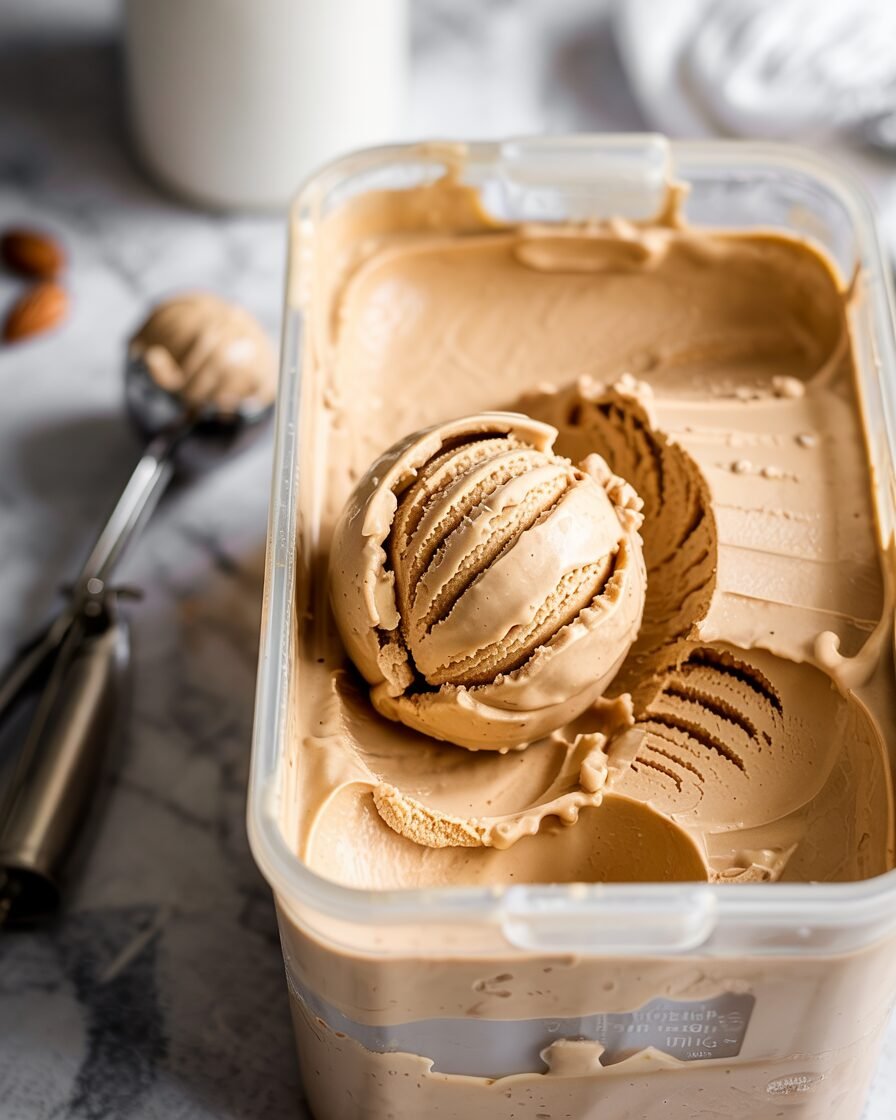
If you’ve ever churned a “healthy” ice cream only to chip your spoon on a frozen brick, this one’s for you. This almond butter protein ice cream recipe is creamy, scoopable straight from the freezer (after a short rest), and tastes like toasted almonds with a hint of caramel. It’s designed for beginner to intermediate home bakers with simple tools — no stand mixer, no fancy ice cream maker required.
What makes this version unique? I use a small amount of inulin (a soluble fiber) and a quick-cool custard base to prevent iciness without loads of sugar.
Pro tip: Blend the base while it’s warm to fully emulsify the almond butter — that’s your shortcut to silky texture.
Why This Recipe Works
Ice cream texture comes down to fat, sugar, air, and ice crystal control.
- Almond butter = fat + emulsifier. The natural oils (about 50–55% fat) coat ice crystals and keep them small. Blending while warm helps disperse those oils evenly, preventing greasy streaks.
- Protein powder structure. Whey protein forms a light network as it freezes, improving body. Too much, though, turns chalky — that’s why I cap it at 30 g per batch.
- Sugar balance matters. I use 40 g maple syrup plus 20 g sugar. Sugar lowers the freezing point, so the ice cream stays scoopable. Reduce it too far and you’ll get an icy, hard block.
- Gentle heating (82–84°C / 180–183°F). Heating the milk base hydrates proteins and dissolves sugars completely, giving smoother results.
Did you know? Ice cream becomes fully firm at around –18°C (0°F). That’s normal — give it 5–10 minutes at room temperature before scooping.
Ingredients
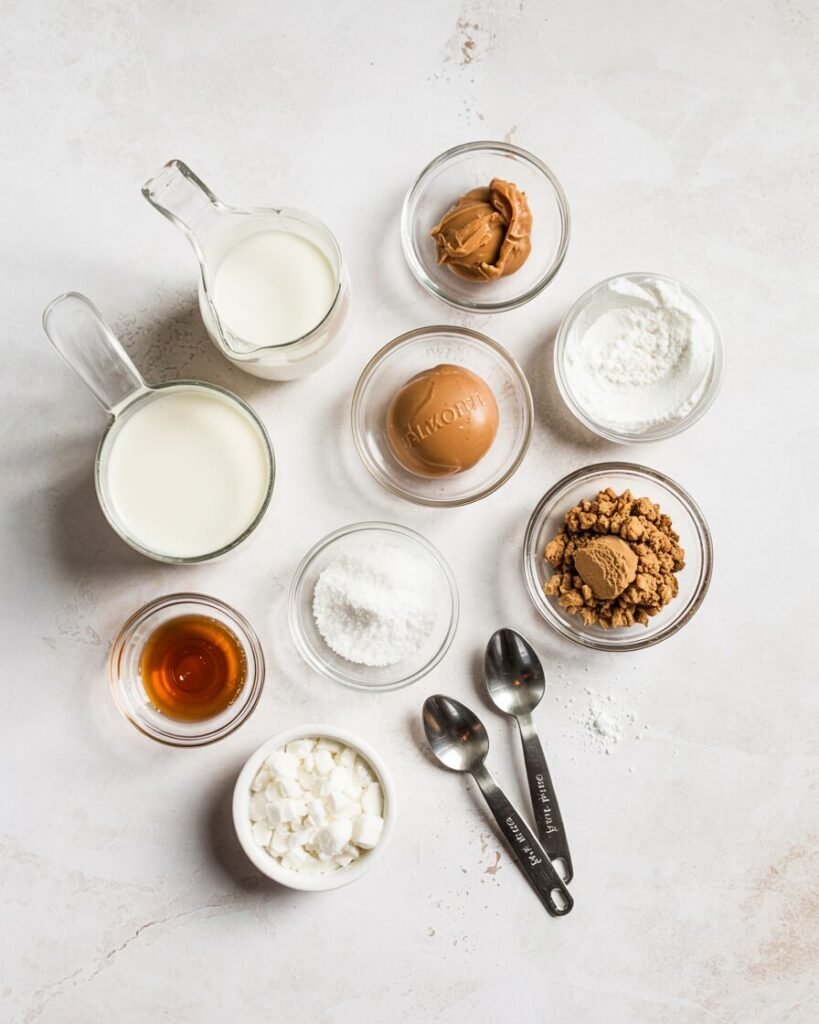
- Whole milk — 240 g (1 cup) — moisture + dairy proteins
- Heavy cream (35% fat) — 120 g (½ cup) — richness and smoother mouthfeel
- Natural almond butter (unsweetened, runny style) — 80 g (⅓ cup) — flavor + fat
- Whey protein isolate (vanilla or unflavored) — 30 g (¼ cup loosely packed) — protein structure
- Maple syrup — 40 g (2 tbsp) — sweetness + freezing control
- Granulated sugar — 20 g (1½ tbsp) — scoopability
- Inulin powder (optional but recommended) — 10 g (1 tbsp) — reduces iciness
- Fine salt — 1 g (¼ tsp) — enhances flavor
- Vanilla extract — 5 g (1 tsp) — aroma
Brand note: Choose natural almond butter without added palm oil. Dutch almond spreads with stabilizers behave differently and can dull flavor.
Equipment
Required
- Medium saucepan
- Silicone spatula
- Digital thermometer
- Blender or immersion blender
- 1-liter freezer-safe container
- Freezer (–18°C / 0°F)
Nice to have
- Ice cream maker
- Fine mesh sieve
- Infrared thermometer for quick temp checks
Step-by-Step Instructions
[Process photo: milk and cream heating in saucepan with thermometer clipped.]
Step 1: Heat the Base (5–7 minutes)
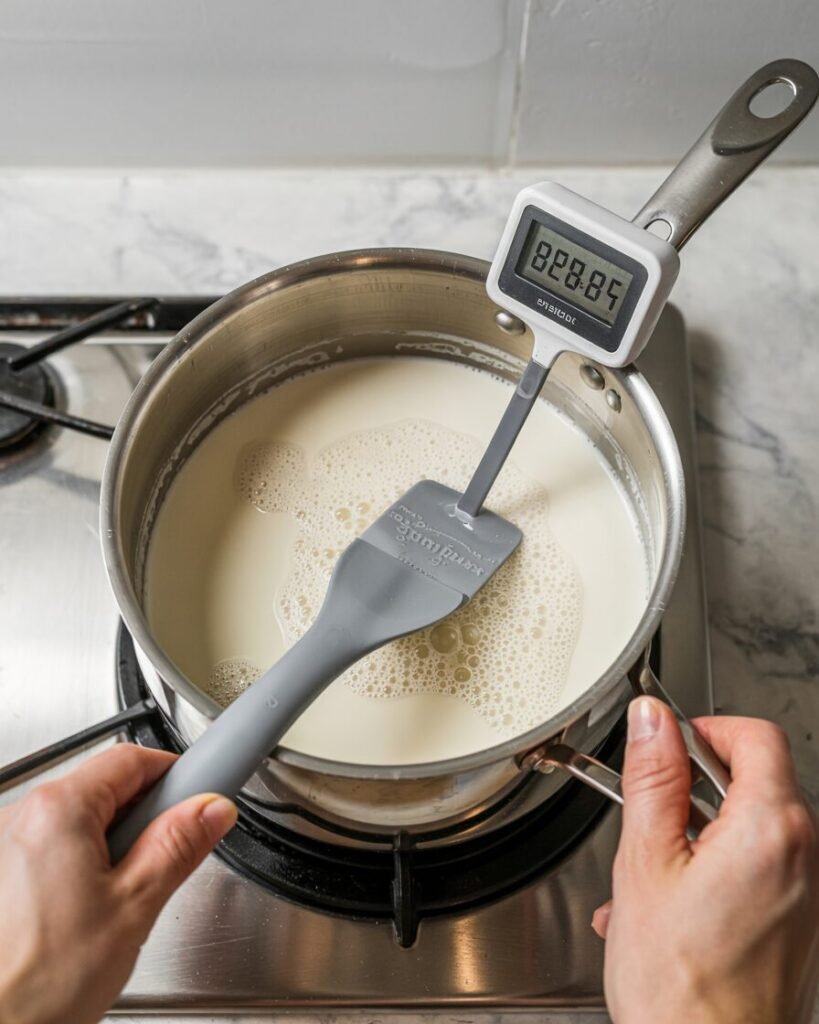
Combine milk, cream, maple syrup, sugar, salt, and inulin in a saucepan. Heat over medium until it reaches 82–84°C (180–183°F), stirring constantly.
Visual cue: Steam rises, mixture slightly thickens, but no boiling bubbles.
Avoid this: Boiling above 90°C (194°F) — it can cause graininess.
[Process photo: almond butter added to warm base.]
Step 2: Emulsify (1 minute blending)
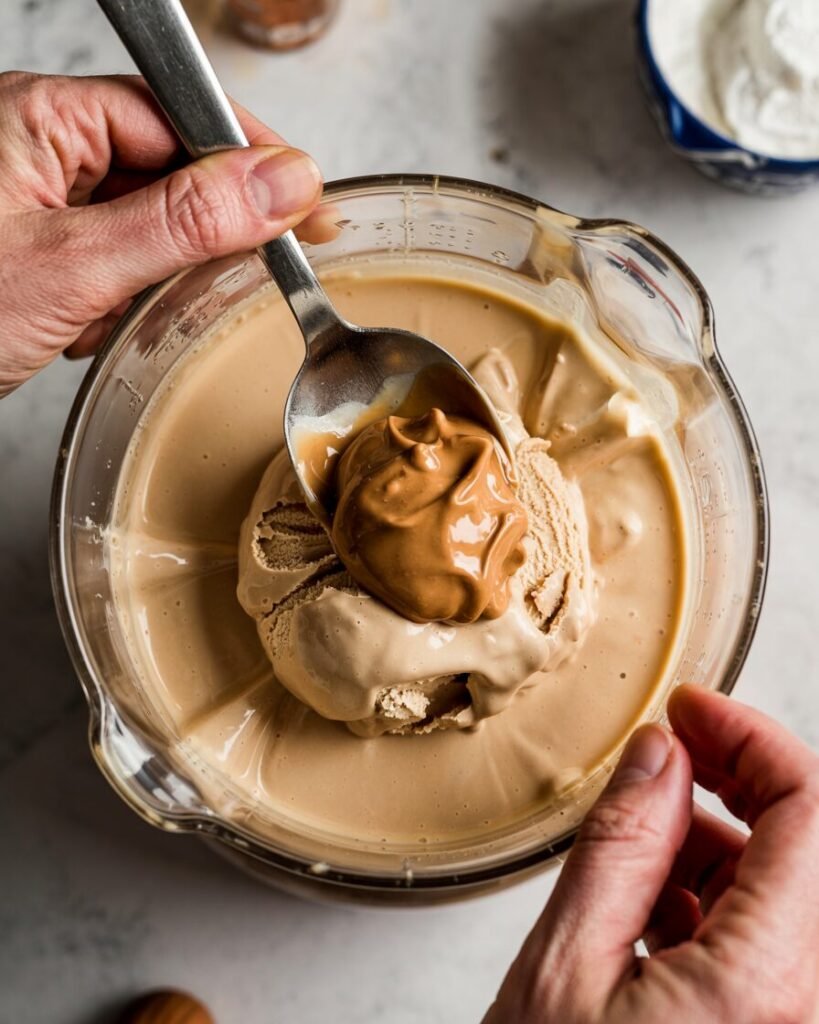
Add almond butter and blend while the mixture is still warm (about 70–75°C / 158–167°F).
Checkpoint: Texture should look glossy and uniform — no oil slicks floating on top.
[Process photo: protein powder being whisked in.]
Step 3: Add Protein (1–2 minutes)
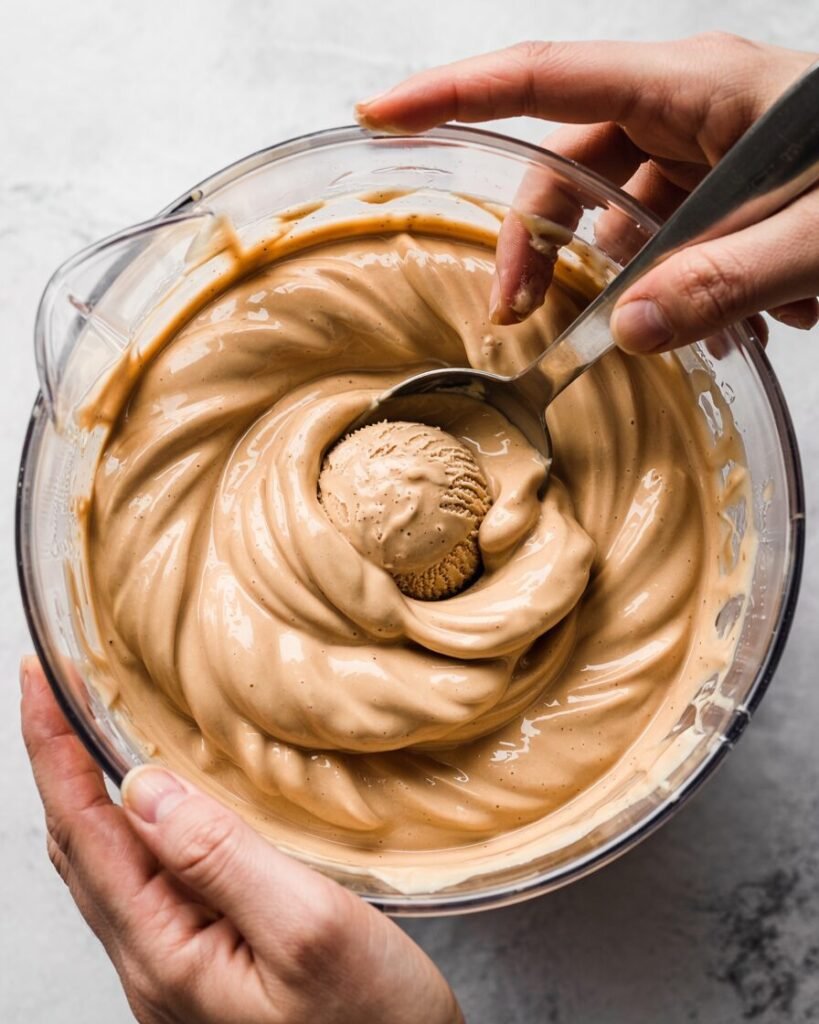
Cool mixture to below 60°C (140°F) before whisking in protein powder and vanilla.
Visual cue: Smooth, pourable custard consistency — not foamy, not gritty.
[Process photo: base chilling over ice bath.]
Step 4: Chill Thoroughly (2–4 hours)
Strain if needed. Chill in fridge until 4°C (39°F).
Pro tip: Faster chilling = smaller ice crystals. An ice bath speeds this up.
Step 5: Freeze
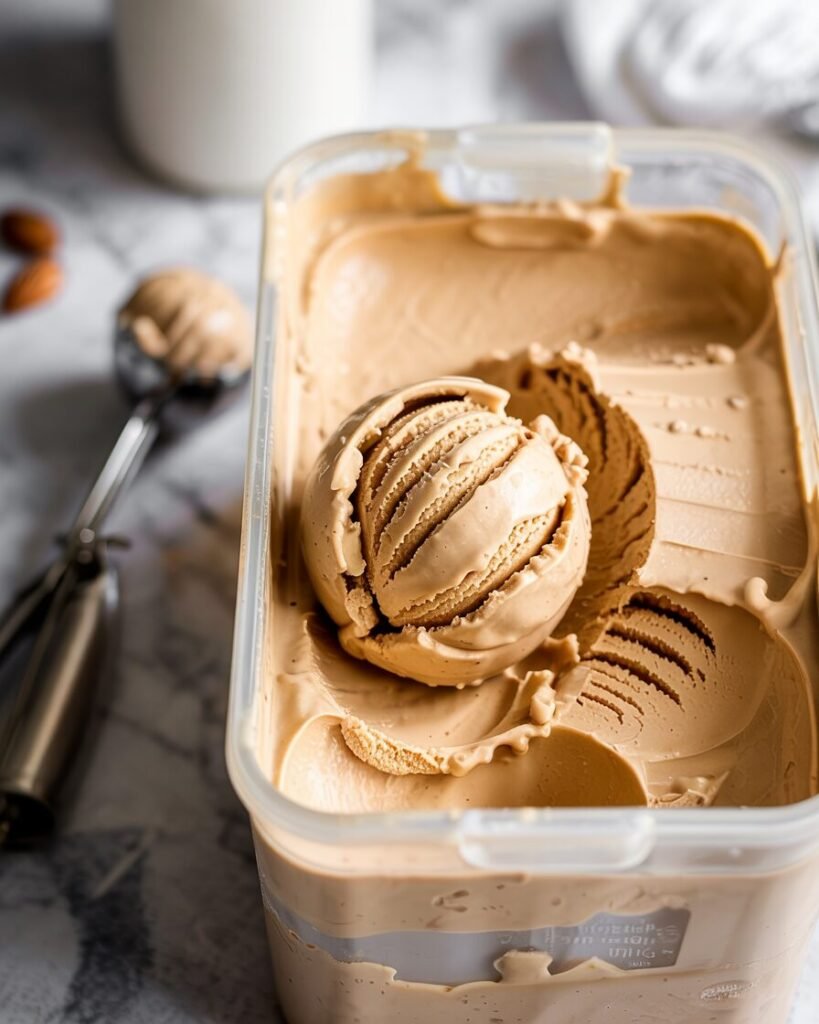
Option A: Ice Cream Maker (20–25 minutes)
Churn according to manufacturer instructions until soft-serve texture. Transfer to container and freeze 2–3 hours to firm.
Option B: No-Churn Method
Pour into shallow container. Freeze 45 minutes, stir vigorously. Repeat 3–4 times. Freeze until firm (4–5 hours total).
Doneness test: When fully frozen, internal temp will be about –18°C (0°F).
Troubleshooting
Problem: Rock-hard texture
Likely cause: Too little sugar or fat.
Fix next time: Add 10 g more maple syrup or 1 tbsp vodka (yes, it lowers freezing point).
Problem: Icy crystals
Cause: Base not chilled fully before freezing.
Fix: Chill to 4°C before freezing; consider using inulin.
Problem: Chalky mouthfeel
Cause: Too much protein powder.
Fix: Reduce to 25–30 g max.
Problem: Greasy streaks
Cause: Almond butter not fully emulsified.
Fix: Blend while warm.
Problem: Weak almond flavor
Cause: Mild almond butter.
Fix: Toast almond butter lightly before using (1–2 minutes in pan).
Substitutions & Variations
Dairy-Free
Replace milk with 240 g almond milk (barista style) and cream with 120 g canned coconut cream. Expect slightly softer texture.
Egg-Free
This recipe is naturally egg-free.
Lower Sugar
Reduce sugar by 10 g, but texture will be firmer.
Chocolate Swirl
Fold in 40 g melted dark chocolate during last churn stage.
Scaling
| Pan/Yield | Milk | Cream | Almond Butter | Protein |
|---|---|---|---|---|
| 1 pint (base) | 240 g | 120 g | 80 g | 30 g |
| Double (1 quart) | 480 g | 240 g | 160 g | 60 g |
Freeze time increases by about 30%.
Storage, Make-Ahead & Freezing
- Freezer: Store in airtight container up to 2 months. Press parchment against surface to prevent ice crystals.
- Before serving: Rest at room temperature 5–10 minutes for best scoop.
- Do not refreeze after melting — texture degrades quickly.
Serving Suggestions
- Drizzle with warm almond butter and flaky salt.
- Pair with dark chocolate brownies for contrast.
- Serve alongside grilled peaches for summer dessert balance.
Sweetness note: This ice cream is moderately sweet. If pairing with sweet cake, reduce maple syrup by 10 g.
FAQs
Can I use plant protein instead of whey?
Yes, but pea protein makes texture slightly denser. Start with 25 g.
Why did my ice cream turn icy overnight?
Likely freezer temperature fluctuations. Store in back of freezer.
Can I halve the recipe?
Yes. Use same temperatures; freeze time shortens slightly.
Can I make this in an OTG?
No baking involved — just stovetop heating and freezing.
Best sweetener alternative?
Honey works (40 g), but flavor becomes floral.
Notes From My Kitchen (Testing Log)
Batch 1: Used only maple syrup (60 g). Result: Softer but overly sweet.
Batch 2: Reduced syrup to 40 g + 20 g sugar — better scoopability.
Batch 3: Added 15 g protein. Texture too soft, lacked body.
Batch 4: 30 g protein — creamy, stable structure.
Batch 5: Skipped inulin. Slight iciness after 3 days.
Final version: 10 g inulin added — noticeably smoother after long freeze.
I also tested three almond butters. The runniest natural version gave best emulsification and strongest flavor.
Nutrition (Approximate, per serving)
- Calories: ~260
- Protein: ~12 g
- Fat: ~20 g
- Carbohydrates: ~15 g
Values are estimates; adjust for brands and portion size. Follow standard food-safety practices when handling dairy.
Conclusion
This almond butter protein ice cream recipe proves you don’t need a commercial stabilizer or a sugar overload for creamy results. With proper emulsification, balanced sweetness, and full chilling, you’ll get a dessert that feels indulgent yet balanced in protein.
If you try it, pay attention to texture at every stage — that’s where success lives.