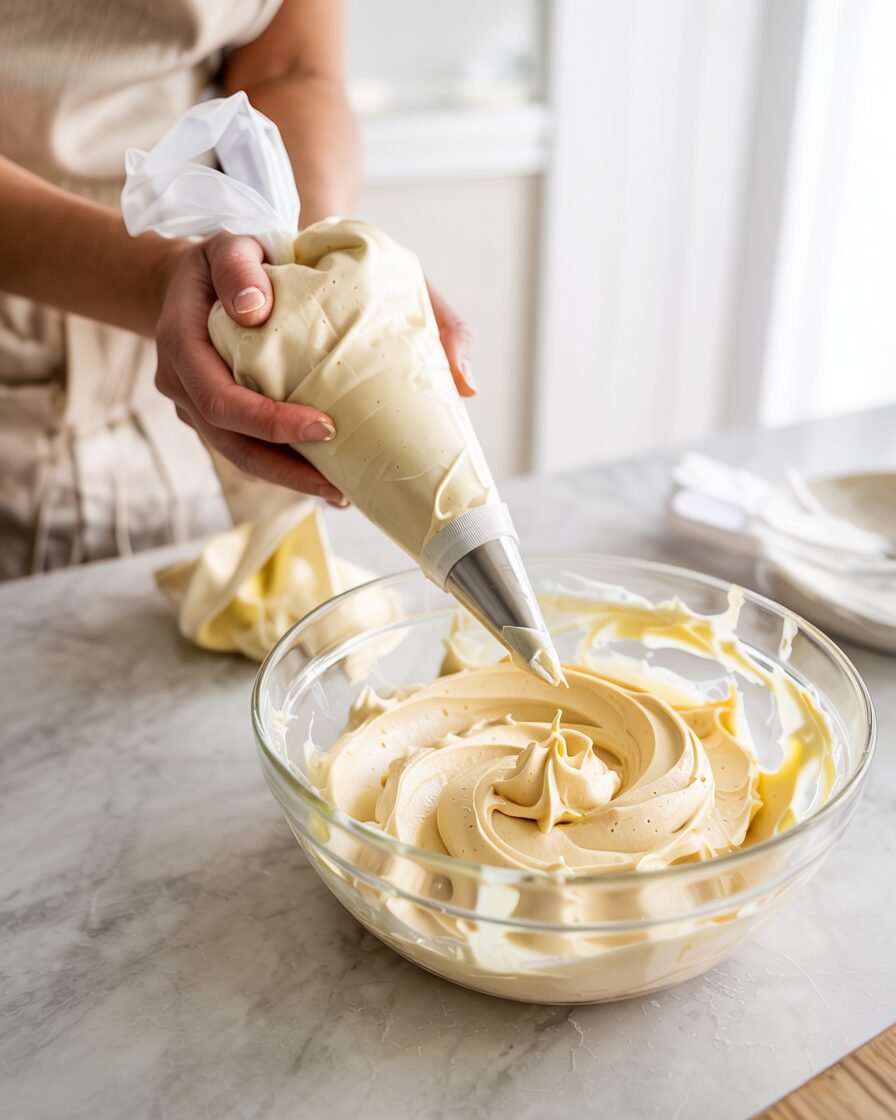
If you’ve ever wanted a frosting that’s sweet, fluffy, stable, and incredibly easy, American buttercream is the one to master first. It’s the classic bakery frosting you see on birthday cakes, cupcakes, and colorful celebration desserts. The best part? You only need four basic ingredients and about 10 minutes to make it.
This American buttercream frosting recipe produces a smooth, pipeable frosting that holds sharp swirls and borders, making it perfect for decorating cakes and cupcakes. It’s beginner-friendly, works with a hand mixer or stand mixer, and uses ingredients most home bakers already have.
Pro tip: Beat the butter longer than you think. Whipping the butter first for 2–3 minutes creates a lighter frosting and prevents that heavy, gritty texture many beginners struggle with.
Why This Recipe Works
American buttercream is the simplest frosting because it relies on a fat + sugar structure instead of cooked sugar syrups or egg whites.
1. Butter provides structure and creaminess
Butter contains about 80% fat, which traps tiny air bubbles during whipping. Those air pockets create the light texture and help the frosting hold shape when piped.
2. Powdered sugar stabilizes the frosting
Powdered sugar contains a small amount of cornstarch, which thickens the frosting and prevents it from becoming runny. It also dissolves instantly, giving buttercream its smooth sweetness.
3. Liquid adjusts consistency
Milk or cream loosens the mixture so it becomes spreadable or pipeable. Just a tablespoon or two can change the texture dramatically.
Did you know?
Beating buttercream longer actually makes it whiter and fluffier because air gets incorporated and light reflects differently through the fat.
Ingredients
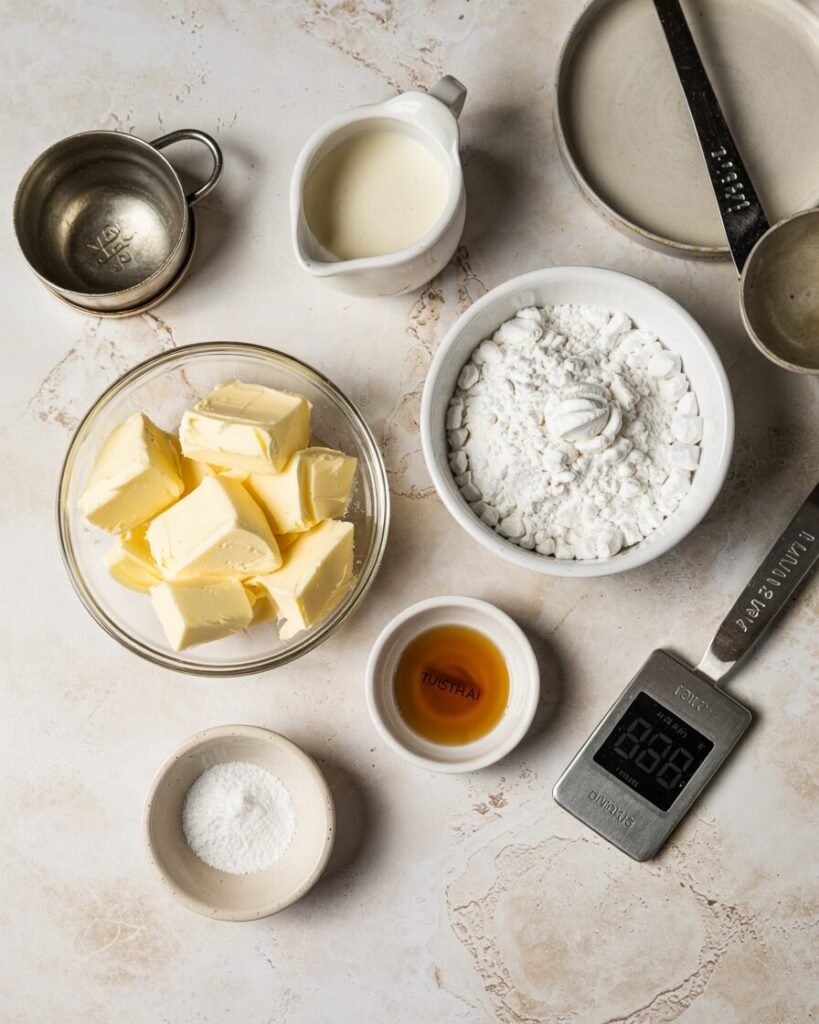
- Unsalted butter — 227 g (1 cup / 2 sticks)
Provides the creamy base and structure. - Powdered sugar — 480 g (4 cups)
Sweetens and thickens the frosting. - Heavy cream or milk — 30–45 ml (2–3 tbsp)
Adjusts texture for spreading or piping. - Vanilla extract — 2 tsp (10 ml)
Adds flavor and balances sweetness. - Salt — 1/8 tsp (optional)
Reduces the overly sweet taste.
Ingredient note:
Use unsalted butter so you can control the flavor. If using salted butter, skip the added salt.
Equipment
Required
- Mixing bowl
- Hand mixer or stand mixer
- Rubber spatula
- Measuring cups/spoons or digital scale
Nice-to-have
- Offset spatula for spreading
- Piping bags and tips
- Fine sieve for sifting powdered sugar
Step-by-Step Instructions
Step 1: Soften and Beat the Butter
Time: 2–3 minutes
Mixer speed: Medium
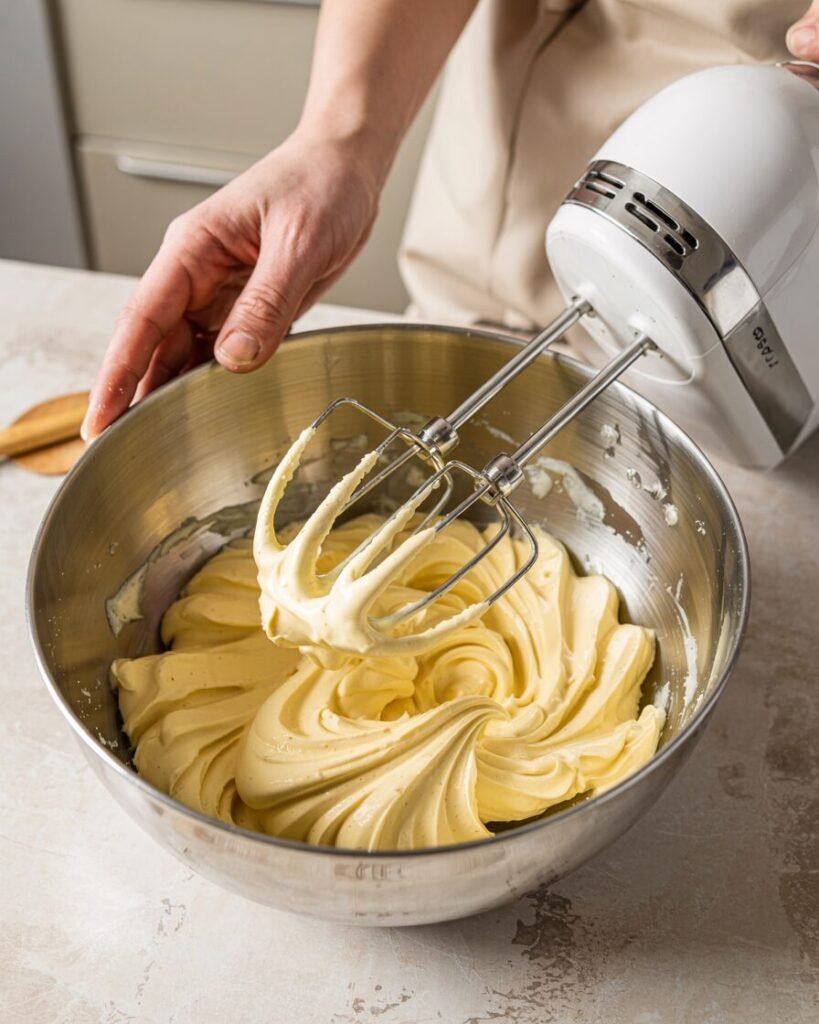
Place 227 g softened butter in a large mixing bowl. Beat until creamy and smooth.
Visual cue:
The butter should look pale, fluffy, and slightly lighter in color. It should spread easily when pressed with a spatula.
Avoid this:
Cold butter will look lumpy and won’t mix smoothly.
Step 2: Add Powdered Sugar Gradually
Time: 3 minutes
Mixer speed: Low → Medium
Add powdered sugar 1 cup at a time, mixing on low speed first to avoid sugar clouds.
Scrape down the bowl between additions.
Visual cue:
The mixture will look thick and crumbly at first, almost like soft dough.
Step 3: Add Vanilla and Cream
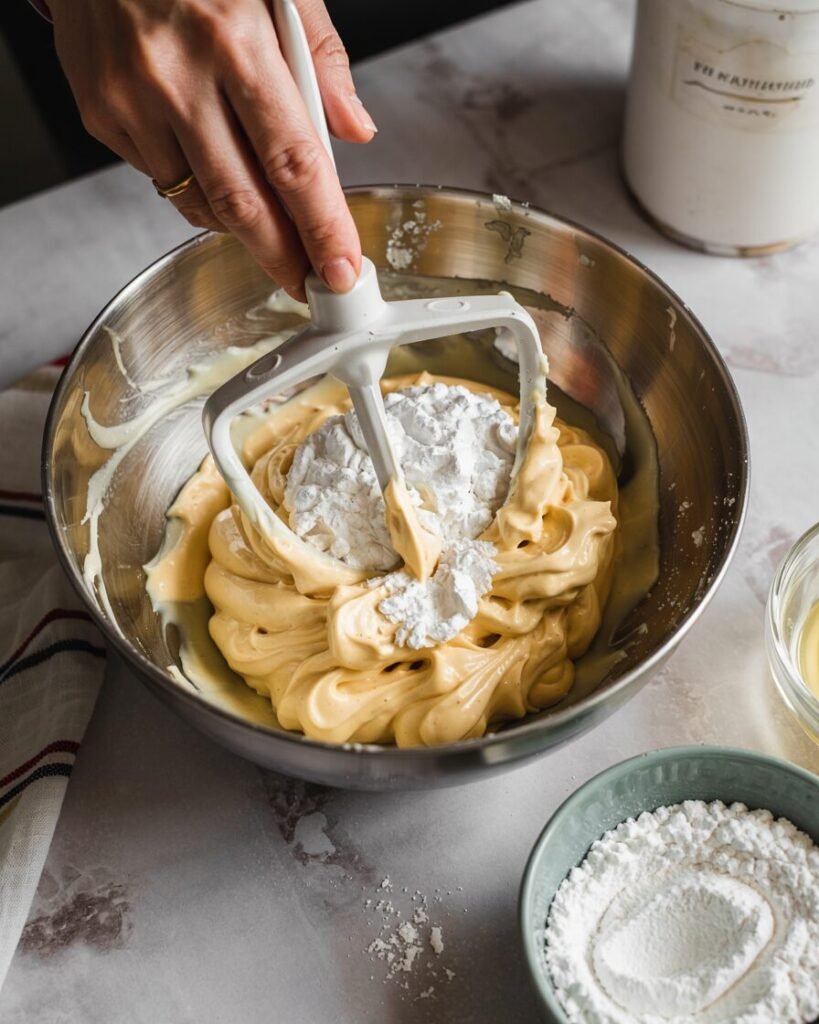
Time: 1–2 minutes
Add:
- 2 tsp vanilla extract
- 2 tbsp cream or milk
Beat on medium speed until the frosting becomes smooth.
Visual cue:
The frosting should transform from dense to light and creamy.
Step 4: Whip for Fluffiness
Time: 2 minutes
Mixer speed: Medium-high
Add an extra tablespoon of cream if needed.
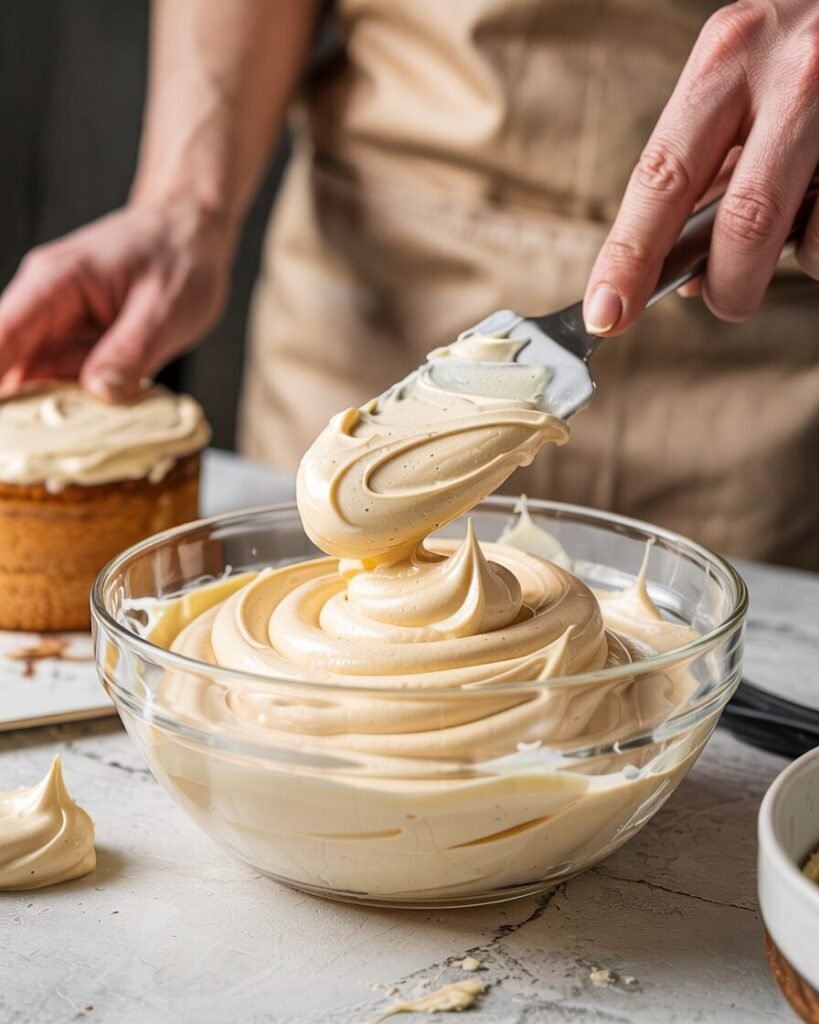
Beat until the buttercream becomes light, fluffy, and easily spreadable.
Checkpoint:
Lift the whisk — the frosting should form soft peaks that hold their shape.
Oven / Kitchen Temperature Tip
Buttercream works best when your kitchen is around 20–24°C (68–75°F). If the room is too warm, the frosting may soften too much.
Troubleshooting Common Failures
Problem: Frosting is too sweet
Likely causes: High sugar ratio.
Fix next time: Add ¼ tsp salt or 1 tsp lemon juice to balance sweetness.
Problem: Frosting is grainy
Likely causes: Powdered sugar not sifted or under-mixed.
Fix: Beat frosting 2–3 minutes longer.
Problem: Frosting is too thick
Likely causes: Too much sugar.
Fix: Add 1 tsp cream at a time until smooth.
Problem: Frosting is too runny
Likely causes: Too much liquid or warm butter.
Fix: Add 2–3 tbsp powdered sugar or chill for 10 minutes.
Problem: Buttercream looks yellow
Likely causes: Natural butter color.
Fix: Beat longer or add tiny drop of violet food coloring to neutralize yellow.
Problem: Air bubbles in frosting
Likely causes: Mixing at very high speed.
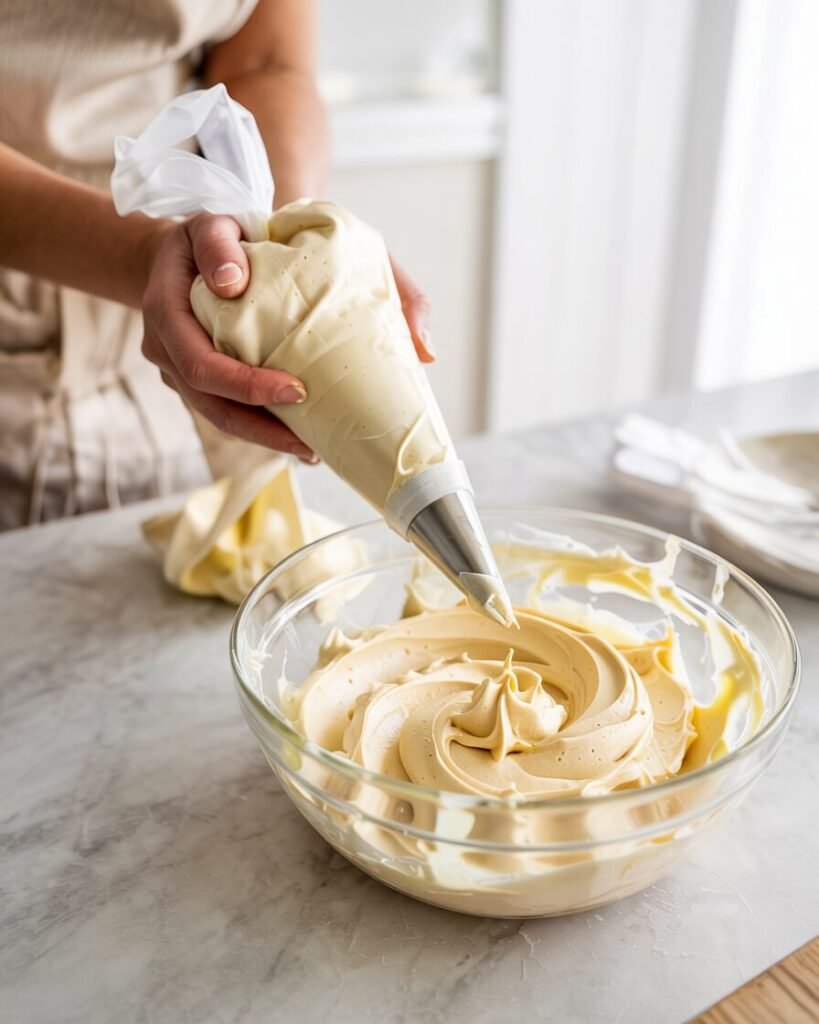
Fix: Stir slowly with a spatula before piping.
Substitutions and Variations
Dairy-Free Option
Replace butter with plant-based baking butter and milk with almond or oat milk.
Texture will be slightly softer, so chill the frosting briefly before piping.
Egg-Free
This recipe is naturally egg-free.
Gluten-Free
Most powdered sugar is gluten-free, but always check the label.
Flavor Variations
Chocolate Buttercream
- Add 40 g (⅓ cup) cocoa powder
- Increase cream by 1 tbsp.
Strawberry Buttercream
- Mix in 2 tbsp freeze-dried strawberry powder
Coffee Buttercream
- Dissolve 1 tsp instant espresso powder in the cream.
Scaling the Recipe
| Yield | Butter | Powdered Sugar | Cream |
|---|---|---|---|
| 12 cupcakes | 115 g | 240 g | 1–2 tbsp |
| 24 cupcakes | 227 g | 480 g | 2–3 tbsp |
| 8-inch cake (2 layers) | 340 g | 720 g | 3–4 tbsp |
Storage, Make-Ahead, and Freezing
Room Temperature
Store in an airtight container for 1 day if your kitchen is cool.
Refrigerator
Keeps for 1 week.
Before using, bring to room temperature and re-whip for 1 minute.
Freezer
Freeze up to 3 months in an airtight container.
Thawing method:
Thaw overnight in the fridge, then whip again until smooth.
Avoid freezing:
Decorated cakes with delicate piping — condensation can damage designs.
Serving Suggestions and Pairings
American buttercream pairs well with:
- Vanilla sponge cakes
- Chocolate cupcakes
- Red velvet cake
- Funfetti birthday cakes
Balance its sweetness with slightly tangy fillings like raspberry jam or cream cheese frosting layers.
FAQs
Can I reduce the sugar in buttercream?
Yes, but not too much. Reducing more than 25% may make the frosting too soft.
Can I make buttercream without a mixer?
Yes. Use a whisk and very soft butter, but expect it to take 8–10 minutes of mixing.
Why is my buttercream melting?
Your butter may be too warm or the kitchen is hot. Chill the frosting 10–15 minutes.
What butter works best?
Use unsalted, high-fat butter (82%) for the smoothest texture.
Can I color American buttercream?
Yes. Gel food coloring works best because it doesn’t thin the frosting.
Notes from My Kitchen (Testing Log)
Batch 1:
Used cold butter — frosting turned lumpy and difficult to mix.
Adjustment: Let butter soften fully.
Batch 2:
Added powdered sugar all at once. Result: sugar clouds and uneven mixing.
Adjustment: Add sugar gradually.
Batch 3:
Used only 1 tbsp cream — frosting too thick for piping.
Adjustment: 2–3 tbsp cream works best.
Final version:
Beating butter first for 3 minutes produced the fluffiest frosting with the smoothest piping texture.
Nutrition and Disclaimer
Approximate per serving (2 tbsp frosting):
- Calories: ~180
- Fat: 10 g
- Carbohydrates: 22 g
- Sugar: 21 g
Values are estimates and vary depending on ingredient brands and portion size.
Conclusion
American buttercream is one of the most versatile frostings every home baker should know. It’s fast, reliable, and incredibly adaptable for flavors and colors. Once you understand the simple formula — butter, powdered sugar, and a splash of cream — you can adjust it to suit any cake or cupcake.
With the tips in this guide, you’ll be able to create smooth, fluffy, bakery-style frosting every time.