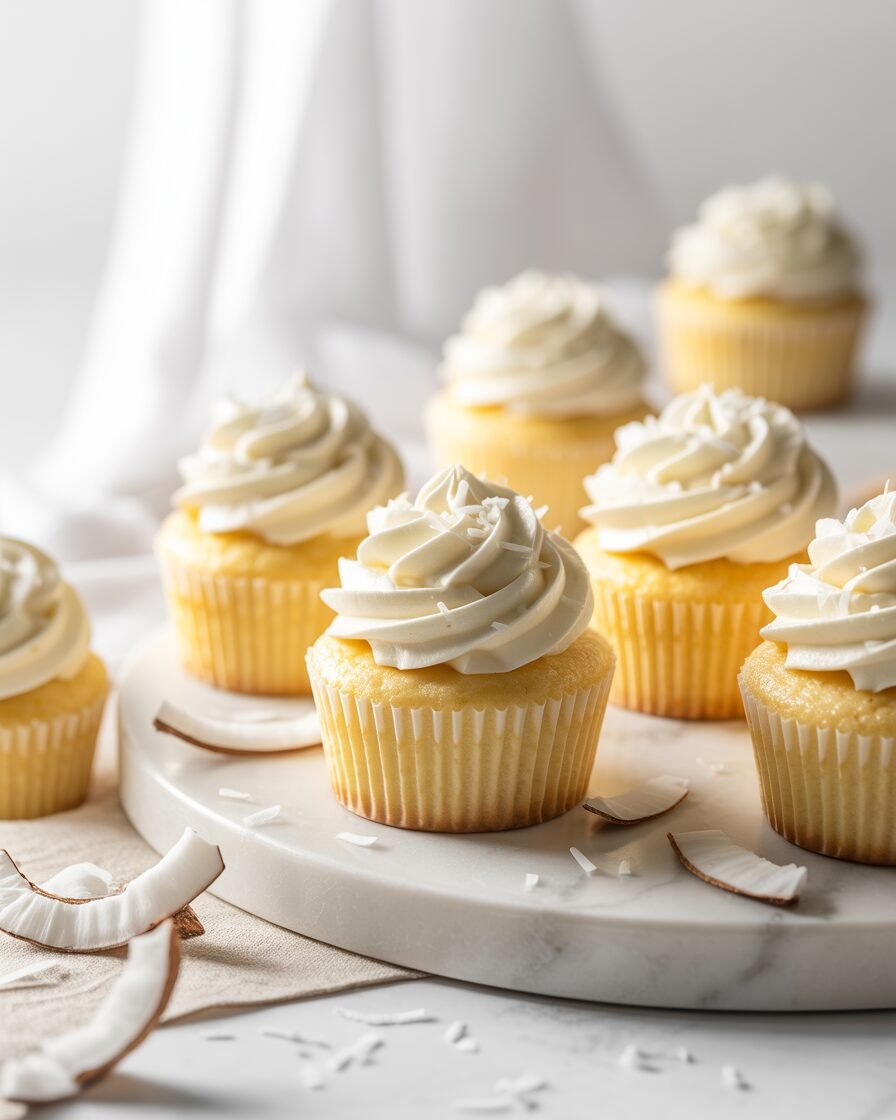
There’s something almost magical about a good coconut cupcake—soft, fragrant, and just sweet enough to feel special without being heavy. But if you’ve ever tried making coconut cupcakes at home, you already know the struggle: they either turn out dry, or the coconut flavor disappears completely once they bake. That’s exactly why I developed this Best Coconut Cupcakes Recipe—a version that finally delivers both a bold coconut flavor and the moist, tender crumb we all want.
This recipe is built for real home kitchens, the kind with a whisk, one mixing bowl, and a small counter where the oven sometimes runs a little hot. And yet, the results feel bakery-level: plush cupcakes topped with a silky coconut-cream frosting that pipes beautifully and stays stable even in warmer rooms.
If you’ve been looking for a coconut cupcake that’s reliable, easy, and full of rich coconut flavor from the first bite to the last, this one will earn a permanent spot in your recipe rotation.
Why This Recipe Works
Coconut desserts often struggle with either dryness (coconut absorbs moisture) or a bland, flat flavor. This recipe solves both:
- Full-fat coconut milk = moisture + flavor
The high fat content functions like butter—keeping the crumb rich and preventing the cupcake from drying out on day two. - Oil-based cupcakes stay tender longer
Coconut oil remains soft at room temperature, so the cupcakes taste moist even when chilled. Oil also creates a finer crumb because it coats flour more efficiently than butter. - Balanced leavening for a smooth top
Using both baking powder and a touch of baking soda helps create lift without doming aggressively, so the cupcakes remain level for frosting. - Room-temperature ingredients = even structure
Especially with coconut oil, which solidifies quickly. Room-temp prevents curdling and keeps the batter smooth.
Ingredients With Weights & Purpose
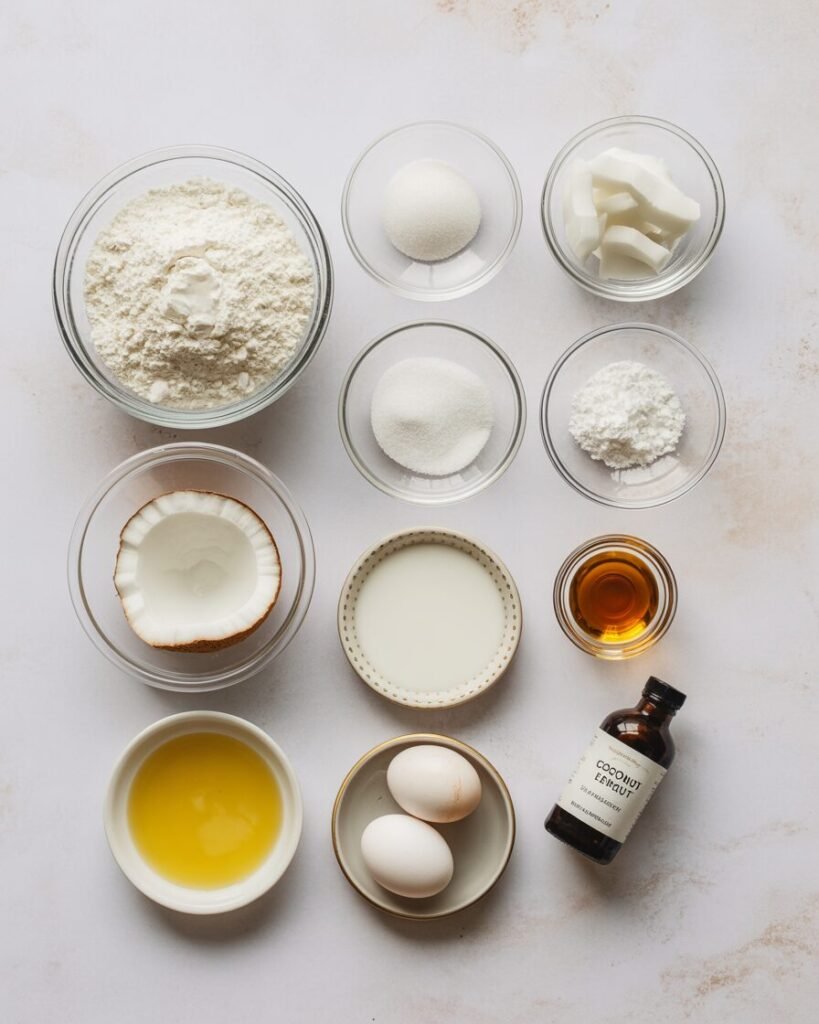
For the Coconut Cupcakes (12 cupcakes)
- All-purpose flour — 160 g (1 ⅓ cups)
Provides structure without making the crumb heavy. - Granulated sugar — 150 g (¾ cup)
Sweetens and helps with moisture retention. - Baking powder — 1 ½ tsp
Main leavening for lift. - Baking soda — ⅛ tsp
Ensures tenderness when paired with acidity. - Fine salt — ¼ tsp
Balances sweetness and enhances coconut flavor. - Coconut oil (melted) — 80 g (⅓ cup)
Creates a moist, tender crumb and enhances coconut notes. - Eggs (room temperature) — 2 large
Bind ingredients and support lift. - Full-fat canned coconut milk (room temperature) — 160 g (⅔ cup)
Adds richness, moisture, and coconut flavor. - Vanilla extract — 1 tsp
Enhances sweetness. - Coconut extract (optional but recommended) — ½ tsp
Strengthens flavor without artificial sharpness.
For the Coconut Cream Frosting
- Unsalted butter (room temp) — 115 g (½ cup)
- Cream cheese (softened) — 115 g (½ cup)
- Powdered sugar — 240 g (2 cups)
- Full-fat coconut milk — 1–2 tbsp
- Vanilla + coconut extract — ½ tsp each
Equipment
Required
- 12-cup muffin tray
- Paper cupcake liners
- Medium mixing bowl + whisk/spatula
- Oven/OTG
- Digital kitchen scale
- Oven thermometer (recommended for accuracy)
Nice to Have
- Cooling rack
- Cookie scoop for even portioning
- Piping bags + star tip
- Offset spatula
Step-by-Step Instructions (With Visual Cues)
Step 1: Preheat & Prep
Preheat oven to 175°C (350°F). Line a 12-cup muffin tray with liners.
Visual cue: Coconut oil should be fully melted but not hot—just liquid.
Step 2: Combine Dry Ingredients
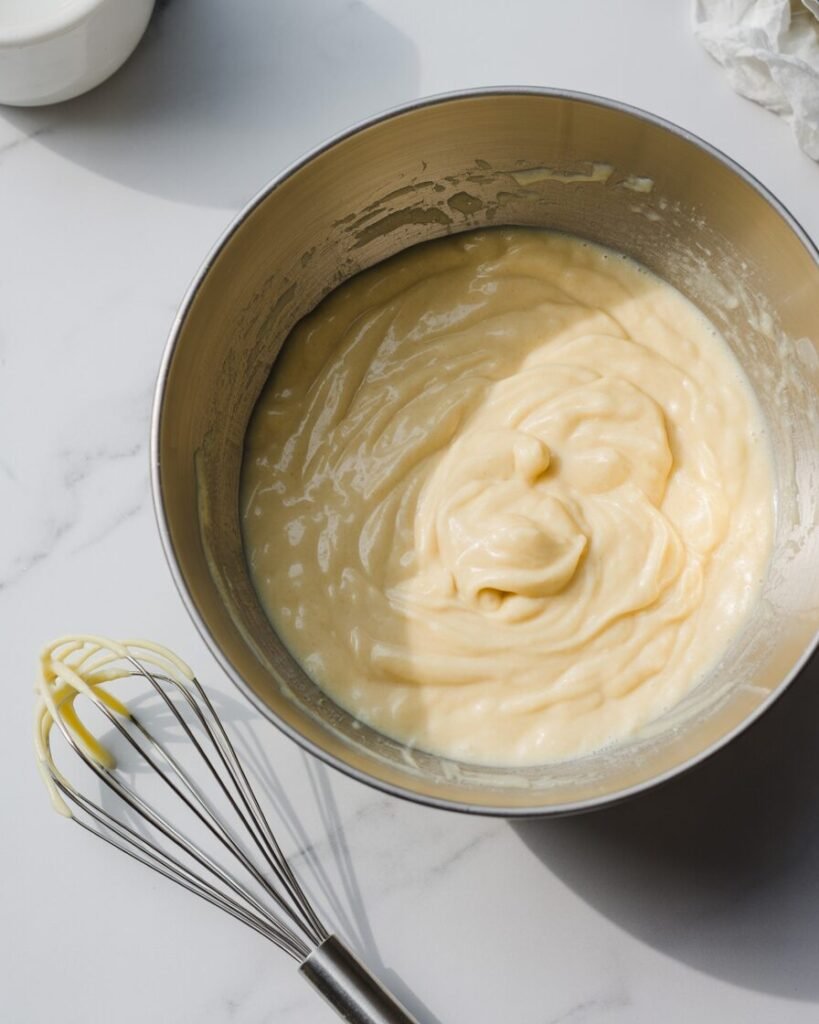
In a bowl, whisk together flour, sugar, baking powder, baking soda, and salt.
Visual cue: Mixture should look evenly pale with no clumps.
Step 3: Mix Wet Ingredients
Whisk eggs, coconut milk, coconut oil, vanilla, and coconut extract until smooth (20–25 seconds).
Visual cue: Mixture should be uniform—if you see oil streaks, keep whisking.
Step 4: Make the Batter
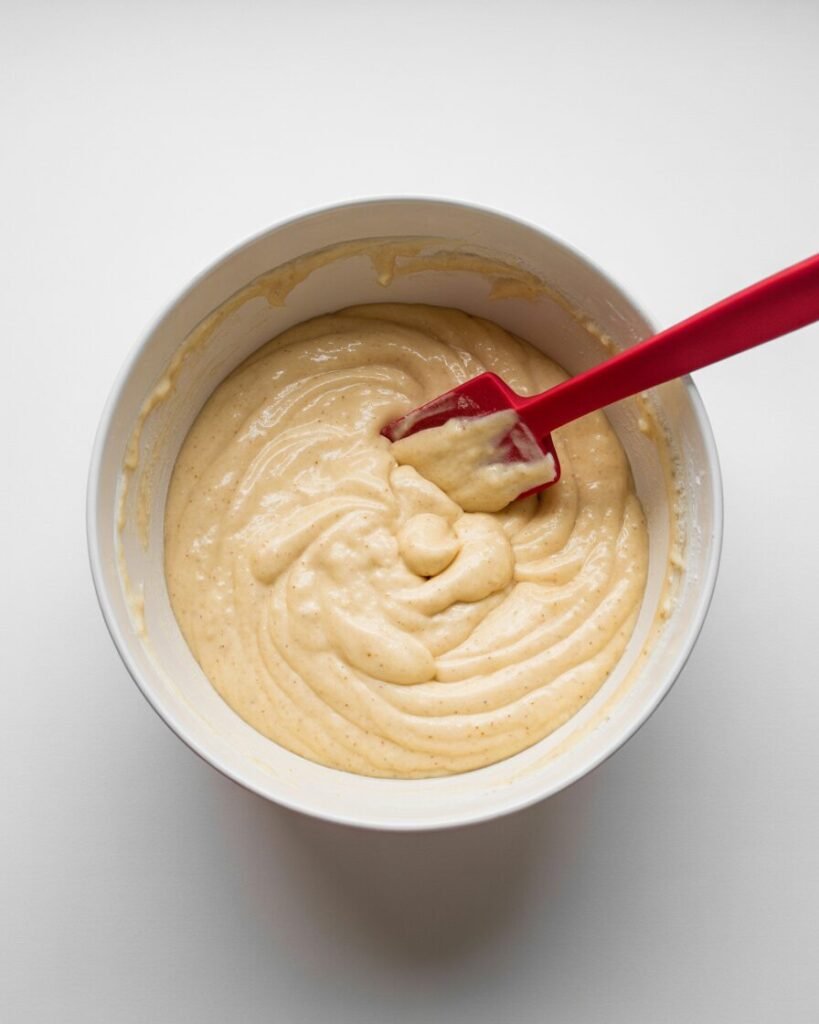
Pour wet ingredients into dry. Fold gently with a spatula just until no flour streaks remain (15–18 folds).
Visual cue: Batter should be smooth, slightly thick, and pourable—NOT elastic or heavy.
Avoid this: Over-mixing leads to tunneling and dense cupcakes.
Step 5: Portion & Bake
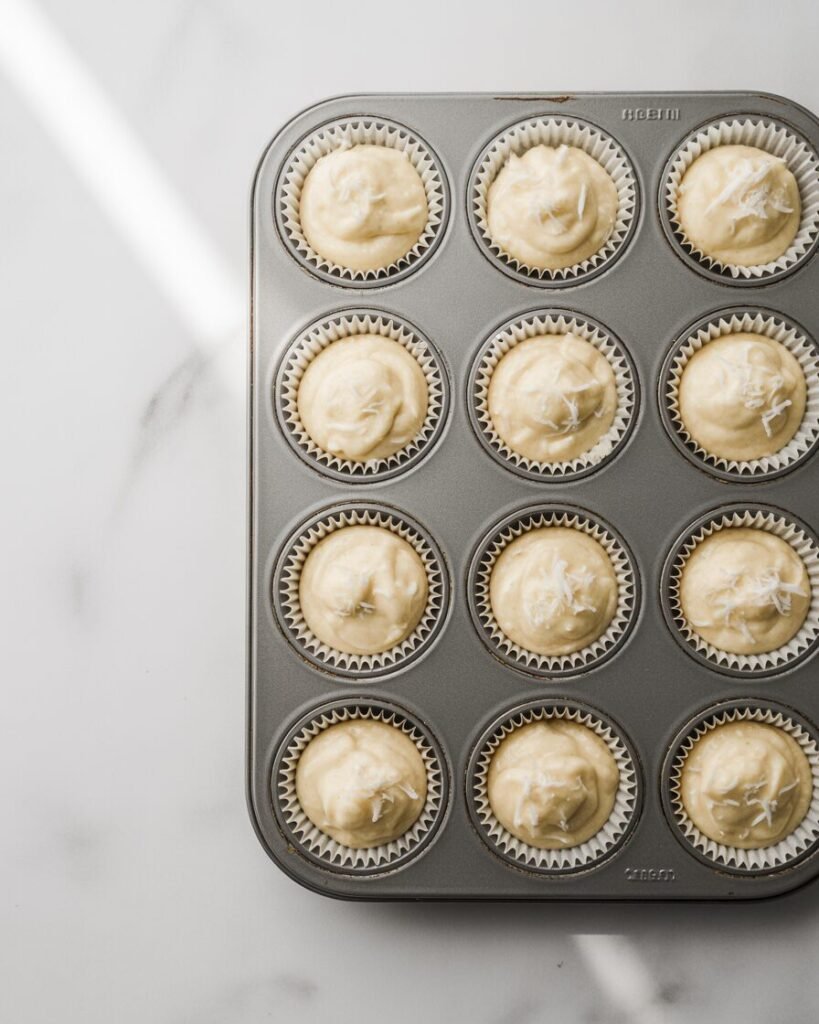
Fill liners ⅔ full. Bake for 17–19 minutes on the middle rack.
Doneness cues:
- Tops should look pale golden, not brown.
- A toothpick should come out with a few moist crumbs—not wet batter.
- Internal temp: 95–97°C (203–206°F).
Step 6: Cool
Let rest 5 minutes in the pan, then move to a cooling rack.
Visual cue: Cupcakes should hold shape and not sink.
Step 7: Frosting
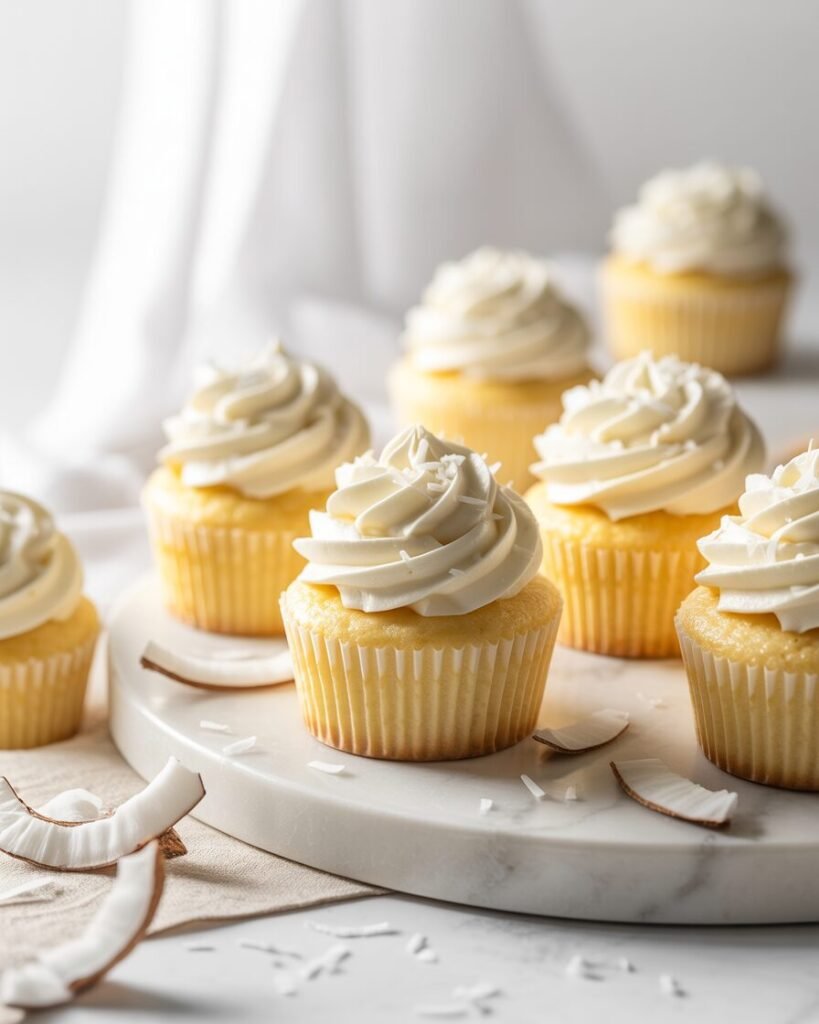
Beat butter + cream cheese (1 minute). Add powdered sugar gradually. Add coconut milk 1 tbsp at a time until creamy.
Visual cue: Frosting should be soft but pipeable; peaks should stand with a slight bend.
Troubleshooting (Most Common Issues & Fixes)
1. Cupcakes Sink After Baking
Likely Causes: Underbaking, too much leavening, or batter overmixed.
Fix: Bake to 95–97°C internal; level leavening; mix gently.
2. Dense, Heavy Crumb
Cause: Batter overworked or coconut oil too cold.
Fix: Use room-temp wet ingredients; fold gently.
3. Gummy or Wet Centers
Cause: Underbaking or low oven temperature.
Fix: Check oven thermometer; bake longer.
4. Dry Cupcakes
Cause: Overbaking or not enough fat.
Fix: Reduce bake time by 2 minutes; use full-fat coconut milk.
5. Frosting Too Soft
Cause: Warm kitchen or over-added liquid.
Fix: Chill frosting 10–15 minutes before piping.
Substitutions & Variations
Dietary Swaps
- Egg-free: Replace eggs with 90 g (6 tbsp) aquafaba or 2 flax eggs (2 tbsp flax + 6 tbsp water rested 10 minutes). Cupcakes will be slightly softer.
- Dairy-free frosting: Use vegan butter + vegan cream cheese; reduce coconut milk to 1 tsp.
- Gluten-free: Use a 1:1 GF baking blend; add ¼ tsp xanthan gum for structure.
Flavor Variations
- Coconut-lime: Add 1 tbsp lime zest + use 1 tbsp lime juice in frosting.
- Almond-coconut: Add ⅛ tsp almond extract (very strong; don’t overdo).
- Toasted coconut: Fold 30 g (⅓ cup) toasted shredded coconut into the batter.
Scaling
| Yield | Flour | Sugar | Coconut Oil | Eggs | Coconut Milk |
|---|---|---|---|---|---|
| 12 cupcakes | 160 g | 150 g | 80 g | 2 | 160 g |
| 24 cupcakes | 320 g | 300 g | 160 g | 4 | 320 g |
Storage, Make-Ahead & Freezing
- Room temperature: 2 days in airtight container (unfrosted lasts longer).
- Fridge: 4–5 days; bring to room temp before serving for best texture.
- Freezing cupcakes (unfrosted): Up to 3 months, wrapped tightly. Thaw at room temp.
- Do NOT freeze: Frosting—cream cheese develops graininess.
Refreshing tip: If cupcakes dry slightly, microwave unfrosted cupcakes for 6–7 seconds.
Serving Suggestions
These pair beautifully with:
- Fresh raspberries or mango
- Lime-coconut glaze
- White chocolate drizzle
- Lightly toasted coconut flakes for texture
FAQs
1. Can I replace coconut oil with butter?
Yes—use 90 g melted butter. Cupcakes will be slightly richer but less coconut-forward.
2. How do I prevent domed or cracked tops?
Bake on the middle rack and avoid an overheated oven.
3. Can I double the recipe?
Yes. Mix each batch separately to avoid overworking the batter.
4. What sugar works best?
Granulated sugar gives the cleanest flavor. Coconut sugar makes cupcakes darker and less fluffy.
5. Can I bake these in an air fryer/OTG?
Yes—175°C (350°F) for 10–12 minutes; check early since air fryers brown faster.
Notes From My Kitchen (Testing Log)
Batch 1: Used only coconut milk for fat. Cupcakes were flavorful but dry.
Adjustment: Added coconut oil for moisture.
Batch 2: Increased leavening. Cupcakes domed too much.
Adjustment: Reduced baking soda and balanced baking powder.
Batch 3: Tried shredded coconut in batter. Texture became dense.
Adjustment: Removed it; used toasted coconut only as topping.
Final Recipe: Balanced coconut oil + coconut milk + gentle mixing produced the moistest, softest crumb.
Nutrition & Disclaimer
Approximate per cupcake (with frosting): 280–310 kcal depending on frosting amount.
Nutrition values are estimates. Follow standard food-safety guidelines when storing baked goods.
Conclusion & Final Thoughts
These Best Coconut Cupcakes are everything I want in a coconut dessert—moist, flavorful, soft, and reliable even for small home kitchens. If you’ve ever struggled with dry coconut bakes, this recipe will finally give you a tender, melt-in-your-mouth texture that stays perfect for days. Whether you’re baking for a party, a weekend treat, or a simple craving, this is one of those recipes you’ll keep bookmarked.