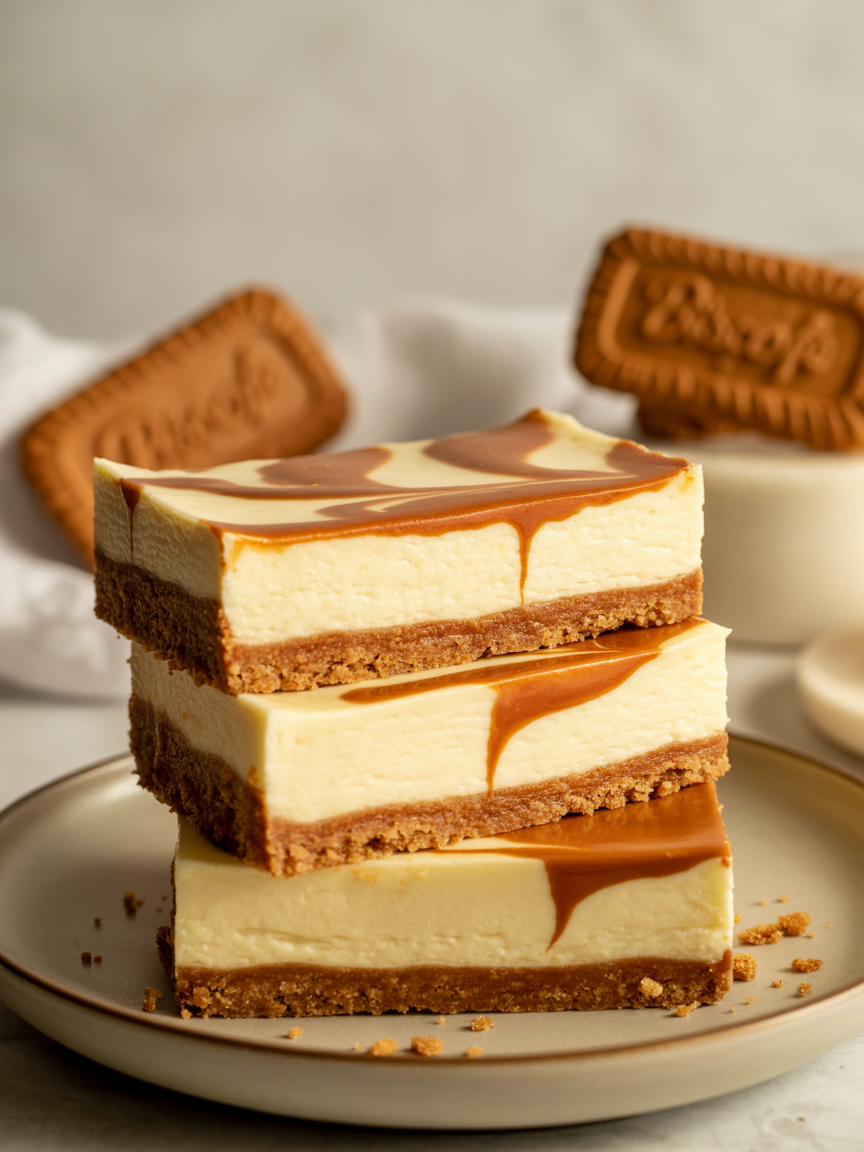
These Biscoff cheesecake bars are perfectly creamy, with a crisp, nutty cookie crust and a dreamy swirl of Biscoff cookie butter on top. Whether you’re new to baking or honing your skills, this recipe delivers consistently smooth texture and rich flavor thanks to simple, tested steps and smart swaps. The pro tip? Always use room-temperature ingredients and a water bath for even baking, so your bars stay crack-free and set perfectly every time.
Why This Recipe Works
The magic of these bars comes from the balance of ingredients and the gentle baking method. Using full-fat cream cheese and room-temperature eggs ensures a smooth, lump-free filling that sets like a custard without sinking. The Biscoff crust adds a crunchy, caramelized base that doesn’t sog or collapse thanks to a short pre-bake. The water bath moderates the oven’s heat, preventing cracks and keeping the center creamy. Key takeaways:
- Room-temperature ingredients blend smoothly, reducing air bubbles that can cause cracks.
- Pre-baking the crust sets the foundation, preventing the filling from seeping through.
- The water bath disperses heat evenly, so the bars set without overcooking or cracking.
Ingredients
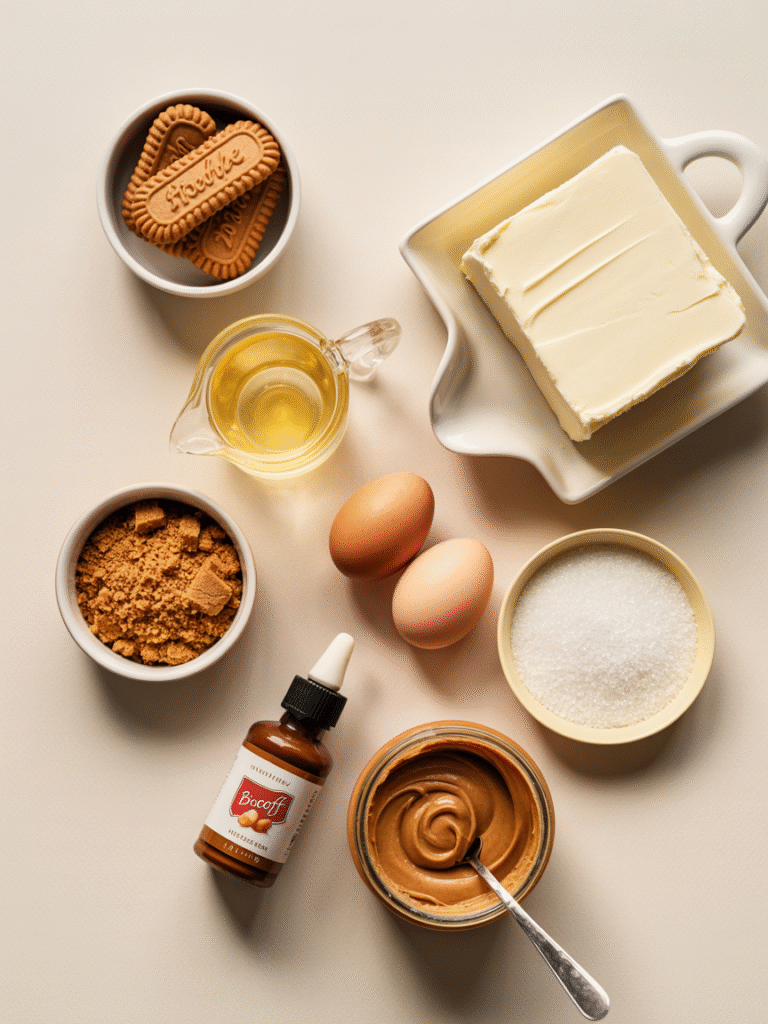
Biscoff Cookie Crust
- 160g (1 1/2 cups) Biscoff cookie crumbs (crushed Lotus Biscoff cookies)
- 56g (1/4 cup) salted butter, melted
Biscoff Cheesecake Filling
- 452g (2 cups) full-fat cream cheese, room temperature
- 60g (1/4 cup) Biscoff cookie butter (spread)
- 133g (2/3 cup) granulated sugar
- 112g (2 large) eggs, room temperature
- 4g (1 tsp) vanilla extract
- 120g (1/2 cup) Biscoff cookie butter, warmed (for swirl)
Equipment
Required
- 8×8-inch (20×20 cm) square baking pan
- Parchment paper (for easy removal)
- Food processor or rolling pin (for cookie crumbs)
- Stand or hand mixer
- Mixing bowls
- Measuring cups and spoons
- Oven thermometer (for accuracy)
- Small offset spatula or knife (for swirling)
Nice-to-have
- Metal binder clips (to secure parchment)
- Sieve (for smoother crumbs)
- Pie weights (optional, for crust baking)
Step-by-Step Instructions
Crust
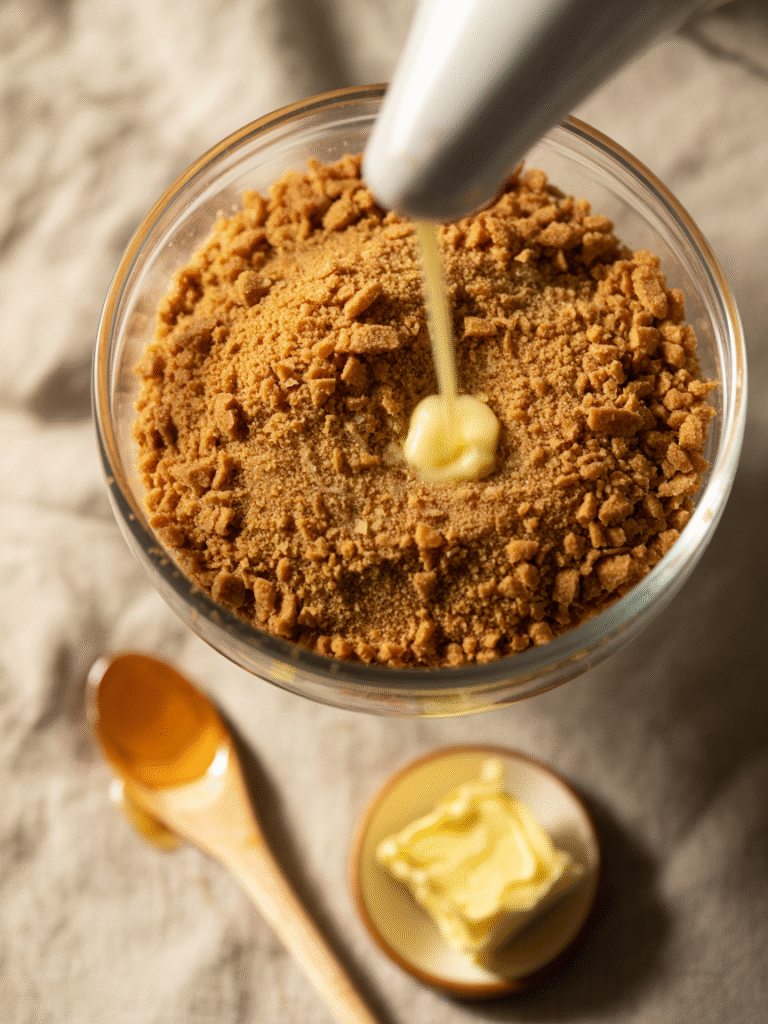
- Preheat oven to 165°C (325°F). Line the pan with parchment, letting edges overhang.
- Pulse Biscoff cookies in a food processor until fine crumbs form (texture like sand). Mix with melted butter until moist.
- Pour crumbs into the pan. Press firmly with a flat cup or glass to create a compact, even crust (the texture should feel like a firm, smooth sandcastle).
- Bake for 8 minutes. Remove and let cool on a wire rack. Keep oven on.
Filling
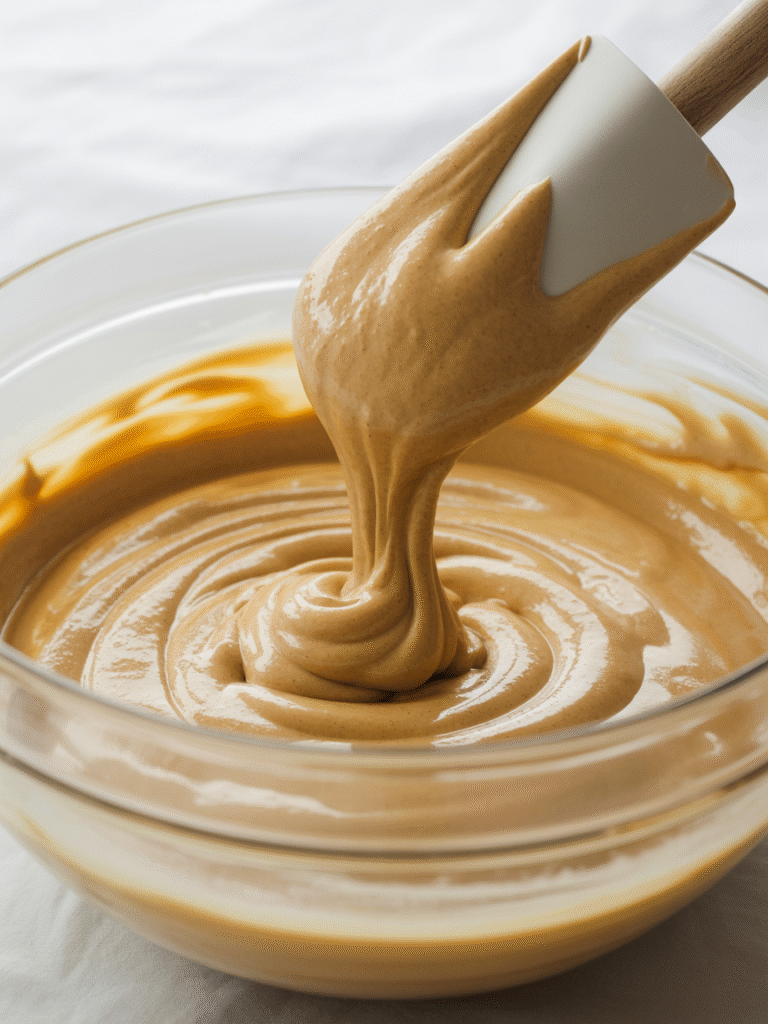
- Beat cream cheese and Biscoff spread at medium speed for 1 minute until smooth and creamy. Scrape bowl.
- Add sugar at low speed, mix until combined. Scrape sides.
- Add eggs one at a time, mix just until blended. Add vanilla, scrape again.
- Pour filling over cooled crust. Tap pan gently to remove bubbles.
- Warm the remaining 120g Biscoff spread for 10 seconds in microwave. Drop spoonfuls on top, swirl with a knife.
Baking
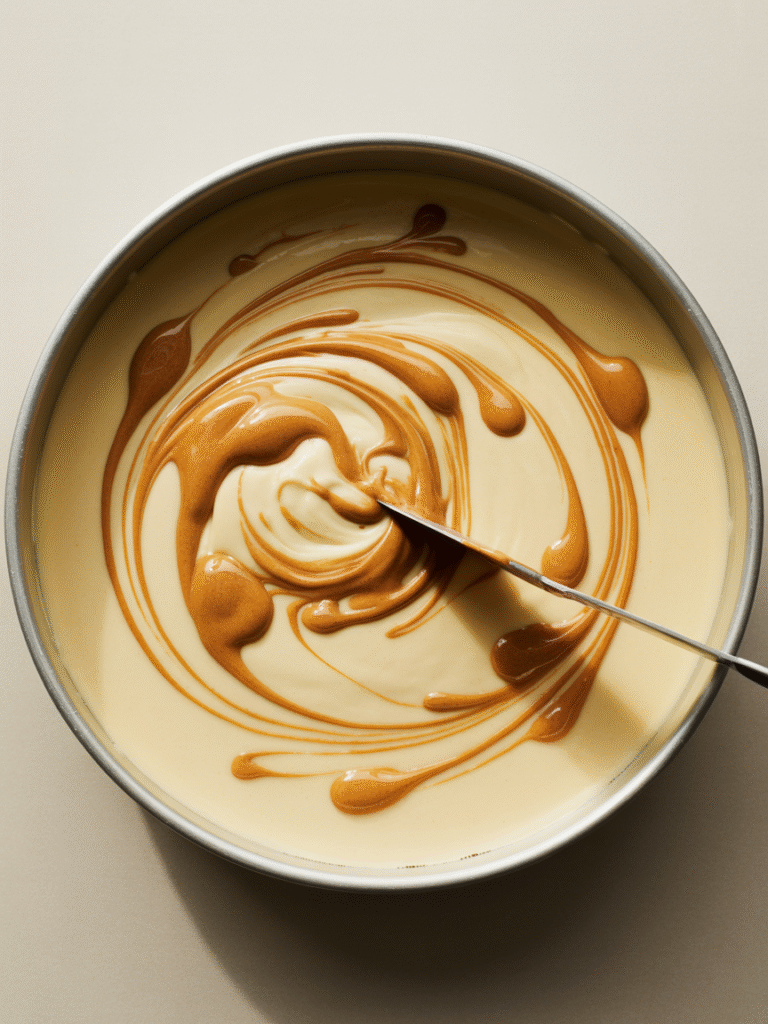
- Place another pan (rimmed baking sheet) with 2.5 cm (1 inch) water on the rack beneath the cheesecake bars. This creates a gentle water bath.
- Bake on the middle rack for 43–48 minutes. Rotate halfway. The center should jiggle slightly when shaken gently (not liquid, but a small wobble).
- Do not use a toothpick—the center will set as it cools.
- Cool completely on a wire rack, then refrigerate for 2 hours (or overnight).
Finishing
- Cut with a sharp, warm knife. Wipe clean between each slice for clean edges.
Troubleshooting Common Failures
- Cracks on top: Usually from overmixing or too high heat. Use low speed, a water bath, and cool the bars slowly.
- Soggy or collapsing crust: Ensure crust is pressed firmly and pre-baked. Avoid overloading filling.
- Center not setting: Check that eggs and cream cheese are at room temperature. Give filling enough chill time (minimum 2 hours).
- Lumpy batter: All ingredients must be room temperature. Beat cream cheese first, then gradually add others.
- Splits/seepage: Use parchment, ensure crust is up to pan edges, and don’t overfill.
Substitutions and Variations
Dietary Swaps
- Egg-free: Not recommended; eggs add structure and stability.
- Dairy-free: Use vegan cream cheese and coconut oil (adjust texture).
- Gluten-free: Use gluten-free cookies for crust (confirm Biscoff is gluten-free if needed).
Flavor Swaps
- Swap Biscoff spread for Nutella or peanut butter for a different swirl.
- Add cinnamon or zest for extra depth.
Scaling Table
| Pan Size | Biscoff Cookie Crumbs (g) | Salted Butter (g) | Cream Cheese (g) | Cookie Butter (g) | Sugar (g) | Eggs (g) | Vanilla (g) |
|---|---|---|---|---|---|---|---|
| 6-inch | 90 | 31 | 253 | 101 | 74 | 63 | 2 |
| 8-inch | 160 | 56 | 452 | 180 | 133 | 112 | 4 |
| 9×13-inch | 320 | 112 | 904 | 360 | 266 | 224 | 8 |
Storage, Make-Ahead, and Freezing
- Counter: Not recommended; store in fridge in airtight container.
- Fridge: Up to 5 days, bring to room temp before serving.
- Freezer: Wrap bars individually, freeze up to 2 months. Thaw overnight in fridge.
- Do not refreeze after thawing.
Serving Suggestions
Serve with fresh berries, a drizzle of Biscoff spread, or a dusting of powdered sugar. The creamy texture pairs well with a sweet-tart fruit compote or a light espresso for balance.
FAQs
- Can I use Nutella instead of Biscoff spread? Yes, it works, but the flavor will be different.
- How to prevent cracks? Use a water bath, low mixer speed, and cool slowly.
- Can I halve the recipe? Yes, use a 6-inch pan and scale down ingredients.
- Best cream cheese for texture? Block-style full-fat cream cheese (not spreadable).
- How to bake in an OTG? Use standard oven setting, ensure even heat, and use a water bath.
Notes from My Kitchen (Testing Log)
- Batch 1: Tried with cold cream cheese—lumpy filling, uneven bake. Adjusted to room temp, smooth texture.
- Batch 2: Skipped water bath—center cracked, edges browning too fast. Added water bath, much better results.
- Final: Full-fat cream cheese, room-temp eggs, water bath—perfectly even, creamy, and stable every time.
Nutrition and Disclaimer
Approximate per serving (1 bar, 8-inch pan):
- 396 kcal, 28g fat, 18g sugar, 5g protein.
Values are estimates; adjust for brands and portion size. Follow food-safety best practices.
Wrap Up
These Biscoff cheesecake bars are a celebration of creamy texture, nutty caramel flavor, and foolproof baking, perfect for sharing with friends or enjoying as a treat after a long day. With the tips and tested steps above, you’ll be able to create a batch that’s smooth, crack-free, and full of that signature Biscoff warmth. Don’t hesitate to experiment with swirls, crusts, or even make-ahead batches for stress-free entertaining. Every slice is a reminder that baking at home can be both simple and spectacular. Happy baking, and I can’t wait to hear how your bars turn out!.
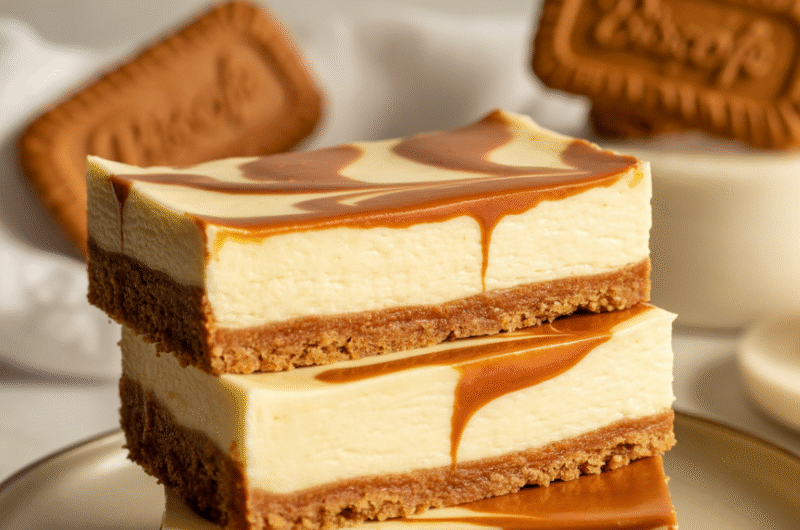
Holiday Biscoff Cheesecake Bars: Make‑Ahead and Slice Clean
Course: DessertCuisine: AmericanDifficulty: Easy, Medium16
servings20
minutes45
minutes400
kcal1
hour10
minutesCooling + chill time: 2–8 hours (until fully set)
Creamy, crack‑free Biscoff cheesecake bars with a crisp, caramelized Biscoff cookie crust and a glossy cookie‑butter swirl. Tested for smooth texture, clean slices, and consistent results with simple home equipment. Uses room‑temperature ingredients and a gentle water‑bath method for an even set.
Ingredients
Biscoff cookie crust
Biscoff cookie crumbs: 160 g (1 1/2 cups) — finely crushed for a crisp, cohesive base.
Salted butter, melted: 56 g (1/4 cup) — binds crumbs and adds richness.
- Cheesecake filling
Full‑fat cream cheese, room temp: 452 g (2 cups/16 oz) — creamy body and structure.
Biscoff cookie butter: 60 g (1/4 cup) — caramelized spice flavor in the filling.
Granulated sugar: 133 g (2/3 cup) — sweetness and stability.
Eggs, room temp: 112 g (2 large) — custard set and sliceable texture.
Vanilla extract: 4 g (1 tsp) — aroma and rounding flavor.
- Swirl
Biscoff cookie butter, warmed: 120 g (1/2 cup) — signature marbled top.
Directions
- Prep and crust
Preheat oven to 165°C (325°F). Line pan with parchment, leaving overhang for lifting.
Mix crumbs and melted butter until evenly moistened (looks like wet sand).
Press firmly into an even layer (compact edges and corners). Bake 8 minutes; cool on rack. Leave oven on. - Filling
Beat cream cheese + 60 g cookie butter on medium for 1 minute until silky and lump‑free; scrape bowl.
Add sugar on low just until combined; scrape.
Mix in eggs one at a time on low until just blended; add vanilla; scrape. Avoid whipping in air. - Pan and swirl
Pour filling over crust; tap pan 3–4 times to release bubbles.
Warm 120 g cookie butter briefly until pourable. Spoon dollops over the surface and marble with a thin knife into gentle swirls. - Bake with gentle moisture
Set a rimmed baking sheet with about 2.5 cm (1 inch) hot water on the rack below the cheesecake (simple water bath).
Bake the cheesecake pan on the middle rack for 43–48 minutes, rotating once at 25 minutes.
Doneness: edges should look set and matte; center should jiggle slightly like set Jell‑O (not liquid). Do not insert a skewer.
Cool in pan on a rack until room temp, then refrigerate at least 2 hours (overnight best). - Slice and serve
Lift using parchment. Warm a sharp knife, wipe between cuts for clean edges. Serve plain or with a light drizzle of melted Biscoff.
Notes
- Storage
Fridge: Airtight container up to 5 days; bring to room temp for 10–15 minutes before serving for best creaminess.
Freezer: Wrap bars individually and place in a freezer bag up to 2 months. Thaw overnight in the fridge. Do not refreeze once thawed. - Substitutions and notes
Cream cheese: Use block/full‑fat only; spreadable tubs can turn runny.
Butter: Unsalted okay; add a small pinch of salt to crust if desired.
Eggs: For egg‑free, setting and clean slicing will change; this version is developed with eggs for stability.
Gluten‑free: Use gluten‑free speculoos‑style cookies; texture may be slightly more delicate.
Dairy‑free: Use vegan cream cheese and 1:1 coconut oil for butter for a no‑bake style; flavor/firmness will differ.
Ingredient sourcing (India): Look for “cookie butter” or “speculoos spread” from Lotus or store brands; full‑fat cream cheese blocks from D’lecta/La Cremella/Philadelphia equivalents work well. - Troubleshooting quick guide
Cracks: Too hot/overmixed; use low mixing, water bath, and cool gradually.
Soggy crust: Crumbs not compacted or under‑baked; press firmly and prebake 8 minutes.
Lumpy batter: Ingredients not room temp; soften cream cheese thoroughly, mix sugar gradually.
Wet center after chill: Underbaked or under‑chilled; bake to slight jiggle only, then chill until cold through.
Greasy top: Overheated cookie butter; warm gently to pourable, not hot.