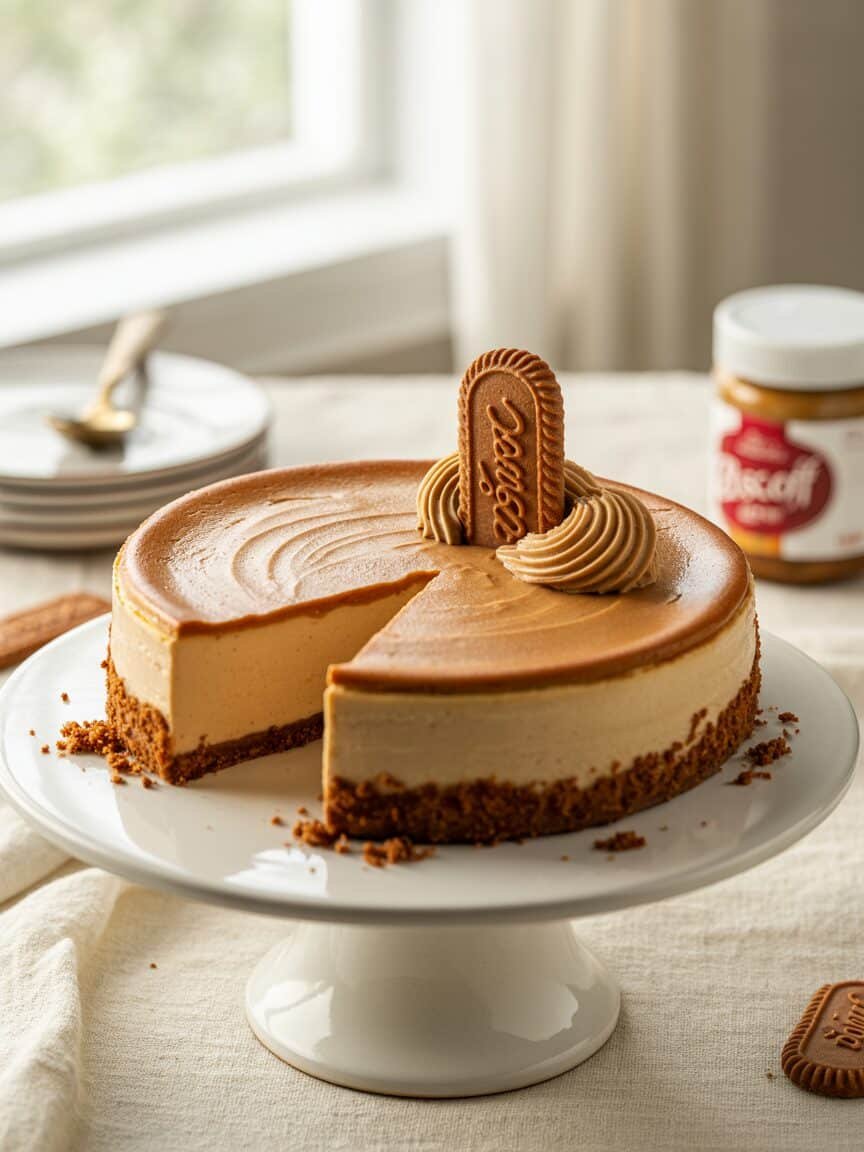
This Biscoff Cheesecake delivers a creamy, spiced filling with a crisp, buttery biscuit base perfect for impressing guests or treating yourself. The recipe is designed for home bakers who want a foolproof, no-fail dessert that’s rich in flavor and texture, with a smooth, crack-free finish every time. My pro tip: chill the base thoroughly before adding the filling to prevent sogginess and ensure a crisp bite.
Why This Recipe Works
This cheesecake stands out because it balances the warm, caramel-like notes of Biscoff spread with the tangy creaminess of cream cheese. The biscuit base uses crushed Biscoff cookies, which add depth and crunch, while the filling is stabilized with a touch of cornstarch and a water bath for even baking. The science behind the success is simple: cream cheese provides structure and tang, eggs bind and set the filling, and the water bath prevents cracks by creating a gentle, moist environment. Using room-temperature ingredients ensures even mixing, and chilling the base before baking locks in its crispness.
Ingredients with Weights and Purpose
- Biscoff cookies (crushed) — 200g (2 cups) — Base structure, flavor, and crunch
- Unsalted butter (melted) — 80g (6 tbsp) — Binds base, adds richness
- Cream cheese (full-fat, room temperature) — 500g (2 cups) — Main filling, creamy texture
- Granulated sugar — 100g (½ cup) — Sweetness, balances tang
- Biscoff spread (smooth) — 120g (½ cup) — Flavor, moisture, richness
- Eggs (large, room temperature) — 3 — Structure, binding
- Cornstarch — 15g (1 tbsp) — Stabilizes filling, prevents cracks
- Vanilla extract — 1 tsp — Flavor enhancement
- Lemon juice — 1 tsp — Brightness, balances richness
Note: Use full-fat cream cheese for best texture. Biscoff spread is key for authentic flavor; avoid substitutes.
Equipment
- Required: 9-inch springform pan, electric hand mixer or whisk, digital scale, oven/OTG, thermometer, mixing bowls, spatula
- Nice-to-have: Offset spatula, fine-mesh sieve, parchment paper, water bath setup
Step-by-Step Instructions
Step 1: Prepare the Base
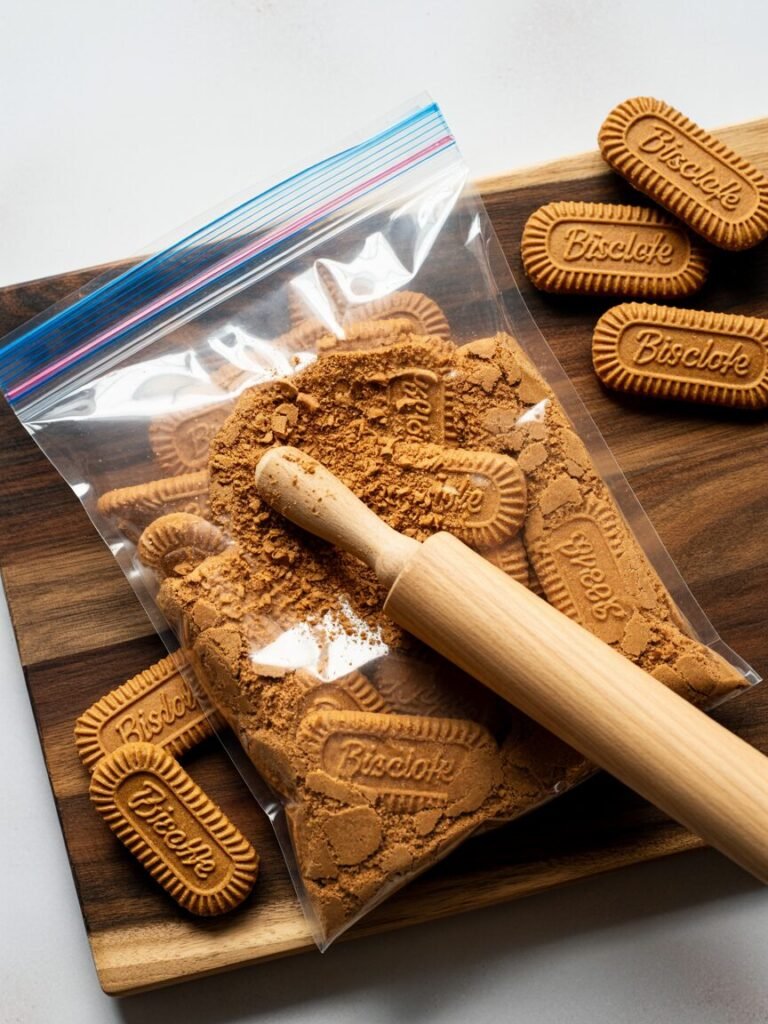
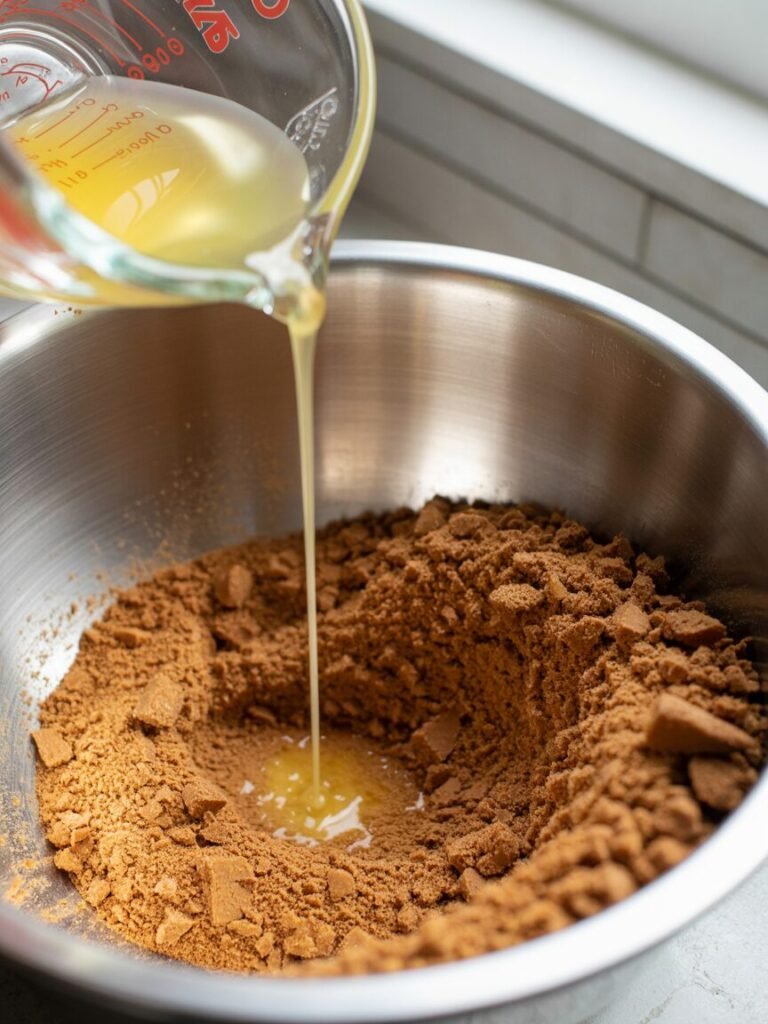
- Crush Biscoff cookies into fine crumbs (use a food processor or ziplock bag and rolling pin).
- Mix with melted butter until evenly coated.
- Press firmly into the bottom of a 9-inch springform pan lined with parchment.
- Chill in the fridge for 30 minutes. Visual cue: Base should feel firm and hold its shape when pressed.
Step 2: Make the Filling
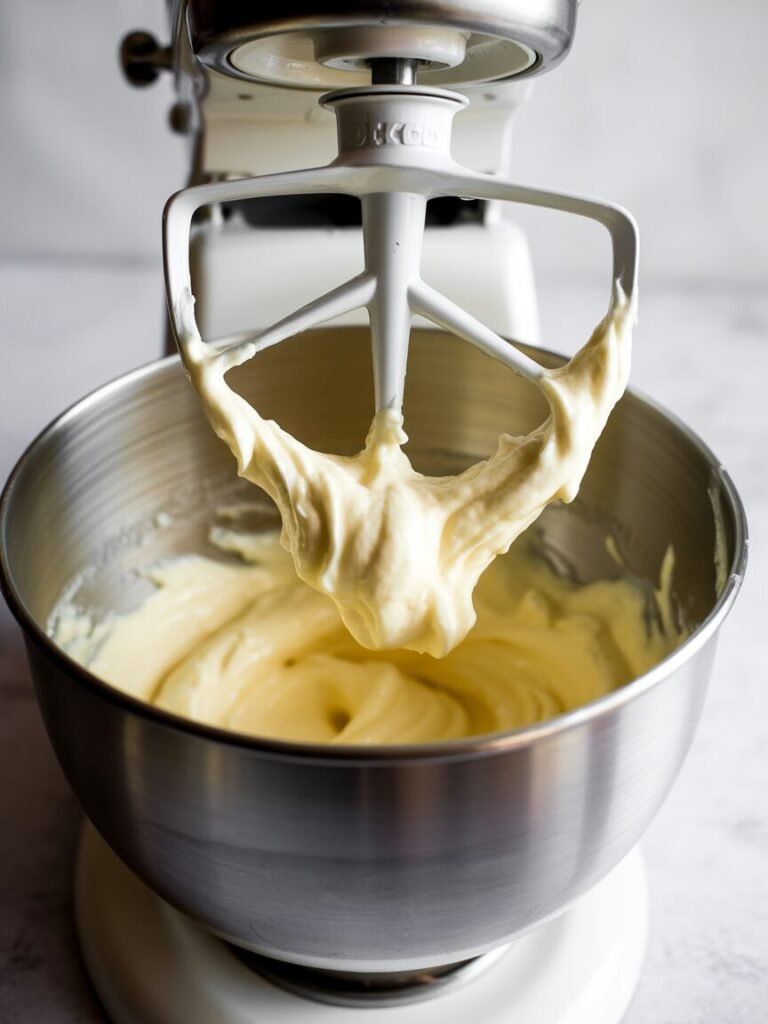

- Beat cream cheese with sugar until smooth and creamy (about 2 minutes on medium speed).
- Add Biscoff spread and mix until fully incorporated.
- Add eggs one at a time, mixing just until combined after each.
- Mix in cornstarch, vanilla, and lemon juice.
- Visual cue: Batter should be smooth, glossy, and free of lumps.
Step 3: Bake
- Preheat oven to 160°C (320°F). Place rack in the center.
- Pour filling over chilled base.
- Place pan in a larger roasting tray and add hot water to reach halfway up the sides of the springform pan.
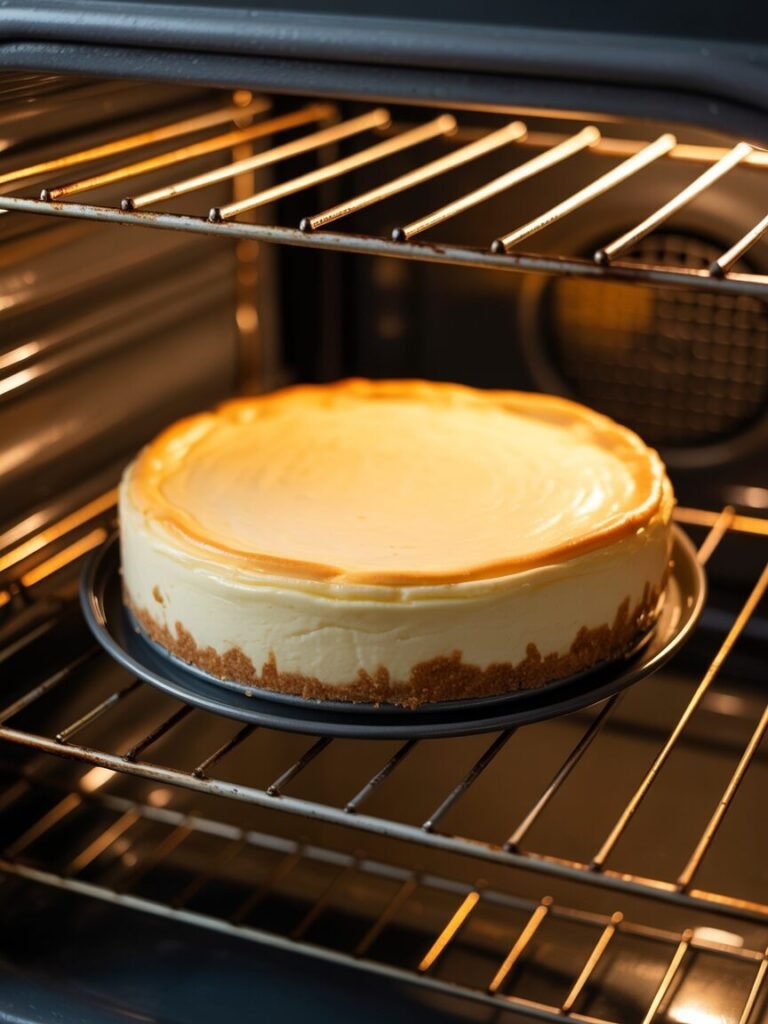
- Bake for 55–60 minutes, or until the edges are set but the center jiggles slightly.
- Visual cue: Center should wobble like jelly, not liquid.
- Turn off oven, crack door, and let cheesecake cool inside for 1 hour.
Step 4: Chill and Serve
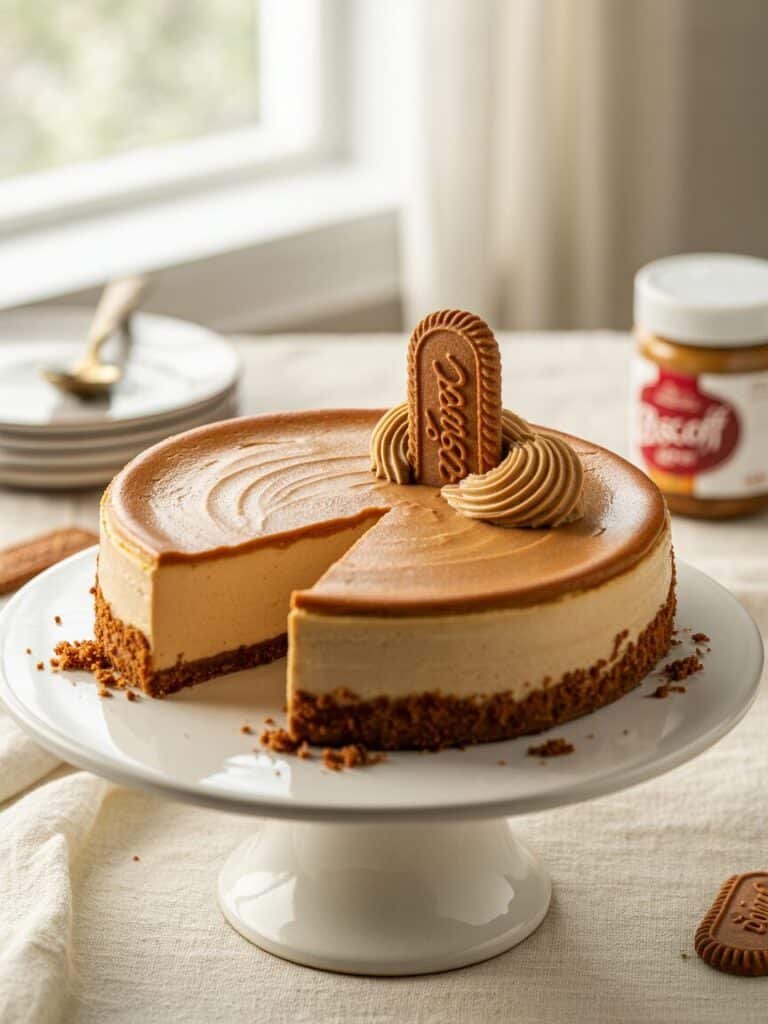
- Remove from oven and water bath. Cool to room temperature, then chill in the fridge for at least 6 hours (preferably overnight).
- Run a knife around the edge before releasing the springform.
Troubleshooting: Common Failures and Fixes
- Cracks on top: Likely caused by overbaking or rapid cooling. Bake until center is just set, and cool gradually in the oven.
- Soggy base: Base wasn’t chilled before baking. Always chill for at least 30 minutes.
- Dense or gummy filling: Overmixed or too many eggs. Mix just until combined, and use room-temperature ingredients.
- Filling too runny: Underbaked. Bake until edges are set and center jiggles slightly.
- Base crumbles: Not enough butter or not pressed firmly. Use 80g butter and press firmly with the back of a spoon.
Substitutions and Variations
- Egg-free: Replace eggs with 3 tbsp cornstarch + 3 tbsp plant-based milk. Texture will be denser.
- Dairy-free: Use dairy-free cream cheese and butter. Biscoff spread is dairy-free.
- Gluten-free: Use gluten-free Biscoff cookies or substitute with gluten-free digestive biscuits.
- Flavor swaps: Add orange zest, cinnamon, or swap Biscoff spread for peanut butter.
- Scaling: For 6-inch pan, halve all ingredients. For 8-inch, reduce by 20%.
Storage, Make-Ahead, and Freezing
- Counter: Store covered for up to 2 days.
- Fridge: Keep in an airtight container for up to 5 days. Bring to room temperature before serving.
- Freezer: Wrap tightly and freeze for up to 2 months. Thaw overnight in the fridge. Do not freeze with whipped cream topping.
Serving Suggestions and Pairing Ideas
Serve with fresh berries, a drizzle of Biscoff spread, or a dollop of whipped cream. Pair with a cup of coffee or tea to balance the sweetness.
FAQs
- Can I use a different cookie for the base? Yes, but Biscoff cookies give the best flavor. Digestive biscuits work as a substitute.
- How to prevent cracks? Use a water bath, avoid overbaking, and cool gradually.
- Can I double the recipe? Yes, but use a larger pan and adjust baking time.
- Best sugar type? Granulated sugar works best for texture and sweetness.
- Can I bake in an OTG? Yes, use the same temperature and water bath method.
Notes from My Kitchen
- Batch 1: Base was soggy. Solution: Chilled base before baking.
- Batch 2: Filling cracked. Solution: Used water bath and cooled gradually.
- Final: Chilling base and water bath method produced the best texture and flavor.
Nutrition and Disclaimer
Approximate per serving (1/12): 320 kcal, 22g fat, 28g carbs, 6g protein. Values are estimates; adjust for brands and portion size. Follow food-safety best practices.
Wrap Up
This Biscoff Cheesecake is a reliable, crowd-pleasing dessert that’s easy to make and hard to mess up especially when you follow the tested tips and visual cues. Whether you’re baking for a special occasion or just treating yourself, this recipe delivers a creamy, spiced filling with a crisp, buttery base every time. The key is in the details: chilling the base, using a water bath, and cooling gradually. With these steps, you’ll get a smooth, crack-free cheesecake that’s rich in flavor and texture. Don’t hesitate to experiment with substitutions and variations to make it your own. Happy baking!
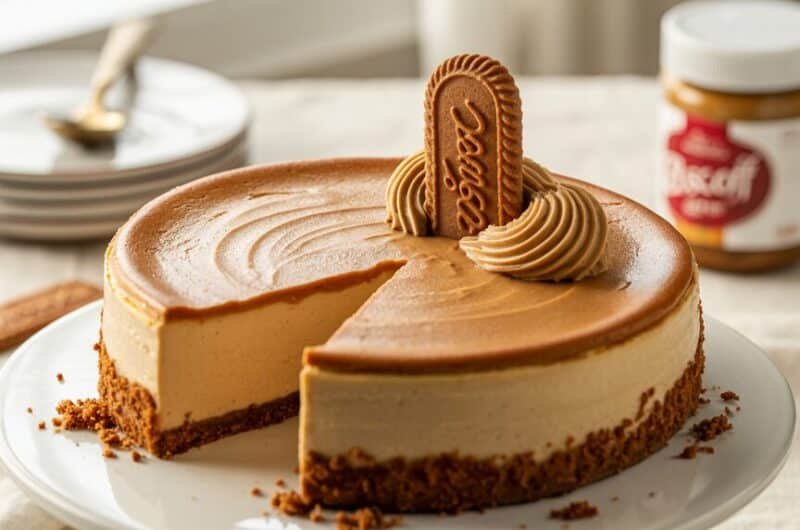
Lotus Biscoff Cheesecake: Buttery Crust, Velvet Filling
Course: DessertCuisine: AmericanDifficulty: Medium12
servings25
minutes1
hour430
kcal8
hours30
minutesCooling/Chill Time: 1 hour in oven + 6 hours refrigeration
Ultra-creamy baked Biscoff cheesecake with a buttery Biscoff cookie crust, silky Biscoff-infused filling, and a gentle water-bath bake for a glossy, crack-free finish.
Ingredients
Crust:
Directions
- Prepare the pan and oven: Line the base of a 9-inch springform pan with parchment; lightly grease the sides. Preheat oven to 160°C (320°F) with rack in the center.
- Make the crust: Crush Biscoff biscuits to fine crumbs, mix with melted butter until evenly moistened, then press firmly and evenly into the lined pan. Chill 30 minutes until firm. Visual cue: crust feels solid and holds its shape when pressed.
- Make the filling: Beat cream cheese and sugar on medium speed until smooth and creamy, about 2 minutes, scraping the bowl. Add Biscoff spread and mix until fully incorporated. Add eggs one at a time, mixing just until combined after each. Mix in cornstarch, vanilla, and lemon juice until the batter is smooth and glossy with no lumps. Visual cue: batter should be silky and lump-free.
- Set up the water bath: Wrap the outside of the springform pan with a double layer of foil if your pan isn’t leakproof. Place the pan inside a larger roasting tray. Pour the filling over the chilled crust and smooth the top. Pour hot water into the roasting tray to reach halfway up the sides of the springform.
- Bake: Bake at 160°C (320°F) for 55–60 minutes until the edges are set but the center jiggles slightly. Visual cue: center wobbles like jelly, not liquid.
- Gentle cool: Turn off the oven, crack the door, and let the cheesecake cool inside for 1 hour to minimize cracks.
- Chill: Remove from the water bath, cool to room temperature, then chill in the fridge at least 6 hours, preferably overnight, until fully set.
- Release and finish: Run a thin knife around the edge, release the springform, and transfer to a cake stand. Optionally warm a few tablespoons of Biscoff spread until pourable and drizzle lightly; add cookie crumbs or a single upright Biscoff cookie as garnish for a clean hero look.
Notes
- Baker’s Notes
Room temperature dairy prevents lumps and helps achieve a glossy filling.
Avoid overmixing after adding eggs to reduce air and prevent cracks.
A proper water bath plus slow cool in the oven keeps the top smooth and crack-free.
Chill fully before slicing; use a hot, wiped knife for clean slices. - Storage
Refrigerate covered for up to 4 days; add cookie garnishes just before serving so they stay crisp. -
Serving Suggestion (Hero Shot Match)
Present on a simple white cake stand with one slice pulled forward to showcase the creamy interior; optional light Biscoff drizzle and minimal crumbs around the base for realism.