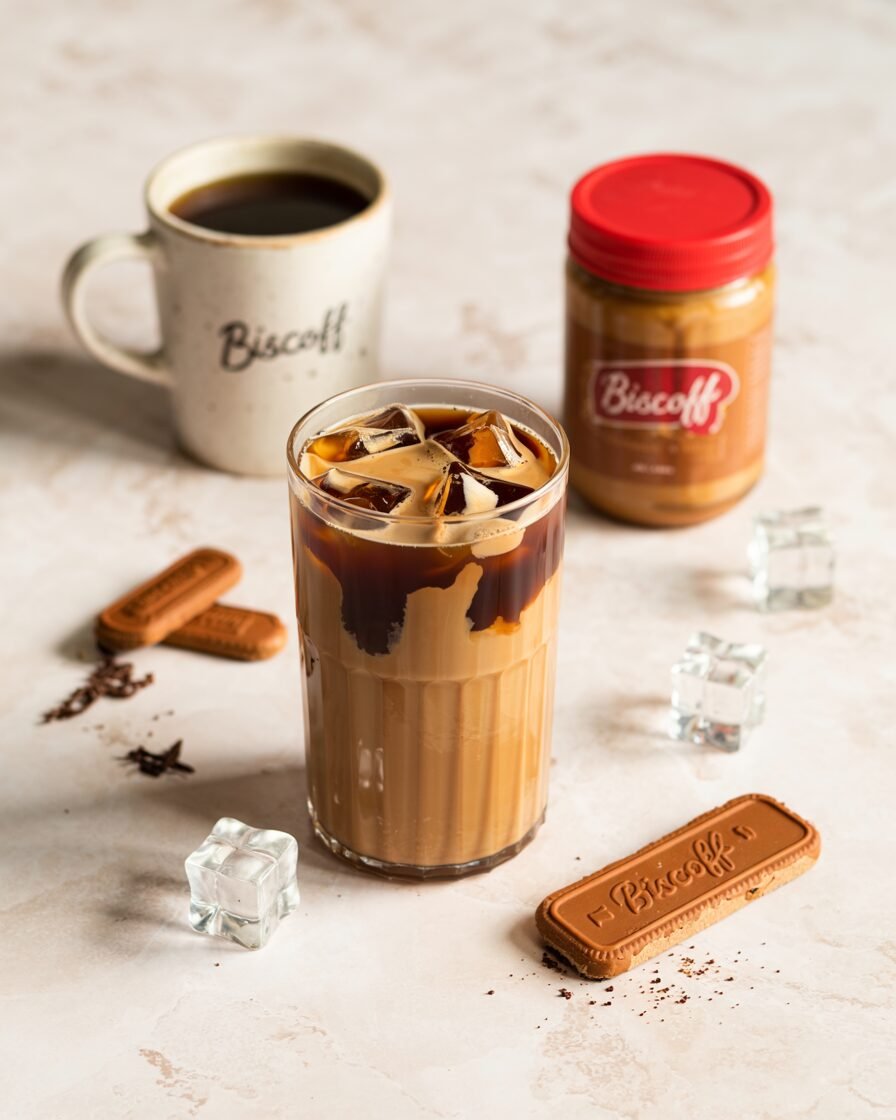
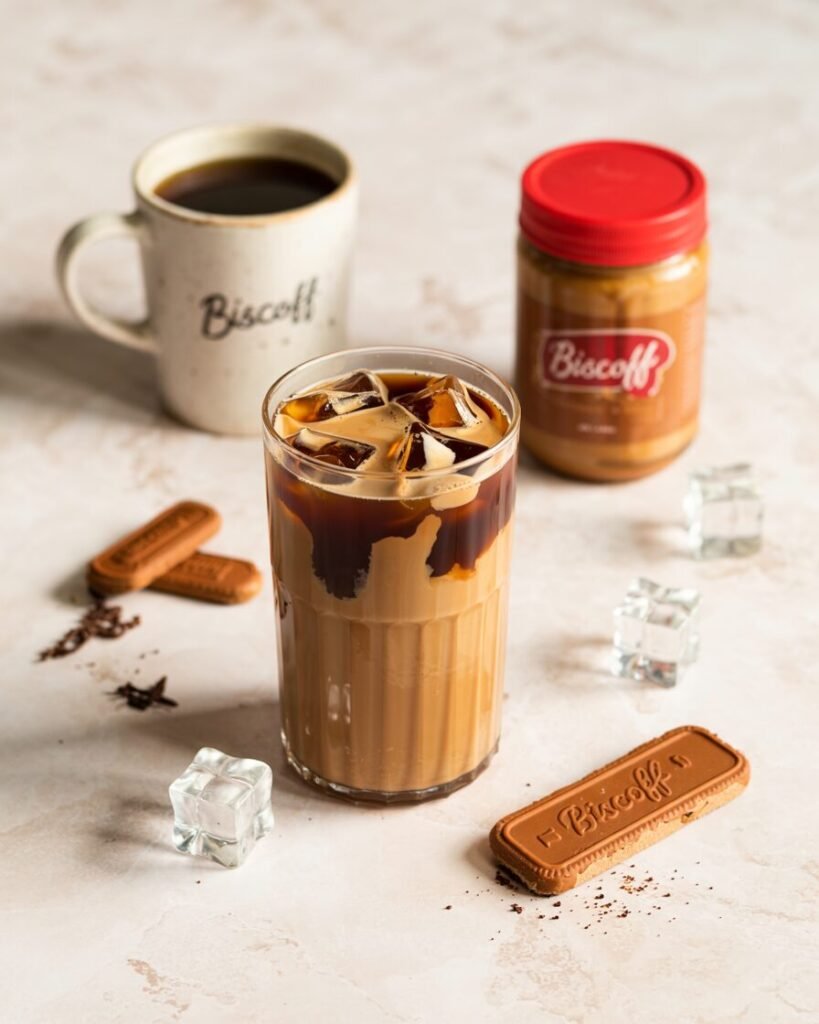
This Biscoff iced coffee is silky, sweetened with just a hint of caramel, and layered with a rich coffee base that doesn’t taste watered down. It’s easy to customize to your preferred sweetness and strength, and you can prep it in under 10 minutes with ingredients you probably already have. The key is balancing the coffee strength with the Biscoff syrup so the drink stays smooth and balanced, not bitter or overly sweet.
- What makes it unique:
Instead of buying a store‑bought syrup, this recipe uses real Biscoff spread to make a homemade syrup that infuses the whole drink with warm, spiced cookies-and-cream notes. It’s also designed to be scaled easily for pitchers or single servings, and it includes options for dairy‑free and lower‑sugar versions. - Promise and pro tip:
You’ll get a creamy, café‑style Biscoff iced coffee that stays flavorful even as the ice melts. The pro tip: chill the brewed coffee completely before assembling, so your drink doesn’t dilute too quickly.
Why this Biscoff iced coffee works
A good Biscoff iced coffee balances three things: strong enough coffee, rich but not overpowering syrup, and a creamy texture. Here’s the simple science behind why this version tastes like it came from a café:
- Cold‑brew style strength: Using strong coffee (or a 1:15 coffee‑to‑water ratio if you brew it yourself) keeps the flavor intense even when mixed with ice and milk. Weak coffee will taste watery once the ice starts to melt.
- Biscoff syrup stability: Melted Biscoff spread dissolved into warm milk creates an emulsion that disperses evenly through the drink instead of floating to the top. This gives every sip the same warm, spiced flavor.
- Dairy and fat balance: The fat in milk or cream coats the tongue slightly, softening the acidity of the coffee. Skim milk works, but a little cream or half‑and‑half gives a better mouthfeel and prevents the drink from tasting thin.
Ingredients
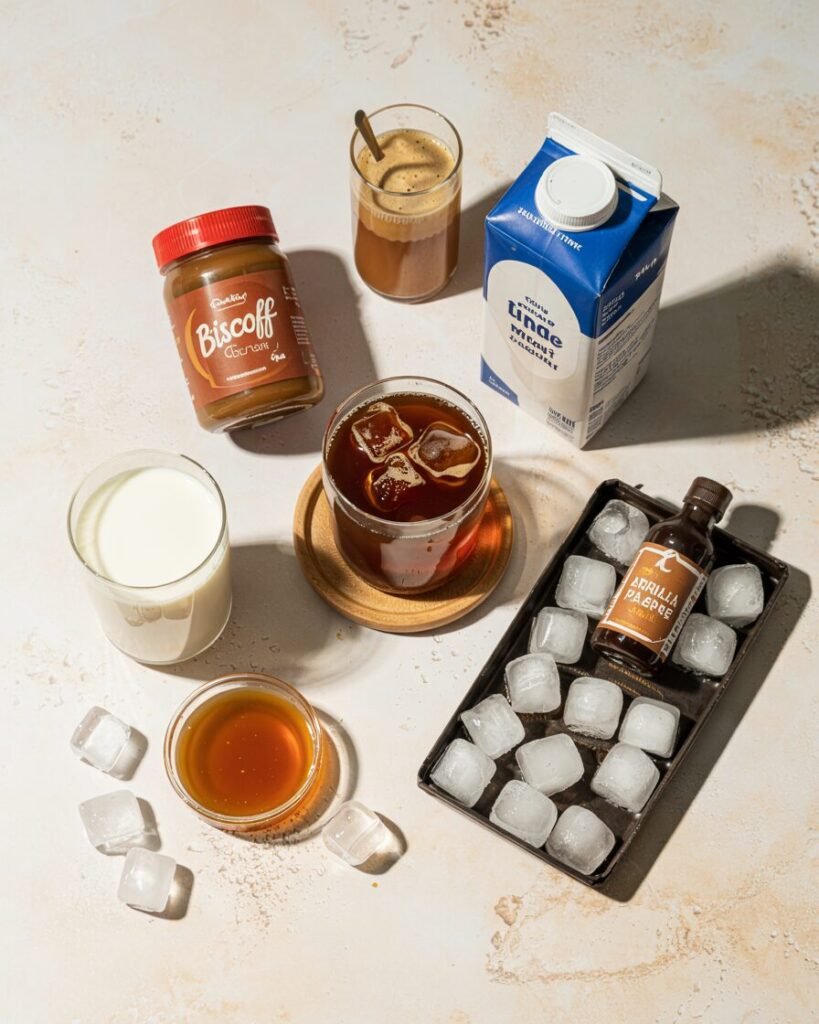
- Strong brewed coffee — 240 g (1 cup) — provides the base flavor and caffeine. Aim for a 1:15 coffee‑to‑water ratio if brewing fresh.
- Biscoff spread — 30 g (2 tbsp) — adds caramel‑like sweetness and signature spiced cookie flavor.
- Whole milk — 120 g (½ cup) — adds creaminess and body.
- Sweetened condensed milk — 15 g (1 tbsp) — deepens sweetness and adds a subtle caramel‑like richness (optional if you like it less sweet).
- Ice cubes — 120–150 g (1 cup) — keeps the drink cold without excessive dilution.
- Vanilla extract — 1–2 g (½ tsp) — enhances the warm, baked‑good notes of the Biscoff.
(Optional dairy‑free swap: use full‑fat coconut milk or oat milk in place of dairy milk.)
Equipment
Required:
- Medium saucepan or small pot
- Measuring jug or scale (preferably with grams)
- Stirring spoon or whisk
- Tall glass or mason jar (about 12 oz / 350 ml)
- Ice cube tray
Nice‑to‑have:
- Barista spoon or long spoon for layering
- Fine‑mesh sieve (if you want to avoid any tiny spice flecks from the Biscoff)
Step‑by‑step instructions
Step 1:
Brew the coffee — 5–10 minutes, 96–98°C (205–210°F) if using hot brewing.
Visual cue: The coffee should smell strong and rich, with a dark amber color. Avoid over‑brewed coffee that tastes bitter or sour.
Step 2:
Chill the coffee — 20–30 minutes in the fridge, or about 10 minutes if you pour it over an ice bath in a pitcher.
Visual cue: The coffee should feel cold to the touch, not lukewarm.
Step 3:
Make the Biscoff syrup — In a small saucepan, heat 120 g milk and 30 g Biscoff spread over low heat, stirring until the spread melts fully and the mixture looks smooth and slightly foamy.
Optional: Add 15 g sweetened condensed milk and 1 g vanilla and stir until combined.
Visual cue: The syrup should pour smoothly and not have any lumps of solid Biscoff.
Step 4:
Pour the syrup into your glass — 10–20 seconds, gentle tilt.
Pro tip: For a layered effect, pour the syrup down the side of the glass after adding the ice.

Step 5:
Add ice — Fill the glass about ¾ full with 120–150 g ice.
Visual cue: The glass should be mostly full of ice, with space at the top for the coffee.
Step 6:
Pour the chilled coffee — Slowly pour 240 g coffee over the ice.
Visual cue: The coffee should mix with the milk‑Biscoff layer, creating a marbled or fully blended look, depending on how you like it.

Step 7:
Stir well and taste — Stir for about 15–20 seconds with a long spoon.
Visual cue: The drink should taste smooth and creamy, with a balance of coffee bitterness and sweet, spiced Biscoff.
Storage and make‑ahead
- Make‑ahead Biscoff syrup: Store in a clean jar or bottle in the fridge for up to 5 days, giving it a quick stir before use.
- Pre‑mixed batches: You can mix the coffee and syrup in a pitcher and store it in the fridge for up to 24 hours, but expect a slightly mellower flavor.
- Freezing: Not recommended, as freezing and thawing will dilute the drink and change the texture of the milk.
Substitutions and variations
- Dairy‑free: Use full‑fat coconut milk or oat milk instead of whole milk; the drink will be slightly sweeter and coconut‑forward.
- Lower sugar: Skip the sweetened condensed milk and reduce Biscoff to 20 g; add a touch of honey or a sugar substitute if needed.
- Espresso instead of brewed coffee: Use 120 g strong espresso (about 2 shots) and 120 g cold water to balance the strength.
- Decaf version: Use decaf coffee beans and everything else the same.
Troubleshooting common issues
| Problem | Likely cause | Fix |
|---|---|---|
| Drink tastes too weak | Coffee is too diluted or not strong enough | Use a 1:15 brew ratio or slightly less ice |
| Too sweet | Too much Biscoff or sweetened condensed milk | Reduce Biscoff to 20 g and skip the condensed milk |
| Separation or oily layer | Biscoff didn’t fully melt or emulsify | Warm the milk slightly and whisk vigorously |
| Bitter aftertaste | Coffee is over‑baked or burned | Use fresh beans, avoid over‑brewing, and consider a lighter roast |
FAQs
1. Can I use a different cookie butter spread?
Yes, but the flavor will change. Other “cookie butter” spreads work, but the caramel‑spice balance will differ slightly.
2. Can I make this without sweetened condensed milk?
Yes. Simply reduce the Biscoff to 20 g and add 1–2 tsp of sugar or honey if needed.
3. How to prevent it from tasting watery?
Use strong coffee, chill it fully, and avoid over‑filling the glass with ice. You can also use coffee ice cubes instead of regular ice.
4. Can I make a larger batch for a pitcher?
Absolutely. For a 4‑serving pitcher:
- 960 g cold coffee
- 120 g Biscoff spread
- 480 g milk
- 4 tbsp sweetened condensed milk (optional)
- 480 g ice (add just before serving)
Notes from my kitchen
- Batch 1: I used regular milk and skipped the condensed milk. The drink was less sweet than I expected, so I added a splash of honey next time.
- Batch 2: I tried espresso for a stronger base. It was great, but I diluted it with cold water to keep the strength balanced.
- Final version: I settled on strong brewed coffee, 30 g Biscoff, and 1 tbsp condensed milk. It’s creamy, not too sweet, and perfect for a hot afternoon.
Nutrition and disclaimer
(Sample values based on full recipe using whole milk and sweetened condensed milk; adjust for your brands and portion sizes.)
Approximate per serving (12 oz / 350 ml):
- Calories: ~220
- Fat: ~10 g
- Carbs: ~25 g
- Protein: ~6 g
Values are estimates and will vary by ingredients, portion size, and added sugar. Follow standard food‑safety practices when storing dairy and coffee in the fridge.