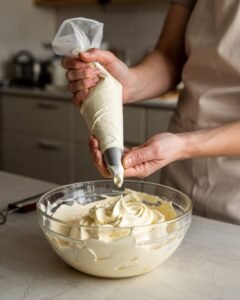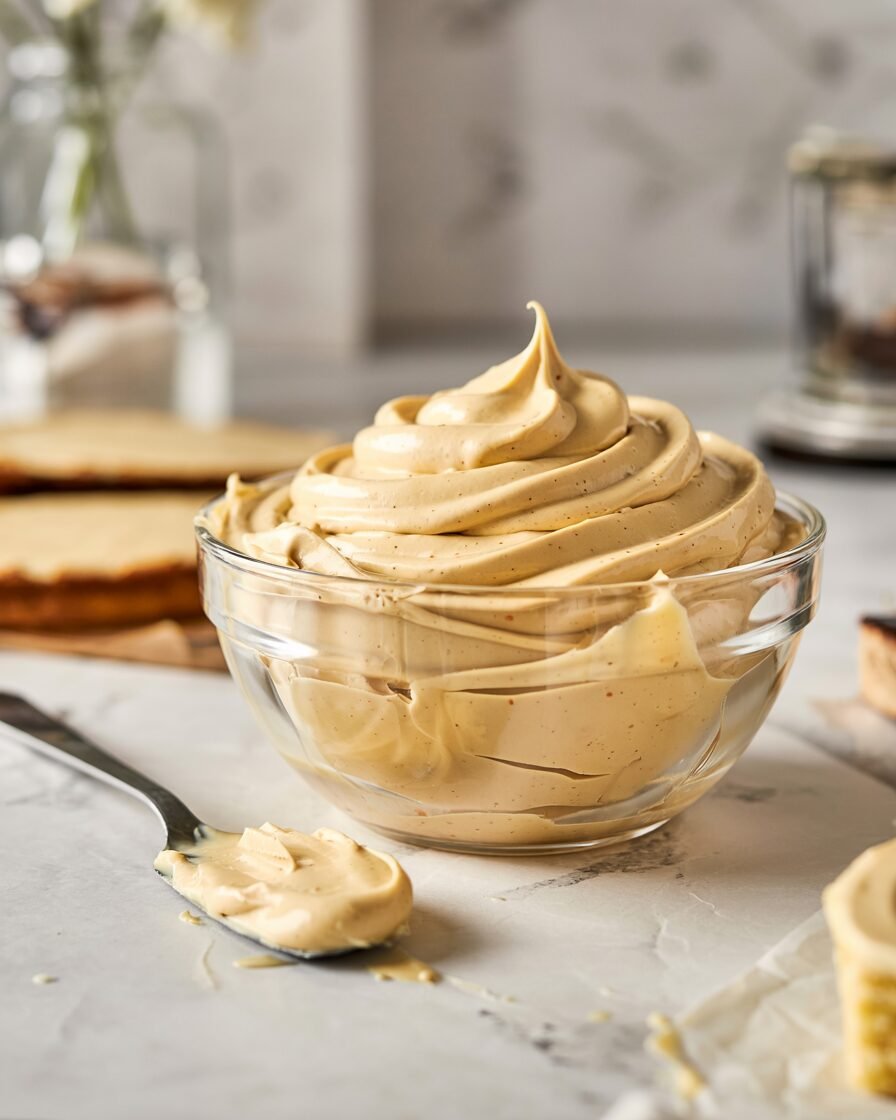
If you’ve ever tasted brown butter frosting, you know it’s a total upgrade from regular buttercream. The butter is gently cooked until it develops deep nutty, caramel-like notes, which transforms a simple frosting into something bakery-level delicious.
This Brown Butter Buttercream Recipe creates a silky, pipeable frosting with a warm toasted flavor that pairs beautifully with vanilla cakes, chocolate cupcakes, or even banana bread. It’s rich without being overly sweet and spreads like a dream.
Pro tip: Let the browned butter cool until it’s soft but still spreadable before whipping. This keeps the buttercream smooth and prevents a greasy texture.
Why This Recipe Works
Buttercream is simple in theory—fat + sugar + liquid—but how you treat the butter changes everything.
1. Browning butter creates flavor compounds
When butter cooks, the milk solids toast through the Maillard reaction, producing nutty, caramel-like aromas. That’s the secret to the deep flavor in brown butter buttercream.
2. Cooling the butter controls texture
Hot butter would melt powdered sugar and ruin the structure. Cooling it to a soft-solid stage (about 20–22°C / 68–72°F) keeps the frosting fluffy.
3. Powdered sugar stabilizes the emulsion
The fine starch in powdered sugar absorbs moisture and helps the frosting hold its shape when piped.
Did you know? Brown butter also slightly reduces water content, which makes the buttercream richer and more stable for piping.
Ingredients
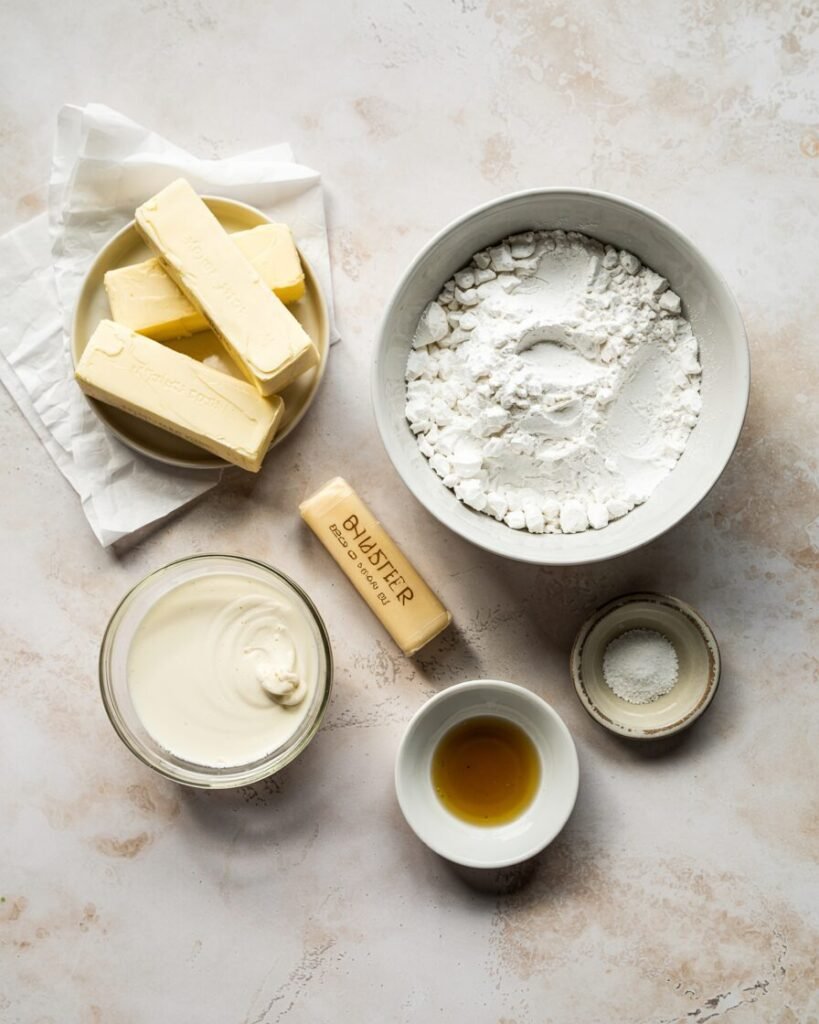
Yield: Frosting for 12 cupcakes or one 8-inch cake
- Unsalted butter — 170 g (¾ cup) — main fat, browned for nutty flavor
- Powdered sugar — 360 g (3 cups) — sweetness and structure
- Heavy cream or milk — 30–45 g (2–3 tbsp) — smooths texture
- Vanilla extract — 5 g (1 tsp) — rounds out flavor
- Salt — 1 g (¼ tsp) — balances sweetness
Ingredient note: Use unsalted butter so you can control the salt level. European-style butter gives even richer flavor.
Equipment
Required
- Medium saucepan or light-colored pan
- Mixing bowl
- Hand mixer or stand mixer
- Rubber spatula
- Digital kitchen scale
- Thermometer (optional but helpful)
Nice-to-Have
- Fine mesh sieve (for powdered sugar)
- Offset spatula for frosting
- Piping bags and tips
Step-by-Step Instructions
Step 1: Brown the Butter
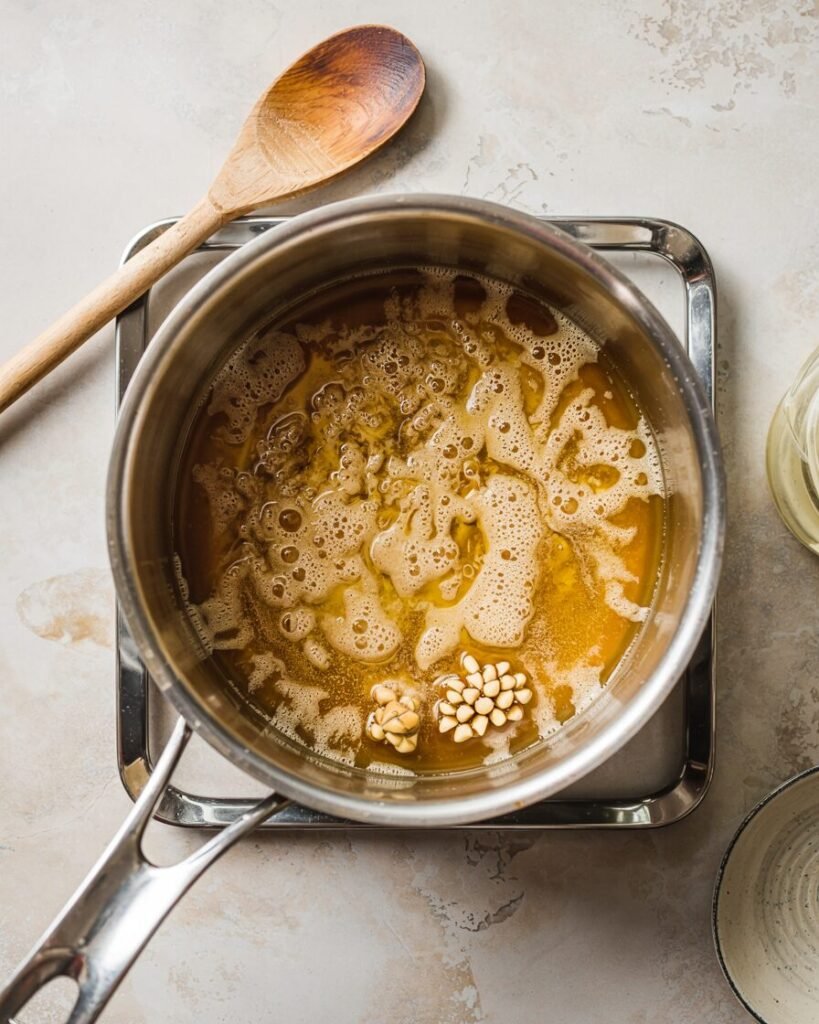
Place 170 g butter in a saucepan over medium heat.
Cook for 5–7 minutes, stirring occasionally.
Visual cue:
- Butter will foam.
- Milk solids sink and turn golden brown.
- Aroma becomes nutty and caramel-like.
Avoid this: If the solids turn dark brown or smell burnt, start again.
Pour into a bowl immediately to stop cooking.
Step 2: Cool the Butter
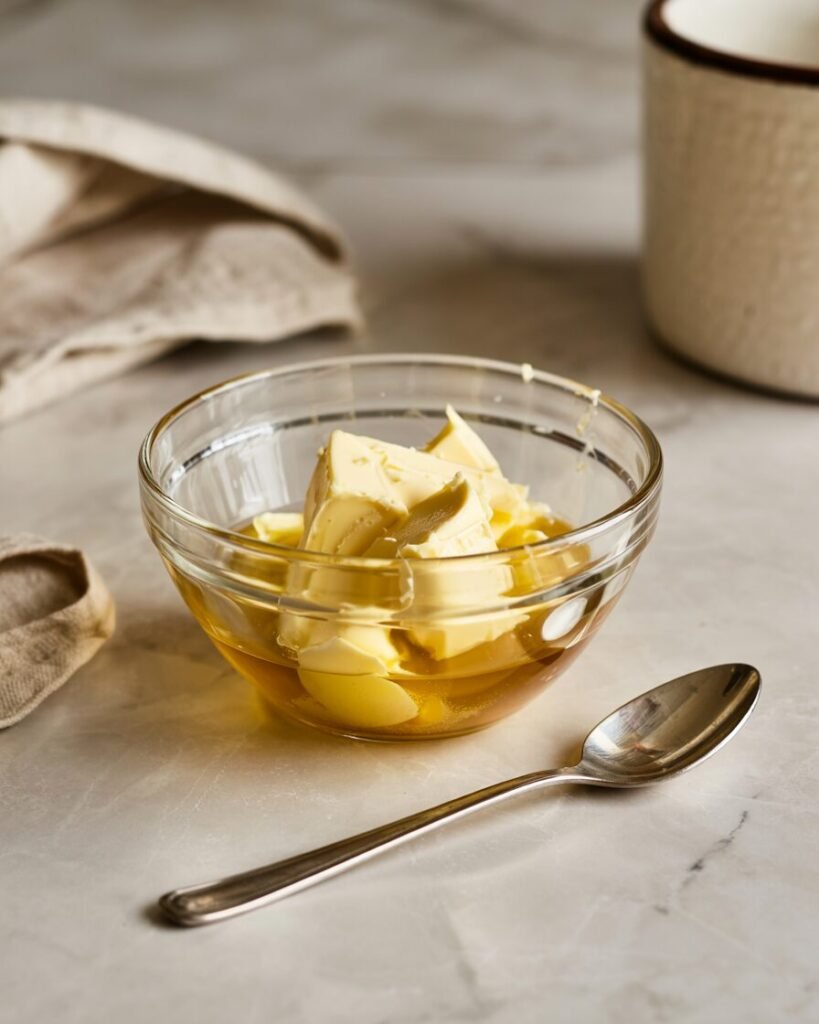
Let the browned butter cool for 30–45 minutes until it becomes soft and opaque but still spreadable.
Checkpoint:
It should feel like softened butter—not liquid.
Step 3: Beat the Butter
Using a mixer on medium speed for 2–3 minutes, beat the cooled brown butter.
Visual cue:
It becomes lighter in color and fluffy.
Step 4: Add Powdered Sugar
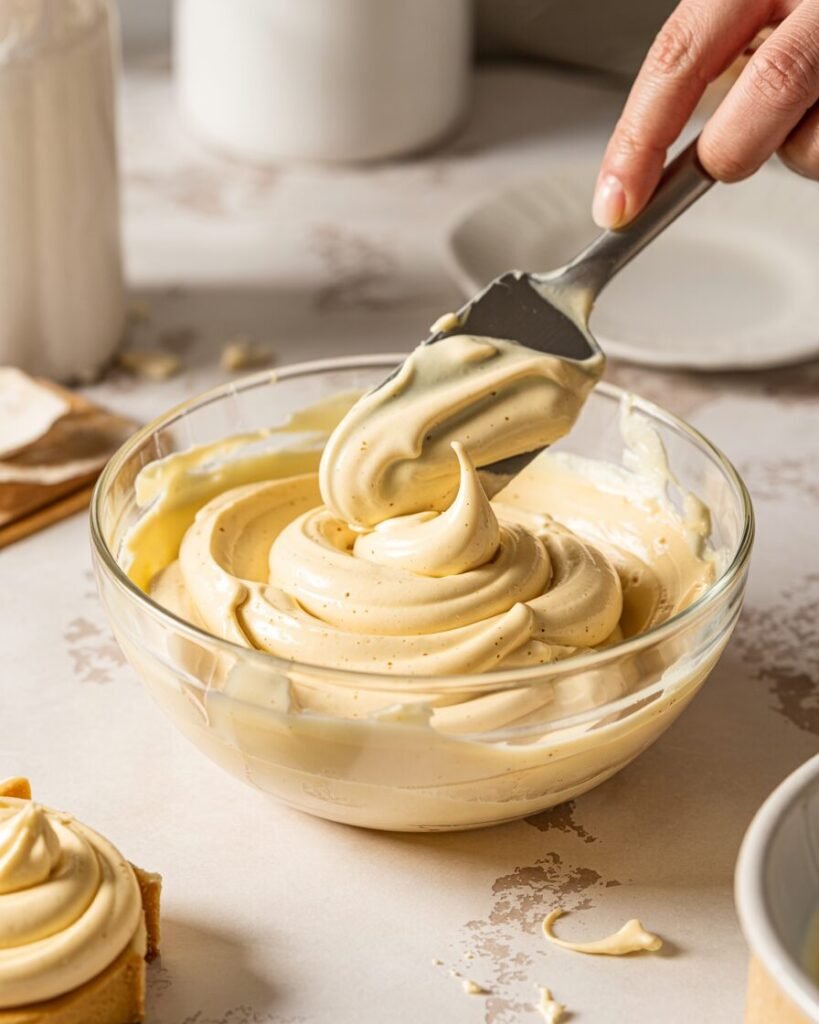
Add powdered sugar in 3 additions, mixing on low speed each time.
Once incorporated, increase speed to medium and whip 2 minutes.
Checkpoint:
Texture should be thick but creamy.
Step 5: Adjust Consistency
Add:
- 1 tsp vanilla
- ¼ tsp salt
- 2–3 tbsp cream
Beat for 2–3 minutes.
Visual cue:
Buttercream becomes smooth, fluffy, and easily spreadable.
If too thick → add 1 tsp cream.
If too soft → add 2 tbsp powdered sugar.
Step 6: Final Whip
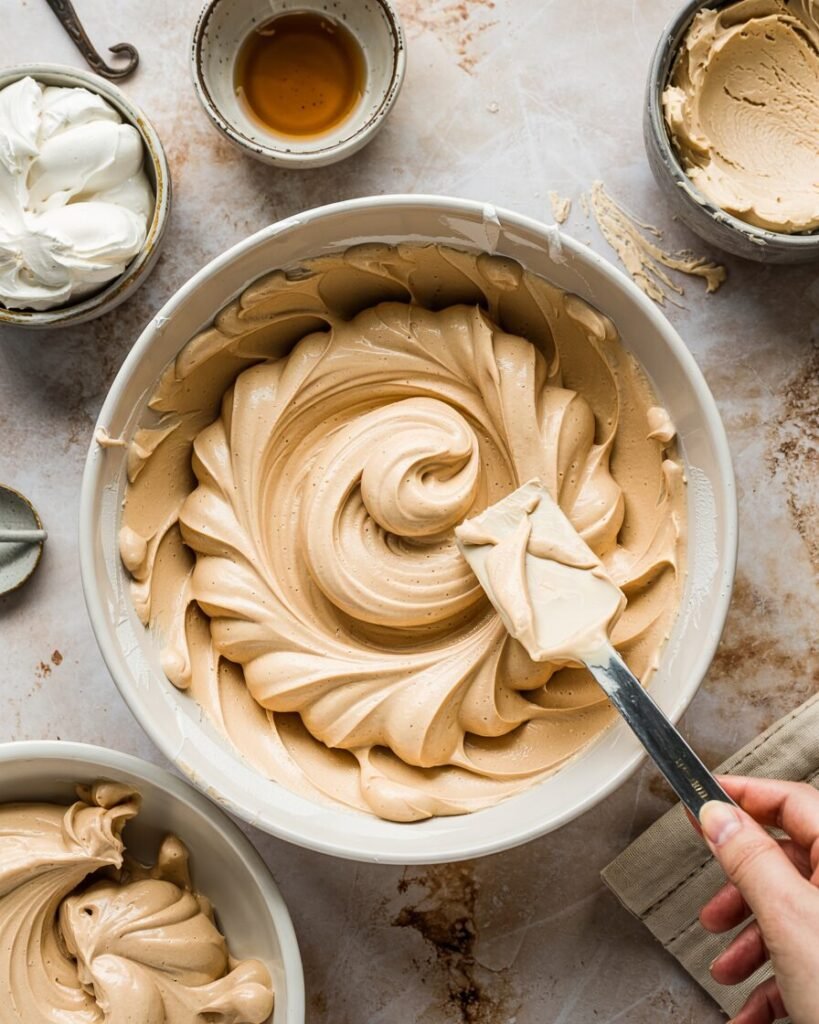
Beat on medium-high for 1 minute to incorporate air.
Perfect texture:
Soft peaks that hold shape on a spatula.
Troubleshooting Common Problems
Problem: Greasy buttercream
Likely cause: Butter was still warm.
Fix next time: Cool browned butter fully before whipping.
Problem: Frosting too sweet
Likely cause: Too much powdered sugar.
Fix: Add extra salt or a teaspoon of cream.
Problem: Buttercream too thin
Likely cause: Too much liquid or warm butter.
Fix: Add powdered sugar or chill for 10 minutes.
Problem: Grainy texture
Likely cause: Sugar not fully mixed.
Fix: Beat longer and sift sugar before adding.
Problem: Buttercream curdled look
Likely cause: Temperature imbalance.
Fix: Keep mixing—most buttercreams smooth out after 1–2 minutes.
Substitutions and Variations
Dairy-Free
Use vegan butter sticks and plant milk.
Note: Vegan butter browns less dramatically but still tastes good.
Egg-Free
This recipe is naturally egg-free.
Gluten-Free
Naturally gluten-free if powdered sugar contains gluten-free starch.
Flavor Variations
Chocolate Brown Butter Buttercream
- Add 30 g cocoa powder
- Increase cream by 1 tbsp
Maple Brown Butter Frosting
- Replace 1 tbsp cream with pure maple syrup
Espresso Version
- Dissolve 1 tsp espresso powder in cream before mixing.
Scaling the Recipe
| Use | Butter | Powdered Sugar | Cream |
|---|---|---|---|
| 6-inch cake | 115 g | 240 g | 2 tbsp |
| 8-inch cake | 170 g | 360 g | 2–3 tbsp |
| 24 cupcakes | 340 g | 720 g | 4–5 tbsp |
Storage, Make-Ahead, and Freezing
Counter:
Up to 1 day in an airtight container.
Refrigerator:
Up to 5 days. Bring to room temperature and re-whip before using.
Freezer:
Freeze up to 2 months in sealed container.
To thaw:
Defrost overnight in fridge, then whip again until fluffy.
Avoid freezing: Frosted cakes with delicate fillings may lose texture.
Serving Suggestions
This frosting pairs especially well with:
- Vanilla sponge cake
- Chocolate cupcakes
- Banana bread
- Pumpkin cake
- Coffee cake
The nutty flavor balances sweet cakes beautifully.
FAQs
Can I use salted butter?
Yes, but reduce added salt to a pinch.
Why is my buttercream runny?
Your butter may be too warm. Chill for 10 minutes, then whip again.
Can I double the recipe?
Yes. Use a large bowl and whip slightly longer to maintain fluffiness.
Can I make this in an OTG oven kitchen setup?
Yes. Since this frosting only requires stovetop and mixer, OTG equipment works perfectly.
Can I pipe this frosting?
Absolutely. It holds shape well for swirls and rosettes.
Notes From My Kitchen (Testing Log)
Batch 1:
Butter browned well but was still warm when whipped. Result: greasy frosting.
Adjustment: Let butter cool until opaque.
Batch 2:
Texture improved, but flavor was slightly sweet.
Adjustment: Added extra salt for balance.
Batch 3:
Tested heavy cream vs milk.
Result: Heavy cream produced a richer texture and smoother piping.
Batch 4:
Tried chilling butter overnight before whipping.
Result: Too firm—needed softening again.
Final Method:
Cooling browned butter to a spreadable consistency before whipping created the best balance of flavor, structure, and fluffiness.
Nutrition and Disclaimer
Approximate per serving (2 tbsp frosting):
- Calories: ~180
- Fat: 11 g
- Carbohydrates: 21 g
- Sugar: 20 g
Values are estimates and vary depending on ingredient brands and portion size. Always follow safe food-handling practices when storing dairy-based frostings.
Conclusion
Brown butter buttercream is one of those simple techniques that delivers huge flavor payoff. By taking just a few extra minutes to toast the butter, you create a frosting with deep caramel notes that taste far more complex than traditional buttercream.
Once you try it, you may find yourself using it on everything from cupcakes to layer cakes.