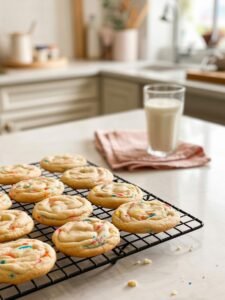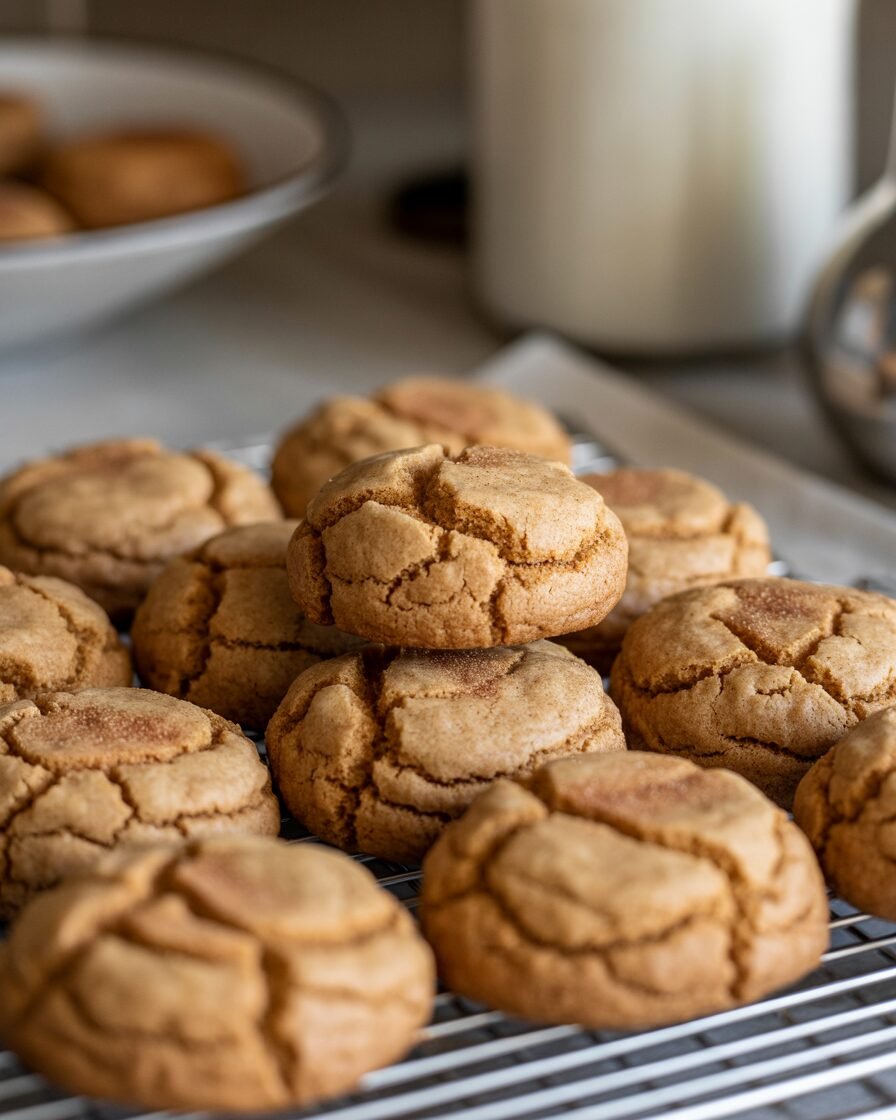
If you’ve ever bitten into a snickerdoodle and thought, “This is nice, but it could be… more?” — welcome. These Brown Butter Snickerdoodles deliver everything you love (pillowy centers, cinnamon-sugar sparkle, tangy chew), but with a deep caramel-nutty flavor thanks to one simple upgrade: browning your butter.
This recipe was built so a home baker—no stand mixer, no specialty flour—can get perfect results on the first try. You’ll get cookies that are soft for days, flavorful enough to taste “bakery-level,” and sturdy enough for packing or gifting.
Pro Tip: Let the brown butter cool until semi-solid before mixing. That’s the secret to thick, plush cookies that don’t spread into pancakes.
Why This Recipe Works
1. Brown butter = concentrated flavor.
When butter browns, its water evaporates, and the milk solids toast, creating nutty compounds called melanoidins. They behave like natural flavor boosters, making the cookie taste richer without adding extra ingredients.
2. Cream of tartar = that classic snickerdoodle tang.
It weakens gluten and adds acidity, which works with baking soda to create extra lift. Without it, you get a cinnamon sugar cookie—not a snickerdoodle.
3. Chilling the dough = controlled spread + chewy centers.
Because brown butter contains less water, dough can become too soft. A short chill firms the fat, preventing overspreading and preserving the signature soft-chewy texture.
Ingredients (With Weights & Purpose)

Makes: 18–20 cookies
Oven: 180°C (350°F)
- Unsalted butter — 113 g (½ cup)
Browning develops nutty, caramel notes. - Granulated sugar — 150 g (¾ cup)
Keeps the cookies light and chewy. - Brown sugar — 50 g (¼ cup, packed)
Adds moisture + deeper flavor. - Egg — 1 large (50 g without shell)
Structure + chew. - Vanilla extract — 2 tsp
Enhances the caramel notes of brown butter. - All-purpose flour — 210 g (1¾ cups)
Provides the right structure for soft-thick cookies. - Baking soda — 1 tsp
Leavening; reacts with cream of tartar. - Cream of tartar — 1 tsp
Tang + signature snickerdoodle chew. - Salt — ½ tsp
Balances sweetness. - Cinnamon — 1 Tbsp (for coating)
Classic warm combo. - Granulated sugar — 50 g (for coating)
Crunchy cinnamon shell.
Equipment
Required
- Sheet pan
- Parchment paper
- Mixing bowls
- Whisk + spatula
- Kitchen scale
- Oven/OTG
- Small saucepan (for browning butter)
Nice to Have
- Cookie scoop
- Instant-read thermometer
- Wire rack
- Silicone spatula (helps scrape brown butter bits)
Step-By-Step Instructions (With Visual Cues)
Step 1: Brown the butter (6–8 minutes).

Melt butter over medium heat until foamy. Stir constantly.
Visual cue: Butter turns amber, smells nutty, and brown specks appear at the bottom.
Pour into a bowl and cool 20–25 minutes until semi-solid, like soft frosting.
Step 2: Mix sugars + brown butter (1–2 minutes).
Whisk granulated and brown sugar into the cooled butter.
Visual cue: Mixture should look glossy and slightly fluffy. If it’s oily, butter was still too warm.
Step 3: Add egg + vanilla (30 seconds).

Whisk until smooth.
Visual cue: Batter should emulsify—no separated streaks.
Step 4: Add dry ingredients (flour, cream of tartar, baking soda, salt).
Fold gently with a spatula.
Visual cue: Dough should be soft but not sticky. If it smears like cake batter, chill 10 minutes.
Step 5: Chill the dough (20–30 minutes).

Prevents overspreading and enhances chew.
Step 6: Scoop & coat.
Roll 1-Tbsp scoops into cinnamon-sugar mixture.
Visual cue: They should hold shape cleanly without sticking to your hands.
Step 7: Bake at 180°C (350°F) for 9–11 minutes.

Place on middle rack.
Visual cue: Edges set, centers puffed and pale. They will deflate slightly as they cool.
Step 8: Cool on pan 5 minutes, then transfer to a rack.

Texture cue: Centers should feel soft but not raw.
Troubleshooting: Common Failures & Fixes
Problem: Cookies spread too much.
- Cause: Butter too warm or dough under-chilled.
- Fix: Chill 20–40 minutes until firmer; ensure brown butter is semi-solid before mixing.
Problem: Dry or cakey texture.
- Cause: Too much flour or overbaking.
- Fix: Weigh flour; bake only until edges set.
Problem: No tangy snickerdoodle flavor.
- Cause: Missing cream of tartar.
- Fix: Don’t skip; it’s essential for authenticity.
Problem: Grainy dough.
- Cause: Brown butter cooled too firmly.
- Fix: Warm bowl slightly or whisk longer.
Problem: Pale, flavorless surface.
- Cause: Not enough cinnamon-sugar coating.
- Fix: Roll twice for extra crunch.
Substitutions & Variations
Egg-Free (Tested)
- Replace 1 egg with 50 g unsweetened applesauce
Pros: Soft texture
Cons: Slightly more spread — chill 10 extra minutes.
Dairy-Free
- Use vegan butter (not margarine).
- Note: Vegan butter browns differently; heat only until golden, not nutty.
Gluten-Free
- Use 1:1 baking GF blend (with xanthan gum).
- Dough will be softer; increase chill time to 45 minutes.
Flavor Variations
- Chai Snickerdoodles: Add 1 tsp chai spice to dough.
- Maple Snickerdoodles: Replace 25 g sugar with maple syrup (reduce egg to 45 g).
- Extra Cinnamon Burst: Add ½ tsp cinnamon directly to the dough.
Scaling
For 30–32 cookies, multiply all ingredients by 1.5.
For 12 cookies, halve everything.
Storage, Make-Ahead & Freezing
Room Temperature:
Store in an airtight container 3–4 days. Add a piece of bread to maintain softness.
Fridge:
Not recommended; refrigeration dries them out.
Freezing Dough:
Roll dough balls, coat in cinnamon-sugar, freeze on a tray, then transfer to a bag. Freeze up to 2 months.
Bake from frozen: add 1–2 extra minutes.
Freezing Baked Cookies:
Freeze up to 2 months, wrapped well.
Refresh by warming in a 150°C (300°F) oven for 3 minutes.
Do Not Freeze:
Dough before adding cinnamon-sugar coating—it becomes patchy when thawed.
Serving Suggestions
- Dip in hot chocolate or chai.
- Sandwich with vanilla ice cream.
- Pair with a caramel drizzle (balances the tang beautifully).
- Serve slightly warm — the brown butter aroma is magical.
FAQs
1. Can I replace cream of tartar?
Not ideally. A workaround is baking powder, but the flavor changes. Use 2 tsp baking powder + skip baking soda.
2. How do I keep them soft?
Don’t overbake. Pull them while the centers still look pale and puffy.
3. Can I double the recipe?
Yes—just mix dry ingredients separately for even distribution.
4. Which butter is best?
High-fat European-style butter browns beautifully, but regular unsalted works perfectly.
5. Can I bake these in an OTG?
Yes. Use the middle rack, preheat 10 minutes, and rotate the tray at 6 minutes.
Notes From My Kitchen (Testing Log)
Batch 1: Butter too warm; cookies spread thin. Increased chill time to 30 minutes.
Batch 2: Tried all brown sugar—too soft and cakey. Added back granulated sugar for chew.
Batch 3: Reduced flour by 10 g — dough too loose. Final flour amount (210 g) balances thickness + softness.
Batch 4: Tested with vegan butter — needed longer chill and gentler browning.
Final: The winning version uses semi-solid brown butter + short chill, giving thick, chewy, warm-spiced cookies that stay soft for days.
Nutrition & Disclaimer
Approx. per cookie: 145 calories
(Values are estimates; adjust based on brands. Always follow standard food-safety practices.)
Final Thoughts
Brown Butter Snickerdoodles are the ultimate upgrade to a nostalgic cookie — familiar yet elevated, simple yet deeply flavorful. Browning the butter and chilling the dough give you a bakery-quality texture without complicated steps or equipment. Whether you’re baking a quick weekday treat or gifting during the holidays, this recipe delivers consistently soft-chewy, cinnamon-coated perfection.