Why you’ll love this recipe
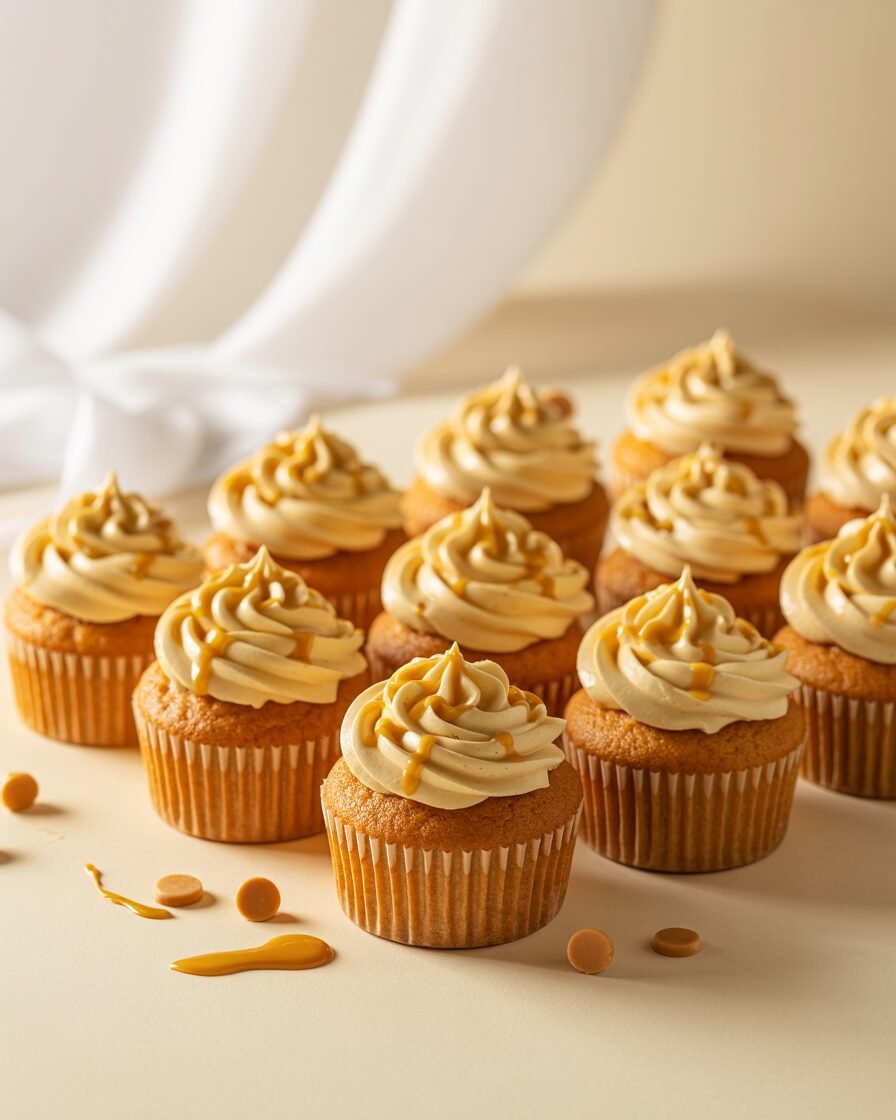
These Brown Sugar Butterscotch Cupcakes deliver a rich, almost “toffee‑like” flavor with a moist, tender crumb and a deep butterscotch filling or frosting you can choose yourself. The recipe is written for home bakers at a beginner–intermediate level, assuming you have a hand/stand mixer, basic measuring tools, and a standard oven or OTG. All measurements are in grams first, with U.S. cups in parentheses.
Texture and flavor promise: soft, slightly dense brown‑sugar‑sweetened cupcakes with a pronounced butterscotch note, not overly sweet, and a stable structure that holds up well to filling and frosting.
Pro tip to get it right:
Use dark brown sugar plus a bit of granulated sugar in the batter so the cupcakes stay moist without sinking, and let the butterscotch sauce cool almost to room temperature before filling or drizzling so it sets inside the cupcake instead of oozing straight through.
Why this recipe works (baking science)
This recipe leans on three key ideas from baking science:
- Brown sugar + molasses = moisture and flavor
Brown sugar contains molasses, which is hygroscopic (attracts and holds water), so it helps the cupcakes stay moist longer than an all‑granulated‑sugar batter. Dark brown sugar adds a deeper, toffee‑like taste, but using only brown sugar can make the crumb a bit dense, so here it’s paired with some granulated sugar for balance. - Melted butter + oil = buttery flavor with a tender crumb
Melted butter releases more flavor than room‑temperature butter, while a small amount of neutral oil (like canola or vegetable) adds tenderness and prevents the cupcake from drying out. The fat also encourages browning and helps stabilize air bubbles during baking. - Acid + baking soda = gentle lift and tenderness
The batter includes buttermilk or yogurt, which is slightly acidic and reacts with baking soda to create little gas bubbles, giving the cupcakes a light, tender texture. A small amount of baking powder provides extra lift without over‑leavening.
Because of these choices, the cupcakes are rich and moist, with a tight but not gummy crumb and a clean, even rise in the oven.
Ingredient list
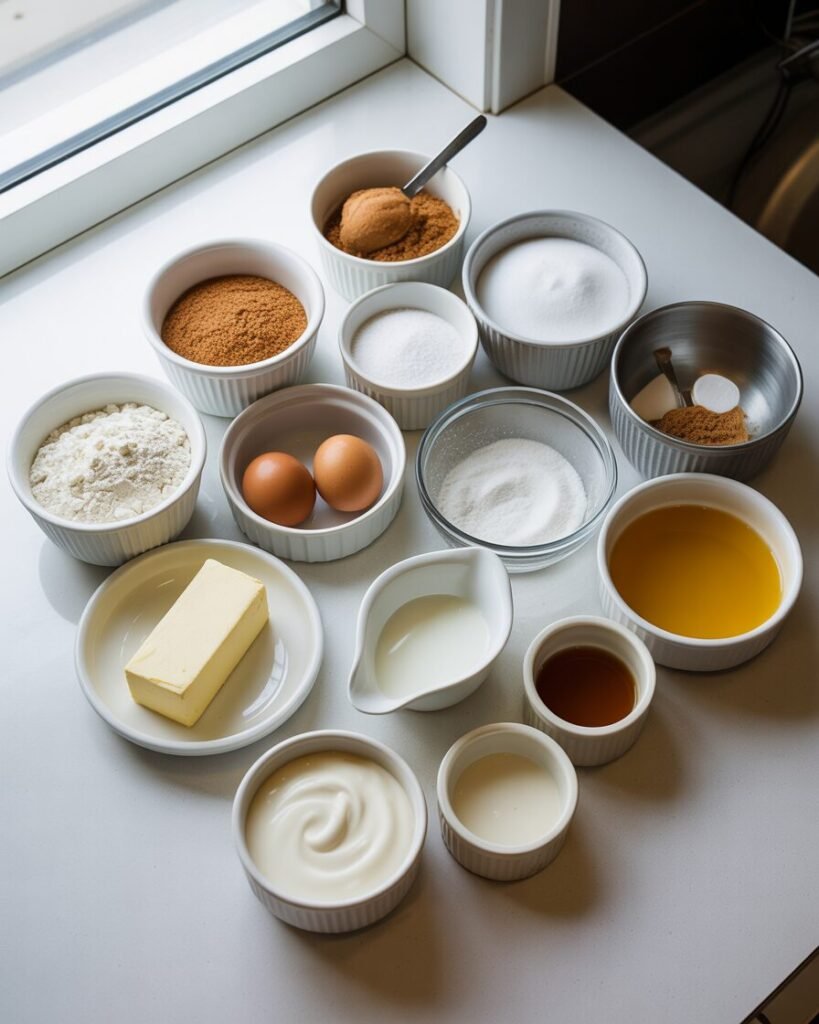
Yields 12 regular cupcakes (approx. 60–65 g batter each).
Oven rack: middle.
Preheat: 325–335°C (165–170°F) for 20–25 minutes.
cupcake batter
- All‑purpose flour (maida) — 150 g (1¼ cups, spooned & leveled)
Purpose: structural backbone. Not cake flour, so the texture is soft but sturdy enough to hold a filling. - Dark brown sugar (packed) — 100 g (½ cup + 2 tbsp)
Purpose: deep butterscotch flavor, moisture, and softness from molasses. - Granulated sugar — 50 g (¼ cup)
Purpose: balances sweetness and helps the cupcakes stay light rather than heavy. - Baking powder — ¾ tsp
- Baking soda — ¼ tsp
Purpose: leavening; the baking soda reacts with acid in the buttermilk/yogurt for a small but important lift. - Fine salt — ¼ tsp
Purpose: rounds out sweetness and enhances flavor. - Room‑temperature eggs (large), beaten — 2 eggs ≈ 100 g total
Purpose: structure, moisture, and emulsification; room temperature helps the batter stay smooth. - Melted unsalted butter, cooled slightly — 60 g (4 tbsp)
Purpose: richness and flavor; melted and slightly cooled prevents over‑creaminess and keeps the batter homogenous. - Vegetable oil (neutral) — 30 ml (2 tbsp)
Purpose: extra tenderness and moisture without making the batter greasy. - Buttermilk or full‑fat yogurt (room temperature) — 90 ml (6 tbsp)
Purpose: acidity to activate baking soda, tenderize gluten, and add moisture. - Vanilla extract (or paste) — 1 tsp
Purpose: rounds out butterscotch flavor; avoid artificial flavoring for best results.
Butterscotch sauce (for filling or drizzle)
- Unsalted butter — 55 g (4 tbsp)
- Dark brown sugar — 120 g (½ cup packed)
- Heavy cream (or whipping cream) — 120 ml (½ cup)
- Vanilla extract — 1 tsp
- Salt — ¼ tsp
- Optional: 1 tsp lemon juice (helps prevent sugar crystallization and keeps the sauce smooth).
Equipment
Required:
- 12‑compartment muffin tin
- Cupcake liners (standard size)
- Hand mixer or stand mixer
- Digital kitchen scale (for accuracy in grams)
- Medium and large mixing bowls
- Whisk or rubber spatula
- Liquid measuring cup
- Small saucepan (for butterscotch sauce)
- Offset spatula or spoon (for frosting)
- Piping bag optional (for neater filling or frosting)
Nice‑to‑have:
- Fine‑mesh sieve (for sifting flour and sugar)
- Parchment circles (for cleanly lining the pan)
- Instant‑read thermometer (for checking internal temp if needed)
Step‑by‑step instructions (with timing and visual cues)
Step 1: Make butterscotch sauce (10–15 minutes active, 30–40 minutes total)
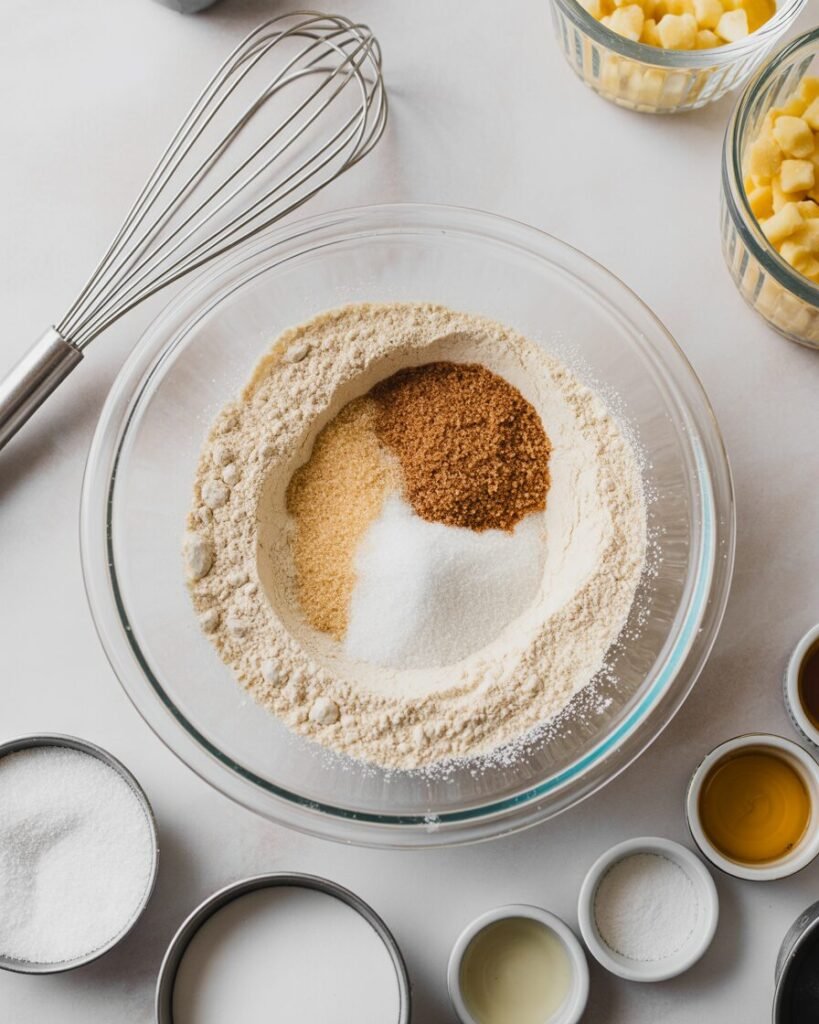
Preparation:
- Place a heat‑safe bowl nearby for the sauce.
In a small saucepan over medium heat, add butter, brown sugar, and salt (plus lemon juice if using).
- Time: 2–3 minutes on medium heat.
- Action: Stir or gently swirl the pan until the butter is melted and the sugar is dissolved.
- Visual cue: mixture should be smooth, glossy, and free of graininess.
Slowly pour in the cream while stirring.
- Action: Bring to a gentle simmer, then reduce heat to medium‑low and let bubble undisturbed for 4–5 minutes.
- Why not stir: stirring can encourage sugar crystals and make the sauce grainy.
- Visual cue: sauce should thicken slightly but still be pourable; it will thicken more as it cools.
Remove from heat, stir in vanilla, and pour into a bowl.
- Cooling: Let cool to room temperature (about 30–40 minutes) before using.
- Pro tip: If you chill it, re‑warm gently; very cold sauce will seize the batter if you inject it into warm cupcakes.
Step 2: Prep oven and pan (5 minutes)
- Preheat oven to 325–335°C (165–170°F). Rack in middle position.
- Line a 12‑hole muffin tin with cupcake liners.
- Lightly grease the outside edges of the liners if your oven runs hot or cakes tend to stick.
Step 3: Make batter (10 minutes)
In a medium bowl, whisk together:
- Flour, brown sugar, granulated sugar, baking powder, baking soda, salt, and vanilla.
In a large bowl, whisk together:
- Melted butter, oil, beaten eggs, buttermilk/yogurt.
Add the dry ingredients to the wet ingredients in two batches, stirring until just combined.
- Avoid this: Do not overmix; stop when the last streaks of flour disappear.
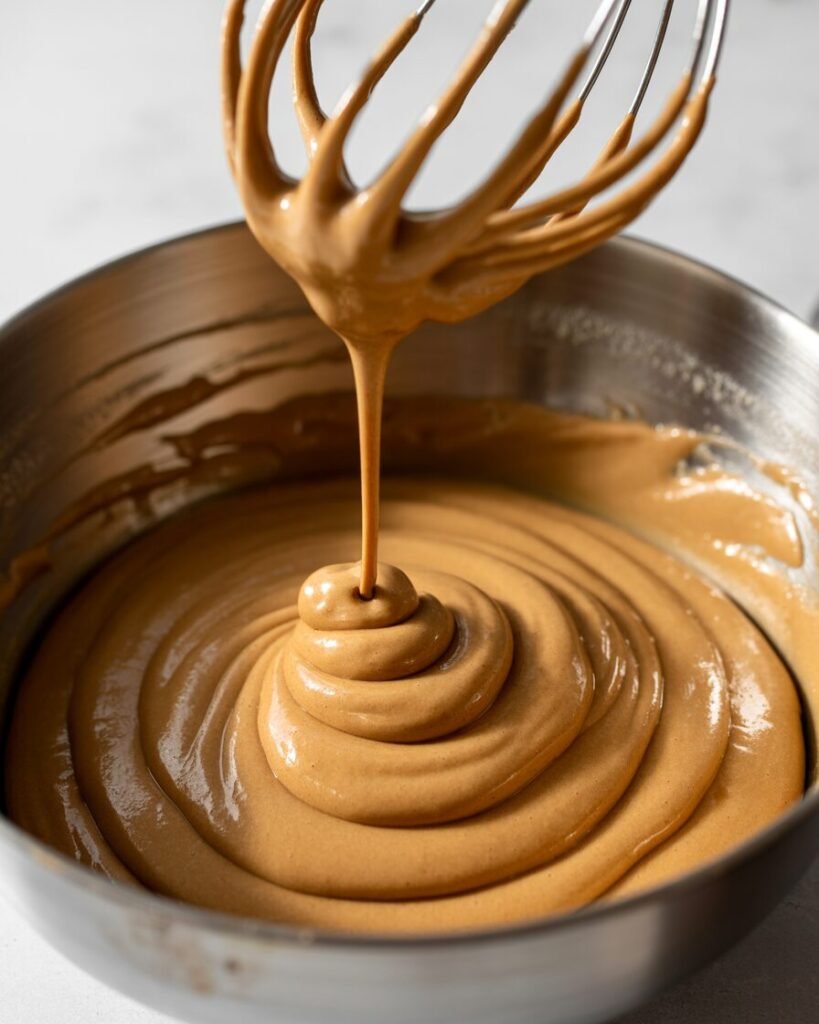
- Visual cue: Batter should be smooth, slightly thick, and pourable, not stiff or runny. It should fall off the whisk in a thick ribbon.
Divide batter into the liners, filling each no more than ⅔ full.
- Why ⅔ full: Prevents spillover and dome cracking; overfilling leads to domes that crack or sink.
- Visual cue: There should be a small gap between the batter and the top of the liner.
Step 4: Bake (20–25 minutes)
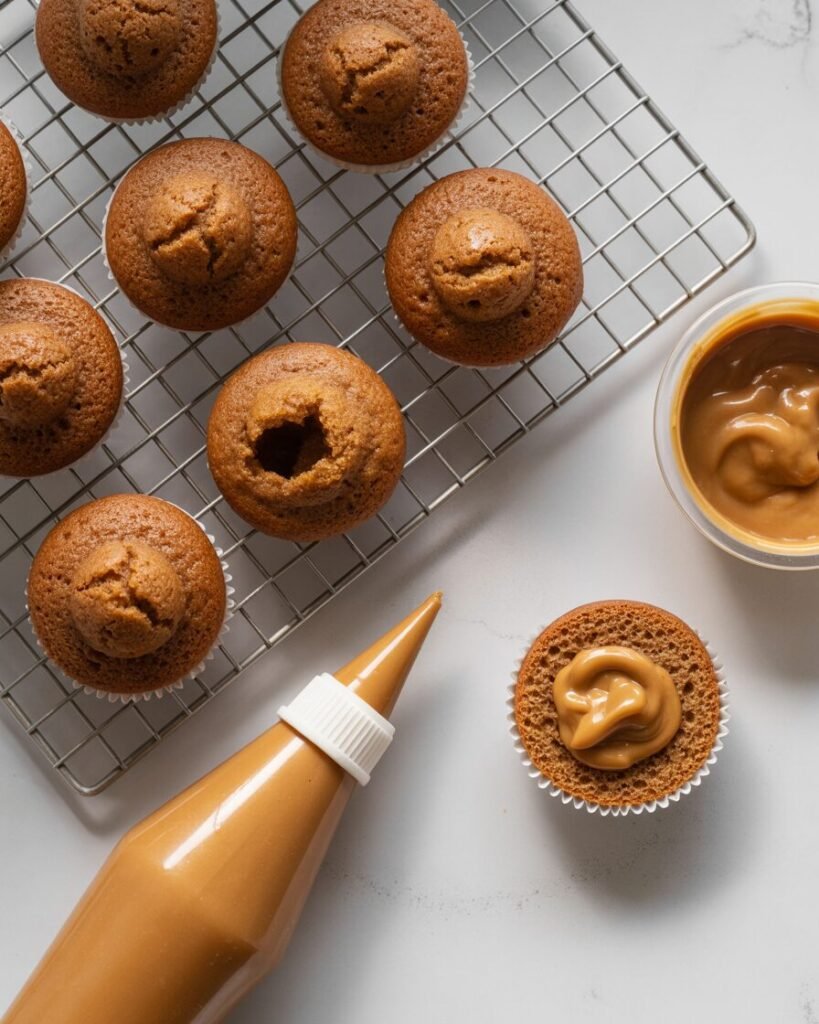
- Bake at 325–335°C (165–170°F) for 20–25 minutes.
- Check doneness:
- Insert a toothpick or skewer into the center cupcake; it should come out clean or with a few moist crumbs, not wet.
- The tops should be lightly golden and springy when lightly pressed.
Cool in the pan for 5 minutes, then transfer to a wire rack to cool completely (about 45–60 minutes).
- Why cool completely: Warm cupcakes will melt frosting or cause the butterscotch to pool.
Step 5: Fill and frost (optional)
Option A – Filled center (gooey butterscotch core):
- Use a small paring knife or cupcake corer to cut a cone‑shaped hole in the center of each cupcake, about 1–1.5 cm deep.
- Spoon or pipe 1–2 tsp cooled butterscotch sauce into each hole.
- Optional: Replace the removed piece of cake or leave it open and frost over the top.
Option B – Butterscotch buttercream:
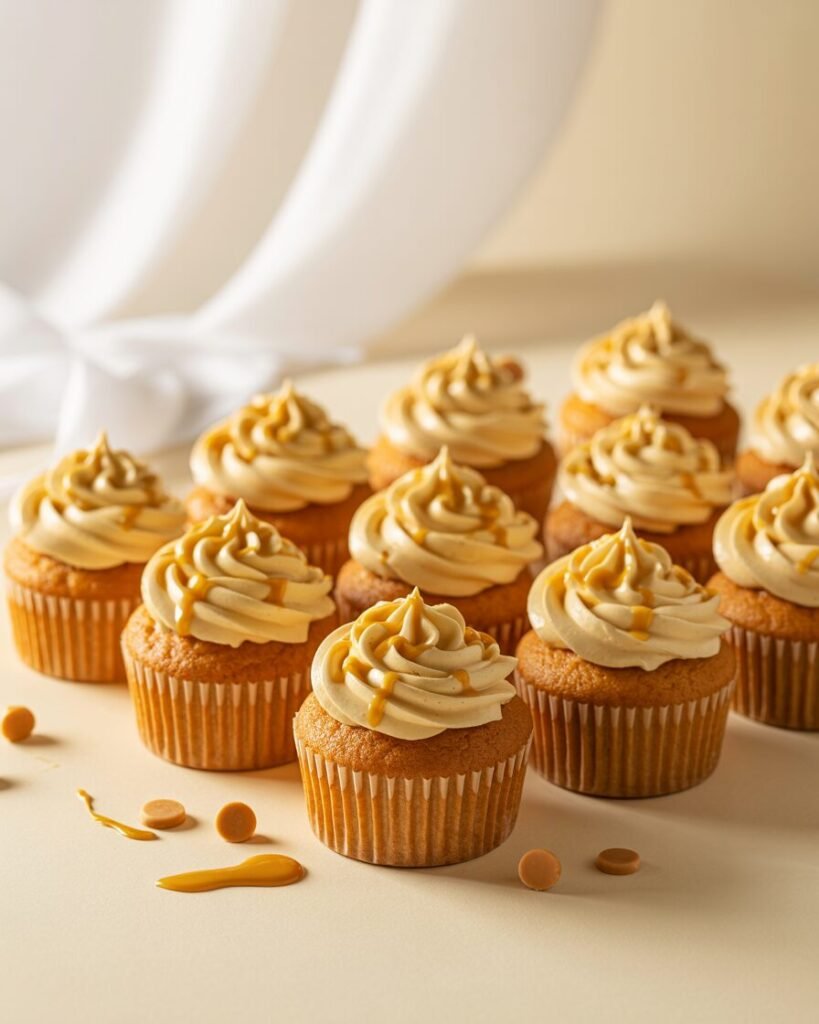
- Cream 120 g (½ cup) room‑temperature butter, then add 100 g cooled butterscotch sauce and 300–400 g powdered sugar (sifted), 1 cup at a time, until smooth and spreadable.
- Visual cue: Frosting should be smooth, not grainy, and hold soft peaks.
Brush / pipe frosting onto cupcakes, then drizzle with extra butterscotch sauce.
Troubleshooting: common failures and fixes
- Problem: Cupcakes sink in the middle
Likely causes: Underbaked center; too much leavening; opening the oven too early.
Fix: Bake until toothpick is clean; reduce baking powder to ½ tsp next time; avoid opening the oven door until at least ¾ of the baking time has passed. - Problem: Dry or dense cupcakes
Likely causes: Too much flour, overbaking, or too much brown sugar without balancing granulated sugar.
Fix: Use the spoon‑and‑level method for flour; remove from the oven when the toothpick is clean; keep the brown‑to‑white sugar ratio as in this recipe. - Problem: Gummy or sticky crumb
Likely causes: Underbaking, or adding too much buttermilk/oil without adjusting flour.
Fix: Bake until the center is no longer doughy; if using a very liquid yogurt, reduce it by 1–2 tbsp. - Problem: Cracked, domed tops
Likely causes: Oven too hot, overfilling, or overmixing.
Fix: Use a slightly lower temperature (325°C); fill only to ⅔; mix batter until just combined. - Problem: Butterscotch sauce is grainy
Likely causes: Stirring too much after it simmers, or sugar not fully dissolved before boiling.
Fix: Stir only until the sugar dissolves, then let it simmer undisturbed; use lemon juice or corn syrup to prevent crystallization.
Substitutions and variations
Egg‑free option (tested):
- Replace 2 eggs (100 g) with 120 g unsweetened applesauce or yogurt + 1 tsp baking powder.
- Caveat: The cupcakes will be slightly denser and less springy; best for eating within 1–2 days.
Dairy‑free option:
- Butter: Use vegan butter or coconut oil (solid, not liquid).
- Buttermilk/yogurt: Use plant‑based yogurt plus ½ tsp lemon juice or soy/almond milk + 1 tsp lemon juice, let sit 5 minutes.
- Heavy cream in butterscotch: Use full‑fat coconut milk or oat cream; texture will be thicker, so adjust quantity slightly.
Gluten‑free option (tested):
- Replace 150 g all‑purpose flour with 150 g gluten‑free all‑purpose blend plus ½ tsp xanthan gum if not included.
- Caveat: GF cupcakes benefit from a slightly longer bake (add 2–3 minutes) and cool completely before filling to avoid collapse.
Flavor variations:
- Add ½ tsp cinnamon or ¼ tsp nutmeg for a warm spice note.
- Swap some or all of the brown sugar in the sauce for 1–2 tsp molasses for a deeper, less sweet butterscotch.
Storage, make‑ahead, and freezing
- Counter: Store unfrosted cupcakes in an airtight container at room temperature for up to 2 days.
- Fridge: Frosted cupcakes can be refrigerated for 3–4 days; bring to room temperature 30 minutes before serving to soften the texture.
- Freezer:
What not to freeze: Butterscotch sauce is best refrigerated; freezing can separate it and change texture.
Serving and pairing ideas
- Serve with a splash of cold milk or chai; the mild sweetness balances the rich butterscotch.
- Pair with vanilla ice cream topped with extra warm butterscotch sauce for a sundae‑style dessert.
- For a less sweet option, pair with lightly sweetened whipped cream instead of buttercream.
FAQs
- Can I replace brown sugar with only white sugar?
Yes, but the cupcakes will be less moist and less flavorful. Expect a lighter, more vanilla‑like taste and a slightly drier crumb. - How to prevent the cupcakes from sinking?
Bake until the centers are truly done, avoid overfilling, and keep the oven door closed until at least ¾ of the baking time has passed. - Can I halve this recipe?
Yes; halve all ingredients and bake in 6 liners, adjusting bake time to 15–18 minutes. - What’s the best brown sugar to use?
Dark brown sugar gives the strongest butterscotch flavor; light brown works but will be milder. - Can I make these in an OTG or air fryer?
- OTG: Use the same temperature and bake time, checking from 18 minutes.
- Air fryer: Use larger cups and bake at 160–170°C for 12–16 minutes, watching closely.