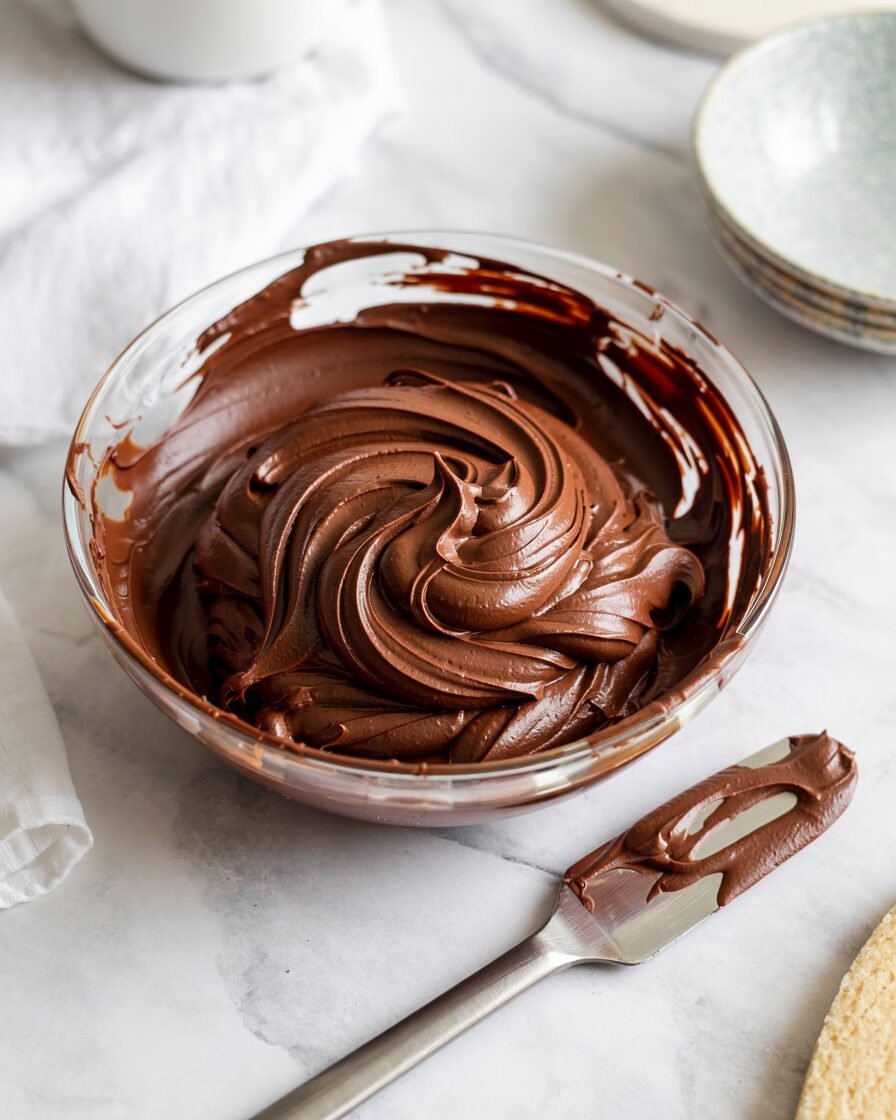
If you’ve ever wanted a frosting that feels luxurious, glossy, and intensely chocolatey—but doesn’t require complicated techniques—this Chocolate Ganache Frosting Recipe might become your new favorite. With just two core ingredients and a simple method, ganache transforms into a silky frosting that spreads beautifully over cakes, cupcakes, brownies, and even cookies.
What makes this recipe special is its perfect spreadable texture—not too runny, not overly stiff. Once cooled slightly, it whips into a rich frosting with a soft, creamy finish that pipes nicely but still melts in your mouth.
Pro tip: The secret to flawless ganache frosting is pouring warm cream over finely chopped chocolate and letting it sit undisturbed for a minute before mixing. This gentle melting prevents grainy or split ganache.
Why This Recipe Works
Chocolate ganache seems simple, but a few small scientific principles make all the difference.
1. Fat + Liquid Emulsion
Ganache forms an emulsion between cocoa butter (from chocolate) and fat from heavy cream. When mixed properly, the fats disperse evenly, giving ganache its smooth texture.
2. Chocolate Ratio Controls Texture
The ratio of chocolate to cream determines the final consistency:
- 1:1 ratio – soft glaze or sauce
- 2:1 ratio – thicker frosting or truffle base
For frosting, this recipe uses a slightly higher chocolate ratio, creating a ganache that firms up while staying spreadable.
3. Temperature Matters
Chocolate melts smoothly around 30–32°C (86–90°F). If cream is too hot, the fats separate. If it’s too cool, chocolate won’t melt fully. The sweet spot is hot cream just below boiling.
Did you know?
Using higher-quality chocolate with at least 50–60% cocoa results in richer flavor and smoother texture because it contains more cocoa butter.
Ingredients
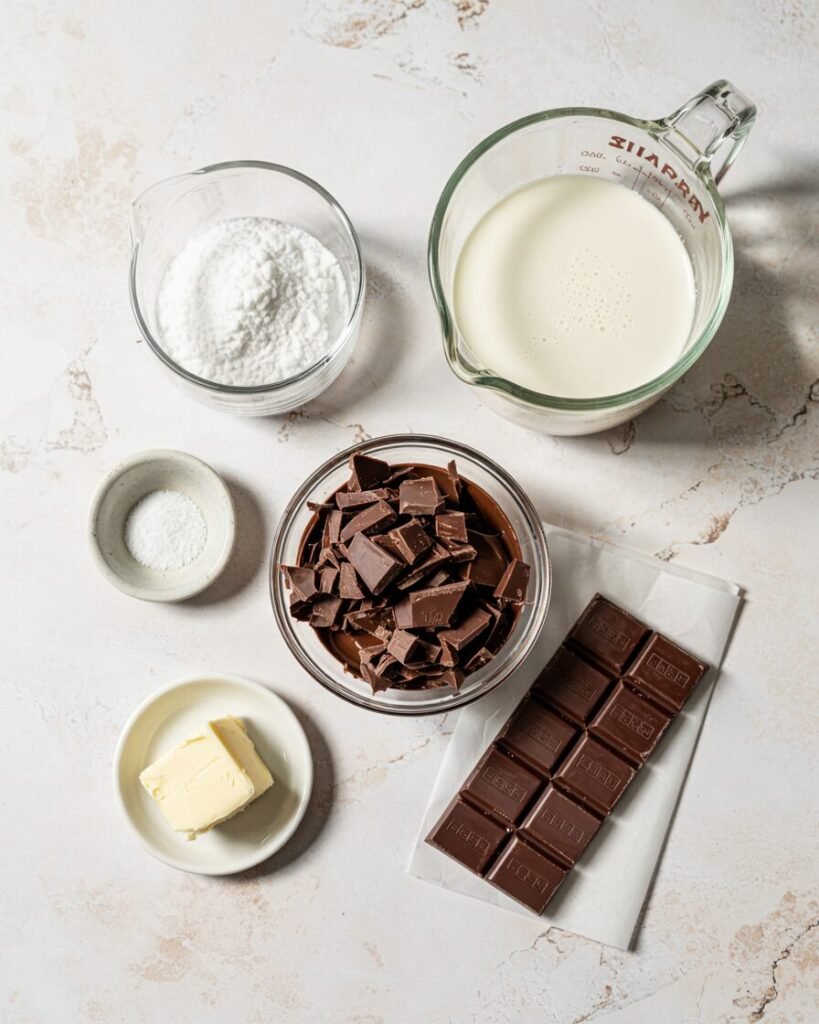
Yield: Enough to frost one 8-inch (20 cm) two-layer cake or 12–15 cupcakes
- Dark or semi-sweet chocolate — 300 g (10.5 oz / about 1 ¾ cups chopped)
Purpose: Provides structure, flavor, and cocoa butter for texture. - Heavy cream (35% fat) — 200 g (¾ cup + 2 tbsp)
Purpose: Creates the emulsion and soft creamy consistency. - Unsalted butter (optional) — 15 g (1 tbsp)
Purpose: Adds shine and a smoother mouthfeel. - Pinch of salt (optional) — 1 g
Purpose: Balances sweetness and enhances chocolate flavor.
Chocolate choice matters:
Use baking chocolate bars or couverture, not chocolate chips. Chips contain stabilizers that prevent smooth melting.
Equipment
Required
- Heatproof bowl
- Saucepan
- Whisk or silicone spatula
- Digital kitchen scale
- Offset spatula (for frosting)
- Thermometer (optional but helpful)
Nice to have
- Fine sieve (to remove lumps if needed)
- Stand mixer or hand mixer (if whipping ganache)
- Piping bag
Step-by-Step Instructions
Step 1: Chop the Chocolate
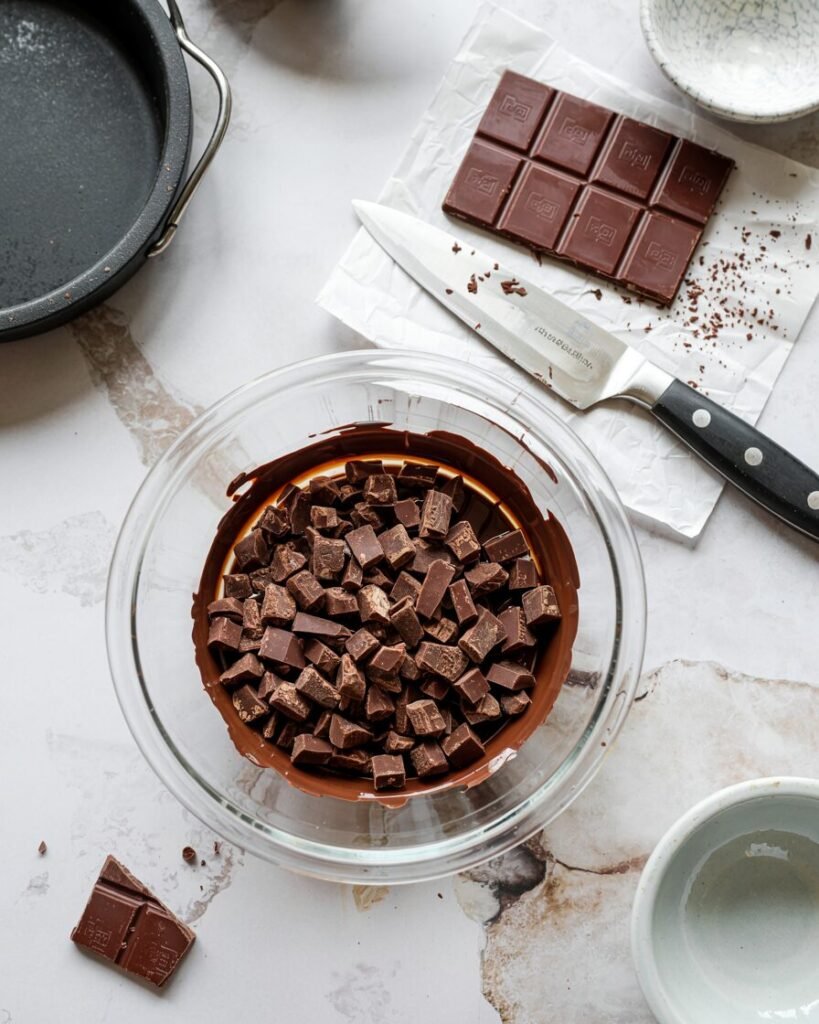
Time: 3 minutes
Finely chop 300 g chocolate and place it in a heatproof bowl.
Visual cue: Pieces should be small and even so they melt uniformly.
Avoid this: Large chunks melt unevenly and create lumps.
Step 2: Heat the Cream
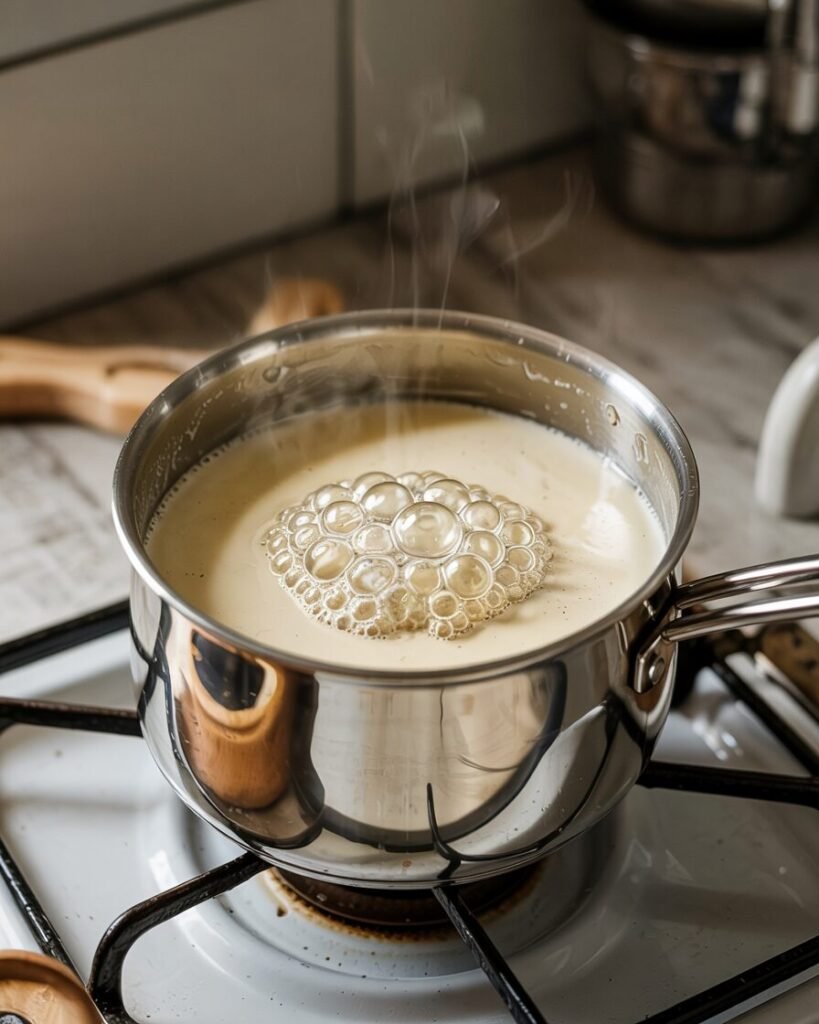
Time: 3–4 minutes
Pour 200 g heavy cream into a saucepan and heat over medium heat.
Heat until the cream just begins to steam and small bubbles appear at the edges.
Temperature: 85–90°C (185–195°F).
Do not boil.
Step 3: Pour and Rest
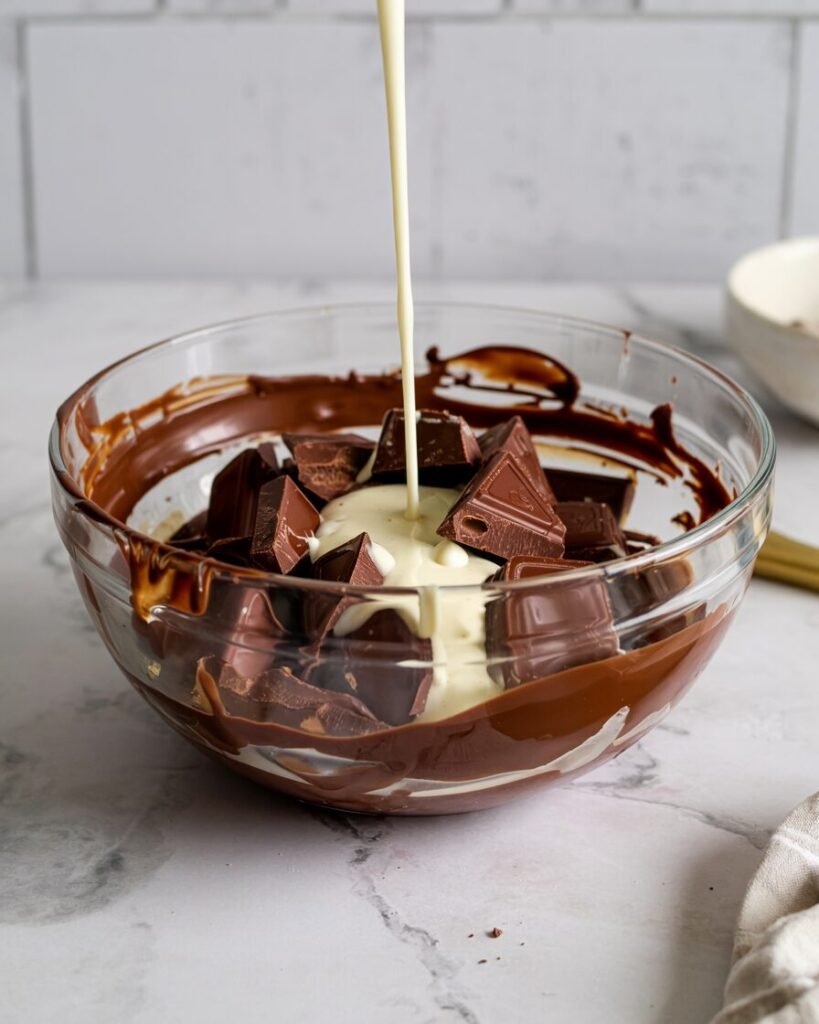
Time: 1 minute
Pour the hot cream directly over the chopped chocolate.
Let the mixture sit undisturbed for 60 seconds.
Visual cue: Chocolate edges will start melting and look glossy.
Step 4: Stir the Ganache
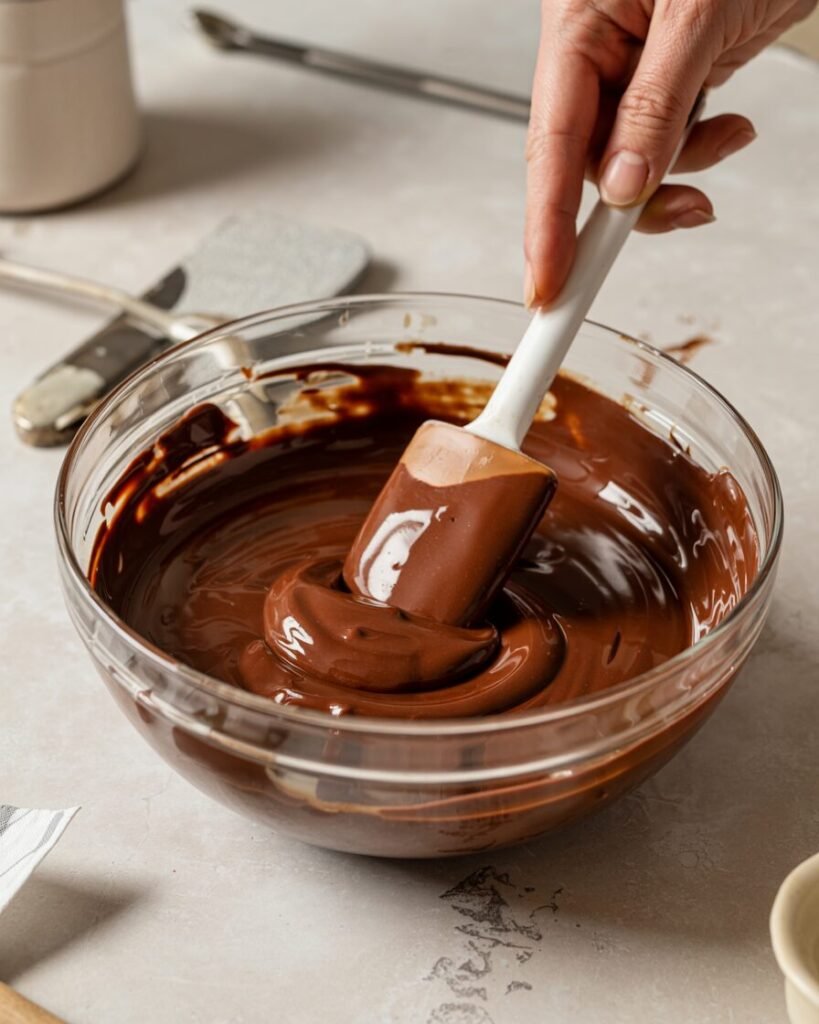
Time: 1–2 minutes
Using a spatula or whisk, stir slowly from the center outward until smooth.
Add:
- 15 g butter (optional)
- pinch of salt
Correct texture: Smooth, shiny, thick chocolate cream.
Incorrect texture: Oily surface or grainy texture.
Step 5: Cool to Frosting Consistency
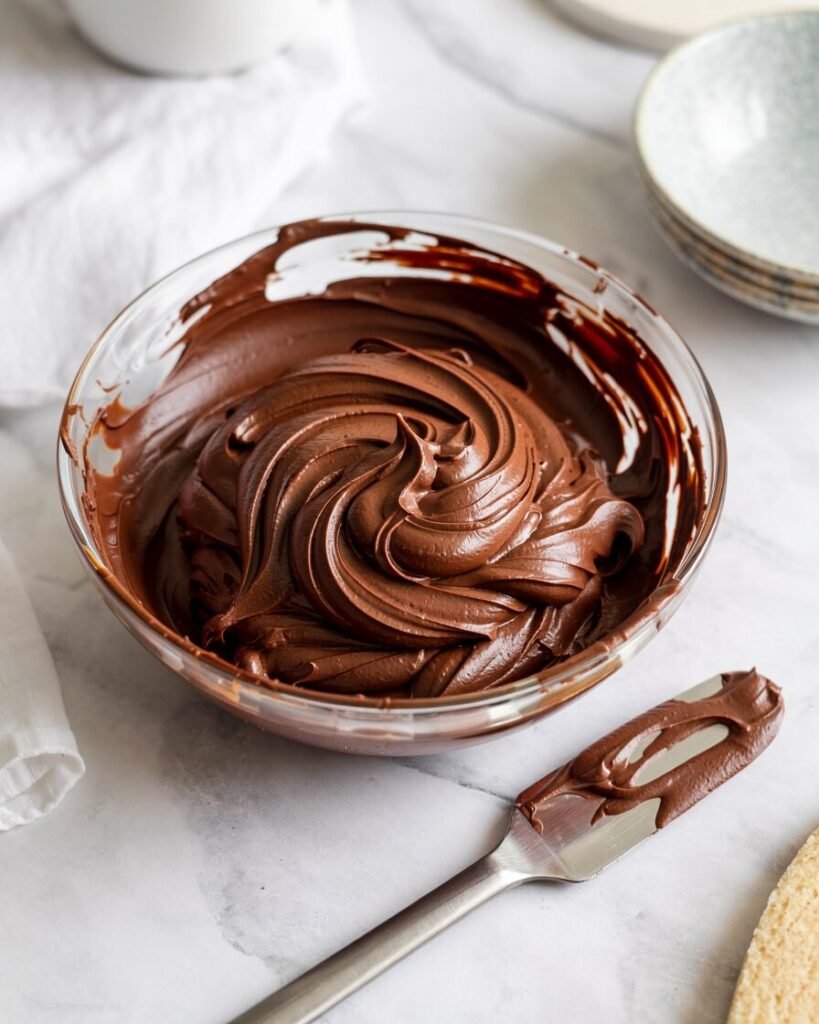
Time: 20–30 minutes
Let ganache cool at room temperature.
Stir occasionally.
Visual cue checkpoint:
- Warm: pourable glaze
- Slightly cooled: thick ribbon consistency
- Fully cooled: spreadable frosting
Optional Step 6: Whip for Fluffy Frosting
Time: 2–3 minutes
Using a hand mixer, whip cooled ganache until lighter in color and fluffy.
Visual cue: Ganache becomes slightly airy and holds soft peaks.
Perfect for piping cupcakes.
Troubleshooting Common Problems
Problem: Ganache looks oily or separated
Likely causes: Cream too hot or over-stirring
Fix: Whisk in 1 tbsp warm milk or cream until smooth
Problem: Ganache too runny
Likely causes: Too much cream or still warm
Fix: Chill 10–15 minutes and stir
Problem: Ganache too thick
Likely causes: Too much chocolate
Fix: Warm gently and mix in 1–2 tbsp warm cream
Problem: Grainy texture
Likely causes: Chocolate overheated or low-quality chocolate
Fix: Blend with immersion blender or reheat gently over double boiler
Problem: Frosting won’t spread smoothly
Likely causes: Ganache too cold
Fix: Warm bowl slightly over warm water and stir
Substitutions and Variations
Dairy-Free Ganache
Replace heavy cream with:
- Full-fat coconut milk — same quantity (200 g)
Flavor becomes slightly coconutty but still delicious.
Sweeter Milk Chocolate Version
Use milk chocolate instead of dark chocolate.
Adjust ratio:
- 300 g milk chocolate
- 150 g cream
Milk chocolate has more sugar and milk solids.
Extra Dark Chocolate Ganache
For intense flavor:
- Use 70% cocoa chocolate
- Add 10 g honey or corn syrup to balance bitterness.
Flavor Variations
Add to hot cream before pouring:
- 1 tsp espresso powder (deepens chocolate flavor)
- 1 tsp vanilla extract
- 1 tbsp orange zest
Scaling the Recipe
| Cake Size | Chocolate | Cream |
|---|---|---|
| 6-inch cake | 200 g | 130 g |
| 8-inch cake | 300 g | 200 g |
| 9-inch cake | 400 g | 260 g |
| 24 cupcakes | 450 g | 300 g |
Storage, Make-Ahead, and Freezing
Room Temperature:
Up to 1 day in a covered bowl.
Refrigerator:
Store up to 5 days in an airtight container.
Before using, let sit at room temp for 30 minutes then re-whip or stir.
Freezer:
Freeze for up to 2 months.
Thaw overnight in refrigerator, then warm slightly and stir until smooth.
What not to freeze:
Whipped ganache frosting — it loses its airy texture.
Serving Suggestions and Pairings
Chocolate ganache frosting pairs beautifully with:
- Vanilla sponge cake
- Chocolate layer cake
- Brownies
- Cupcakes
- Pound cake
Balance rich ganache with slightly tangy fillings like raspberry jam or strawberry compote.
FAQs
Can I replace heavy cream with milk?
Not recommended. Milk contains less fat and can cause ganache to become thin or separate. If needed, add 1 tbsp butter to increase fat.
Why is my ganache dull instead of shiny?
The cream may have been too cool or the chocolate wasn’t fully melted. Warm gently and stir until glossy.
How do I double the recipe?
Simply double all ingredients while maintaining the same chocolate-to-cream ratio.
Can I make ganache in an OTG oven?
Yes. Heat cream on stovetop or microwave, then mix with chocolate. The oven itself isn’t needed for ganache.
How do I make it pipeable?
Allow ganache to cool completely and whip it for 2–3 minutes until fluffy.
Notes From My Kitchen (Testing Log)
Batch 1:
Used chocolate chips. Ganache tasted good but had a slightly waxy texture. Lesson: chocolate chips contain stabilizers.
Batch 2:
Used baking chocolate but poured boiling cream. Result: oily separation. Cooling the cream slightly fixed this.
Batch 3:
Adjusted cream temperature to just steaming. Texture became perfectly glossy.
Batch 4:
Tested whipped ganache for cupcakes. Whipping created a lighter frosting that piped beautifully.
Batch 5 (Final version):
300 g chocolate + 200 g cream gave the best balance—rich but spreadable.
This is the ratio I now use for most layer cakes.
Nutrition and Disclaimer
Approximate per serving (2 tbsp frosting):
- Calories: ~180
- Fat: 14 g
- Carbohydrates: 12 g
- Protein: 2 g
Values are estimates and may vary depending on ingredient brands and portion sizes. Follow safe food-handling practices when storing dairy products.
Final Thought
Chocolate ganache frosting proves that sometimes the simplest recipes produce the most luxurious results. With just chocolate and cream, you can create a frosting that feels bakery-level but is surprisingly easy to make at home.
Once you understand the basic ratio and temperature control, ganache becomes incredibly versatile—perfect as a glaze, frosting, filling, or even truffle base.