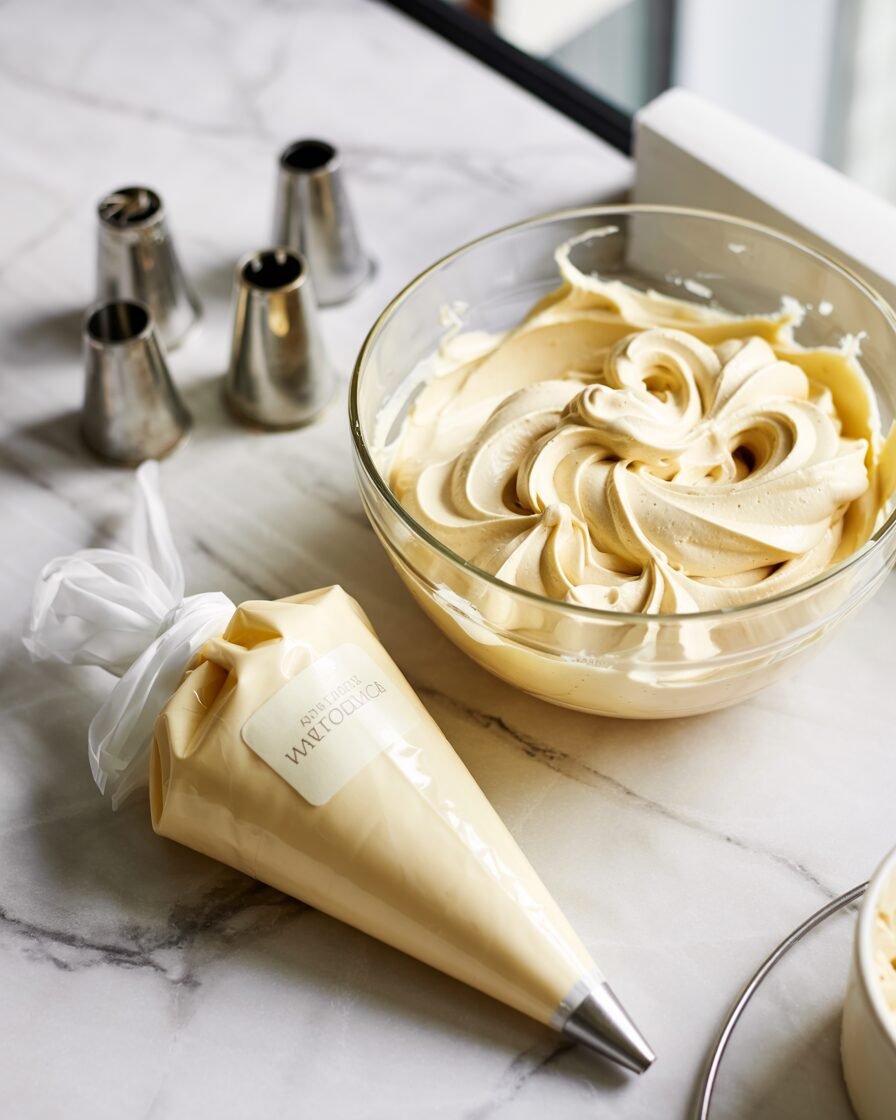
If you’ve ever made buttercream that turned out too sweet, grainy, or oddly greasy, you’re not alone. Vanilla buttercream seems simple—just butter, sugar, and vanilla—but the small details make all the difference between frosting that spreads beautifully and frosting that refuses to cooperate.
This Classic Vanilla Buttercream Frosting is my go-to recipe for cakes, cupcakes, and cookies because it’s smooth, stable, and perfectly balanced in sweetness. It pipes clean edges, spreads easily, and keeps its structure even on warm days.
The pro tip: beat the butter alone for a full 2–3 minutes before adding sugar. This step aerates the butter and eliminates the dense, greasy texture that many home bakers struggle with.
Whether you’re frosting a birthday cake or piping elegant cupcakes, this buttercream will give you light, fluffy frosting with a silky finish—even if you’re working with just a hand mixer.
Why This Recipe Works
Buttercream is a simple emulsion of fat (butter) and sugar, but the balance between those elements determines texture and stability.
1. Properly creamed butter traps air
When you beat softened butter for a few minutes, tiny air pockets form. These pockets create the light and fluffy texture we want in buttercream. If you skip this step, the frosting ends up dense.
2. Powdered sugar stabilizes the emulsion
Powdered sugar contains a small amount of starch. That starch helps absorb moisture and stabilizes the frosting, preventing it from separating.
3. Cream or milk controls consistency
Liquid loosens the buttercream slightly so it spreads smoothly. Too little liquid makes stiff frosting, while too much causes it to collapse. The sweet spot creates pipeable yet stable buttercream.
Did you know?
Temperature matters more than most people realize. Butter that’s too cold makes lumpy frosting, while butter that’s too warm creates greasy buttercream.
Ingredients
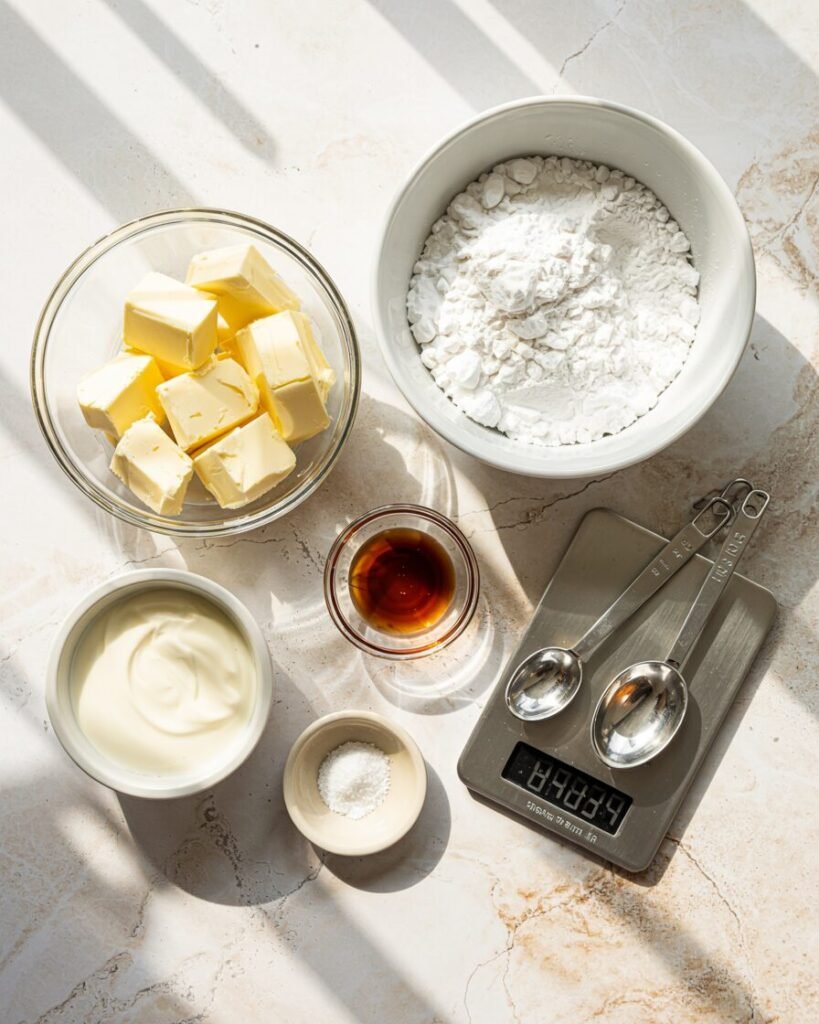
- Unsalted butter — 226 g (1 cup / 2 sticks)
The base of the frosting. Unsalted butter gives better flavor control. - Powdered sugar — 480 g (4 cups)
Sweetens and thickens the buttercream while stabilizing it. - Heavy cream or milk — 30–45 g (2–3 tbsp)
Adjusts consistency for spreading or piping. - Pure vanilla extract — 10 g (2 tsp)
Adds classic vanilla flavor. - Fine salt — 1 g (¼ tsp)
Balances sweetness and enhances flavor.
Optional:
- Vanilla bean paste — 1 tsp for a stronger vanilla aroma.
Equipment
Required
- Mixing bowl
- Hand mixer or stand mixer
- Silicone spatula
- Digital kitchen scale (recommended)
- Measuring spoons
Nice to Have
- Offset spatula for frosting cakes
- Piping bags and tips
- Fine sieve for sifting sugar
Step-by-Step Instructions (With Visual Cues)
Step 1: Prepare the butter

Beat softened butter in a bowl on medium speed for 2–3 minutes.
Visual cue:
Butter should turn pale and fluffy, almost whipped. If it still looks dense and yellow, keep mixing.
Avoid this: butter that looks melted or shiny means it’s too warm.
Step 2: Add powdered sugar gradually
Add powdered sugar ½ cup (60 g) at a time, mixing on low speed.
Time: about 3–4 minutes total
Visual cue:
The mixture will first look dry and crumbly, then gradually come together into a thick paste.
Checkpoint: scrape the bowl after every two additions.
Step 3: Add vanilla, salt, and cream
Pour in vanilla extract, salt, and 2 tablespoons cream.
Mix on medium speed for 1 minute.
Visual cue:
Frosting becomes smoother and easier to spread.
Step 4: Whip the buttercream
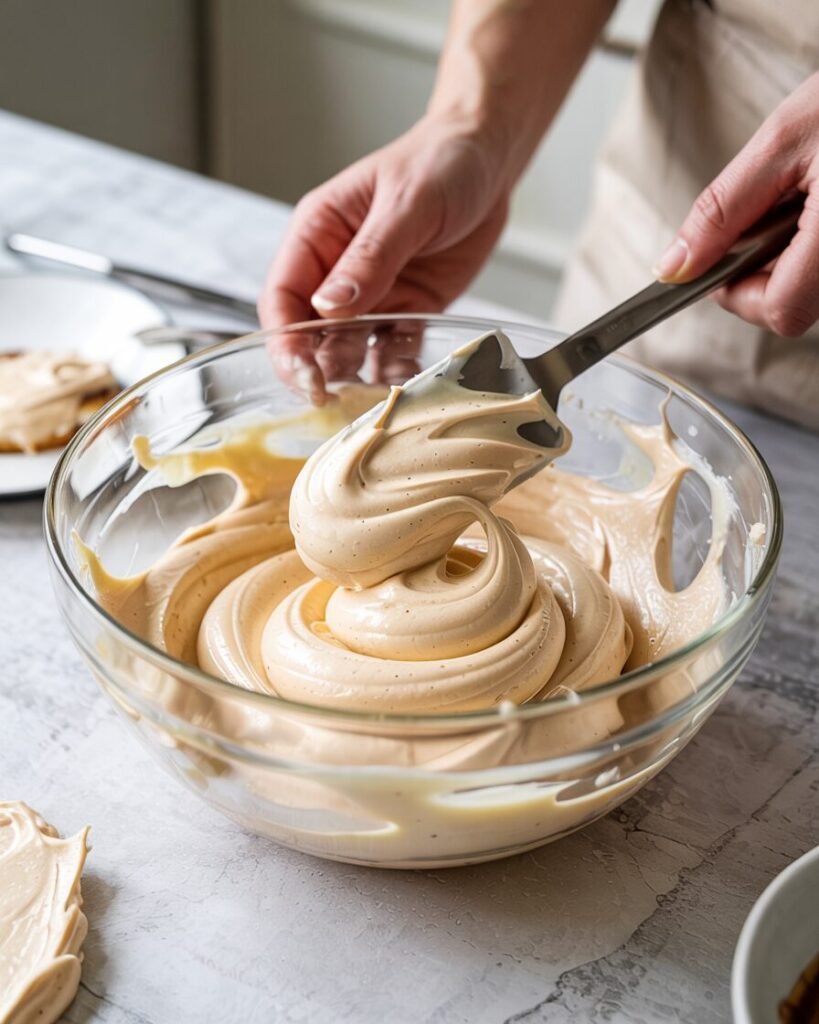
Increase mixer to medium-high speed for 2–3 minutes.
Visual cue:
The buttercream becomes lighter in color and fluffy. It should hold soft peaks similar to whipped cream.
Checkpoint: if it looks too thick, add 1 tsp cream at a time.
Step 5: Final texture check

Use a spatula to stir the frosting slowly.
Correct texture: smooth, airy, and spreadable.
Too stiff: add a teaspoon of cream.
Too soft: mix in 1–2 tbsp powdered sugar.
Troubleshooting Common Problems
Buttercream is grainy
Cause: powdered sugar not sifted or butter too cold.
Fix: beat longer or add 1 tsp warm cream.
Frosting looks greasy
Cause: butter too warm.
Fix: refrigerate bowl for 10 minutes, then rewhip.
Buttercream too sweet
Cause: high sugar ratio.
Fix: add a pinch of salt or 1 tsp lemon juice.
Frosting too soft to pipe
Cause: too much liquid or warm kitchen.
Fix: chill frosting for 10–15 minutes.
Buttercream looks curdled
Cause: temperature imbalance.
Fix: continue mixing; it usually comes back together.
Frosting full of air bubbles
Cause: over-whipping.
Fix: stir slowly with spatula to smooth.
Substitutions and Variations
Dairy-Free Buttercream
Use plant-based butter (226 g) and almond or oat milk (2–3 tbsp).
Results are slightly softer, so chill before piping.
Less Sweet Buttercream
Replace ½ cup powdered sugar with 2 tbsp cornstarch + 2 tbsp powdered sugar. This reduces sweetness slightly.
Chocolate Buttercream
Add 40 g (½ cup) unsweetened cocoa powder and an extra 1–2 tbsp cream.
Citrus Buttercream
Add 1 tsp lemon or orange zest for a fresh flavor.
Scaling the Recipe
| Yield | Butter | Powdered Sugar | Cream |
|---|---|---|---|
| Small batch (12 cupcakes) | 113 g | 240 g | 1–2 tbsp |
| Standard batch | 226 g | 480 g | 2–3 tbsp |
| Large batch (24 cupcakes) | 340 g | 720 g | 3–4 tbsp |
Storage, Make-Ahead, and Freezing
Room temperature:
Up to 1 day in an airtight container if the kitchen is cool.
Refrigerator:
Store for 5–7 days. Bring to room temperature and rewhip for 1 minute before using.
Freezer:
Freeze up to 3 months in an airtight container.
Thawing:
Defrost overnight in the fridge, then bring to room temperature and rewhip.
Avoid freezing buttercream that already contains fruit purée because the texture may separate.
Serving Suggestions and Pairings
This classic buttercream pairs beautifully with:
- Vanilla sponge cakes
- Chocolate cupcakes
- Red velvet cake
- Sugar cookies
- Layer cakes with fruit fillings
For balance, pair sweet buttercream with slightly tangy fillings like raspberry jam or lemon curd.
FAQs
Can I use salted butter instead of unsalted?
Yes. Just skip the added salt in the recipe.
Why is my buttercream yellow?
Butter naturally has a yellow tint. Beating longer helps lighten the color.
Can I halve or double the recipe?
Absolutely. The method stays the same—just keep ingredient ratios consistent.
What type of vanilla works best?
Pure vanilla extract gives the best flavor. Vanilla bean paste adds visible specks.
Can I make this in an OTG or without a mixer?
Yes, but whisking by hand requires about 8–10 minutes of vigorous mixing.
Notes From My Kitchen (Testing Log)
Batch 1:
Used butter that was slightly cold. Result: tiny lumps in frosting.
Adjustment:
Let butter sit at room temperature for 30 minutes.
Batch 2:
Added all sugar at once. Result: powdery frosting that took longer to mix.
Adjustment:
Added sugar gradually.
Batch 3:
Used warm butter in summer kitchen. Result: greasy texture.
Adjustment:
Chilled bowl for 10 minutes.
Final Version:
Beating butter first, then gradually adding sugar produced the fluffiest texture with stable piping structure.
Nutrition and Disclaimer
Approximate per serving (2 tbsp frosting):
- Calories: ~150
- Fat: 9 g
- Carbohydrates: 18 g
- Sugar: 17 g
Values are estimates and may vary based on ingredient brands and portion size. Always follow proper food-safety practices when storing and serving buttercream.
Conclusion
Classic vanilla buttercream frosting is one of those foundational baking recipes that every home baker should master. Once you understand the balance of butter, sugar, and mixing technique, the process becomes surprisingly easy—and incredibly reliable.
The secret lies in properly aerating the butter, adding sugar gradually, and adjusting the texture with small amounts of cream. With these simple techniques, you’ll end up with frosting that spreads smoothly, pipes beautifully, and tastes perfectly balanced.