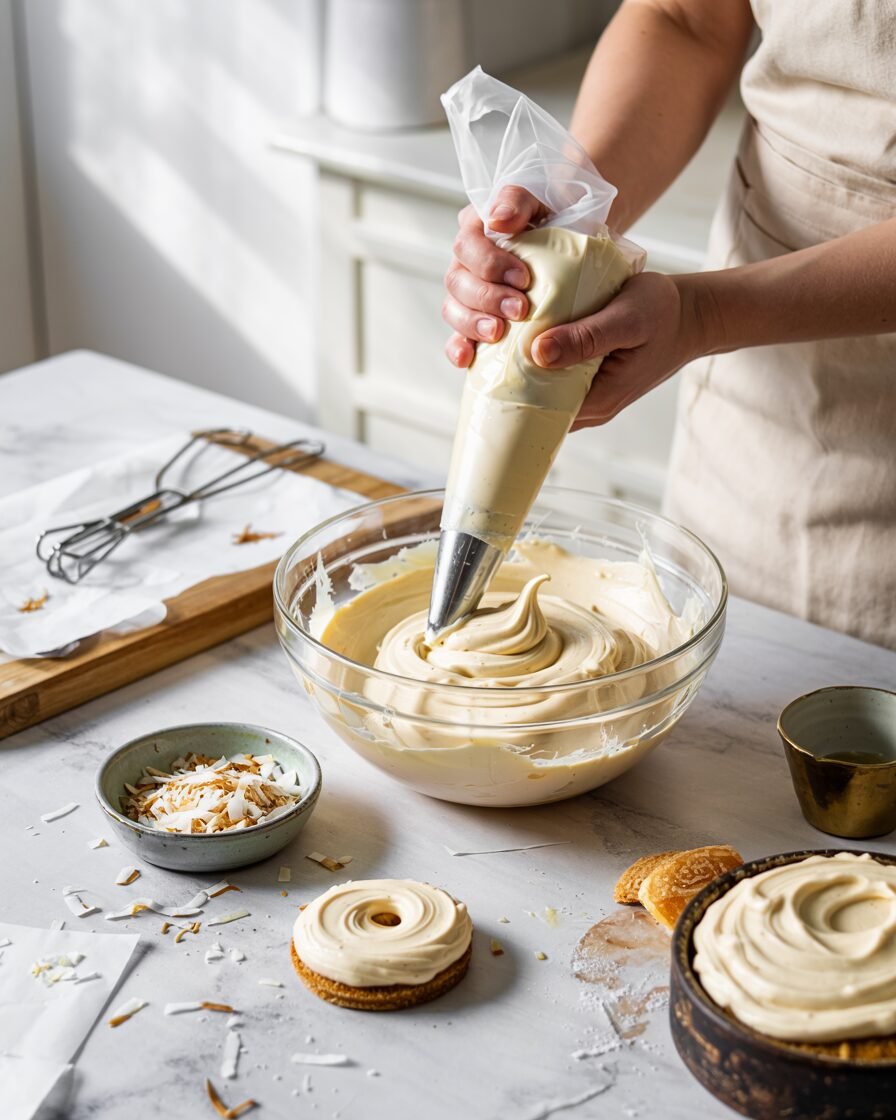
If you love coconut desserts, this coconut buttercream frosting recipe might become your new favorite finishing touch. It’s light, creamy, and packed with real coconut flavor without being overly sweet or greasy like some frostings can be. This recipe is designed specifically for home bakers who want a smooth, pipeable frosting that spreads beautifully on cakes, cupcakes, and cookies—even if you only have a hand mixer.
The result? A silky, fluffy buttercream with balanced sweetness and natural coconut aroma that holds its shape for piping yet melts smoothly on the tongue.
Pro tip: Use room-temperature butter that’s soft but not greasy. If the butter is too warm, your frosting will lose structure before it ever reaches the cake.
Why This Recipe Works
Buttercream might seem simple—just butter and sugar—but the balance of ingredients determines whether your frosting becomes silky or gritty.
1. Butter Creates Structure
Butter is the backbone of buttercream. When properly creamed, it traps tiny air bubbles that give frosting its light texture. Using butter that is around 18–20°C (65–68°F) allows the mixer to incorporate air while still keeping the frosting stable.
2. Powdered Sugar Stabilizes the Emulsion
Powdered sugar contains cornstarch, which helps stabilize buttercream and prevents it from separating. It also dissolves faster than granulated sugar, creating the classic smooth frosting texture.
3. Coconut Flavor Needs Balance
Coconut milk and coconut extract provide flavor, but they also add moisture. Too much liquid will break the buttercream, so the key is adding small amounts gradually until the desired consistency is reached.
Did you know? Coconut fat solidifies at cool temperatures, which actually helps this frosting hold its shape better than some vanilla buttercreams.
Ingredients
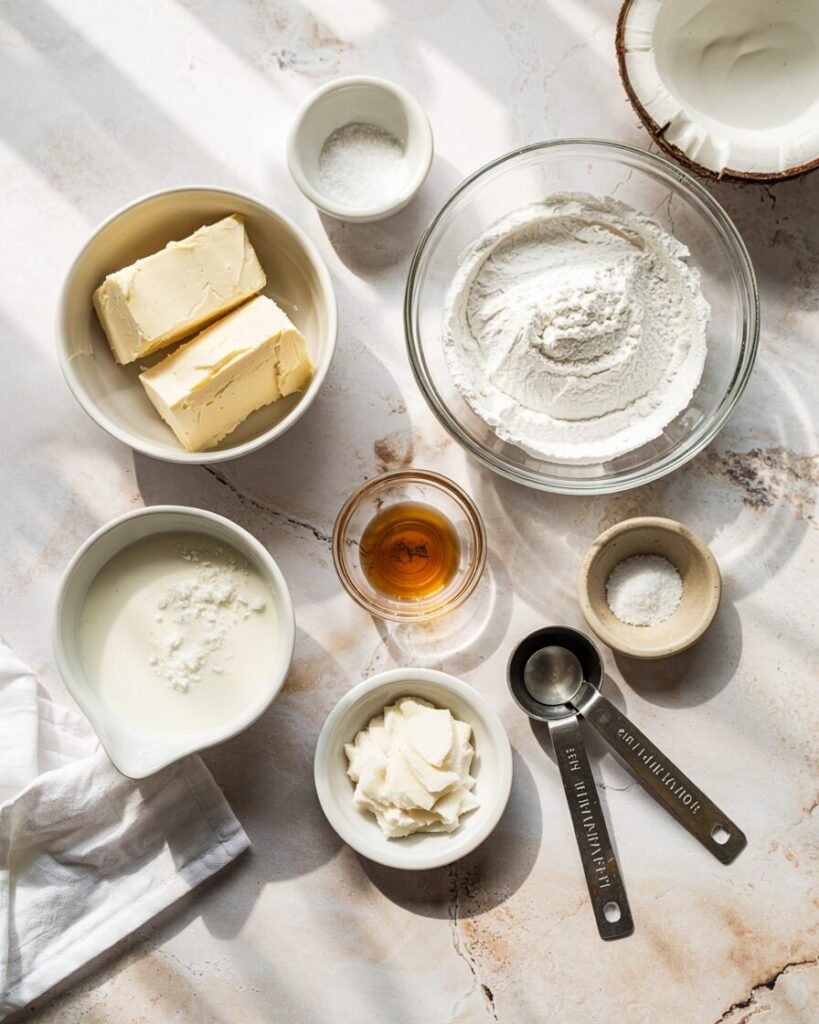
- Unsalted butter — 225 g (1 cup) — softened; provides structure and creamy texture
- Powdered sugar (icing sugar) — 360 g (3 cups) — sweetness and stability
- Coconut milk (full-fat) — 30–45 g (2–3 tbsp) — coconut flavor and smooth consistency
- Coconut extract — 1 tsp — intensifies coconut flavor
- Vanilla extract — ½ tsp — rounds out the flavor
- Salt — 1 g (¼ tsp) — balances sweetness
- Optional: toasted coconut flakes — 20 g (¼ cup) — texture and garnish
Ingredient note: Full-fat canned coconut milk works best. Carton coconut milk is too diluted and may thin the frosting.
Equipment
Required
- Hand mixer or stand mixer
- Mixing bowl
- Kitchen scale
- Rubber spatula
- Measuring spoons
Nice-to-Have
- Offset spatula for spreading frosting
- Piping bags and tips
- Fine sieve for powdered sugar
- Thermometer (to check butter softness)
Step-by-Step Instructions
Step 1: Cream the Butter
Time: 2–3 minutes
Speed: Medium
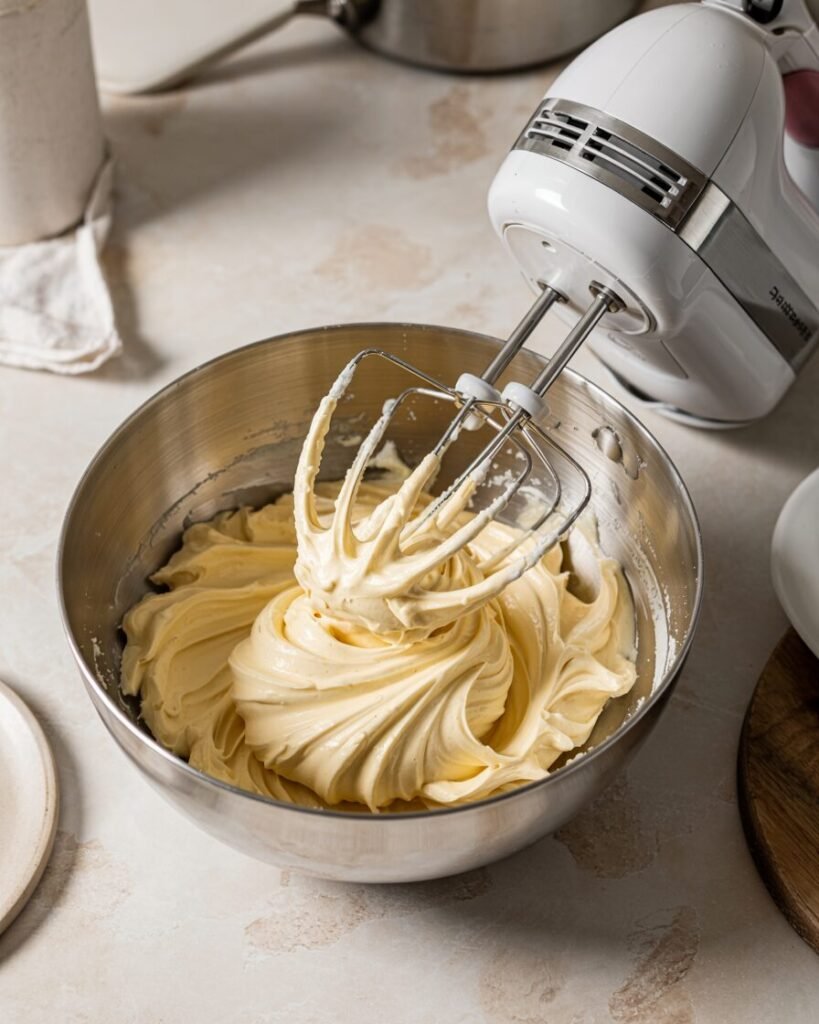
Place softened butter in a mixing bowl and beat until smooth and pale.
Visual cue: Butter should look lighter in color and fluffy, almost like whipped cream cheese.
Avoid this: If the butter looks shiny or greasy, it’s too warm.
Step 2: Add Powdered Sugar Gradually
Time: 3–4 minutes
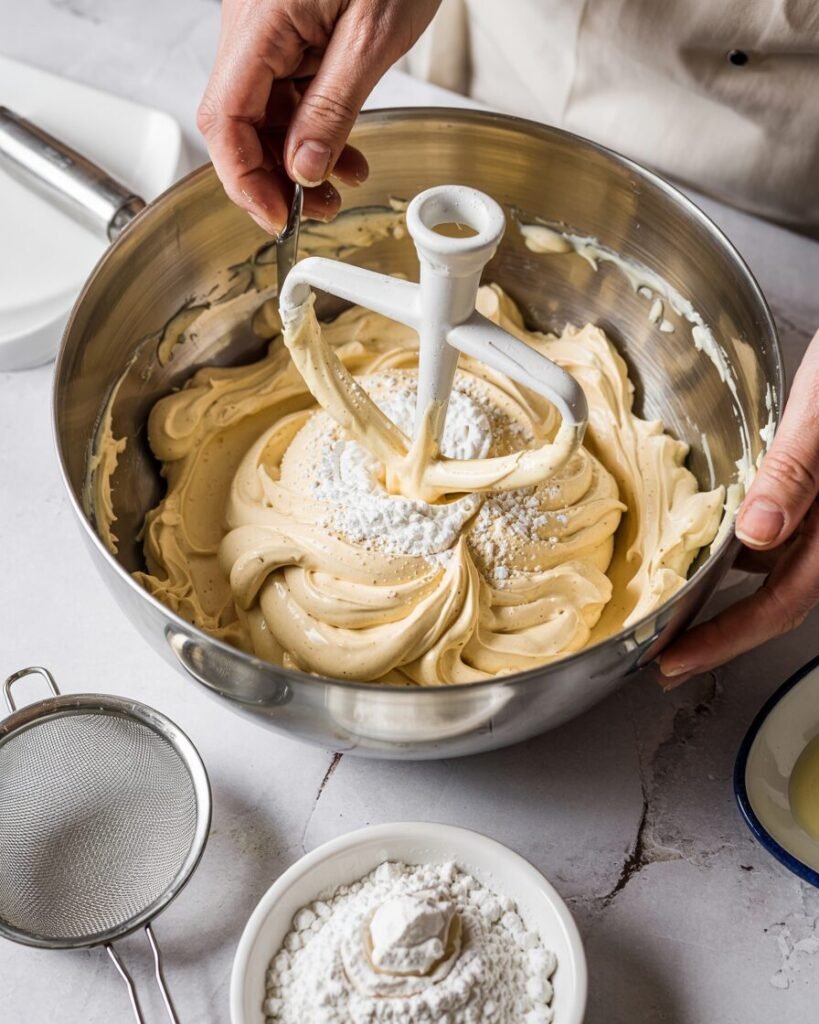
Add powdered sugar ½ cup (60 g) at a time, mixing on low speed first.
Scrape the bowl between additions.
Visual cue: The mixture will look thick and slightly crumbly before smoothing out.
Step 3: Add Coconut Flavor
Add coconut extract, vanilla extract, salt, and 2 tbsp (30 g) coconut milk.
Beat on medium-high speed for 2 minutes.
Checkpoint: The frosting should become fluffy, smooth, and slightly glossy.
If it’s too thick, add 1 tsp coconut milk at a time.
Step 4: Final Whip
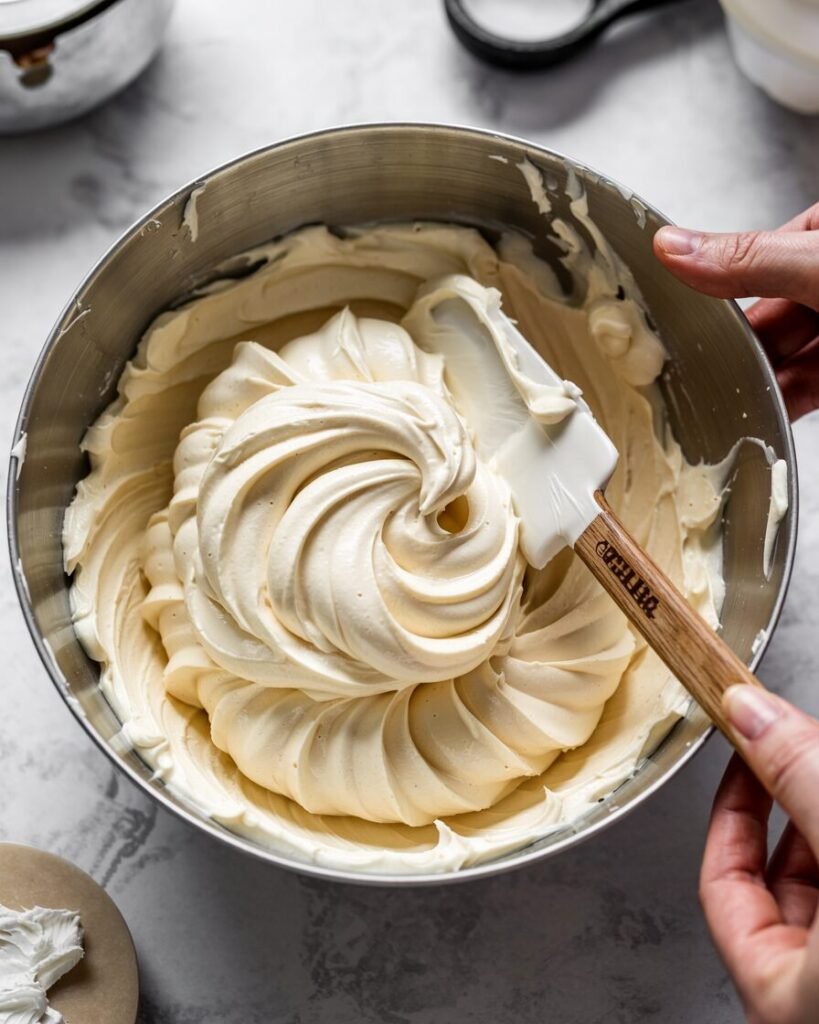
Beat the frosting on medium-high speed for another 2 minutes.
Visual cue: Frosting should form soft peaks that hold their shape but curl slightly at the tip.
Step 5: Use or Chill
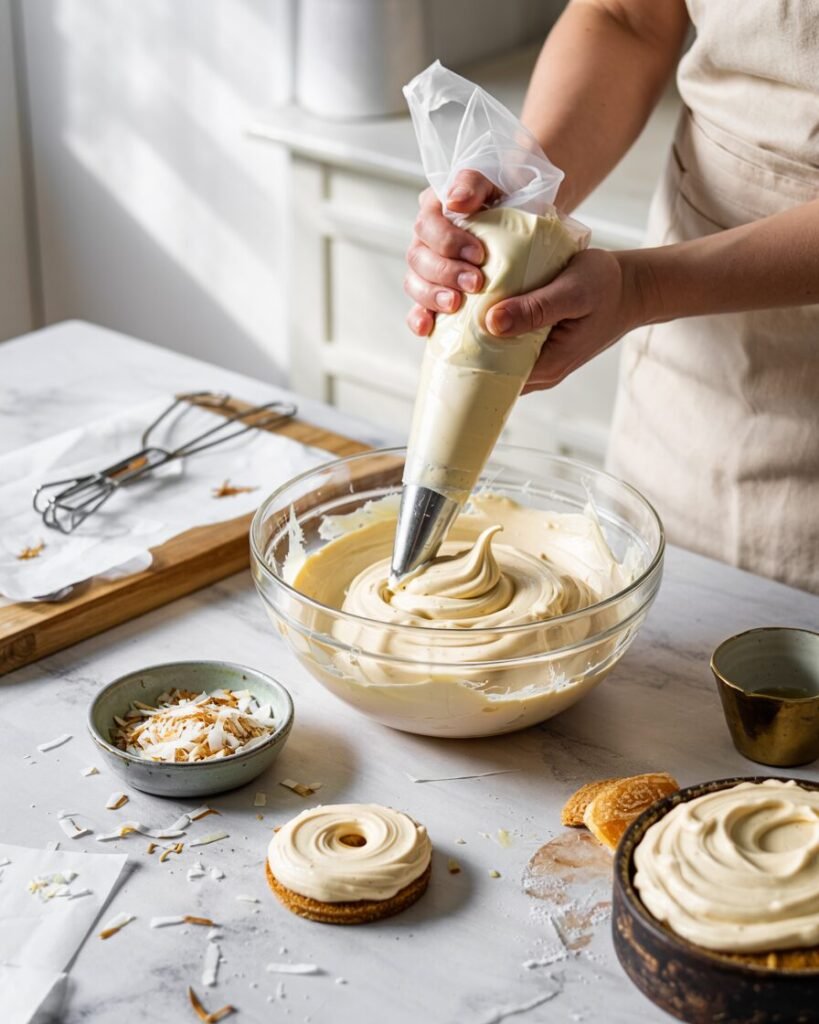
Use immediately for spreading or piping.
If the frosting feels too soft, chill for 10 minutes, then re-whip.
Troubleshooting: Common Failures and Fixes
Problem: Frosting is too runny
Likely causes: Butter too warm, too much coconut milk
Fix next time: Chill frosting 15 minutes and beat again; reduce liquid by 5–10 g
Problem: Frosting tastes too sweet
Likely causes: Too much powdered sugar
Fix next time: Add a pinch more salt or a few drops of lemon juice
Problem: Frosting looks grainy
Likely causes: Sugar not fully mixed
Fix next time: Beat frosting longer (3–4 minutes)
Problem: Frosting splits or looks curdled
Likely causes: Butter too cold or too much liquid
Fix next time: Warm bowl slightly and beat until smooth
Problem: Frosting melts on cake
Likely causes: Warm kitchen or cake not cooled
Fix next time: Chill cake layers before frosting
Substitutions and Variations
Dairy-Free Version
Replace butter with 225 g vegan butter or coconut butter sticks.
Note: Flavor will be slightly more coconut-forward.
Less Sweet Version
Replace 60 g powdered sugar with 30 g cream cheese for tanginess.
Flavor Variations
- Add lime zest (1 tsp) for coconut-lime frosting
- Add 2 tbsp cocoa powder for chocolate-coconut frosting
- Fold in toasted coconut flakes for texture
Scaling the Recipe
| Yield | Butter | Powdered Sugar | Coconut Milk |
|---|---|---|---|
| 12 cupcakes | 115 g | 180 g | 1–2 tbsp |
| 24 cupcakes | 225 g | 360 g | 2–3 tbsp |
| 8-inch layer cake | 340 g | 540 g | 3–4 tbsp |
Storage, Make-Ahead, and Freezing
Counter: Up to 1 day in an airtight container if the kitchen is cool.
Refrigerator: Store up to 5 days. Bring to room temperature and re-whip before using.
Freezer: Freeze up to 2 months in an airtight container.
Thawing:
Thaw overnight in the fridge, then beat again until fluffy.
What not to freeze: Frosting already piped on delicate whipped-cream cakes.
Serving Suggestions and Pairing Ideas
This coconut buttercream pairs beautifully with:
- Vanilla sponge cakes
- Pineapple cakes
- Chocolate cupcakes
- Lemon loaf cakes
For a tropical dessert, frost a vanilla cake and sprinkle toasted coconut flakes on top.
The sweet coconut flavor also balances well with slightly tart fillings like pineapple jam or passionfruit curd.
FAQs
Can I use coconut cream instead of coconut milk?
Yes, but use half the amount because coconut cream is thicker.
How do I prevent buttercream from melting?
Keep the kitchen cool and avoid using overly soft butter.
Can I halve or double the recipe?
Yes, this buttercream scales easily. Just maintain the same ingredient ratios.
What’s the best butter for buttercream?
Unsalted butter with 82% fat content gives the best texture.
Can I make this in an OTG oven kitchen setup?
Yes—since no baking is involved, this frosting works perfectly with just a hand mixer.
Notes from My Kitchen (Testing Log)
Batch 1:
Used carton coconut milk. The frosting became too thin and lacked flavor.
Adjustment: Switched to full-fat canned coconut milk.
Batch 2:
Added coconut milk all at once. The buttercream briefly separated.
Adjustment: Added liquid slowly.
Batch 3:
Reduced sugar slightly and added a pinch more salt.
Final result:
A balanced frosting that pipes cleanly, holds ridges well, and tastes like real coconut rather than artificial candy.
Nutrition and Disclaimer
Approximate per serving (2 tbsp frosting):
- Calories: ~140
- Fat: 9 g
- Carbohydrates: 15 g
- Sugar: 14 g
Values are estimates and will vary based on ingredient brands and portion sizes. Always follow proper food-safety practices when storing butter-based frostings.
Conclusion
Coconut buttercream frosting is one of those simple recipes that can completely transform a cake. With just a few ingredients and the right technique, you can create a frosting that’s smooth, flavorful, and stable enough for piping or spreading.
The key is controlling butter temperature, adding liquids gradually, and whipping the frosting long enough to build that fluffy structure.