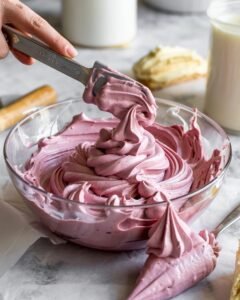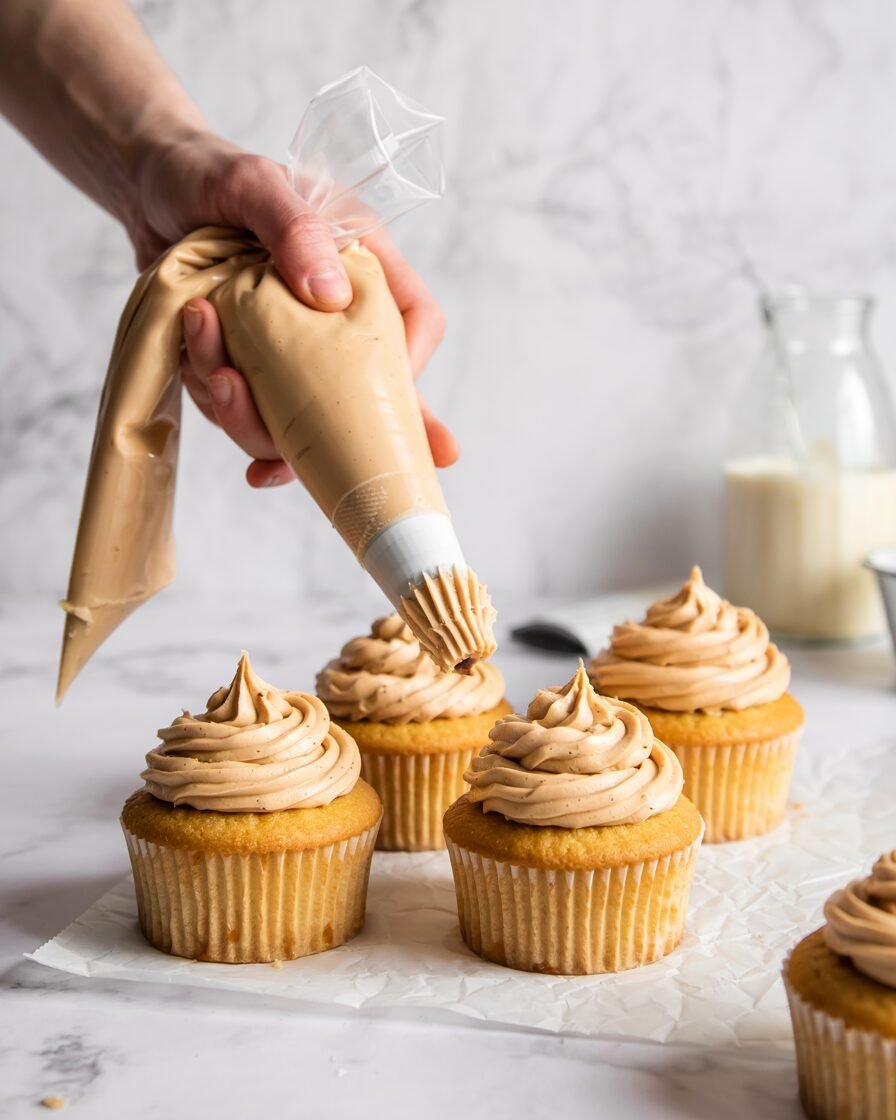
If you love the warm, spiced flavor of cookie butter, this frosting might become your new baking obsession. This cookie butter frosting recipe creates a silky, pipeable frosting that tastes like a creamy version of your favorite spiced cookies. It spreads smoothly, holds its shape for cakes and cupcakes, and balances sweetness with that signature caramelized biscuit flavor.
What makes this frosting special? Instead of relying only on powdered sugar, the structure comes from a balanced ratio of butter and cookie butter, giving it a richer flavor and smoother texture.
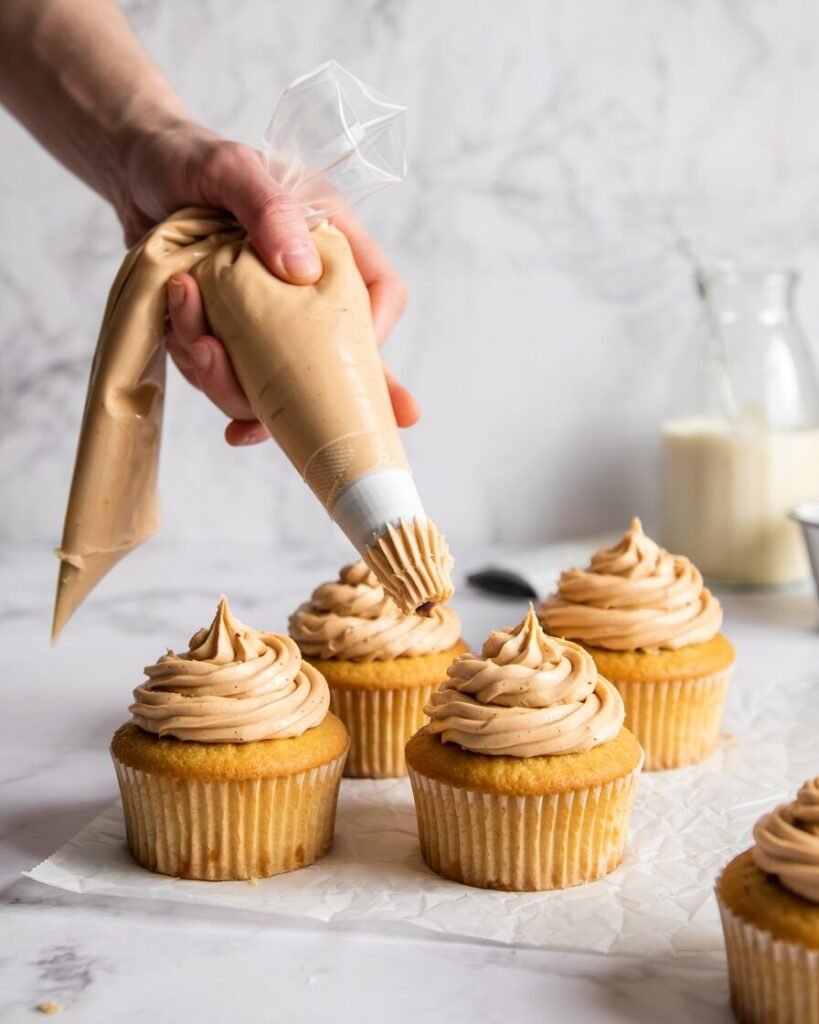
Pro tip: Slightly chilling the frosting for 10 minutes before piping helps it hold beautiful swirls without becoming stiff.
Why This Recipe Works
Great frosting isn’t just about sweetness—it’s about structure, fat balance, and emulsification. This frosting relies on a few simple baking principles.
1. Fat balance creates stability.
Butter and cookie butter both contain fats, but butter is firmer at room temperature. Combining them gives the frosting enough structure to pipe while maintaining a creamy mouthfeel.
2. Powdered sugar stabilizes and thickens.
Powdered sugar contains cornstarch, which absorbs moisture and helps the frosting hold shape. Without it, the frosting would be too loose.
3. Cream controls texture.
Heavy cream emulsifies the mixture and loosens the frosting just enough to make it spreadable. Adding it gradually prevents a runny frosting.
Did you know?
Cookie butter already contains sugar and oils, so using too much liquid can quickly break the frosting. That’s why cream is added slowly.
Ingredients
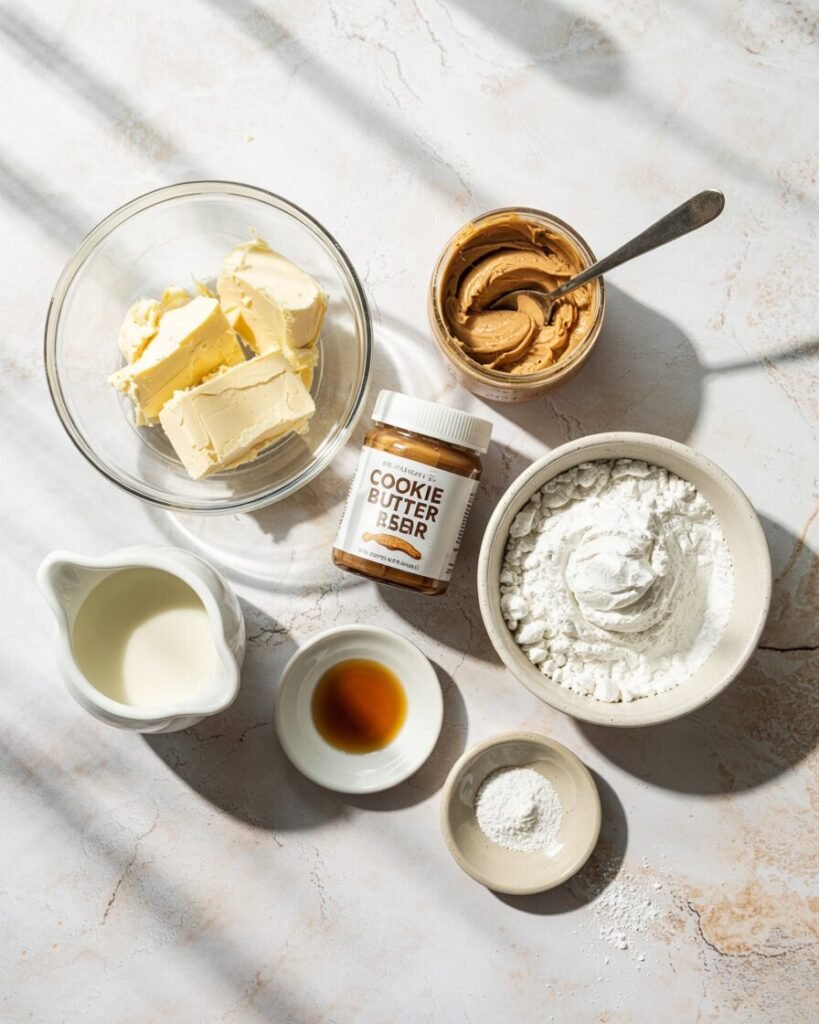
Yield: Frosting for 12 cupcakes or one 8-inch cake
- Unsalted butter (softened) — 115 g (½ cup)
Base fat that provides structure and stability. - Cookie butter spread — 180 g (¾ cup)
Adds flavor, sweetness, and creamy texture. - Powdered sugar (sifted) — 240 g (2 cups)
Sweetens and thickens the frosting. - Heavy cream — 30–45 g (2–3 tbsp)
Adjusts consistency and makes frosting silky. - Vanilla extract — 5 g (1 tsp)
Rounds out the flavor. - Salt — 1 g (¼ tsp)
Balances sweetness.
Ingredient note:
Brands like Biscoff or Speculoos cookie butter work best because they have a thick consistency.
Equipment
Required
- Mixing bowl
- Hand mixer or stand mixer
- Kitchen scale
- Rubber spatula
- Measuring spoons
Nice-to-Have
- Offset spatula for spreading
- Piping bag and tips
- Fine sieve for powdered sugar
Step-by-Step Instructions
Step 1: Cream the butter
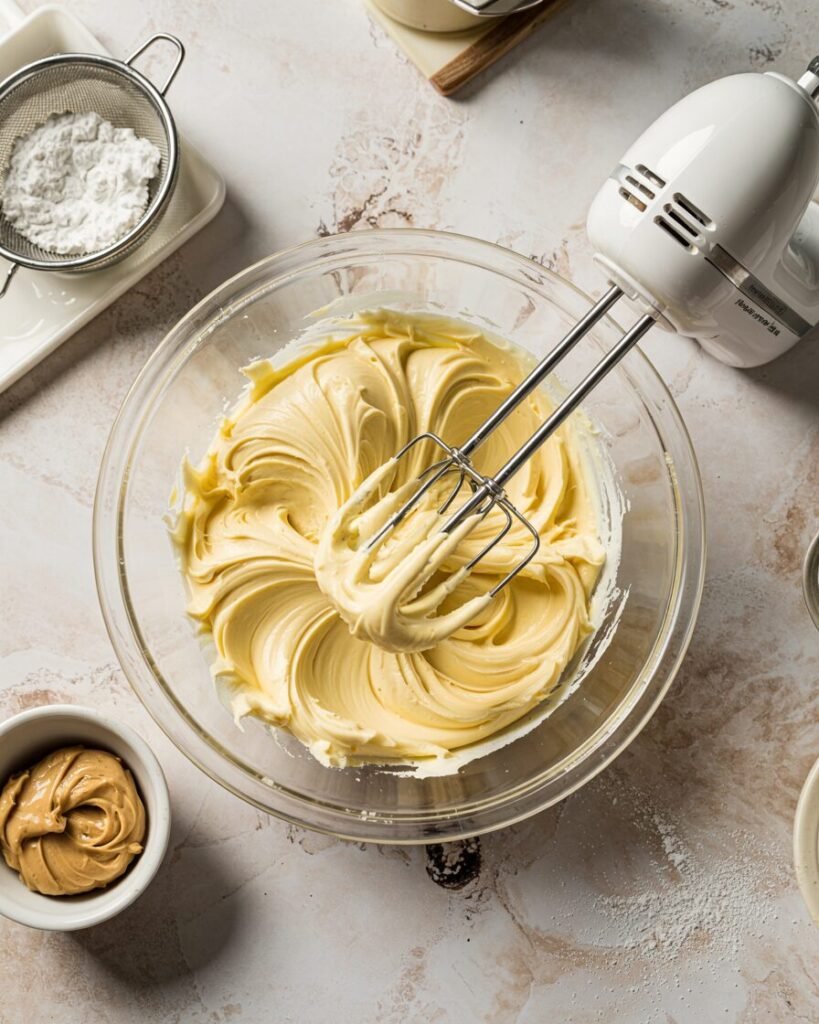
Beat 115 g softened butter on medium speed for 2–3 minutes until light and fluffy.
Visual cue:
The butter should turn pale and smooth, almost like whipped cream.
Avoid this:
Cold butter will look lumpy and won’t whip properly.
Step 2: Add the cookie butter
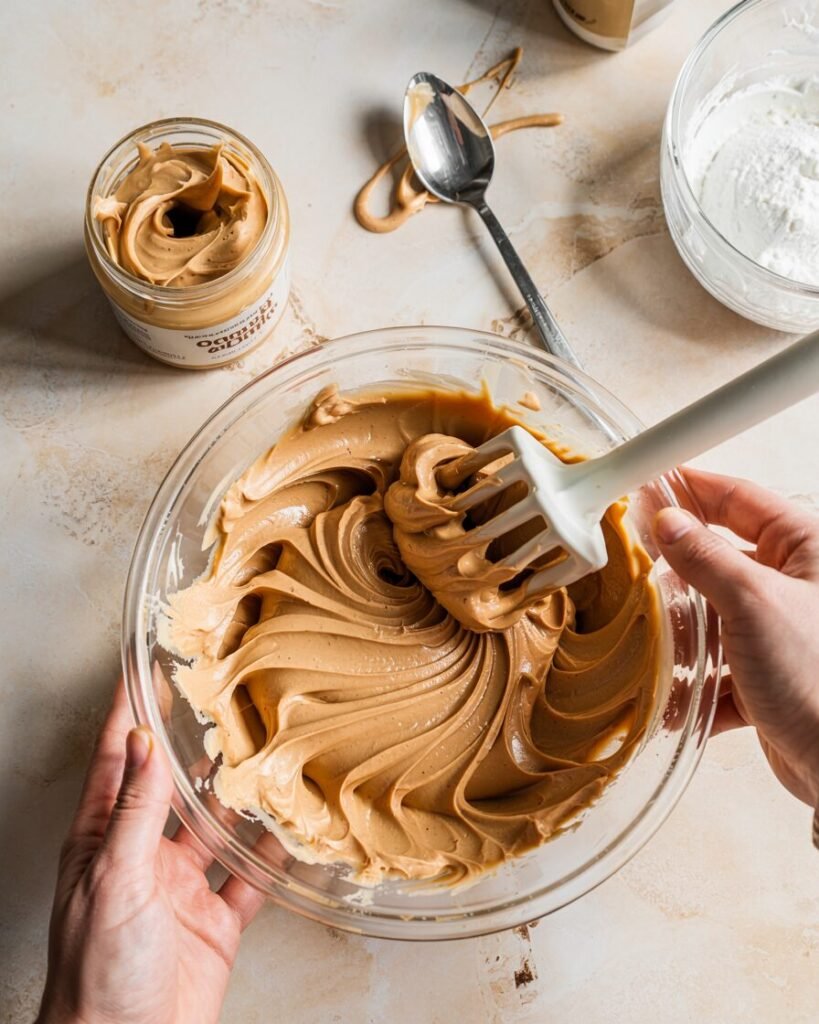
Add 180 g cookie butter and beat for 1–2 minutes until fully combined.
Visual cue:
The mixture becomes creamy and slightly glossy.
If it looks oily or separated, the butter may be too warm. Chill the bowl for 5 minutes, then mix again.
Step 3: Add powdered sugar
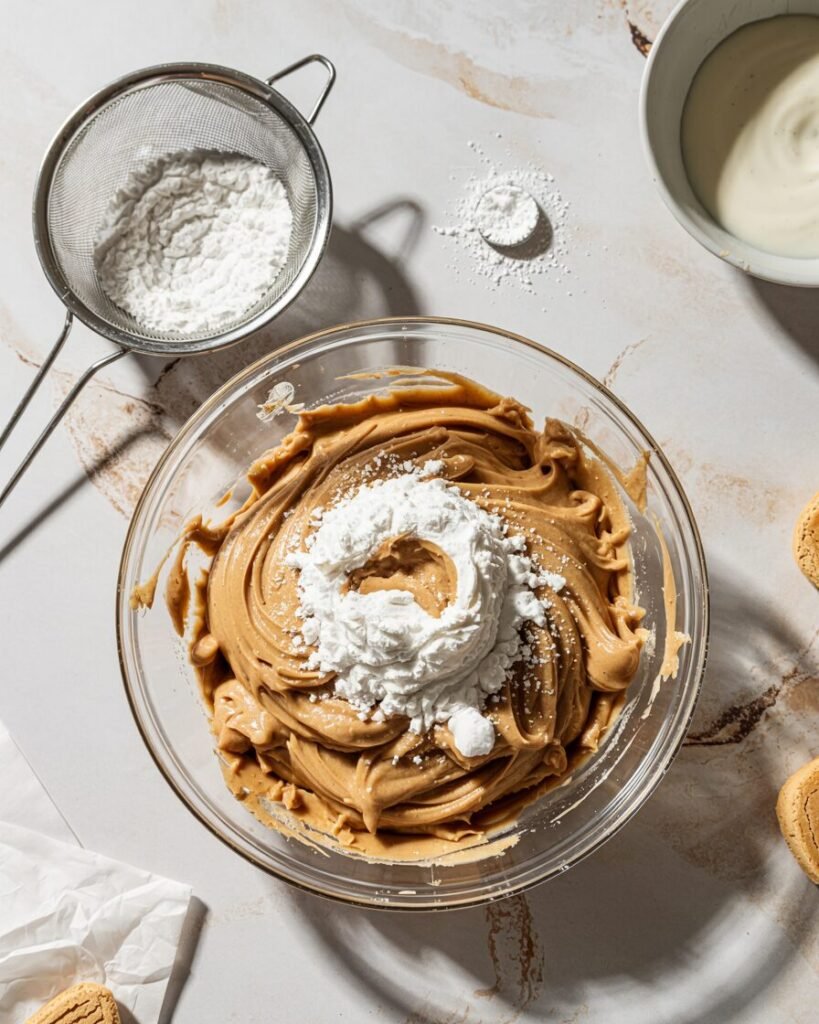
Add the 240 g powdered sugar in two batches, mixing on low speed.
Mix for 30 seconds, then increase speed and beat for 1 minute.
Checkpoint:
The frosting should look thick and slightly fluffy.
Step 4: Adjust consistency
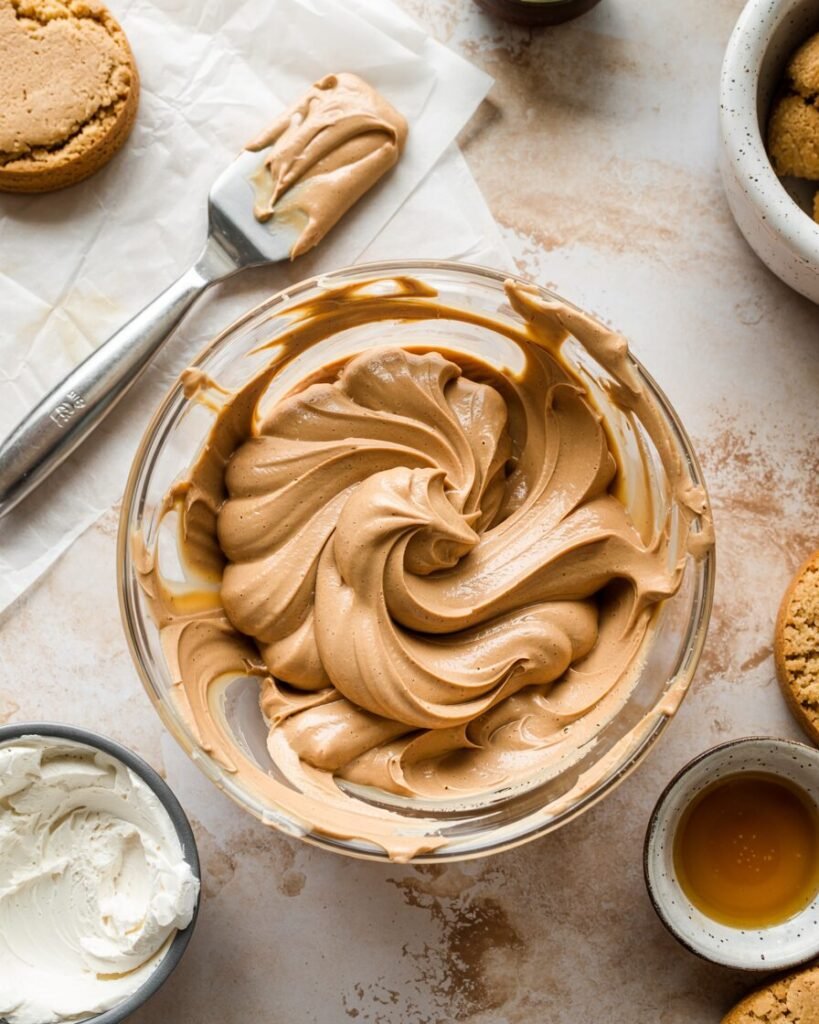
Add 2 tablespoons (30 g) heavy cream and vanilla extract.
Beat for 2 minutes until light and airy.
Visual cue:
The frosting should hold soft peaks that bend gently like a hook.
If too thick, add another 1 tbsp cream.
Step 5: Final texture check
Scrape the bowl and beat for 30 seconds.
Correct texture:
Smooth, fluffy, and easily spreadable.
Too stiff: add 1 tsp cream.
Too soft: mix in 1–2 tbsp powdered sugar.
Troubleshooting: Common Frosting Problems
Problem: Frosting too runny
Likely cause: Too much cream or warm butter.
Fix next time: Add powdered sugar or chill for 10 minutes.
Problem: Grainy texture
Cause: Unsifted powdered sugar.
Fix: Always sift sugar before mixing.
Problem: Frosting separates
Cause: Butter too warm.
Fix: Chill mixture briefly and re-whip.
Problem: Too sweet
Cause: Cookie butter already contains sugar.
Fix: Add a pinch more salt.
Problem: Frosting too thick
Cause: Too much powdered sugar.
Fix: Add cream gradually.
Problem: Frosting won’t hold piping shape
Cause: Too warm.
Fix: Chill frosting for 10–15 minutes.
Substitutions and Variations
Dairy-Free Option
- Replace butter with plant-based butter (115 g)
- Replace cream with coconut cream (30 g)
Texture will be slightly softer but still pipeable.
Gluten-Free Option
Use gluten-free cookie butter if available.
Flavor Variations
Chocolate Cookie Butter Frosting
- Add 20 g cocoa powder
- Add 1 tbsp extra cream
Espresso Cookie Butter Frosting
- Mix ½ tsp instant espresso powder into the cream.
Cinnamon Spice Frosting
- Add ½ tsp cinnamon + pinch nutmeg.
Scaling Guide
| Yield | Butter | Cookie Butter | Powdered Sugar |
|---|---|---|---|
| 12 cupcakes | 115 g | 180 g | 240 g |
| 24 cupcakes | 230 g | 360 g | 480 g |
| 6 cupcakes | 60 g | 90 g | 120 g |
Cream adjusts as needed.
Storage, Make-Ahead, and Freezing
Counter:
Up to 1 day in an airtight container.
Refrigerator:
Store for 5 days. Bring to room temperature and re-whip before using.
Freezer:
Freeze up to 2 months in a sealed container.
Thawing:
Thaw overnight in the fridge, then whip for 1 minute to restore fluffiness.
What not to freeze:
Fully frosted cakes with delicate decorations—they may lose shape.
Serving Suggestions and Pairings
This frosting pairs beautifully with:
- Vanilla cupcakes
- Chocolate cake
- Banana cake
- Pumpkin spice cake
- Cinnamon rolls
It’s also delicious spread between soft sandwich cookies or layered in cookie butter cake.
Because it’s naturally sweet, it works best with cakes that have a slight acidity or mild flavor, like banana or vanilla.
FAQs
Can I replace butter with margarine?
Yes, but the frosting will be softer and less stable for piping.
Why is my frosting oily?
The butter may be too warm. Chill the bowl briefly and whip again.
Can I reduce the sugar?
Only slightly. Powdered sugar provides structure, so reducing more than 20% may cause a runny frosting.
Can I pipe this frosting?
Yes. Chill it for 10 minutes first if your kitchen is warm.
Can I make it without a mixer?
Yes. Use a whisk and mix vigorously, though it will take about 5–7 minutes.
Notes From My Kitchen (Testing Log)
Batch 1:
Used equal parts butter and cookie butter. Result: very soft frosting that struggled to pipe.
Adjustment: Increased powdered sugar.
Batch 2:
Better structure but slightly too sweet.
Adjustment: Added salt and reduced sugar slightly.
Batch 3:
Added heavy cream gradually instead of all at once. Texture became much smoother.
Batch 4:
Tested piping after chilling for 10 minutes. Perfect swirl definition.
Final version:
The current recipe gives the best balance of flavor, stability, and spreadability.
Nutrition and Disclaimer
Approximate nutrition per serving (based on 12 servings):
- Calories: ~210
- Fat: ~12 g
- Carbohydrates: ~24 g
- Sugar: ~22 g
Values are estimates and may vary depending on brands and portion sizes. Always follow proper food-safety practices when storing and serving frosting.
Conclusion
Cookie butter frosting is one of those recipes that feels indulgent but comes together surprisingly quickly. With just a handful of ingredients and the right mixing technique, you can create a frosting that’s rich, fluffy, and full of warm spiced cookie flavor.
Final Thoughts
The key to mastering this frosting is fat balance and mixing technique. Keep your butter softened—but not melted—and add cream gradually until the frosting reaches the perfect spreadable consistency.
Once you’ve tried it, you might find yourself putting it on everything from cupcakes to pancakes.