
If you love warm, spiced flavors but want something quicker than a full dessert, this Cookie Butter Latte is your new go‑to. Inspired by spiced speculoos and gingersnap cookies, it turns rich espresso or strong coffee into a smooth, cinnamon‑kissed drink with a velvety cookie butter foam on top.
This recipe is designed for beginner–intermediate home bakers and coffee lovers using common kitchen tools and a saucepan or small pot. No fancy machine is needed: you can froth the milk with a small whisk or handheld milk frother.
What makes this recipe special:
- It uses real cookie butter (not just syrup) for deep flavor.
- The method builds a natural foam layer without heavy cream.
- You get on‑purpose, balanced sweetness—deeply spiced but not cloying.
Pro tip:
Warm your mug first and dissolve the cookie butter in hot espresso before adding milk; this prevents clumps and keeps the flavor evenly distributed in every sip.
How This Cookie Butter Latte Works
This drink is built around three simple principles:
1. Cookie butter needs heat to blend smoothly.
Raw cookie butter can separate or clump when added cold. By warming it with a splash of hot espresso or coffee, it turns into a silky, pourable sauce that mixes cleanly into milk.
2. Frothing your own milk creates a light foam layer.
Instead of relying on whipped cream, heating and whisking the milk develops tiny air bubbles and a thin foam that sits naturally on top of the latte. This keeps the drink lighter and cuts the sweetness without losing richness.
3. Spices and coffee balance each other.
Cinnamon and a pinch of nutmeg or ginger in the cookie butter echo the warmth of espresso, while a small amount of sugar or sweetener rounds everything out. The result is a drink that tastes “dessert‑like” but still reads as a proper coffee experience.
Ingredients
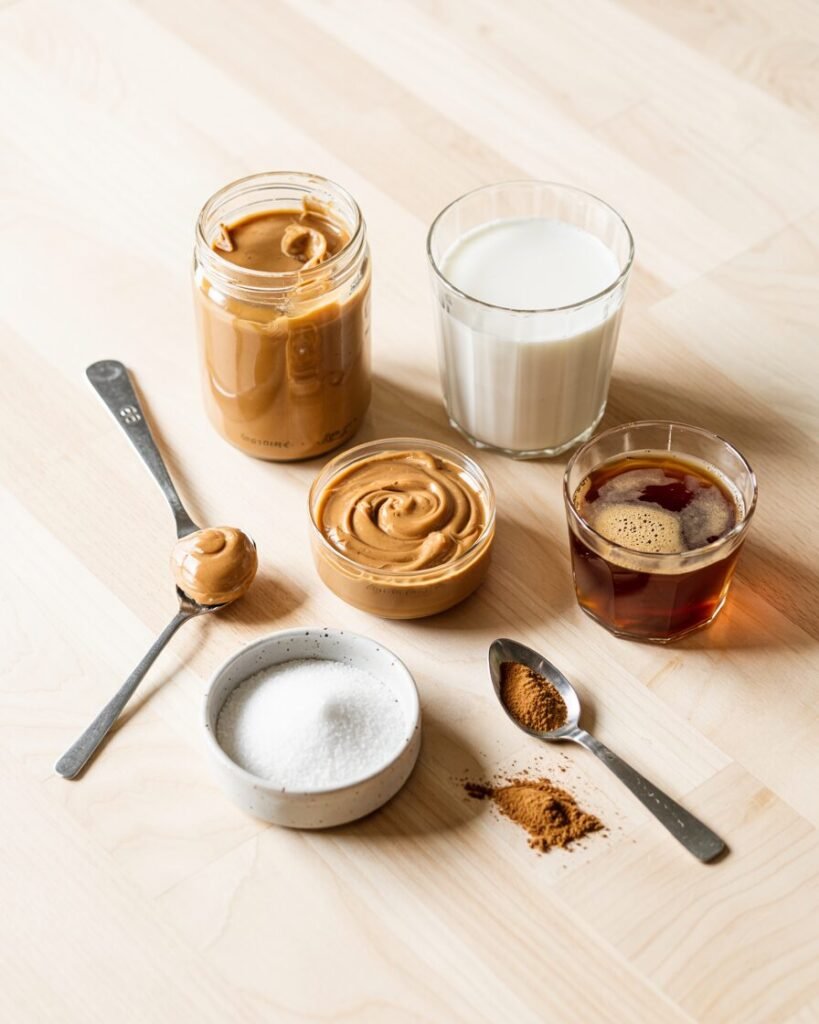
Makes 1 generous serving (about 300 ml / 10–12 oz). Scale up by multiplying as needed.
- Espresso or strong coffee — 60 ml (1/4 cup)
The base. Use freshly brewed espresso or very strong drip/IBRI coffee for depth. - Whole milk — 240 ml (1 cup)
Creates a creamy body and stable foam. You can use any milk, but higher fat gives a richer mouthfeel. - Cookie butter (spiced, ready‑made) — 30 g (about 2 tbsp)
The star. Look for a smooth, spreadable speculoos / cookie butter (not “chunky” or super crunchy).
Purpose: Adds warm spice (cinnamon, nutmeg, ginger) and a rich, cookie‑like sweetness. - Granulated sugar — 5–10 g (1–2 tsp)
Adjust to taste and sweetness of your cookie butter.
Purpose: Enhances sweetness without masking the coffee flavor. - Ground cinnamon — 0.5 g (1/8 tsp)
Purpose: Reinforces the spiced sugar‑cookie character and adds a light aroma on top. - Optional: pinch of nutmeg or ground ginger — 0.25 g (tiny pinch)
Purpose: Adds a subtle warmth without overpowering.
Equipment
Required:
- Small saucepan or heat‑safe jug
- Small whisk or handheld milk frother
- Digital kitchen scale (ideal) or measuring spoons
- Mug (capacity 350–400 ml)
- Spoon or small spatula
Nice‑to‑have:
- Fine‑mesh sieve (to remove any cookie butter clumps)
- Mini skewer or toothpick (to test temperature by touch)
Step‑By‑Step Instructions
Prep time: 2–3 minutes
Cook/froth time: 5–7 minutes
Total: about 8–10 minutes
Step 1: Warm the mug
Place your mug in a warm oven or rinse it with hot water from the tap.
Visual cue: The mug should feel hot to the touch so your latte stays warm longer.
Step 2: Dissolve the cookie butter
- In a small bowl or mug, add 30 g cookie butter and 15 ml (1 tbsp) hot espresso or coffee.
- Use a small spoon to mash and whisk until the mixture is smooth and free of lumps.
Visual cue: The mixture should look like a runny, glossy sauce, not grainy or separated.
Step 3: Make the espresso base
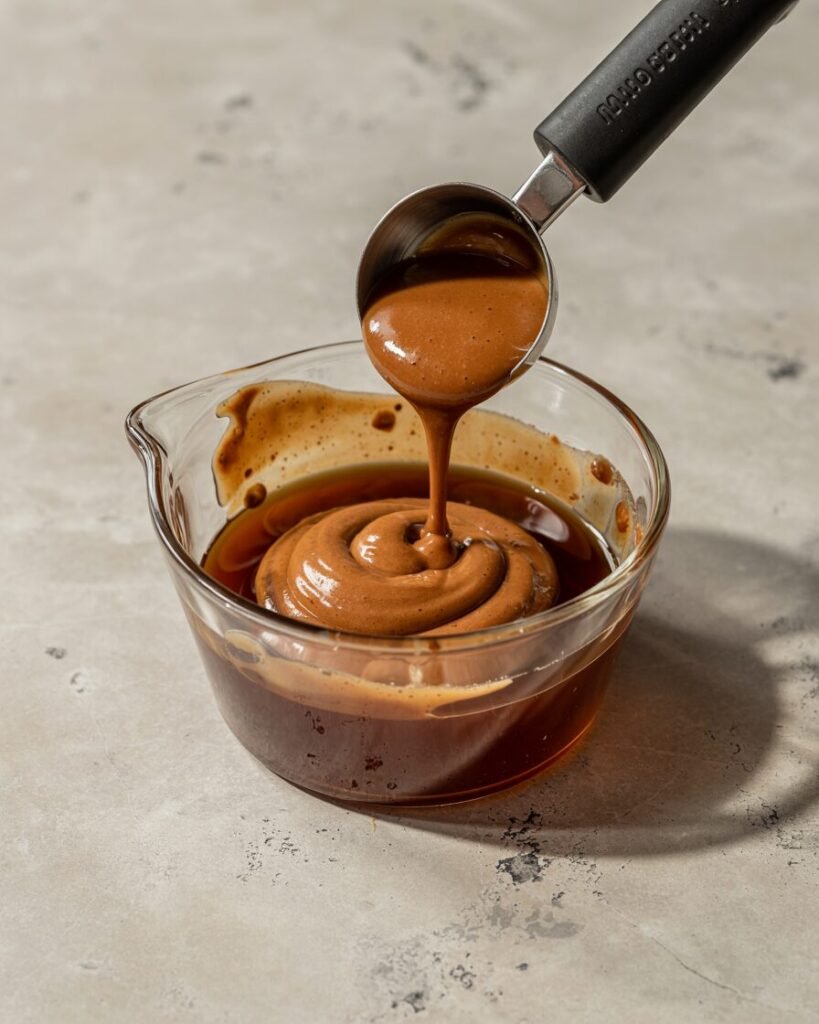
- Brew 60 ml (1/4 cup) espresso or strong coffee.
- Pour the rest of the espresso into the mug with the cookie butter mixture. Stir gently until fully blended.
Visual cue: The liquid should be uniformly pale brown with no visible streaks of solid cookie butter.
Step 4: Heat and froth the milk
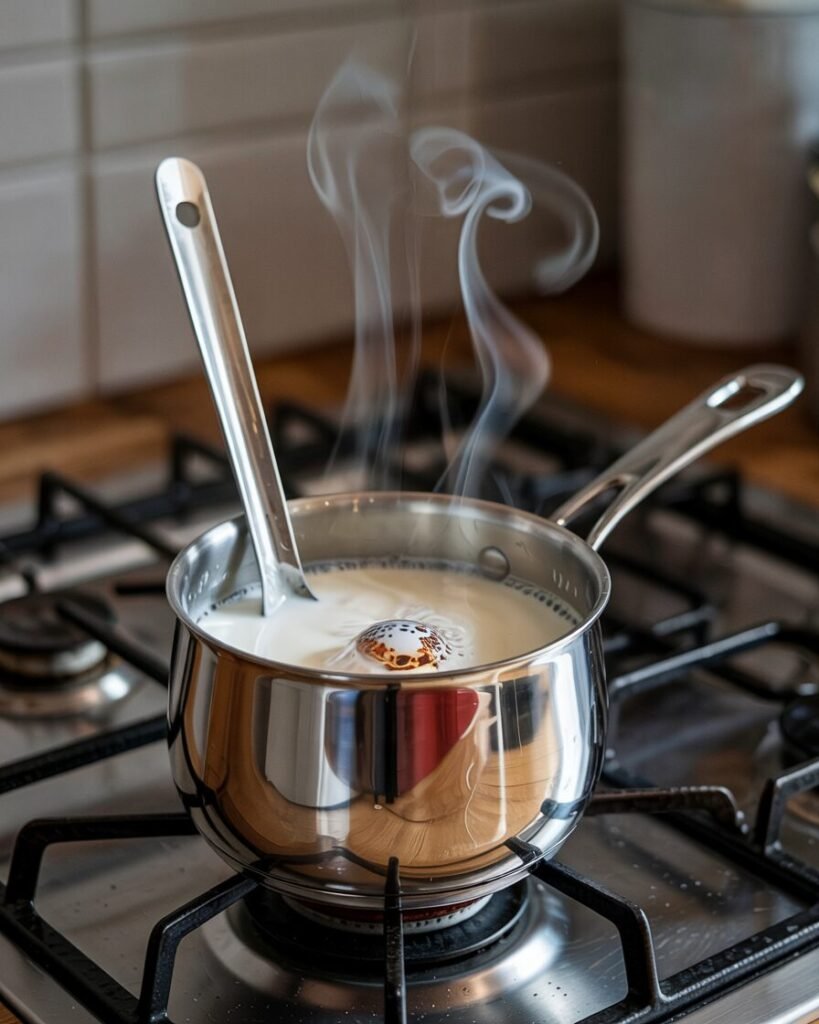
- In a small saucepan, combine 240 ml (1 cup) milk and 5–10 g sugar (1–2 tsp).
- Heat over medium‑low flame °C°C / °F°F, stirring often, until the milk is hot but not boiling (about 60–70°C / 140–160°F).
- Remove from heat and whisk vigorously for 30–45 seconds (or use a handheld frother for 20–30 seconds).
Visual cue: The surface should be covered with a light foam layer and the milk should feel very warm but not steaming violently.
Step 5: Combine and finish

- Gently pour the hot milk into the coffee–cookie butter mixture, holding back the foam with a spoon at first if you want a layered look.
- Once most of the milk is in, spoon the foam on top.
- Sprinkle a pinch of cinnamon (0.5 g) and, if using, a tiny pinch of nutmeg or ginger over the foam.
Visual cue: The foam should sit on top in a soft, pillowy layer, not immediately sink into the drink.
Troubleshooting Common Issues
Problem: Cookie butter clumps in the coffee
- Likely cause: Cold cookie butter or too little liquid used to dissolve it.
- Fix: Always warm the espresso slightly and use at least 15 ml hot liquid to thin the cookie butter first. Whisk until smooth before adding more coffee.
Problem: Milk doesn’t froth well
- Likely cause: Milk too hot or too cold, or using low‑fat milk without enough protein/fat.
- Fix: Heat to 60–70°C / 140–160°F and use at least 2% or whole milk. Whisk with quick, vigorous strokes or use a frother.
Problem: Drink tastes too sweet or too spicy
- Likely cause: Cookie butter brand differences or added sugar topped on top of sweet coffee.
- Fix: Reduce added sugar to 5 g (1 tsp) or less, or choose a plainer cookie butter. Taste before adding more cinnamon.
Problem: Foam collapses quickly
- Likely cause: Overheating or over‑whisking, which deflates the foam.
- Fix: Heat milk only until very hot, not boiling, and whisk just enough to create a light foam.
Substitutions and Variations
Dairy‑free version:
- Use 240 ml (1 cup) oat milk or soy milk instead of whole milk.
- They foam slightly less than dairy but still create a creamy texture.
- Add 1–2 g extra sugar (1/2–1 tsp) if the non‑dairy milk is very thin or bland.
Egg‑free:
- This recipe is naturally egg‑free. No adjustment needed.
Gluten‑free friendly:
- Ensure your cookie butter is labeled gluten‑free if you’re serving sensitive guests.
- The rest of the ingredients are typically gluten‑free; just check labels on packaged products.
Flavor variations Sarah tested:
- Lavender twist: Add 0.1 g (a tiny pinch) of culinary lavender to the milk while heating.
- Caramel‑style: Replace 5 g sugar with 10 ml caramel sauce (also dissolved in hot espresso first).
- Mocha‑style: Add 10 g (about 1.5 tsp) cocoa powder to the coffee–cookie butter mix and whisk until smooth.
Storage, Make‑Ahead, and Serving
This drink is best fresh and hot, but you can prep components ahead:
- Cookie butter coffee base:
Mix the cookie butter with a small amount of espresso and store it in a sealed jar in the fridge for up to 3 days. Warm gently before using. - Iced Cookie Butter Latte (Sarah’s tested variation):
- Dissolve 30 g cookie butter in 60 ml hot espresso.
- Cool completely, then pour over ice and top with 240 ml cold milk. Stir well.
- Best consumed within 1–2 hours to avoid separation.
What not to freeze:
- Fully assembled latte. Freezing and thawing will destroy the foam and separate the milk.
Serving Suggestions
- Pair with:
- A plain scone or biscuit to balance the sweetness.
- A slice of banana bread or a small piece of dark chocolate for extra comfort.
- For a party, make a larger batch of the coffee–cookie butter base, then pour into heated mugs and top with freshly frothed milk for each guest.
FAQs
Can I use cookie butter syrup instead of spreadable cookie butter?
Yes, but you’ll need less. Start with 15–20 ml (1–1.5 tbsp) syrup, taste, and adjust. Syrup is sweeter and thinner, so you may want to reduce added sugar.
How do I prevent the drink from tasting too oily?
Use a smooth, not overly greasy cookie butter. If it separates, whisk it thoroughly with the hot espresso first. You can also strain the mixture through a fine sieve.
Can I make this in a microwave?
Yes, but with care. Heat the milk in a microwave‑safe jug in 30‑second bursts, stirring in between, until very hot (not boiling). Then whisk or froth as usual.
How to make it stronger or weaker?
For a stronger coffee punch, increase espresso to 90 ml (3/8 cup) and reduce milk to 180 ml (3/4 cup). For a milder drink, reverse that ratio.
Notes From My Kitchen (Testing Log)
Batch 1:
Used cold cookie butter straight from the jar. It clumped badly and left a greasy film on top.
Adjustment: Started warming the cookie butter with a spoonful of hot espresso first; that fixed the texture.
Batch 2:
Heated milk close to boiling and whisked aggressively. The foam turned into a bubbly, unstable mess.
Adjustment: Lowered heat and whisked more gently, which created a smoother foam layer.
Final chosen method:
Pre‑dissolve cookie butter in hot espresso, heat milk to 65°C / 150°F, froth briefly, then pour and top with cinnamon. This gives a smooth, layered latte with a soft foam that lasts through the first few sips.
Nutrition and Disclaimer
Approximate per serving (with whole milk and 10 g sugar):
- Calories: roughly 220–250 kcal
- Fat: ~12 g
- Carbohydrates: ~25 g
- Protein: ~8 g
Values are estimates and will vary by brands, milk type, and exact sugar amount. Always follow standard food‑safety practices when storing and reheating dairy products.