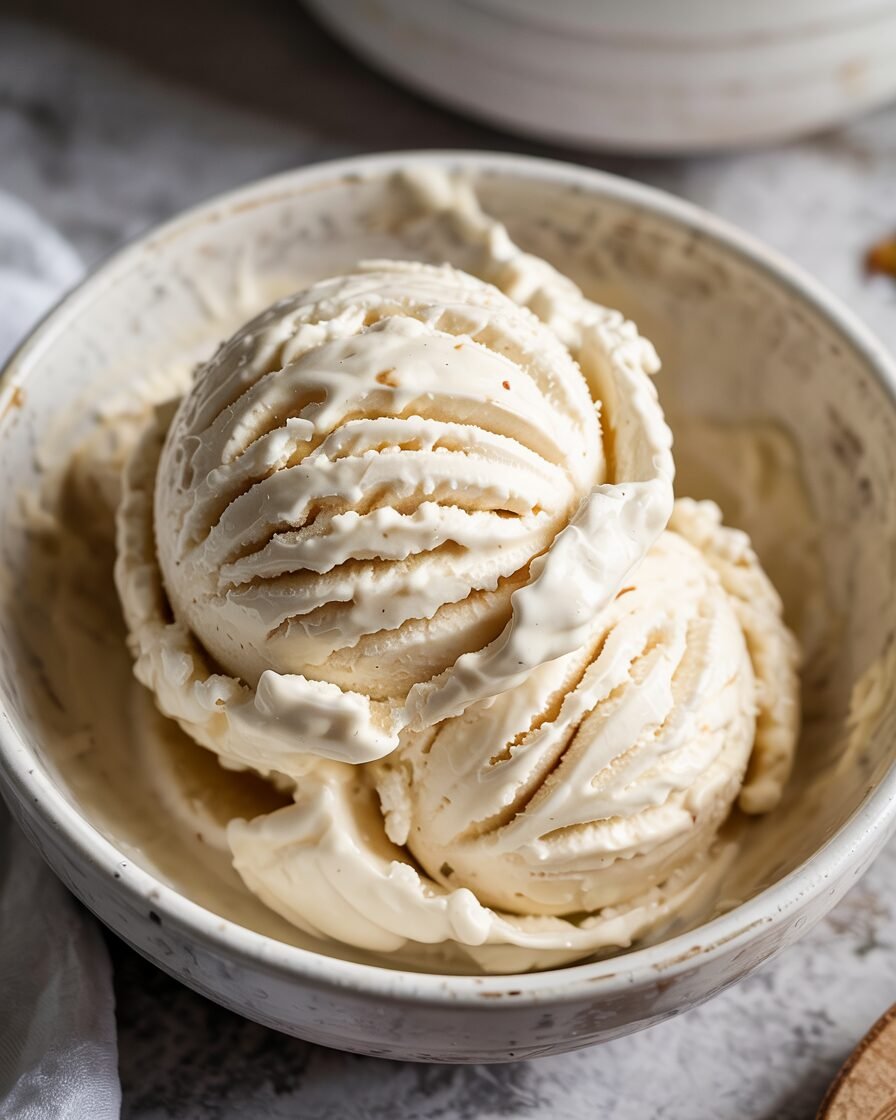
If you’ve ever wanted homemade vanilla ice cream without an ice cream maker, without eggs, and without complicated custard steps — this Cottage Cheese Vanilla Ice Cream is your answer. It’s creamy, scoopable straight from the freezer (with one simple trick), and packed with real vanilla flavor.
What makes this recipe unique? We use full-fat cottage cheese blended silky smooth as the protein-rich base. The result is surprisingly luxurious — not icy, not tangy — just clean vanilla creaminess with structure.
Pro tip: The secret to a non-icy texture is blending long enough to eliminate curds and adding a small amount of invert sugar (honey or corn syrup). That’s your scoopability insurance.
Why This Recipe Works
- Protein = Creaminess. Cottage cheese is high in milk proteins (casein), which help stabilize water and reduce large ice crystal formation. When fully blended, it mimics the structure of churned custard without eggs.
- Fat Content Matters. Full-fat cottage cheese (minimum 4% milkfat) gives body. Fat interferes with ice crystal growth, which keeps the texture creamy rather than icy.
- Sugar Controls Texture. Sugar doesn’t just sweeten — it lowers the freezing point. A small portion of honey or corn syrup (invert sugar) prevents the mixture from freezing rock-solid.
- Air Incorporation. High-speed blending incorporates micro-air bubbles. This replaces the churning step you’d normally need.
Did you know? Ice cream becomes scoopable around −12°C to −14°C (10°F to 7°F). Home freezers run colder (−18°C / 0°F), so we adjust the formula to compensate.
Ingredients
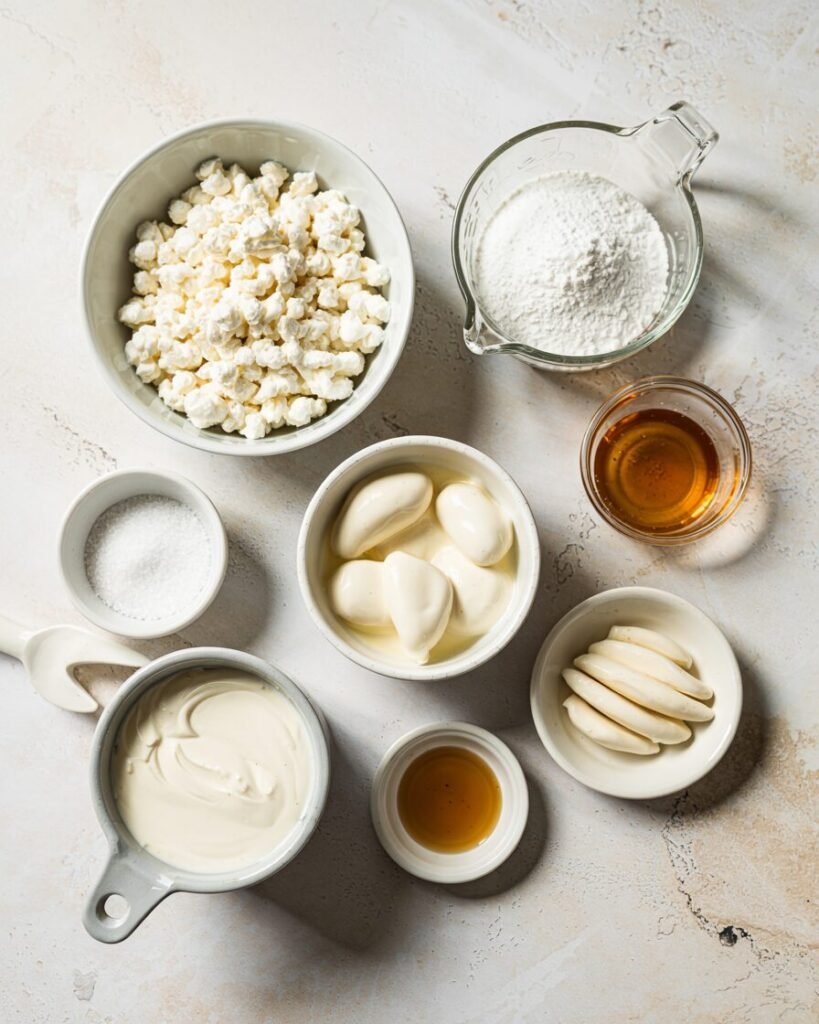
- Full-fat cottage cheese — 400 g (2 cups) — Base; provides protein and creaminess.
Use small-curd, 4% milkfat. Avoid low-fat. - Heavy cream (35% fat) — 120 g (½ cup) — Adds richness and smooth mouthfeel.
- Granulated sugar — 60 g (¼ cup) — Sweetness and texture control.
- Honey or light corn syrup — 30 g (1½ tbsp) — Improves scoopability.
- Pure vanilla extract — 10 g (2 tsp) — Flavor.
- Fine salt — 1 g (⅛ tsp) — Enhances sweetness.
Optional for deeper vanilla flavor:
- Vanilla bean paste — ½ tsp — Visible specks.
Equipment
Required
- High-speed blender or food processor
- Digital scale (recommended for accuracy)
- Freezer-safe container (1-liter capacity)
- Spatula
- Freezer set to −18°C (0°F)
Nice-to-have
- Instant-read thermometer
- Shallow metal loaf pan (freezes faster than plastic)
Step-by-Step Instructions
Step 1: Blend the Base (2–3 minutes)
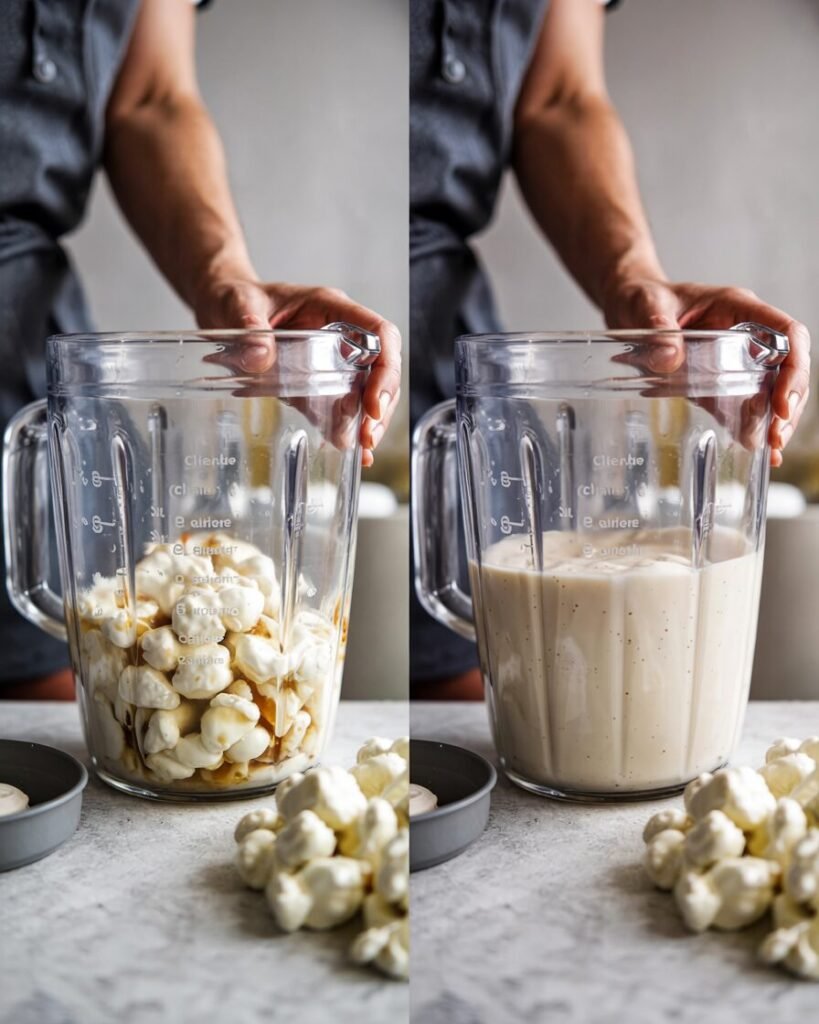
Add cottage cheese, cream, sugar, honey, vanilla, and salt to your blender.
Blend on high for 90–120 seconds.
Visual cue: The mixture should look completely smooth — no visible curds. It should resemble thick yogurt or melted milkshake.
Checkpoint: Rub a little between your fingers. If you feel graininess, blend another 30–60 seconds.
Avoid this: Stopping too early. Tiny curds = icy texture later.
Step 2: Taste and Adjust (1 minute)
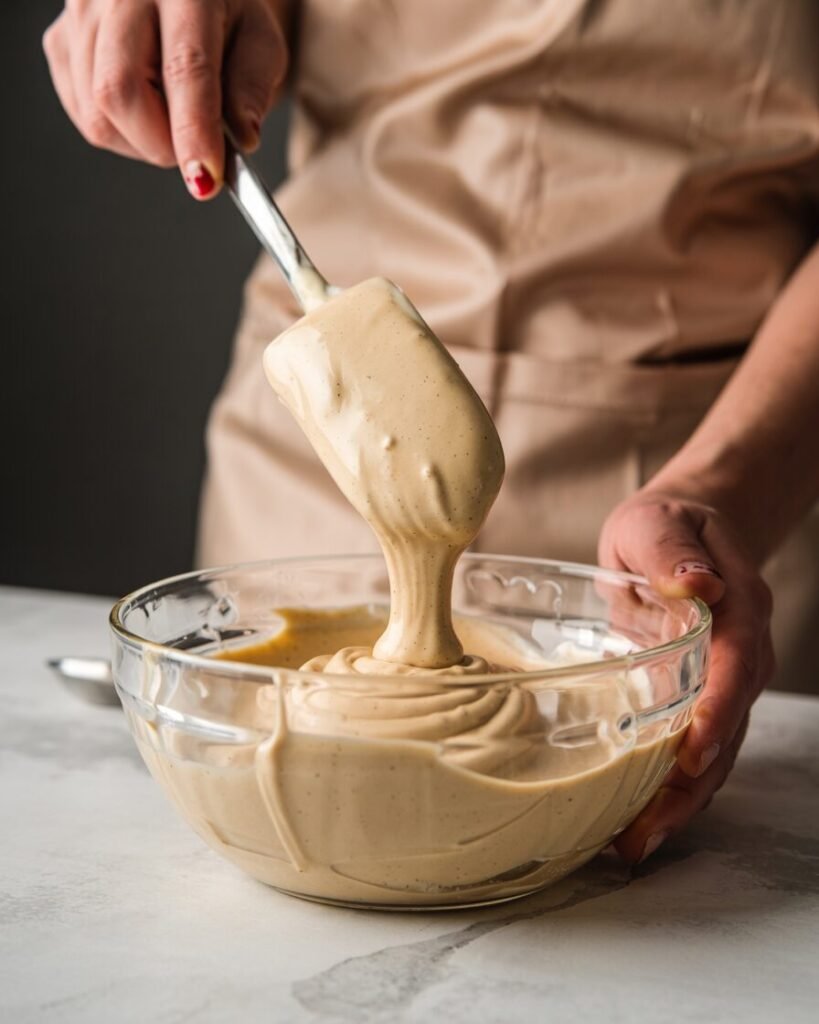
Taste the mixture before freezing. It should taste slightly sweeter than you prefer — sweetness dulls when frozen.
If needed, add 5–10 g (1–2 tsp) sugar and blend briefly.
Step 3: Freeze (3–4 hours)
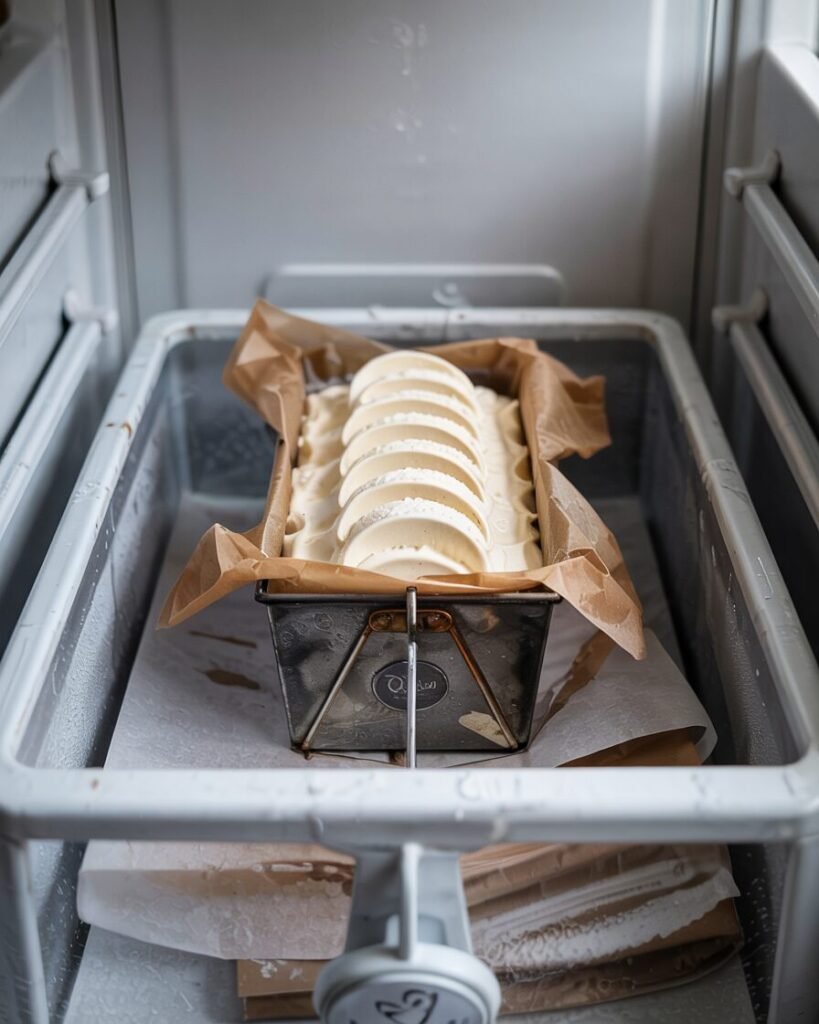
Pour into a shallow, freezer-safe container. Smooth the surface and press parchment directly on top to prevent ice crystals.
Freeze for 3–4 hours.
Visual cue at 2 hours: Edges will be firm but center still soft — that’s normal.
Final texture: Firm but scoopable.
Optional smoother texture method: Stir vigorously after 90 minutes to break up forming crystals.
Step 4: Scoop and Serve
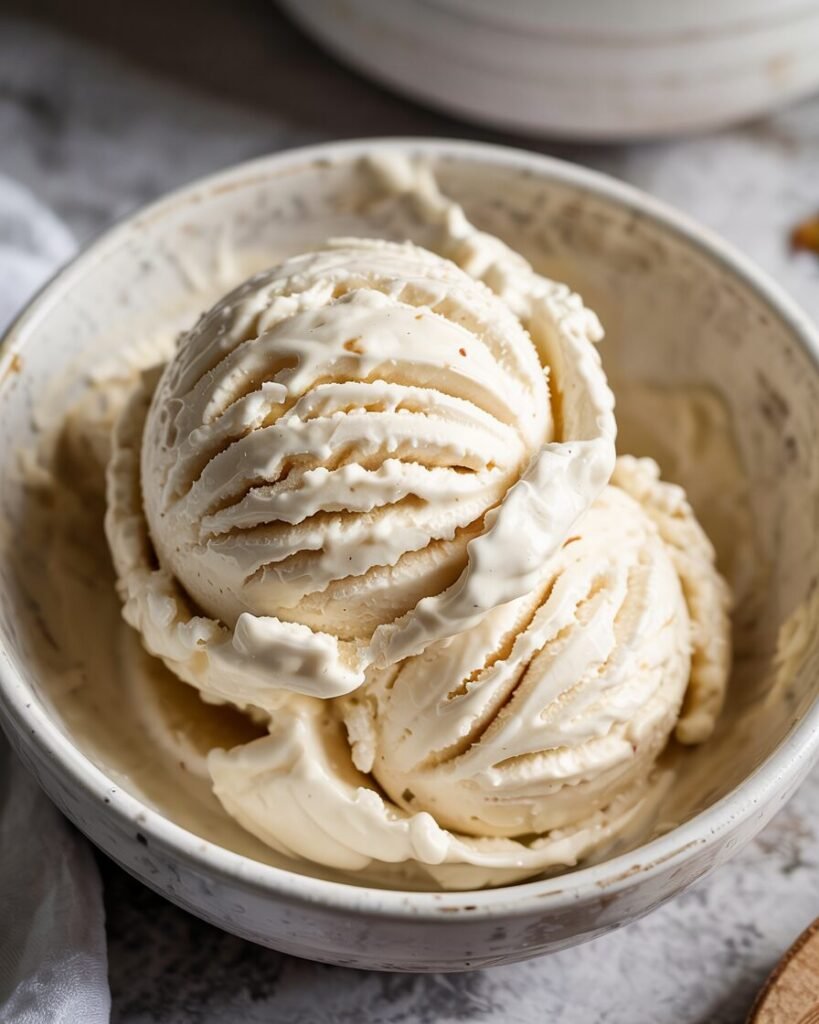
If frozen overnight, let sit at room temperature for 8–10 minutes before scooping.
Ideal serving temp: −12°C (10°F).
If too hard, your freezer may run colder — allow extra rest time.
Troubleshooting (Common Failures & Fixes)
Problem: Icy texture
Likely causes: Low-fat cottage cheese; under-blending; no invert sugar.
Fix next time: Use full-fat; blend 2+ minutes; keep 30 g honey.
Problem: Tangy flavor
Likely causes: Cottage cheese brand too acidic.
Fix: Add 1–2 tbsp extra cream and 10 g sugar.
Problem: Rock hard after freezing
Likely causes: Too little sugar; freezer below −20°C (−4°F).
Fix: Increase honey by 10 g; store in shallow container.
Problem: Grainy mouthfeel
Likely cause: Incomplete blending.
Fix: Blend longer; strain if needed before freezing.
Problem: Too soft / melts quickly
Likely cause: Too much sugar or honey.
Fix: Reduce invert sugar to 20 g.
Substitutions & Variations
Dairy-Free Version
Use:
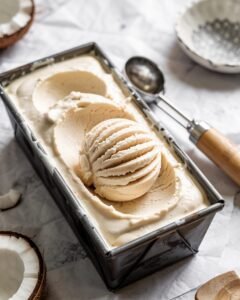
- 400 g thick coconut yogurt
- 120 g coconut cream
- Same sugar ratios
Note: Texture softer; freeze 4–5 hours.
Lower-Sugar Version
Reduce sugar to 40 g and honey to 20 g.
Texture slightly firmer.
Flavor Variations
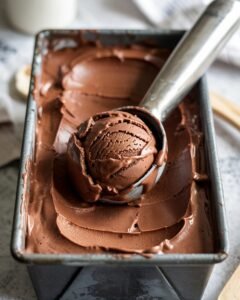
- Chocolate: Add 25 g cocoa powder + 20 g extra sugar.
- Strawberry: Blend 120 g reduced strawberry puree (cook down to remove water).
- Coffee: Add 1 tbsp instant espresso dissolved in 1 tbsp hot cream.
Scaling
| Yield | Cottage Cheese | Cream | Sugar | Honey |
|---|---|---|---|---|
| Small (500 ml) | 300 g | 90 g | 45 g | 20 g |
| Large (1 liter) | 600 g | 180 g | 90 g | 60 g |
Storage, Make-Ahead & Freezing
Freezer:
Best within 2 weeks for optimal texture. Store airtight with parchment touching surface.
Do not refreeze after fully melting — ice crystals will form.
Make-ahead tip: Blend and refrigerate base up to 24 hours before freezing.
Serving Suggestions
- Drizzle with warm chocolate sauce (contrast temperature).
- Serve over warm brownies.
- Pair with fresh berries for acidity balance.
- Sandwich between cookies for freezer-friendly treats.
Sweetness level: Moderate. Balanced, not cloying.
FAQs
Can I use low-fat cottage cheese?
Not recommended. Texture becomes icy and thin.
Can I skip the cream?
You can, but reduce cottage cheese by 50 g and expect firmer texture.
How do I double the recipe?
Blend in two batches to ensure smoothness.
Can I make this in an ice cream maker?
Yes — churn 15–20 minutes after blending for even lighter texture.
Why does my ice cream taste less sweet after freezing?
Cold temperatures dull sweetness perception. Slightly oversweeten base before freezing.
Notes From My Kitchen (Testing Log)
Batch 1: Used low-fat cottage cheese. Result: icy, slightly chalky.
Batch 2: Switched to 4% milkfat. Huge improvement in creaminess.
Batch 3: Reduced honey to 15 g. Texture too firm after overnight freeze.
Batch 4: Increased honey to 30 g. Perfect scoop after 8 minutes rest.
Batch 5: Blended only 60 seconds. Slight graininess remained.
Final Method: 2-minute blend + 30 g honey + shallow metal pan = smoothest texture.
After testing 5 variations, the fat level and blending time made the biggest difference — more than sugar adjustments.
Nutrition (Approximate Per Serving)
Per 1 of 4 servings:
- Calories: ~280
- Protein: 14 g
- Fat: 18 g
- Carbohydrates: 18 g
Values are estimates and vary by brand and portion size.
Food safety note: Keep frozen at −18°C (0°F). Do not leave at room temperature longer than 20 minutes.
Conclusion
This Cottage Cheese Vanilla Ice Cream proves you don’t need eggs, a custard base, or an ice cream machine to make something creamy and satisfying. With full-fat cottage cheese, proper blending, and the right sugar balance, you get a smooth, protein-rich dessert that actually scoops like real ice cream.