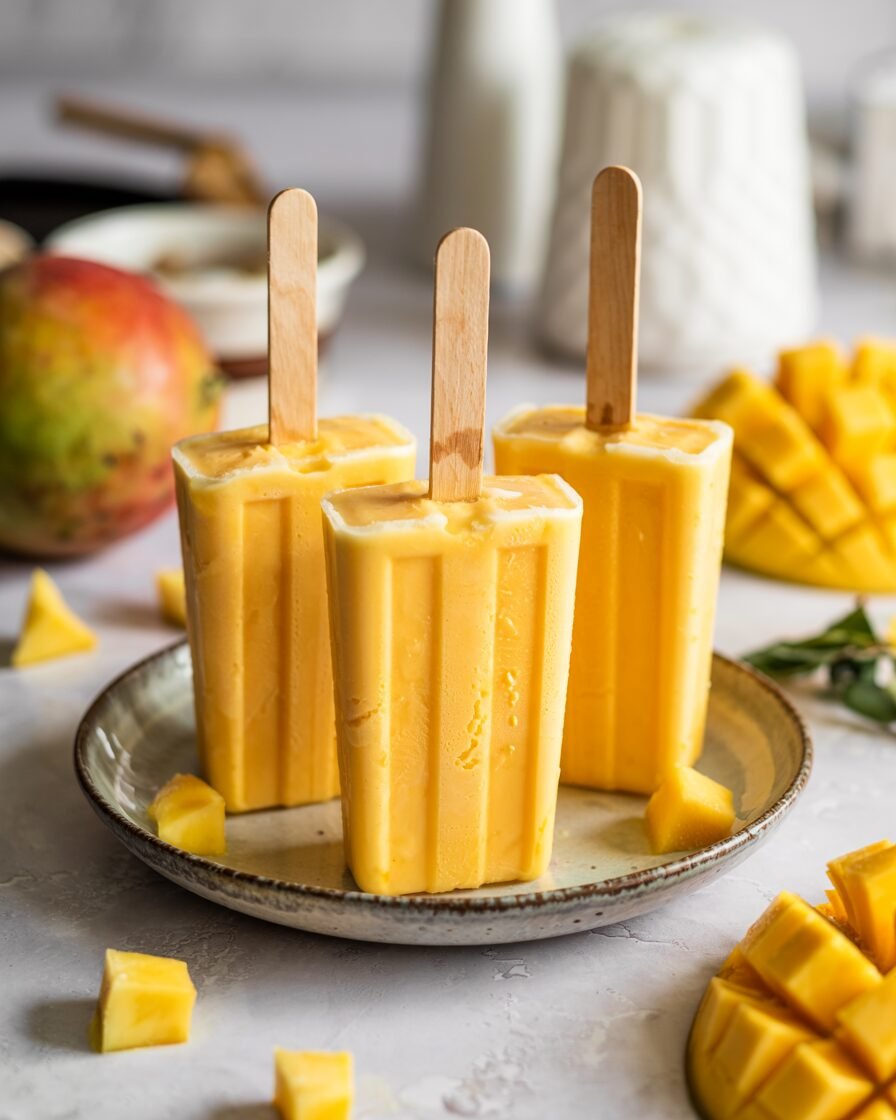
If summer had a flavor, it would taste like mango. And these creamy mango popsicles capture that sunshine-sweet flavor in the easiest frozen dessert you can make at home.
This recipe is designed for beginner home bakers with minimal equipment—no ice cream maker, no fancy tools, just a blender and a freezer. The result? Popsicles that are ultra creamy, naturally sweet, and bursting with real mango flavor, not icy or rock-hard like many homemade versions.
The secret pro tip: blend a little dairy (or coconut milk) with ripe mango puree. The added fat prevents large ice crystals and gives the popsicles that smooth, creamy texture you expect from store-bought frozen treats.
Once you try these, you’ll realize homemade popsicles are not only better—they’re ridiculously easy.
Why This Recipe Works (The Science)
Great popsicles are all about balancing water, fat, and sugar.
1. Mango provides natural sugars and body.
Ripe mangoes contain natural sugars like fructose and glucose. These sugars lower the freezing point slightly, which helps prevent the popsicles from freezing into solid ice blocks.
2. Cream or coconut milk adds fat for smoothness.
Fat coats water molecules, reducing the formation of large ice crystals. That’s why dairy-based popsicles feel creamy instead of crunchy.
3. A touch of acidity brightens flavor.
A small squeeze of lime juice balances the sweetness and enhances the mango flavor without making the popsicles taste sour.
Did you know?
Professional ice creams aim for about 10–16% fat for smooth texture. While popsicles are lighter, even a little fat from cream or coconut milk dramatically improves mouthfeel.
Ingredients
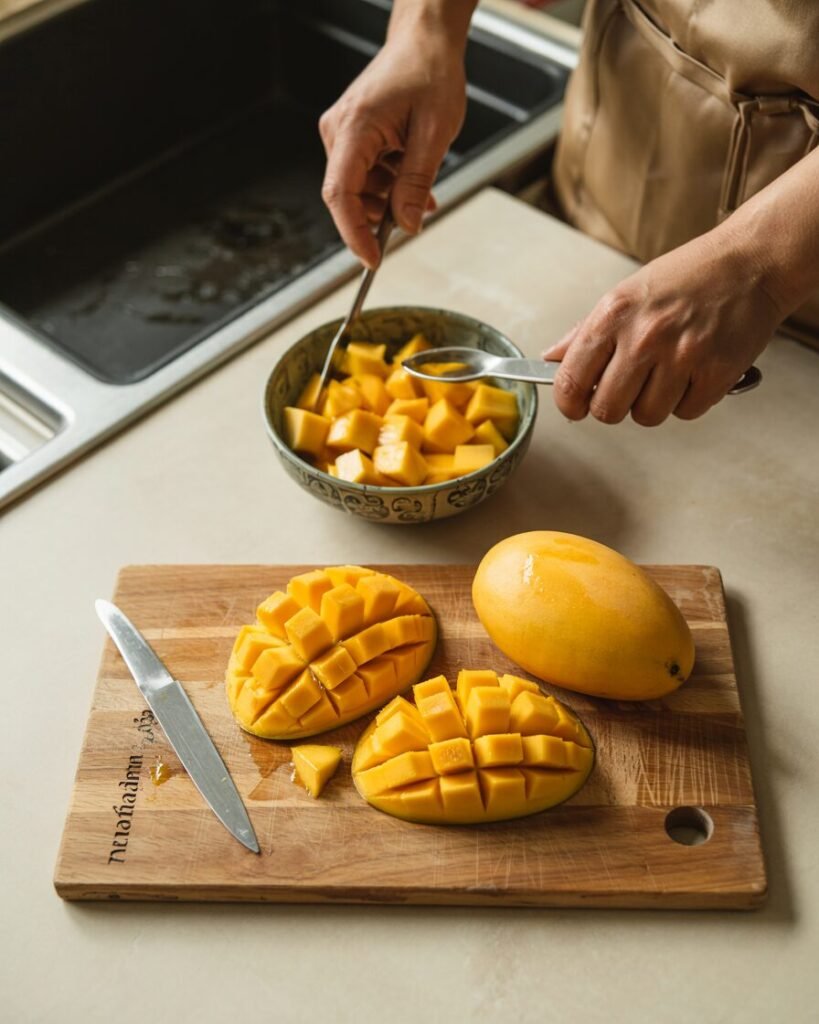
Yield: 8 standard popsicles (80–90 ml each)
- Ripe mango flesh — 400 g (about 2 large mangoes / 2 cups puree)
Main flavor and natural sweetness - Heavy cream — 120 g (½ cup)
Adds richness and prevents icy texture - Condensed milk — 120 g (⅓ cup)
Sweetener and creamy body - Fresh lime juice — 10 g (2 tsp)
Balances sweetness and brightens flavor - Vanilla extract — 2 g (½ tsp)
Rounds out flavor
Optional:
- Pinch of salt (1 g)
Enhances sweetness and mango flavor
Ingredient tip:
Ataulfo or Alphonso mangoes produce the smoothest puree and best aroma.
Equipment
Required
- Blender or food processor
- Popsicle mold (8 cavities, ~80–90 ml each)
- Popsicle sticks
- Measuring cups or digital scale
- Freezer
Nice-to-Have
- Fine mesh sieve (for extra smooth puree)
- Silicone popsicle molds (easier release)
Step-by-Step Instructions with Visual Cues
Step 1: Prepare the mango puree (3 minutes)
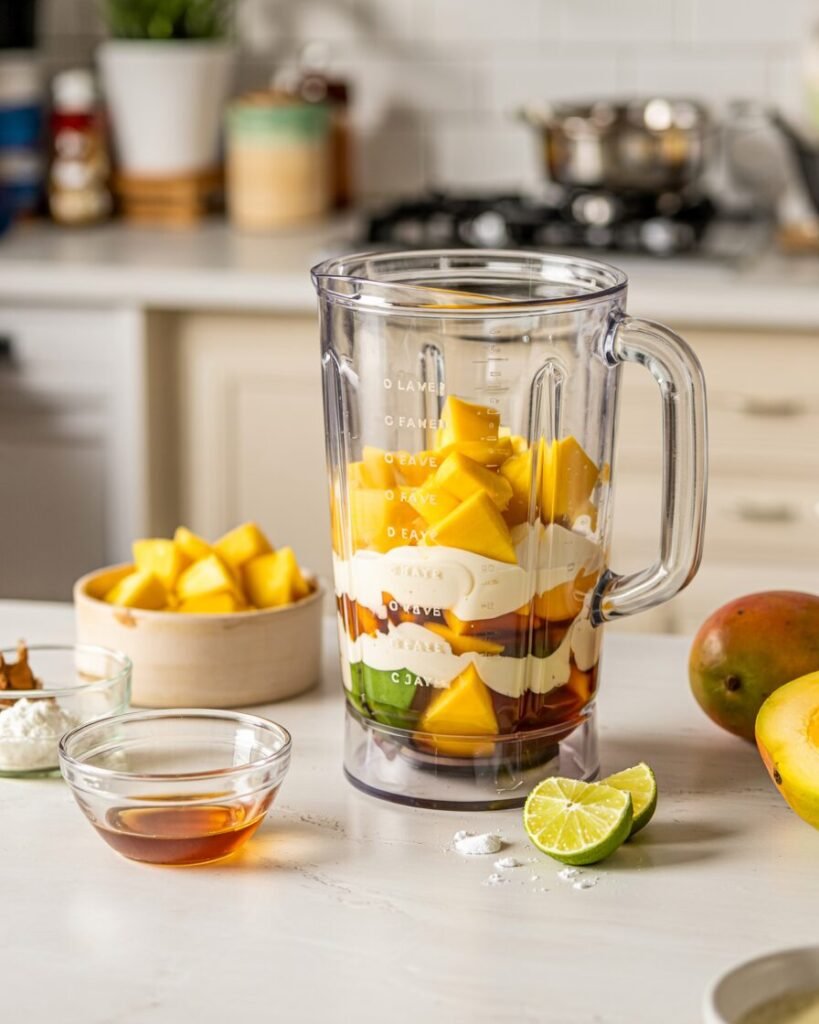
Peel and dice 400 g ripe mango flesh.
Blend until completely smooth.
Visual cue:
The puree should look thick, glossy, and bright orange with no visible fibers.
Avoid this:
Chunky puree will create uneven texture in the popsicles.
Step 2: Blend the creamy base (2 minutes)
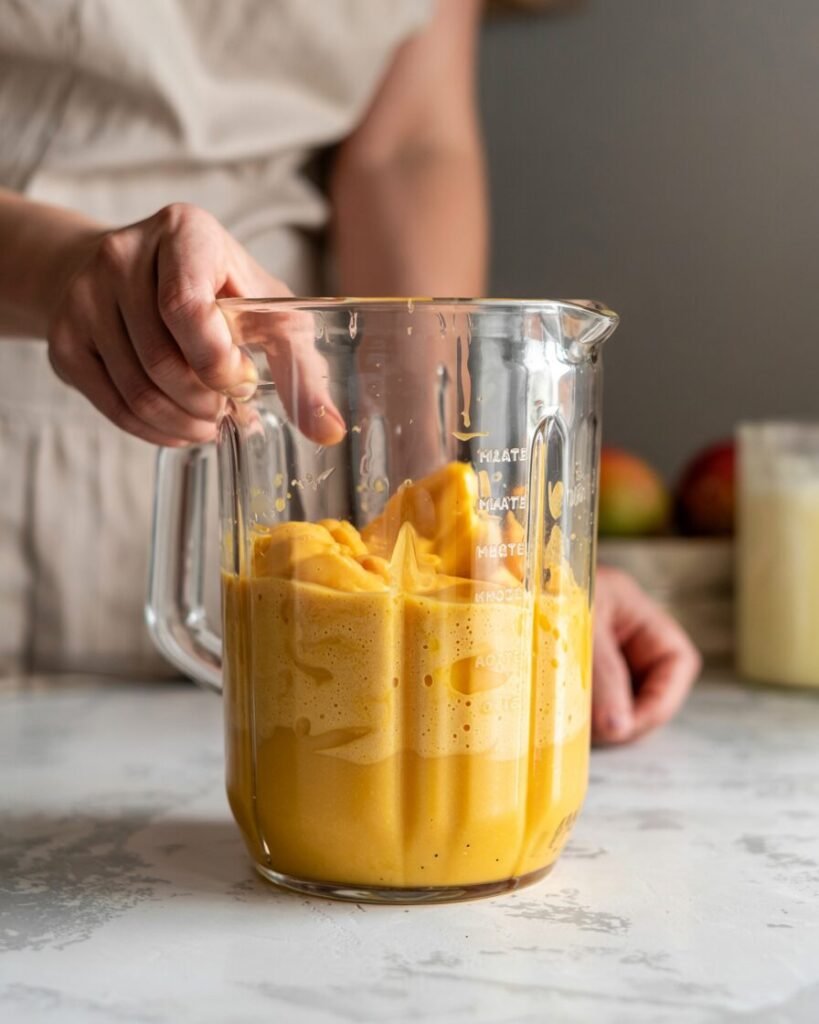
Add to the blender:
- Mango puree
- 120 g heavy cream
- 120 g condensed milk
- 10 g lime juice
- ½ tsp vanilla
- Pinch of salt
Blend for 30–40 seconds until fully combined.
Visual cue:
The mixture should look pale golden orange and pour like a smoothie.
If it looks watery, your mangoes may be less ripe—add 1–2 tbsp extra condensed milk.
Step 3: Taste and adjust
Taste the mixture before freezing.
It should taste slightly sweeter than you want, because freezing dulls sweetness.
Optional adjustments:
- More lime juice for brightness
- More condensed milk for sweetness
Step 4: Fill the molds (5 minutes)
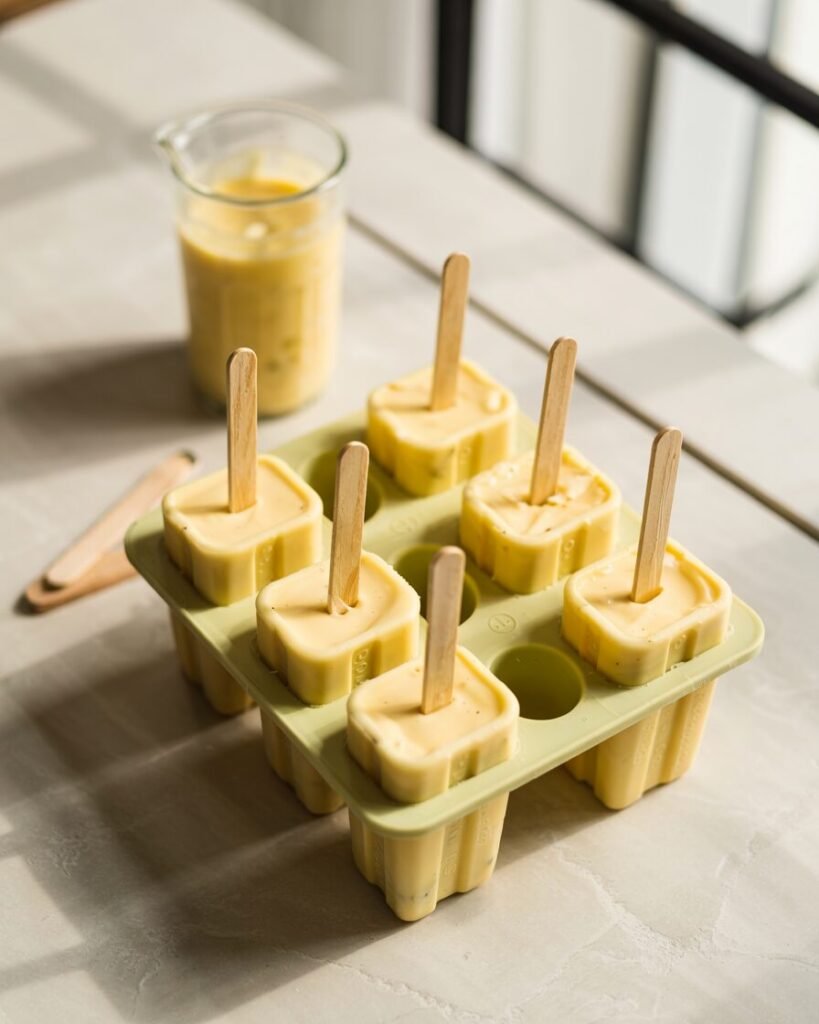
Pour the mixture into popsicle molds, leaving 5 mm space at the top.
Insert popsicle sticks.
Visual cue:
The mixture should fill smoothly with no large bubbles.
Tip:
Tap the mold gently on the counter to release trapped air.
Step 5: Freeze (6–8 hours)
Place molds upright in the freezer.
Freeze for at least 6 hours, ideally overnight.
Freezer temperature:
−18°C / 0°F
Doneness cue:
Popsicles should feel firm with no soft center when pressed.
Step 6: Unmold
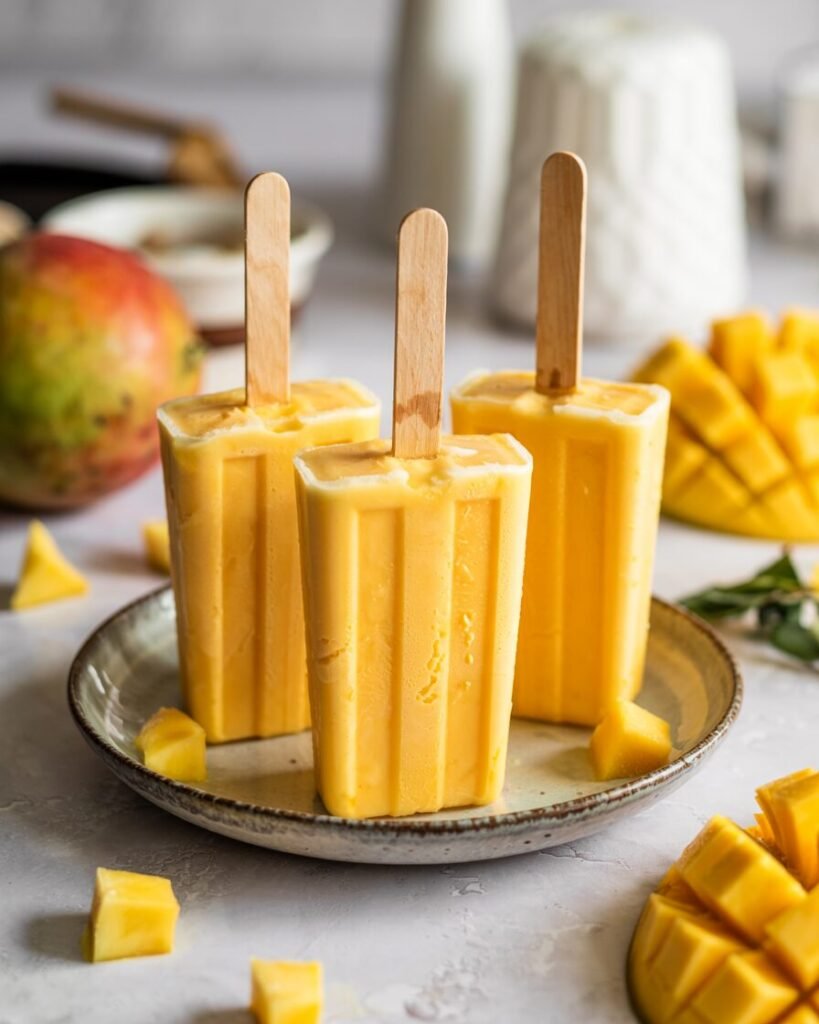
Run the mold under warm water for 10–15 seconds.
Gently pull the stick.
If it resists, warm the mold again briefly.
Avoid twisting aggressively—this can break the popsicle.
Troubleshooting: Common Problems and Fixes
Problem: Popsicles are icy
Likely causes: Too much water, not enough fat
Fix next time: Add 2–3 tbsp cream or coconut milk
Problem: Popsicles too hard to bite
Likely cause: Low sugar content
Fix: Increase condensed milk by 20–30 g
Problem: Popsicles taste bland
Likely causes: Unripe mangoes
Fix: Add 1 tbsp honey or extra condensed milk
Problem: Popsicles won’t release from mold
Likely cause: Frozen too solid
Fix: Dip mold in warm water 15–20 seconds
Problem: Grainy texture
Likely cause: Fibrous mango variety
Fix: Strain puree through a fine mesh sieve
Substitutions and Variations
Dairy-Free Version
Replace cream + condensed milk with:
- 240 g full-fat coconut milk
- 60 g maple syrup or honey
Result: Slight coconut flavor, still creamy.
Vegan Version
Use:
- Coconut milk
- Maple syrup or agave
Low-Sugar Option
Use:
- 120 g Greek yogurt
- 40 g honey
Texture will be slightly tangier and less creamy.
Flavor Variations
Mango Chili Popsicles
Add ¼ tsp chili powder for a spicy twist.
Mango Coconut Popsicles
Replace cream with coconut milk.
Mango Yogurt Swirl Popsicles
Layer mango mixture with sweetened Greek yogurt before freezing.
Scaling the Recipe
| Yield | Mango | Cream | Condensed Milk |
|---|---|---|---|
| 4 popsicles | 200 g | 60 g | 60 g |
| 8 popsicles | 400 g | 120 g | 120 g |
| 16 popsicles | 800 g | 240 g | 240 g |
Storage, Make-Ahead, and Freezing
Freezer:
Store popsicles up to 2 months in airtight freezer bags.
Prevent freezer burn:
Wrap each popsicle in parchment before storing.
Best texture window:
First 3 weeks.
Do not store in the refrigerator—they will melt and refreeze unevenly.
Serving Suggestions and Pairings
These popsicles shine on their own, but you can elevate them with simple additions:
- Drizzle with melted dark chocolate
- Sprinkle toasted coconut flakes
- Serve with lime zest and chili salt
- Dip halfway in white chocolate
Balance tip:
Mango is naturally sweet, so pairing with tangy or bitter flavors works beautifully.
FAQs
Can I use frozen mango?
Yes. Thaw completely before blending. Drain excess liquid so the mixture doesn’t become watery.
How do I prevent icy popsicles?
Add fat (cream or coconut milk) and enough sugar. Both reduce ice crystal formation.
Can I halve or double the recipe?
Absolutely. Just maintain the same ingredient ratios.
Can I make these in an OTG freezer compartment?
Yes, but freezing may take 8–10 hours depending on freezer strength.
What mango variety works best?
Sweet, non-fibrous mangoes like Alphonso, Ataulfo, or Kesar give the smoothest texture.
Notes From My Kitchen (Testing Log)
Batch 1:
Used only mango puree and sugar. Result: refreshing but very icy.
Batch 2:
Added cream. Texture improved dramatically but still slightly hard.
Batch 3:
Switched sugar to condensed milk. This created a creamier, smoother pop.
Batch 4:
Added lime juice. Flavor became noticeably brighter.
Batch 5 (final version):
Balanced mango, cream, condensed milk, and lime. The texture became silky, scoop-like, and easy to bite.
Key takeaway:
Even a small amount of fat transforms homemade popsicles.
Nutrition and Disclaimer
Approximate per popsicle:
- Calories: 140
- Carbs: 22 g
- Fat: 5 g
- Sugar: 20 g
Values are estimates and depend on ingredient brands and mango sweetness. Always follow proper food-safety and storage practices.
Final Thoughts
Homemade popsicles are one of the easiest desserts you can make, yet they deliver the most satisfying reward—bright fruit flavor, creamy texture, and pure summer nostalgia.
This creamy mango popsicle recipe proves you don’t need special equipment or complicated techniques to create a frozen treat that tastes amazing.