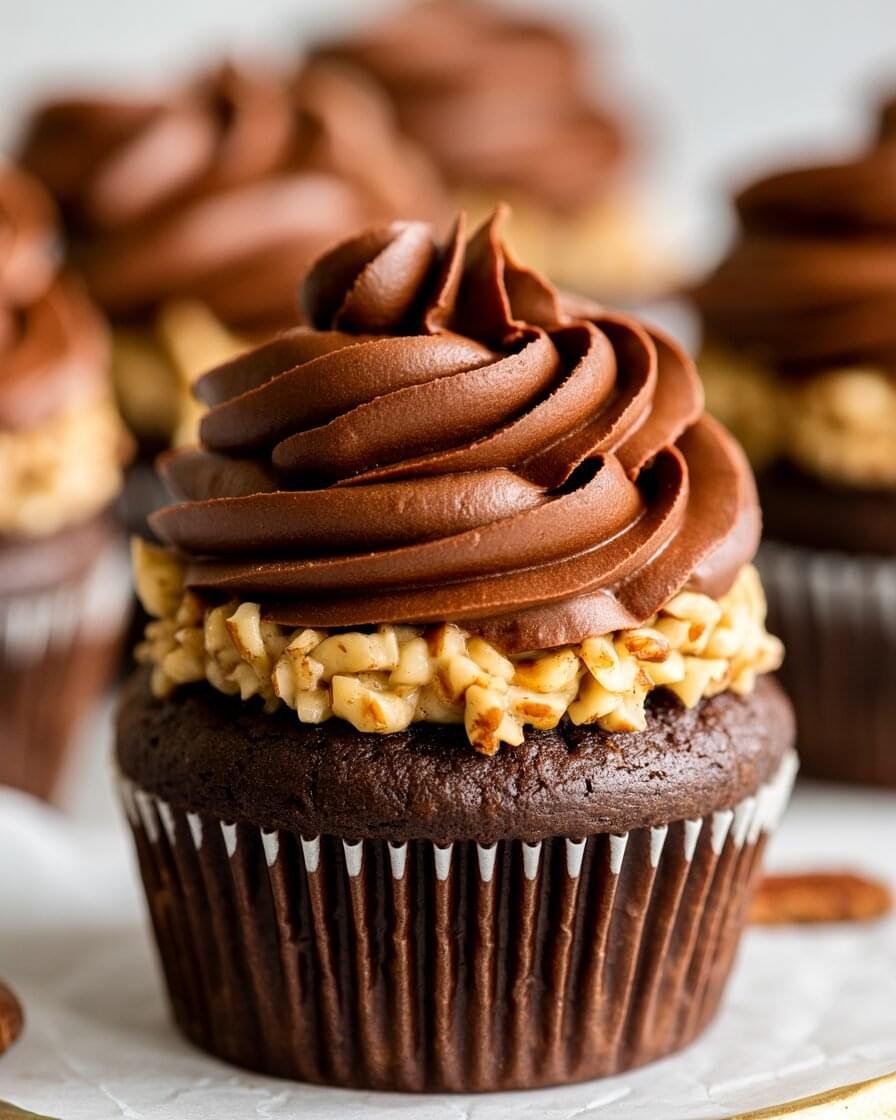
There are chocolate cupcakes… and then there are German Chocolate Cupcakes, the kind that make people pause mid-bite and ask, “Wait—what is this magic?” These cupcakes take everything we love about the classic cake—the caramel-sweet coconut, the buttery pecans, the deep cocoa flavor—and turn it into a batch-friendly, no-stress recipe that works beautifully even in small home kitchens.
If you’ve struggled with dry chocolate cupcakes or fillings that turn gritty, you’re in the right place. This version gives you soft, moist cupcakes that stay tender for days, a smooth and perfectly thick coconut-pecan filling, and a pipeable chocolate frosting that behaves itself even in warm weather. I’ll walk you through the exact textures to look for, why each ingredient matters, and the tested tips that guarantee success on your very first try.
Why This Recipe Works (Baking Science)
German Chocolate Cake is beloved for its sweet, nutty, caramel-coconut filling—but the cake itself must be sturdy enough to hold it while staying tender. Here’s the science behind this cupcake version:
- Oil + Buttermilk = Moist crumb
Oil has a lower melting point than butter, so it stays liquid even when the cupcake cools, keeping the crumb soft. Buttermilk’s acidity weakens gluten strands, giving a plush, fine crumb. - Blooming cocoa intensifies flavor
Pouring hot coffee or hot water over cocoa powder dissolves the fat-soluble flavor compounds, resulting in a deeper, smoother chocolate taste. - Balanced leavening for flat-topped cupcakes
Too much baking soda causes doming and cracking. This recipe uses a 2:1 baking powder to baking soda ratio for gentle lift and level surfaces—perfect for frosting.
Ingredients (With Weights + Purpose)
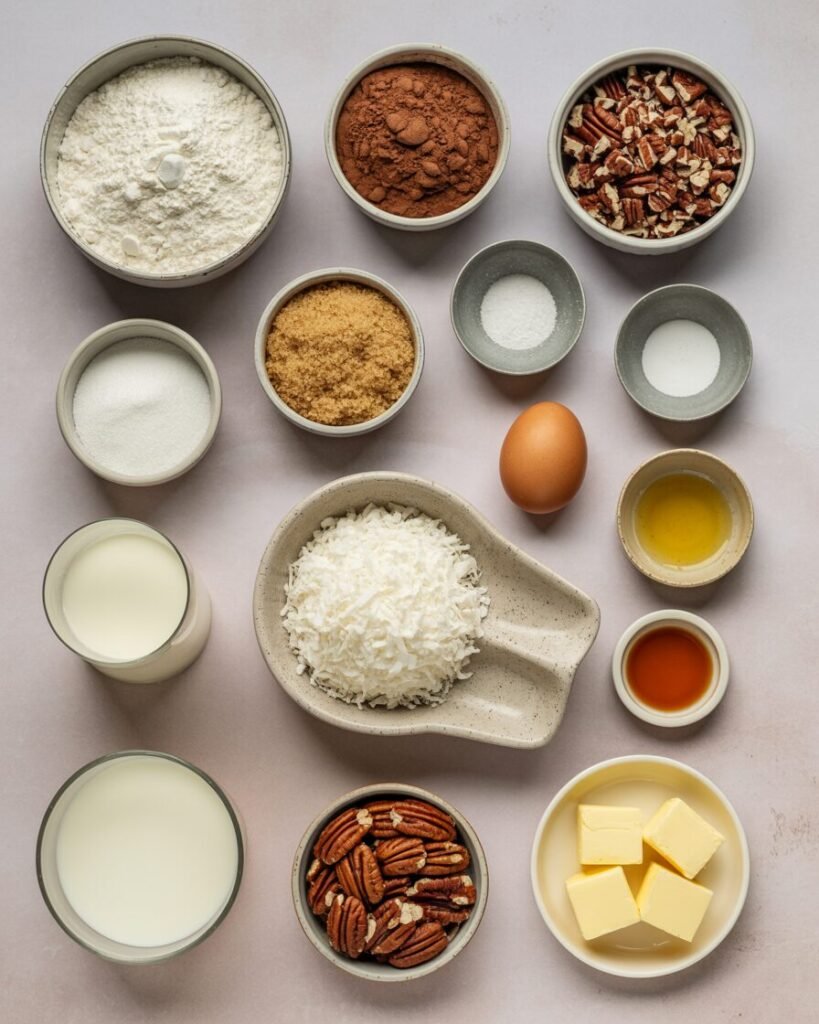
Chocolate Cupcakes (12 standard cupcakes)
- All-purpose flour — 135 g (1 cup + 2 tbsp) — Structure; keeps crumb tender.
- Dutch-process cocoa powder — 35 g (⅓ cup) — Rich color & smooth chocolate flavor.
- Granulated sugar — 150 g (¾ cup) — Sweetness, moisture retention.
- Light brown sugar — 50 g (¼ cup) — Adds caramel notes, softness.
- Baking powder — 1 tsp — Main lift.
- Baking soda — ½ tsp — Reacts with buttermilk for tenderness.
- Salt — ¼ tsp — Balances sweetness.
- Neutral oil — 70 g (⅓ cup) — Moisture.
- Buttermilk — 120 g (½ cup) — Acidity + moisture.
- Egg — 1 large (50 g) — Binding and structure.
- Hot coffee or boiling water — 120 g (½ cup) — Blooms cocoa.
Coconut–Pecan Filling
- Evaporated milk — 120 g (½ cup)
- Granulated sugar — 100 g (½ cup)
- Salted butter — 30 g (2 tbsp)
- Egg yolk — 1 — Thickens mixture.
- Shredded sweetened coconut — 70 g (¾ cup)
- Toasted chopped pecans — 60 g (½ cup)
- Vanilla — 1 tsp
Chocolate Frosting
- Softened butter — 115 g (½ cup)
- Powdered sugar — 200 g (1 ⅔ cups)
- Cocoa powder — 25 g (¼ cup)
- Milk or cream — 1–2 tbsp
- Vanilla — ½ tsp
- Pinch of salt
Equipment
Required
- Standard 12-cup muffin pan
- Paper liners
- Hand mixer or whisk
- Mixing bowls (2–3)
- Kitchen scale
- OTG/oven
- Small saucepan
- Cooling rack
Nice to Have
- Offset spatula
- Cookie scoop for portioning
- Instant-read thermometer
- Fine mesh sieve for cocoa
Step-by-Step Instructions (With Visual Cues)
Step 1: Make the coconut-pecan filling
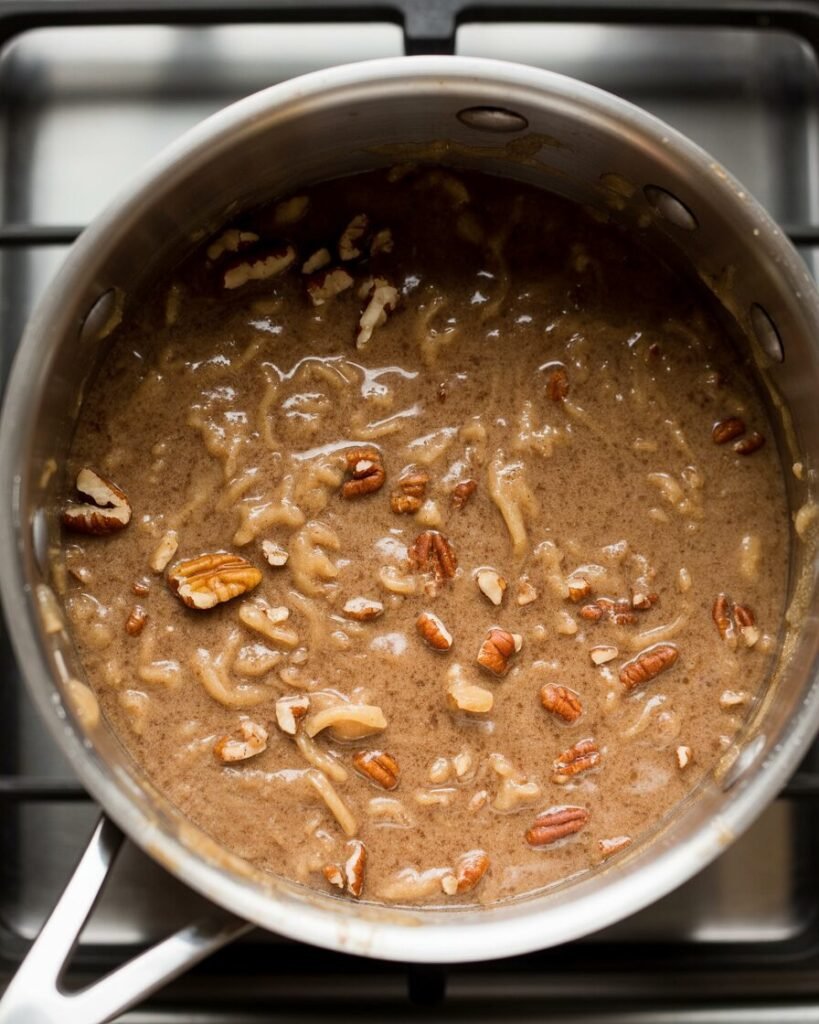
Cook evaporated milk, sugar, butter, and egg yolk over medium-low heat for 7–9 minutes, stirring constantly.
Visual cue: Mixture thickens to a loose custard that coats the spoon.
Remove from heat; stir in coconut, pecans, and vanilla. Cool completely.
Step 2: Preheat the oven
Bake at 175°C (350°F), OTG middle rack.
Preheat for 12–15 minutes to ensure even heat.
Step 3: Mix dry ingredients
Sift flour, cocoa, baking powder, baking soda, sugar, brown sugar, and salt.
Visual cue: No lumps; cocoa evenly distributed.
Step 4: Combine wet ingredients
Whisk egg, oil, and buttermilk until smooth.
Step 5: Bring batter together
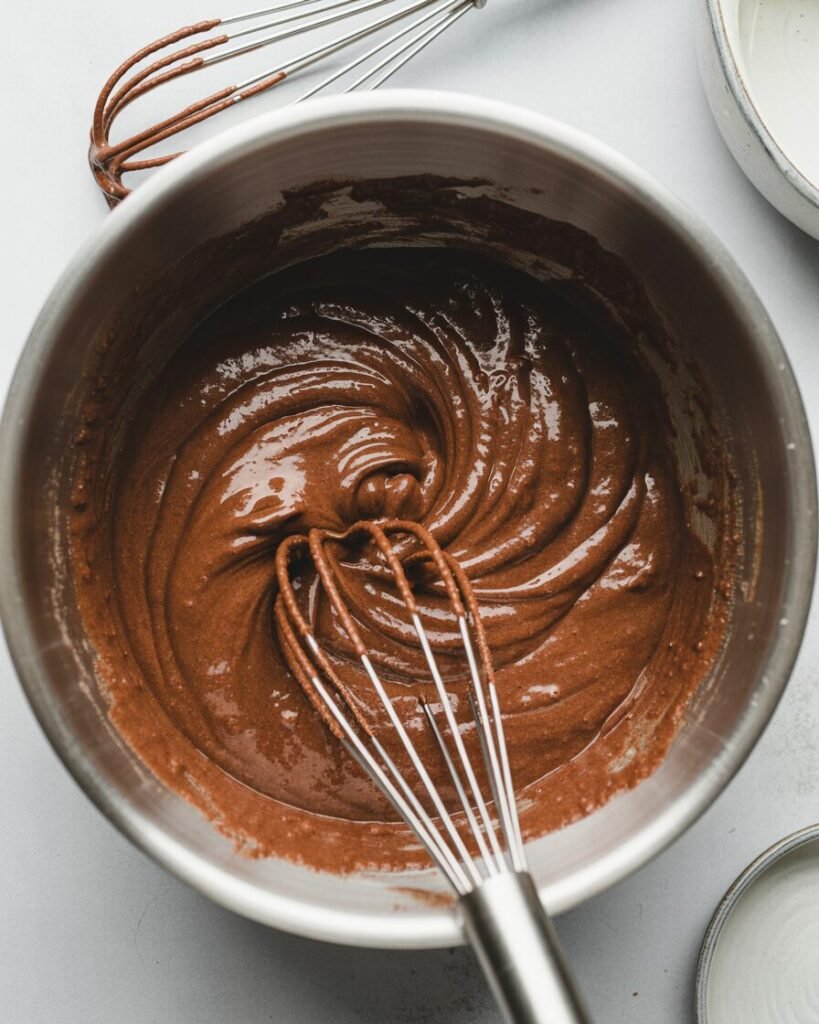
Add wet ingredients to dry. Mix until just combined—don’t overmix.
Pour in hot coffee; whisk slowly.
Visual cue: Batter should be thin, glossy, and pourable—this is correct.
Step 6: Bake
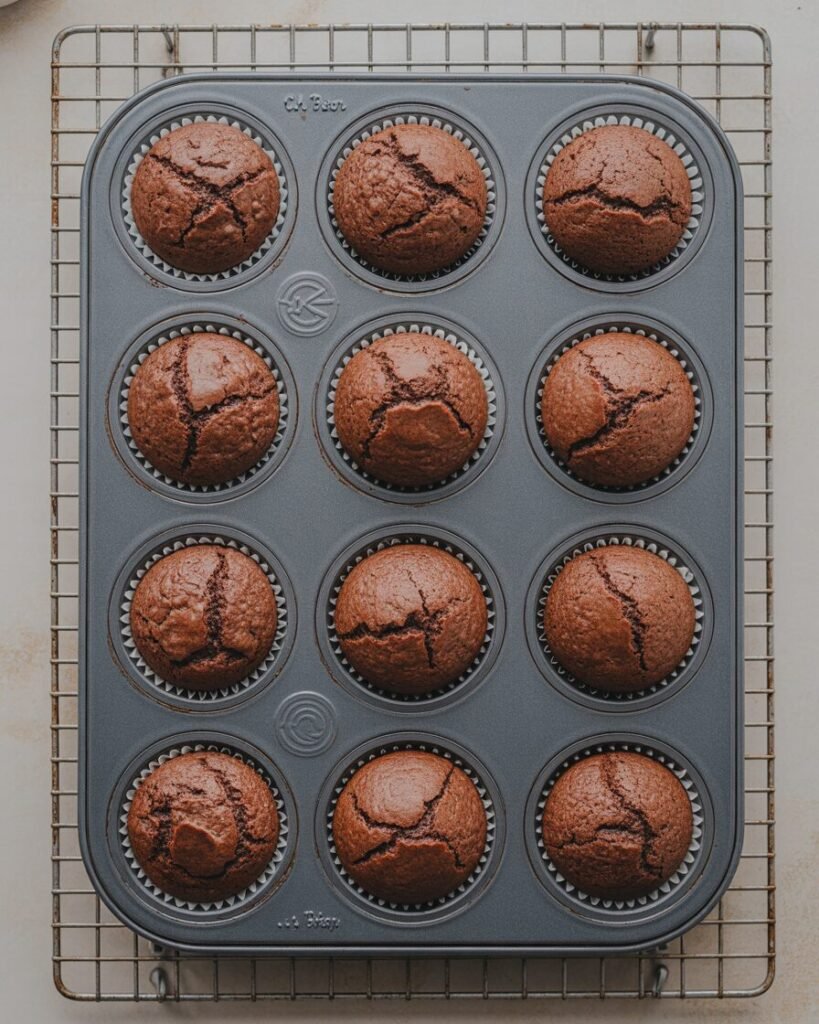
Fill liners ⅔ full.
Bake 18–20 minutes or until tops spring back and a skewer comes out clean (or internal temp reaches 96–98°C / 205°F).
cool fully before filling + frosting.
Step 7: Assemble
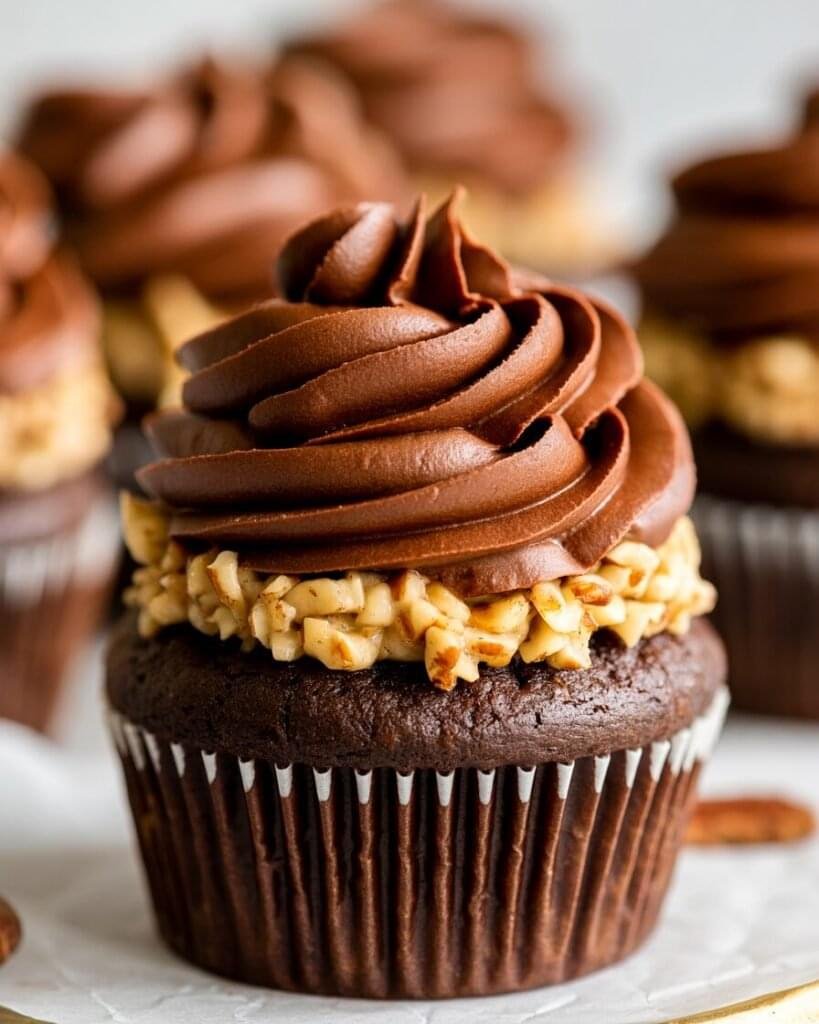
Cut a small cone from each cupcake center. Add 1–1½ tsp coconut-pecan filling. Replace lids.
Pipe chocolate frosting on top using your favorite tip.
Troubleshooting (Common Issues & Fixes)
1. Cupcakes sink
- Likely cause: Underbaking, thin batter, too much leavening.
- Fix: Bake to 96–98°C internal; check oven temperature accuracy.
2. Cracked domed tops
- Cause: High oven temp or overfilled liners.
- Fix: Fill ⅔ full; reduce temp by 10°C in OTGs prone to running hot.
3. Gummy or dense crumb
- Cause: Overmixing or expired leaveners.
- Fix: Stir only until combined; replace baking powder every 6 months.
4. Frosting too stiff
- Cause: Over-measured sugar.
- Fix: Add 1–2 tsp milk until smooth.
5. Filling becomes grainy
- Cause: Heat was too high.
- Fix: Cook low & slow; stir continuously.
Substitutions & Variations
Dietary Swaps
- Egg-free cupcakes:
Replace egg with 50 g unsweetened applesauce.
Crumb becomes slightly softer but still stable. - Dairy-free:
- Use coconut milk instead of evaporated milk.
- Vegan butter works in both filling & frosting.
- Use plant-based “buttermilk” (oat milk + 1 tsp lemon juice).
- Gluten-free:
Use a 1:1 baking blend with xanthan gum. Expect slightly looser crumb.
Flavor Variations
- Add 1 tsp espresso powder to intensify chocolate.
- Swap pecans for walnuts or hazelnuts.
- Add 10 g cocoa to frosting for a deeper chocolate profile.
Scaling
- 24 cupcakes: Double all ingredients.
- 6 cupcakes: Halve the cupcake ingredients; filling yields extra (freeze it!).
Storage, Make-Ahead & Freezing
- Room temperature: 2 days in an airtight box (filling stays stable).
- Refrigerator: 4–5 days; bring to room temp before serving.
- Freezer:
- Freeze unfrosted cupcakes up to 2 months.
- Freeze filling separately in a zip bag (lay flat).
- Frosting freezes up to 1 month; whip after thawing.
Do not freeze assembled cupcakes—the filling causes soggy centers once thawed.
Serving Suggestions
Serve with:
- Dark chocolate drizzle
- Fresh berries
- A dollop of whipped cream (lightly sweetened to balance the caramel filling)
FAQs
1. Can I use natural cocoa powder?
You can, but reduce baking powder to ¾ tsp because natural cocoa is more acidic.
2. How do I prevent dry cupcakes?
Weigh flour, use oil—not butter—and bake only until just done.
3. Can I make these in an air fryer?
Yes: 150°C (300°F) for 12–14 minutes; check early.
4. Can I double the filling?
Yes. The filling freezes beautifully for future batches.
5. What’s the best oil for this cake?
Neutral oils like canola or sunflower keep the flavor clean.
Notes From My Kitchen (Testing Log)
Batch 1:
Used too much baking soda → slight metallic taste and doming. Adjusted to current ratios.
Batch 2:
Tried butter instead of oil → crumb tighter and drier next day. Returned to oil.
Batch 3:
Cooked filling too fast → grainy texture. Lower heat solved it.
Final Method:
Oil-based batter + bloomed cocoa + gently cooked filling = moist, stable cupcakes with deep chocolate flavor and perfect structure.
Final Thoughts
German Chocolate Cupcakes are the perfect mix of rich, nostalgic flavors with weeknight-simple technique. Whether you’re baking for a birthday, celebration, or just because chocolate makes everything better, these cupcakes deliver reliable results—even in small home kitchens with basic equipment. If you follow the visual cues and keep temperatures controlled, you’ll get cupcakes that are moist, level, deeply chocolatey, and filled with the classic coconut-pecan goodness the cake is known for.