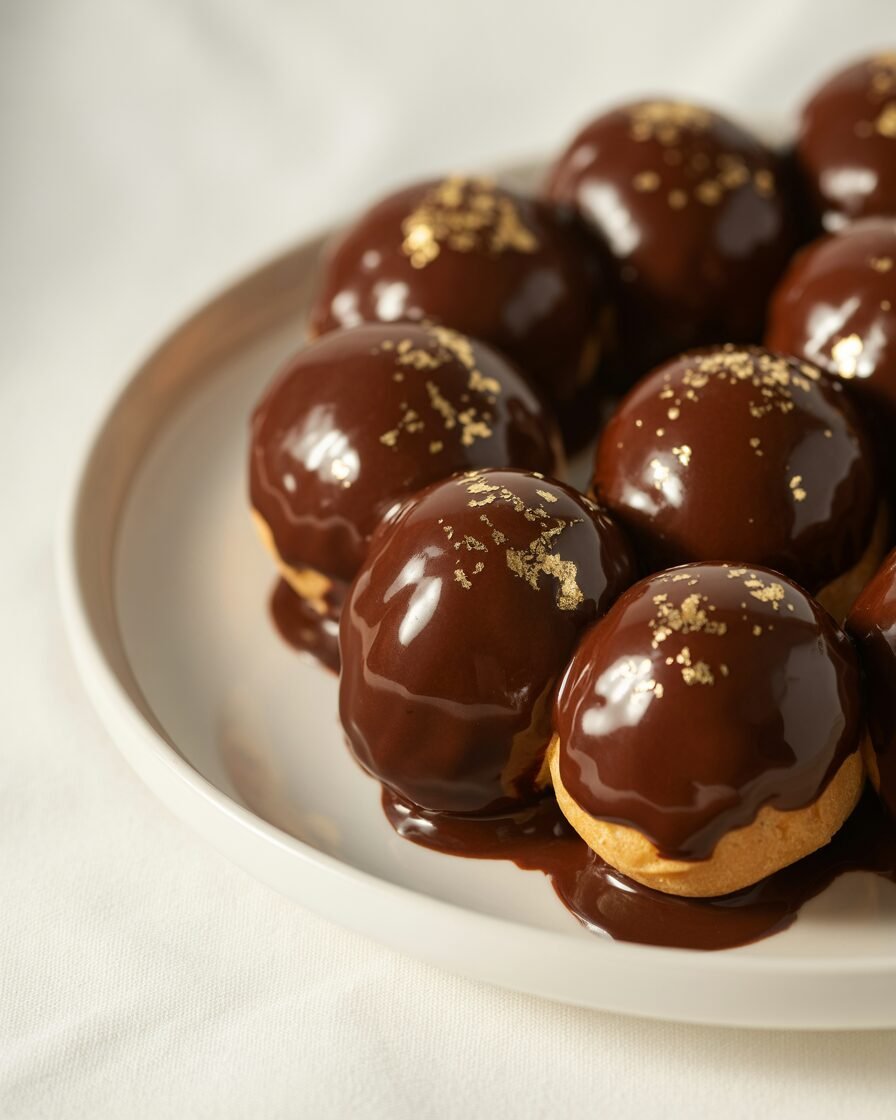
If you’ve ever wanted to make a dessert that looks like it walked straight out of a Parisian pastry case—but is still totally beginner-friendly—these Gold-Dusted Chocolate Profiteroles are your new signature showstopper. They’re crisp, hollow choux shells filled with cloud-light vanilla cream and finished with a glossy chocolate glaze plus a subtle sweep of edible gold dust. Think elegant and achievable.
What makes my profiteroles fool-proof? A precise choux paste method that ensures perfect puffing and zero soggy bottoms. My #1 pro tip: dry out your dough on the stovetop for 2–3 minutes until it forms a matte film in the pan—this single step controls structure.
Why This Recipe Works
Profiteroles rely entirely on steam leavening—no baking powder, no yeast—so the structure must be strong enough to expand without collapsing. Cooking the dough (panade) on the stovetop gelatinizes the starches in the flour, allowing them to hold steam effectively.
Eggs are the backbone: their proteins set and create the hollow interior we fill later. Adding them one at a time ensures the dough reaches the correct “V-shaped ribbon” consistency—not too thick, not too runny. Room-temperature eggs mix in faster, preventing overworking.
A hot oven (220°C/425°F) gives an initial burst of expansion. Reducing the temperature (190°C/375°F) finishes the bake evenly and drives out moisture. This two-phase bake is what separates crisp shells from limp ones.
Finally, edible gold dust adheres beautifully to chocolate glaze because cocoa butter offers the perfect tacky surface when partially set.
Ingredients
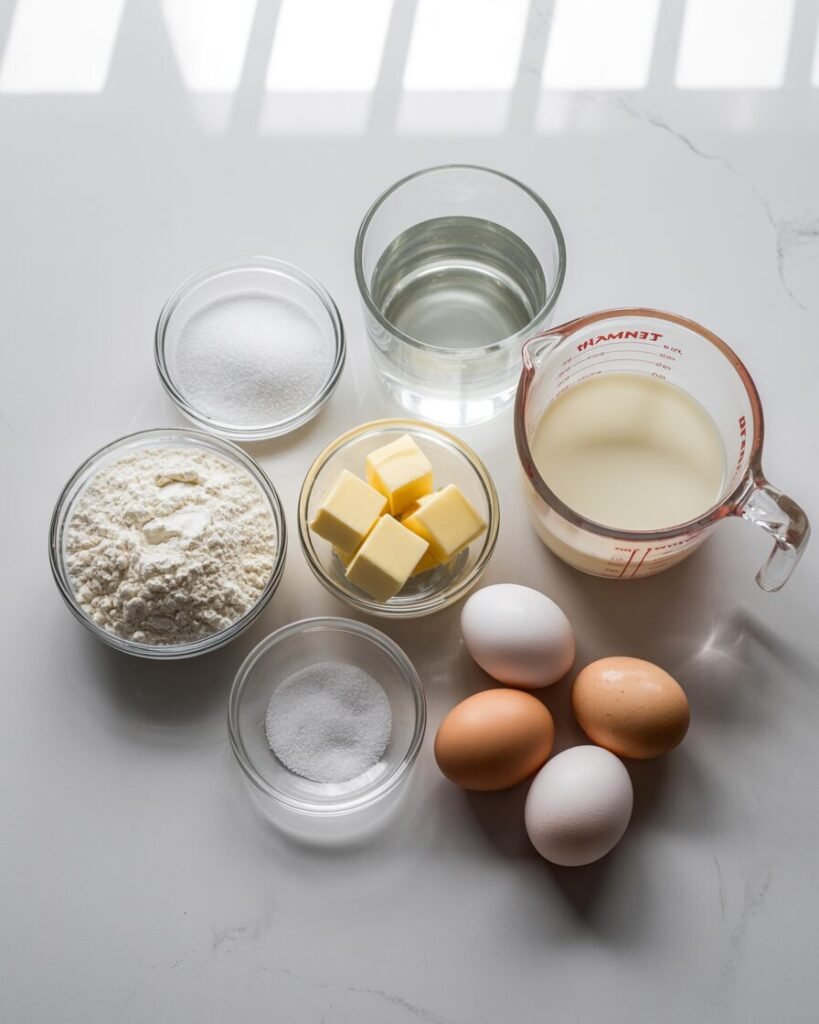
For the Choux Pastry (20–22 profiteroles)
- Water — 120g (½ cup) — steam generation + hydration
- Whole milk — 120g (½ cup) — richer color & softer bite
- Unsalted butter — 100g (7 tbsp) — flavor + structure
- Fine salt — 2g (½ tsp) — balances sweetness
- Sugar — 5g (1 tsp) — improves browning
- All-purpose flour — 150g (1¼ cups) — structure; must be sifted
- Eggs (room temp) — 4 large (200g total) — leavening + binding
Vanilla Pastry Cream Filling
- Whole milk — 400g (1¾ cups)
- Egg yolks — 4
- Sugar — 80g (⅓ cup)
- Cornstarch — 30g (¼ cup)
- Unsalted butter — 30g (2 tbsp)
- Vanilla bean paste — 1 tbsp
Chocolate Glaze
- Dark chocolate (60–70%) — 150g (1 cup chopped)
- Heavy cream — 120g (½ cup)
- Unsalted butter — 20g (1 tbsp) — shine
Finish
- Edible gold dust — as needed
Equipment
Required
- Baking sheet + parchment
- Medium saucepan
- Wooden spoon or stiff spatula
- Piping bag + ½-inch round tip (or zip bag snipped)
- Oven/OTG
- Digital scale
- Instant-read thermometer (optional but helpful)
Nice-to-Have
- Offset spatula
- Fine mesh sieve
- Cooling rack
Step-by-Step Instructions with Visual Cues
1. Make the Choux Base (Panade)
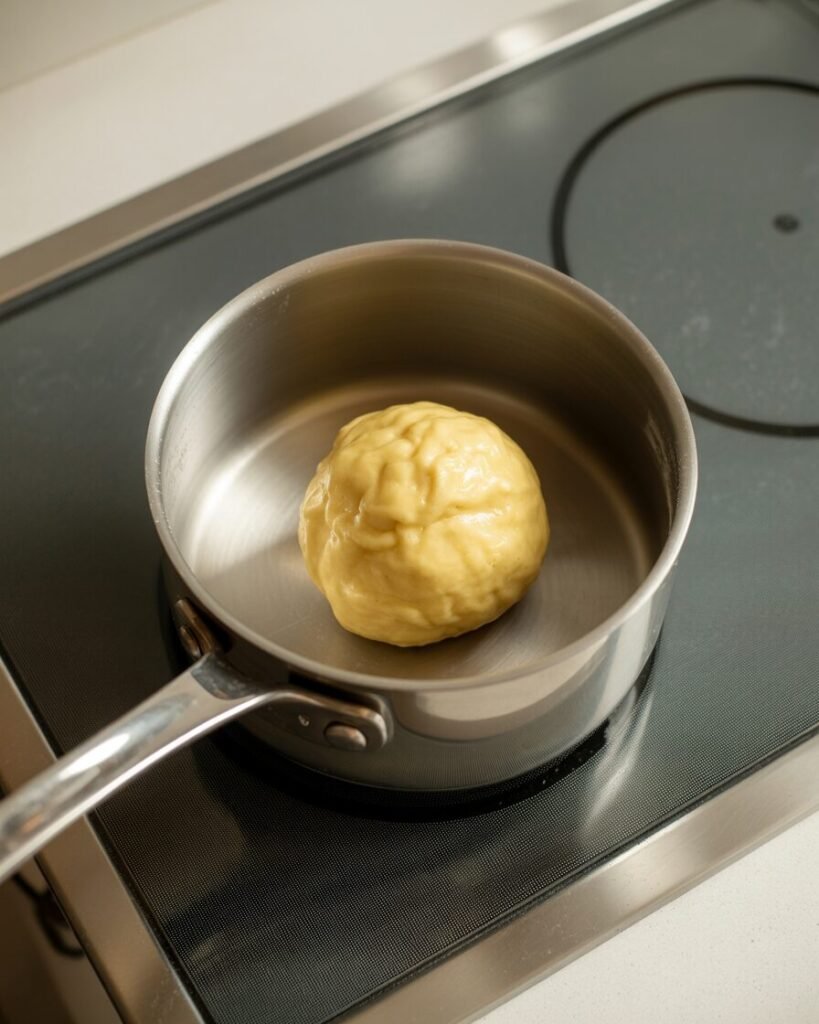
Heat water, milk, butter, salt, and sugar over medium heat until fully melted and just beginning to bubble (3–4 minutes).
Visual cue: mixture should be steaming, not boiling violently.
Add sifted flour all at once and stir vigorously. Cook 2–3 minutes until the dough forms a ball and leaves a thin film on the bottom of the saucepan.
Correct texture: matte, cohesive, and pulls away cleanly.
Incorrect: shiny, oily dough → not cooked enough.
2. Incorporate Eggs
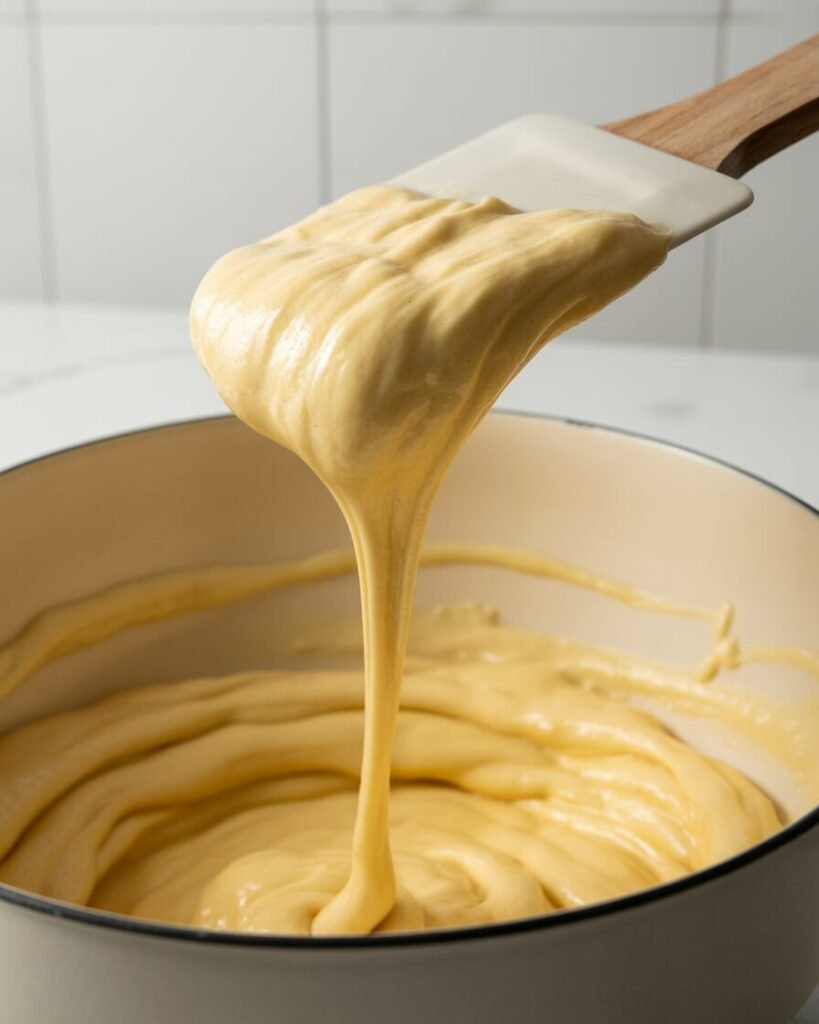
Transfer dough to a bowl; cool 5 minutes. Add eggs one at a time, mixing thoroughly after each.
Check consistency: When lifted with a spatula, the dough should form a smooth “V-shaped” ribbon at the tip. Too stiff? Add ½ beaten egg. Too runny? Add 1–2 tsp extra flour.
3. Pipe & Bake
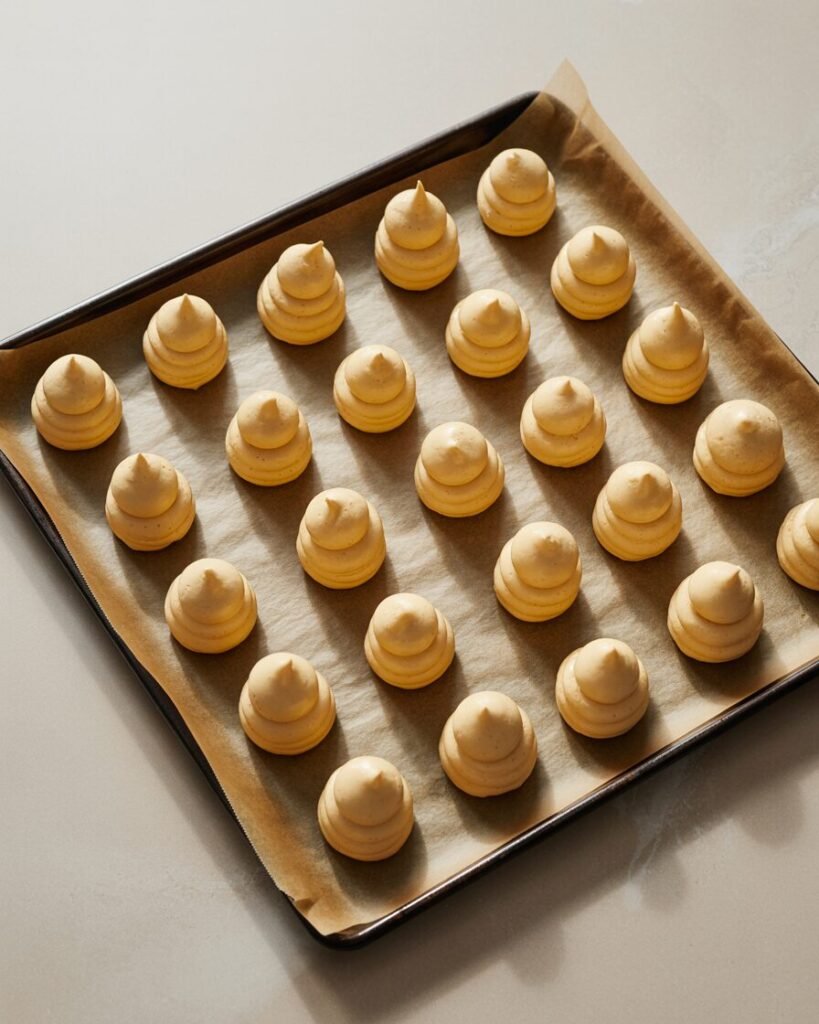
Preheat oven to 220°C (425°F) with the rack in the middle.
Pipe 1½-inch mounds onto parchment, spacing 2 inches apart. Smooth peaks with a damp fingertip.
Bake 10 minutes at 220°C (425°F), then reduce to 190°C (375°F) and bake 15–18 more minutes until deep golden.
Visual cue: shells should be evenly colored with no pale spots.
Pierce each bottom with a skewer to release steam. Cool fully.
4. Make Vanilla Pastry Cream
Whisk yolks, sugar, and cornstarch. Heat milk until steaming; temper into yolk mixture. Return to saucepan; cook 2–3 minutes until thick. Remove from heat, stir in butter and vanilla.
Correct texture: thick, glossy, smooth.
Incorrect: grainy → overheated.
Chill completely before using.
5. Fill Profiteroles
Pipe pastry cream into each shell until slightly heavy in your hand.
6. Chocolate Glaze + Gold Finish
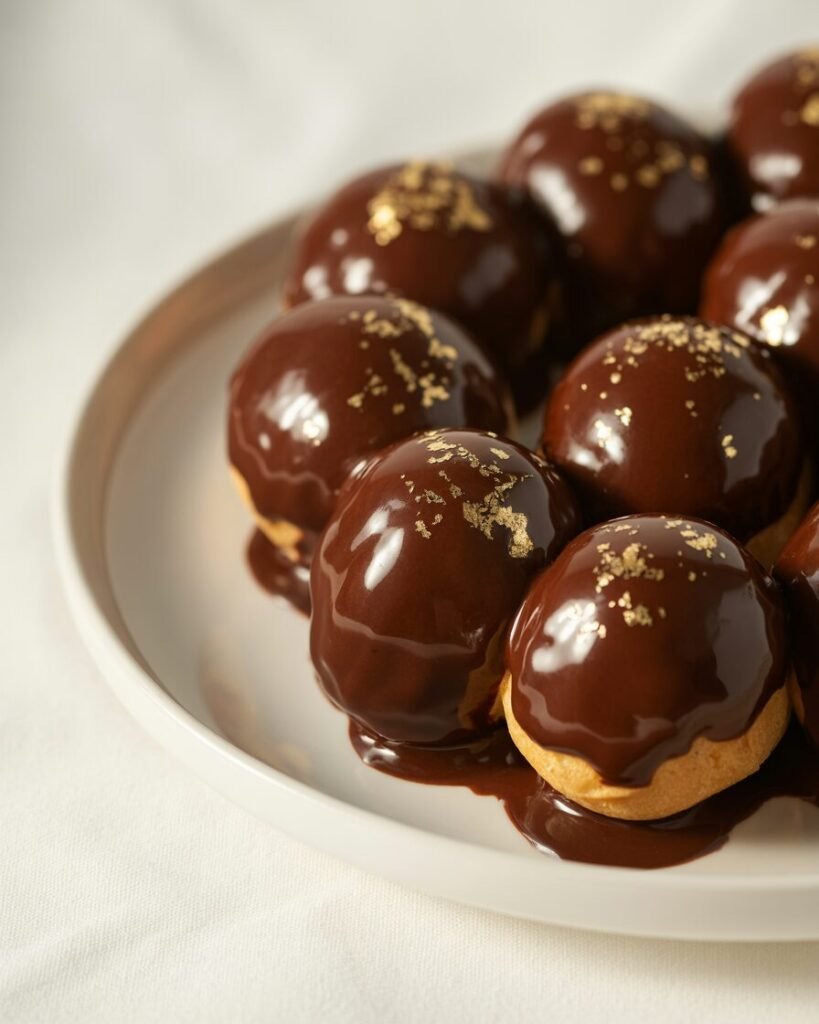
Heat cream until steaming; pour over chocolate. Rest 1 minute, then stir until smooth. Blend in butter for shine.
Dip tops of profiteroles. Let glaze partially set (8–10 minutes). Lightly brush or dust gold powder over the surface.
Troubleshooting (Fix Common Failures)
• Flat profiteroles
- Cause: eggs added too quickly, dough too loose, oven not hot enough.
- Fix: reach the V-ribbon consistency; ensure 220°C preheat.
• Soggy shells
- Cause: underbaked or not vented.
- Fix: bake until deep golden; pierce immediately after baking.
• Cracked tops
- Cause: dough too dry or oven too hot.
- Fix: adjust with ½ beaten egg; verify oven temperature with thermometer.
• Hollow but rubbery interiors
- Cause: steam trapped.
- Fix: lengthen second bake by 3–5 minutes.
• Pastry cream too thin
- Cause: insufficient cooking or wrong cornstarch amount.
- Fix: cook until large bubbles appear; reheat gently with an extra 1 tsp cornstarch slurry if needed.
Substitutions & Variations
Dietary Swaps
- Egg-free choux: Not recommended—steam structure relies on egg proteins.
- Dairy-free: Use oat milk for both pastry cream and panade + vegan butter; shells will be slightly paler.
- Gluten-free: Replace flour with a 1:1 gluten-free blend; increase cook-time of panade to ensure starch hydration.
Flavor Variations
- Coffee glaze: Add 1 tbsp espresso to chocolate glaze.
- Orange-vanilla cream: Add 1 tsp orange zest to pastry cream.
- Salted caramel filling: Fold 3 tbsp caramel into cooled pastry cream (reduces firmness).
Scaling
Half batch: divide all measurements by 2 (yields ~10 profiteroles).
Large batch: multiply by 1.5 for ~30 shells.
Storage, Make-Ahead & Freezing
- Unfilled shells (room temp): 24 hours in an airtight container.
- Filled profiteroles (fridge): 24–36 hours; best within 24 hours for crispiness.
- Freeze shells: up to 2 months. Thaw uncovered, then re-crisp at 160°C (320°F) for 5–6 minutes.
- Do not freeze: pastry cream—texture becomes grainy.
Gold finish remains intact after refrigeration.
Serving Suggestions
Serve with warm chocolate sauce, fresh berries, or a dusting of powdered sugar. For a dramatic dessert board, stack in a pyramid and add fresh edible flowers or a chocolate drizzle.
FAQs
1. Can I make the choux dough ahead?
Yes—refrigerate unbaked dough up to 24 hours. Bring to room temperature before piping.
2. Why did my dough look greasy?
Butter separated because the flour wasn’t stirred in fast enough. Restart and mix vigorously.
3. Can I bake these in an OTG?
Yes—use the middle rack, coils on top + bottom, same temperatures.
4. How do I double the recipe?
Double everything except eggs—add eggs gradually until you reach V-ribbon.
5. Can I use only water instead of milk?
Yes, but shells will be crisper and less golden.
Notes From My Kitchen (Testing Log)
Batch 1: Dough too loose after adding all eggs; shells baked flat. Added notes on checking V-ribbon earlier.
Batch 2: Reduced egg amount to 200g total; perfect rise but slight cracking → extended panade cooking by 1 minute.
Batch 3: Tested dairy-free version; oat milk created lighter shells but still structurally sound.
Final Method: Combined water + milk for balanced color, cooked panade to full matte stage, and used two-stage baking for consistent puff.
Nutrition & Disclaimer
Approx. per piece (filled + glazed): ~120–140 kcal.
Values are estimates; adjust for your brands and portion size. Always follow food-safety best practices when storing dairy-based fillings.
Conclusion & Final Thoughts
These Gold-Dusted Chocolate Profiteroles deliver everything I love in a celebration dessert—simple ingredients, impressive presentation, and a texture that’s crisp, airy, creamy, and indulgent all at once. Once you master the visual cues of choux paste, this becomes one of those recipes you can pull off anytime, for any event, with total confidence. If this is your first time: trust the process, watch the dough texture, and don’t skip the steam-venting step.