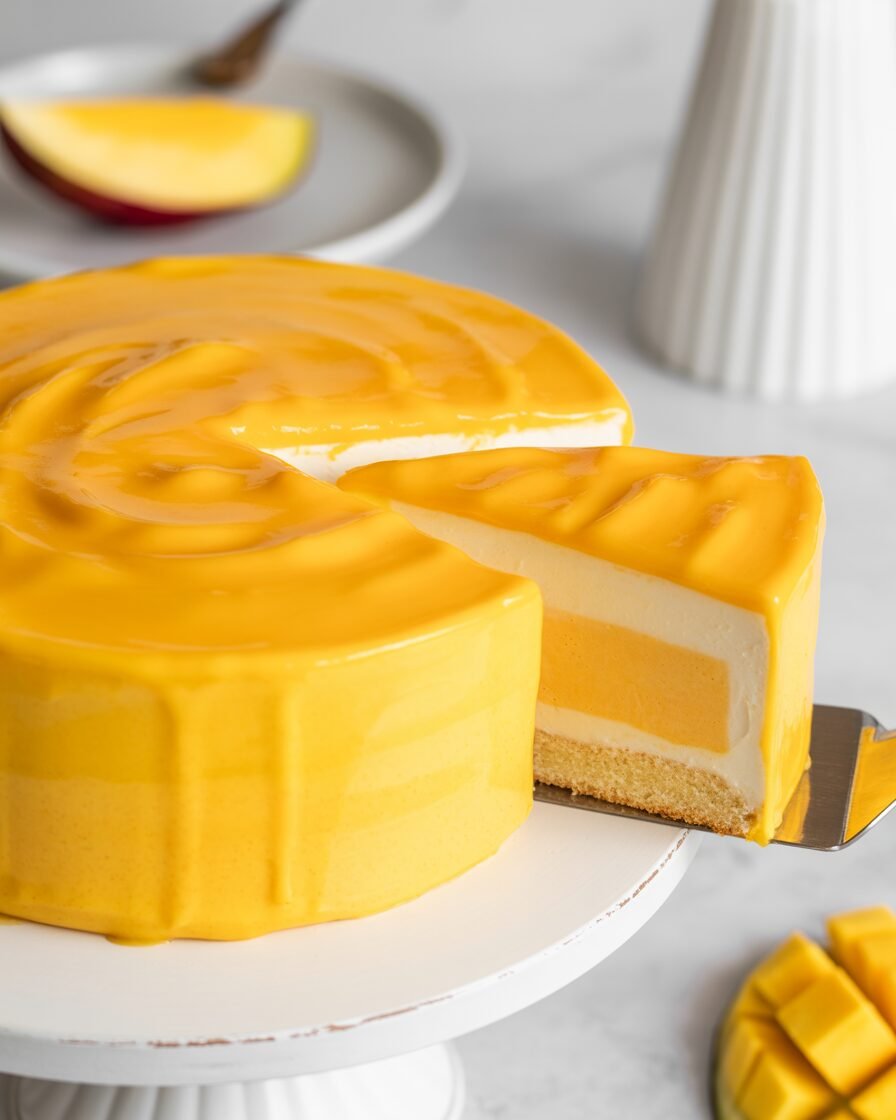
Some recipes look gorgeous online but fall apart the second you try them at home—especially anything involving mousse. I know, because my early mango mousse cakes either refused to set, tasted bland, or turned into a wobbly mango puddle by morning. That frustration is exactly why I created this version: a home-baker-friendly mango mousse cake that works even in warm kitchens, with basic tools, and without pastry-chef theatrics.
This recipe promises a mousse that’s feathery light yet stable, a sponge that stays soft without getting soggy, and a clean slice that actually holds its shape. If there’s one pro tip to remember, it’s this: stabilize the mango purée before folding in the cream. That single step transforms the entire texture and prevents 90% of common mousse failures.
💡 Why This Recipe Works (The Baking Science)
This recipe balances structure + lightness so your mousse stays airy but firm:
1. Gelatin stabilizes the purée and cream
Mango is naturally high in enzymes and water, so it doesn’t set on its own. Hydrated gelatin forms a delicate network that traps moisture, preventing collapse and giving that bouncy mousse texture.
2. Whipped cream aeration = lightness
Whipping cream to medium-stiff peaks creates micro-bubbles. When folded gently into the stabilized mango mixture, these bubbles stay intact, giving you that cloud-like mousse that still slices neatly.
3. Low-fat sponge + low hydration = no soggy base
A denser sponge absorbs a little mango moisture without turning mushy. That’s why we use oil + milk—not butter—to create a flexible, moist layer that holds up under mousse.
🛒 Ingredients
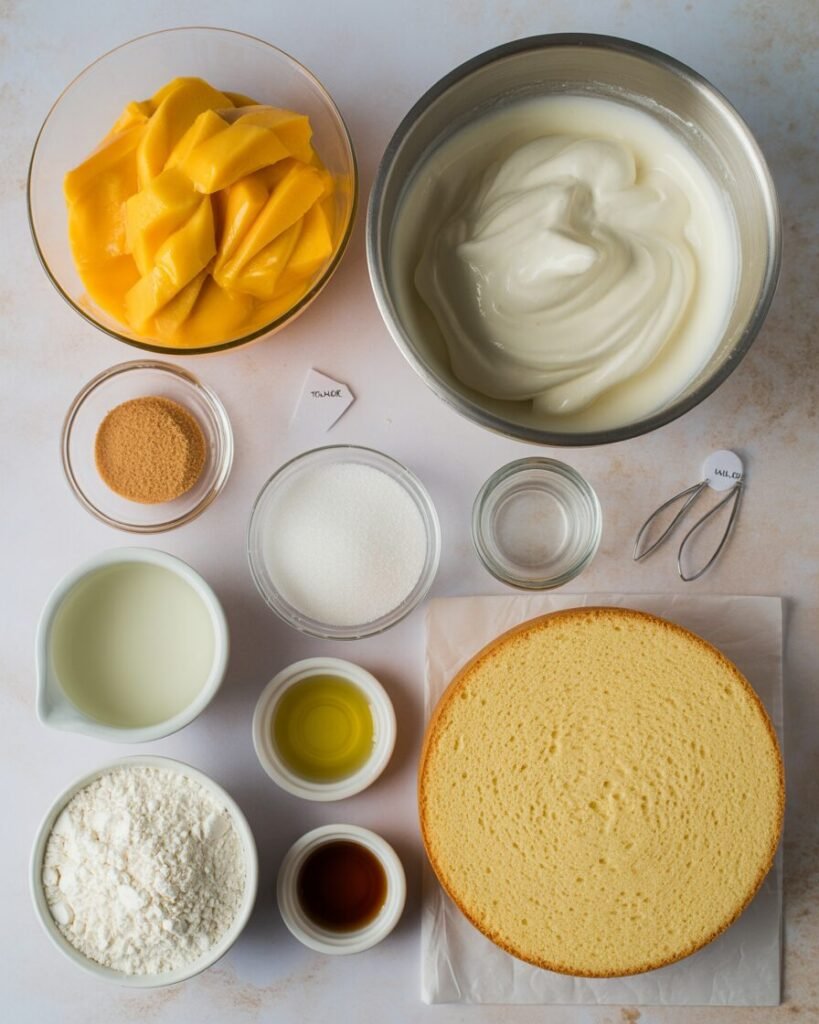
For the Vanilla Sponge (6-inch / 15 cm)
- All-purpose flour — 90g — ¾ cup — provides structure
- Cornstarch — 10g — 1 tbsp — softens crumb
- Baking powder — ½ tsp — lift
- Salt — 1 pinch — enhances flavor
- Sugar — 70g — ⅓ cup — sweetness + browning
- Neutral oil — 40g — 3 tbsp — keeps cake moist
- Milk (room temp) — 60g — ¼ cup — hydration
- Vanilla extract — 1 tsp — flavor
- Egg — 1 large — structure & tenderness
(Egg-free substitute provided in a later section)
For the Mango Mousse
- Fresh mango purée — 250g — 1 cup — main flavor
- Heavy whipping cream (35%) — 300g — 1¼ cups — aeration
- Sugar — 40–60g — 3–5 tbsp — adjust based on mango sweetness
- Gelatin powder — 6g — 2 tsp — stabilizer
- Water (for blooming gelatin) — 25g — 2 tbsp
Optional Mango Glaze Topping
- Mango purée — 80g — ⅓ cup
- Gelatin — 2g — ½ tsp
- Warm water — 1 tbsp
🔧 Equipment You’ll Need
Required
- 6-inch (15 cm) round pan or mousse ring
- Mixing bowls
- Hand whisk or hand mixer
- Silicone spatula
- Digital scale (recommended)
- OTG/oven
- Parchment paper
- Handheld thermometer (optional but useful for gelatin tempering)
Nice to Have
- Offset spatula
- Fine sieve (for lump-free purée)
- Acetate cake collar for clean edges
📘 Step-by-Step Instructions (With Visual Cues)
Step 1: Bake the Vanilla Sponge
Preheat: 170°C (338°F), middle rack, 10 minutes.
- Whisk flour, cornstarch, baking powder, and salt.
- In another bowl, whisk egg + sugar until pale (1 minute).
- Add oil, milk, and vanilla; whisk smooth.
- Fold in the dry ingredients gently.
Visual cue: Batter should be smooth, pourable, not runny. Ribbon should fall for 2–3 seconds, not longer.
Bake: 20–23 minutes.
Doneness test: A skewer comes out clean, and top springs back lightly.
Cool completely.
Step 2: Prepare the Mango Purée Base
Heat mango purée + sugar in a pan on low for 2–3 minutes (do NOT boil).
Visual cue: Should thicken slightly and smell intensely fruity. This step reduces moisture and kills enzymes that interfere with gelatin.
Cool to room temperature.
Step 3: Bloom & Activate Gelatin

- Sprinkle gelatin over cold water; let bloom 5 minutes.
- Microwave 10–15 seconds to melt or use a double boiler.
Visual cue: No granules should remain. It should be clear, not cloudy.
Stir gelatin into the cooled mango purée. Purée must NOT be hot—aim for 28–32°C (82–89°F).
Step 4: Whip the Cream
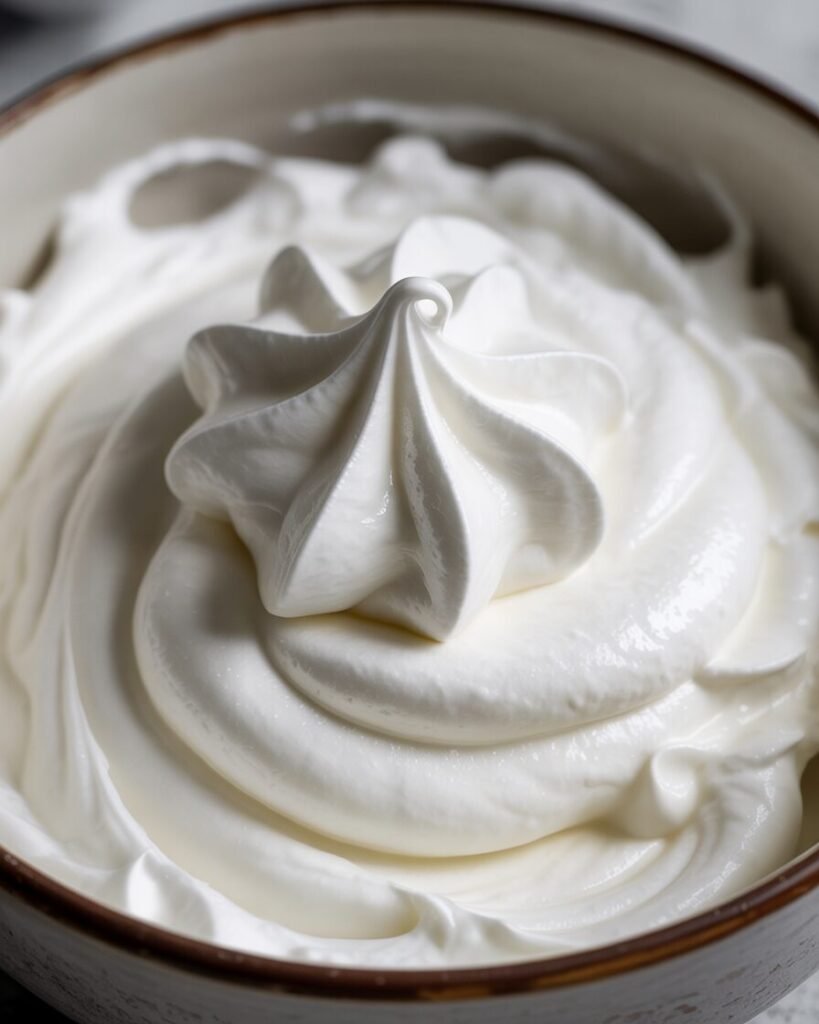
Whip chilled cream to medium-stiff peaks.
Visual cue: Peaks stand but gently curl at the tip. If too stiff, mousse will be grainy.
Step 5: Fold the Mousse
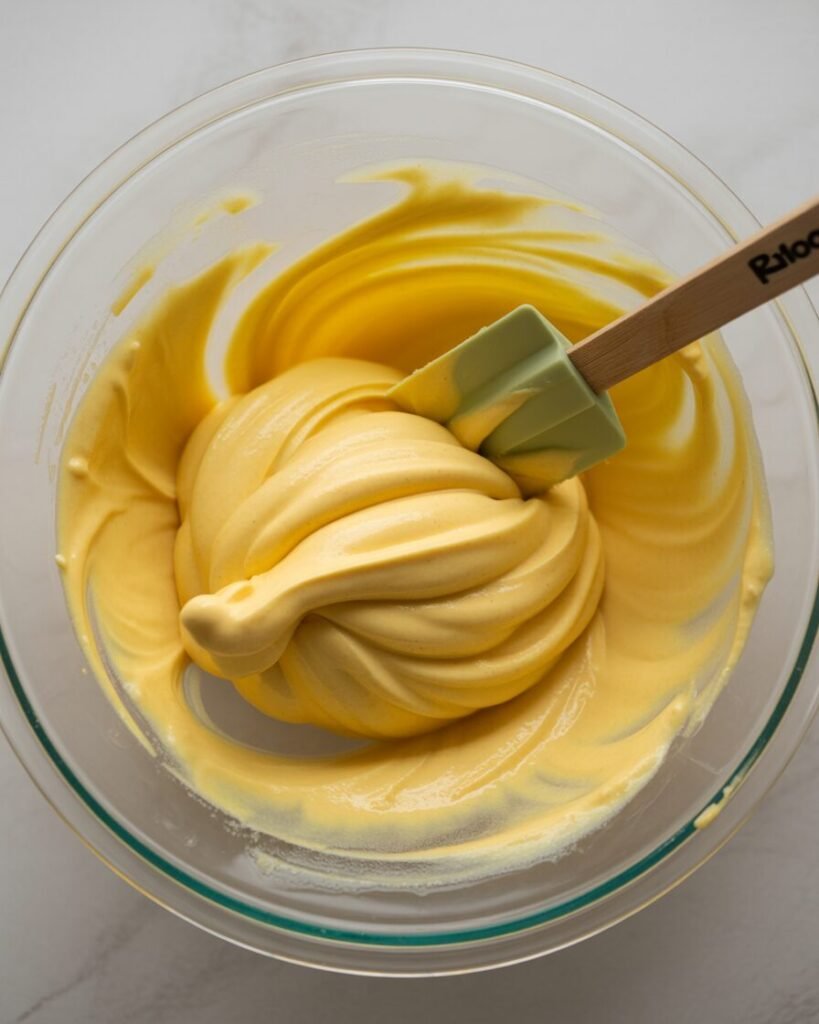
- Add ⅓ whipped cream to mango base; whisk to lighten.
- Fold in remaining cream with a spatula.
Visual cue: Mousse should look glossy, airy, and hold soft mounds without flowing.
Step 6: Assemble the Cake
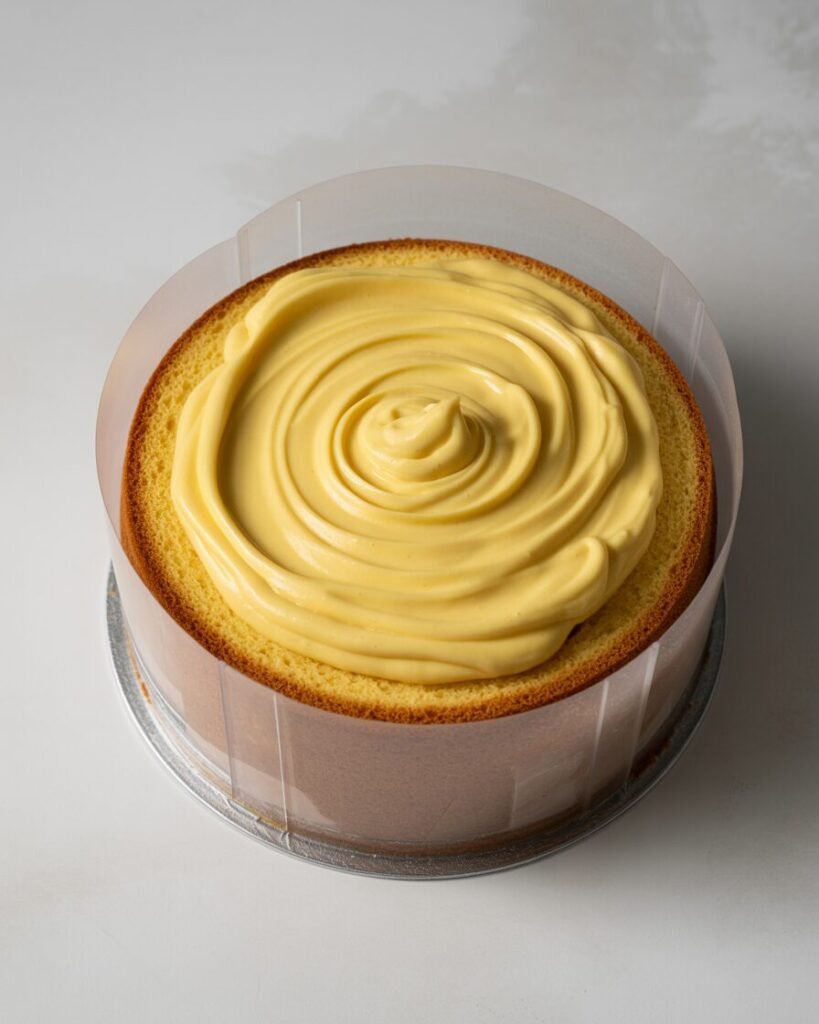
- Place sponge inside a 6-inch ring lined with acetate.
- Pour mousse on top, tap gently to remove air pockets.
- Chill 4–6 hours or overnight for best slicing.
Step 7 (Optional): Add Mango Glaze
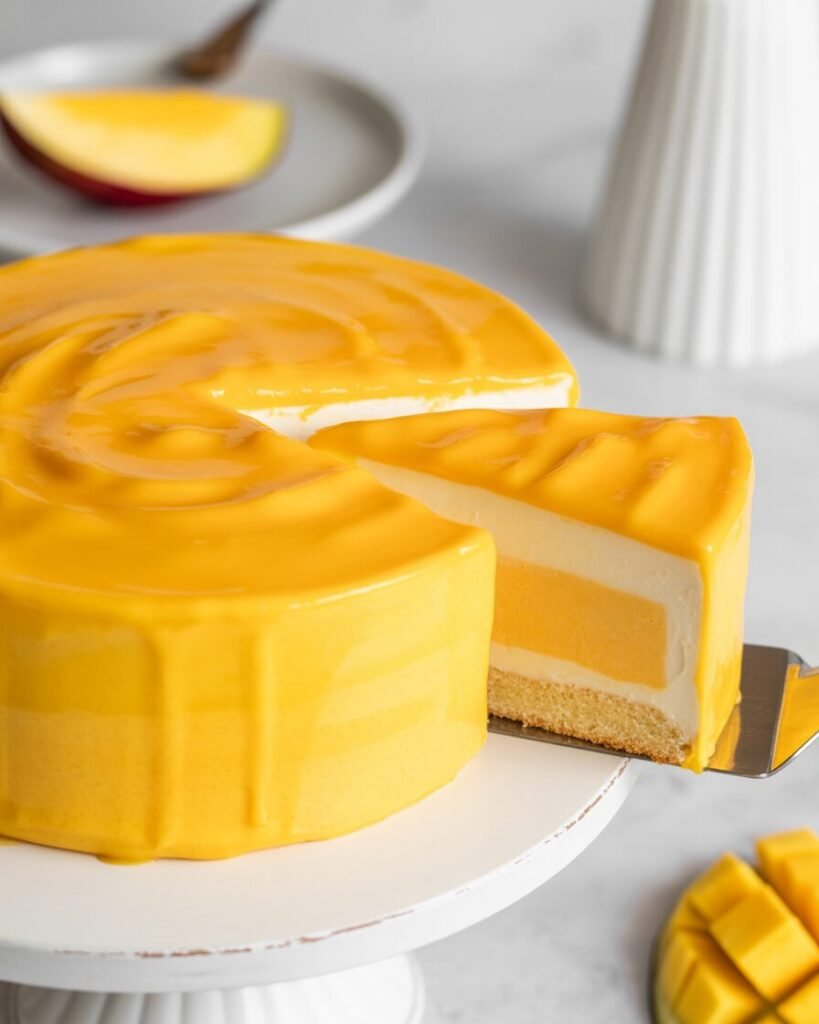
Mix purée + melted gelatin; pour over set mousse.
Chill another 1 hour until glossy and firm.
🛠️ Troubleshooting (Real Failures & Fixes)
1. Mousse is runny
Cause: Purée too hot, gelatin insufficient, over-whipped cream.
Fix: Cool purée fully; use correct gelatin; aim for medium-stiff peaks.
2. Sponge turns soggy
Cause: Warm mousse poured on cake, cake underbaked.
Fix: Always chill mousse mixture slightly before pouring; bake sponge to full doneness.
3. Mousse separates or looks grainy
Cause: Cream whipped too stiff.
Fix: Stop at medium-stiff peaks.
4. Cake collapses after chilling
Cause: Gelatin didn’t bloom or activate properly.
Fix: Ensure gelatin fully dissolves; avoid boiling.
5. Mango glaze doesn’t set
Cause: Too much water or weak gelatin.
Fix: Use exact ratios; reduce water next time.
🔄 Substitutions & Variations
Egg-Free Sponge (Tested!)
Replace egg with:
- 60g yogurt + ¼ tsp baking soda
Cake will be slightly denser but sturdy for mousse.
Dairy-Free Version
- Use coconut whipping cream (chilled overnight).
- Increase gelatin to 7g because coconut is less stable.
Gluten-Free Version
- Replace flour with gluten-free baking blend 1:1.
- Add 10g extra milk to maintain moisture.
Flavor Variations
- Passionfruit–Mango: Replace 50g purée with passionfruit pulp.
- Mango–Coconut: Add 20g coconut cream to mousse (reduce cream by same amount).
- Mango Cheesecake Mousse: Add 80g softened cream cheese to the mango base before folding.
📏 Scaling Guide
| Cake Size | Sponge Ingredients | Mousse Ingredients |
|---|---|---|
| 6-inch (default) | 1× recipe | 1× recipe |
| 8-inch | Multiply all by 1.8× | Multiply all by 2× |
| Cupcakes (10 mousse cups) | 1× sponge baked thin + cut into rounds | 1× mousse |
📦 Storage, Make-Ahead & Freezing
Room Temperature
Sponge alone: 1 day, wrapped.
Mousse cake: KEEP refrigerated.
Refrigerator
- Cake stays fresh 3–4 days.
- Keep airtight to avoid fridge odors.
Freezer
- Freeze whole mousse cake (without glaze): up to 1 month.
- Thaw in fridge overnight.
- Do NOT freeze glaze—it loses shine and becomes patchy.
Avoid freezing fresh mango chunks inside the mousse — they release water and create icy pockets.
🍽️ Serving Suggestions
Pair with:
- Coconut whipped cream
- Lime zest for brightness
- Thin mango coulis
- Fresh berries for contrast
Best served slightly chilled, not cold — 15 minutes out of the fridge.
❓ FAQs
1. Can I use canned mango pulp?
Yes. Use Alphonso pulp, but reduce sugar by 10–15g since canned pulp is sweeter.
2. How do I prevent mousse from melting in warm Indian weather?
Increase gelatin to 7g and keep the cake chilled until just before serving.
3. Can I double the recipe?
Yes—scale 1.8× for sponge, 2× for mousse for an 8-inch cake.
4. Can I make this in an OTG?
Absolutely. Bake on the middle rack, lower rod only, 170°C.
5. What’s the best cream brand?
Use 35% fat whipping cream such as Amul whipping cream (chilled overnight).
🧪 Notes From My Kitchen (Real Testing Log)
Batch 1: Mousse too soft; mango purée was warm. Learned to cool purée fully before adding gelatin.
Batch 2: Cream over-whipped → grainy texture. Stopped at medium-stiff peaks next time.
Batch 3: Sponge slightly soggy. Solution: lightly toast sponge for 3 minutes in oven before assembling.
Batch 4: Gelatin bloomed unevenly. Stirred thoroughly and warmed gently for clarity.
Final Batch: Perfect balance — glossy mousse, stable structure, smooth slice. Chosen ratios produce consistent results even in humid conditions.
📊 Nutrition (Estimate per slice — 1/8 cake)
Calories: ~285
Fat: ~16g
Carbs: ~32g
Protein: ~3g
Values are approximate. Adjust based on brands and portion size.
Final Thoughts
This Homemade Mango Mousse Cake is one of those desserts that looks bakery-professional but is surprisingly beginner-friendly once you understand the science behind it. With stabilized mango, properly whipped cream, and a sturdy sponge, you get a cake that’s light, fruity, refreshing, and absolutely stunning on a dessert table.
If you follow the visual cues and troubleshooting tips, you’ll confidently get the perfect mousse texture—no weeping, no collapse, just tropical perfection.