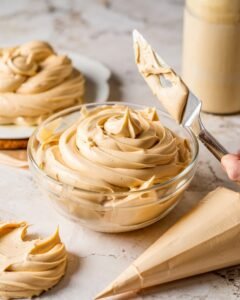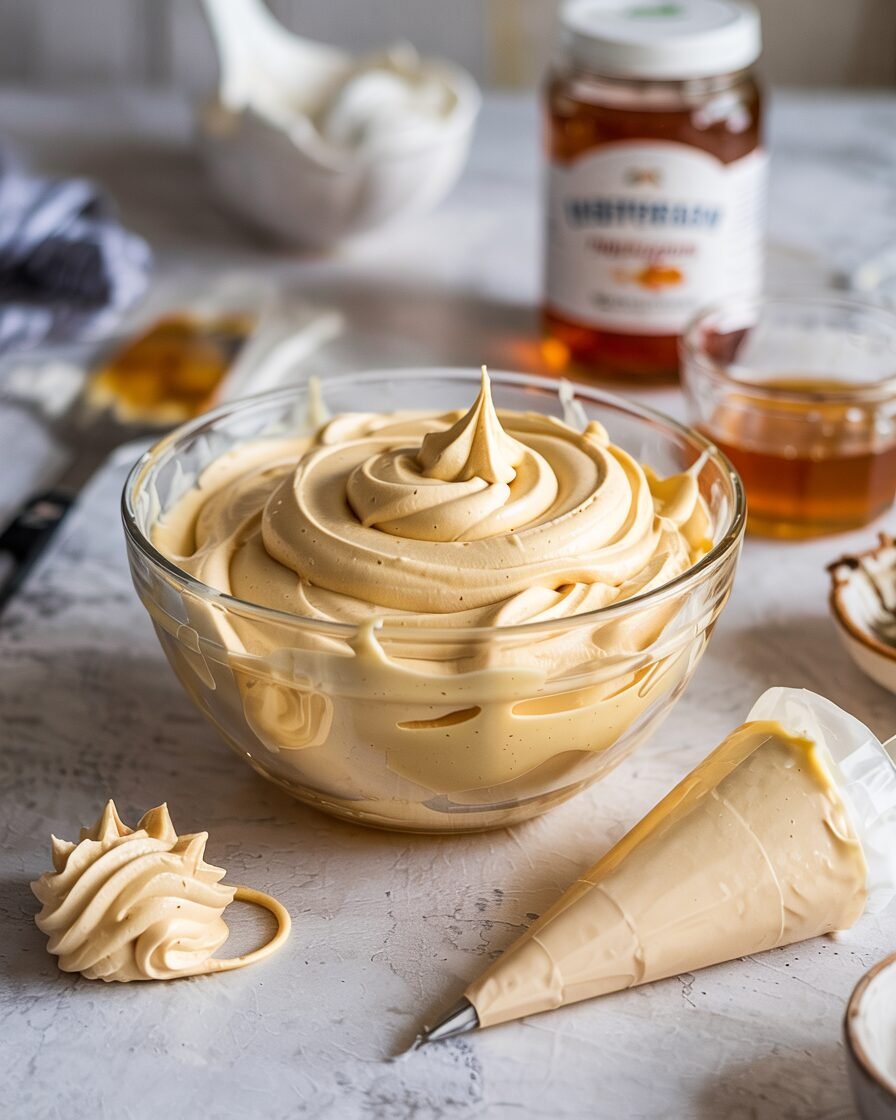
If you’ve ever wanted a frosting that tastes a little more special than classic buttercream, honey buttercream is the answer. It’s smooth, creamy, and lightly floral with a natural sweetness that sugar alone simply can’t replicate. This Honey Buttercream Frosting Recipe creates a silky, pipeable frosting that spreads beautifully on cakes, cupcakes, and cookies without being overly sweet.
What makes this recipe unique is the balance between real honey flavor and a stable buttercream structure. Many honey frostings end up runny or overly sweet—but this one stays fluffy and holds its shape.
Pro tip: Slightly warm the honey before mixing so it blends smoothly into the butter without separating the frosting.
Why This Recipe Works
Great buttercream is all about emulsion and balance—fat, sugar, and liquid working together to form a smooth, stable structure.
First, butter provides the structure. When softened butter is whipped, tiny air pockets form inside it. These pockets help create a light and fluffy frosting rather than a dense paste.
Second, powdered sugar stabilizes the mixture. Powdered sugar contains a small amount of cornstarch, which absorbs moisture from the honey and prevents the frosting from becoming loose.
Third, honey contributes both sweetness and moisture. Unlike granulated sugar, honey is hygroscopic, meaning it attracts and retains moisture. This keeps buttercream softer and smoother for longer.
Finally, a small splash of cream adjusts consistency. If frosting becomes too thick, cream loosens the structure without breaking the emulsion.
Did you know? Honey is sweeter than sugar by weight, so using too much can make frosting overly sweet. This recipe balances the ratio so the honey flavor shines without overpowering.
Ingredients
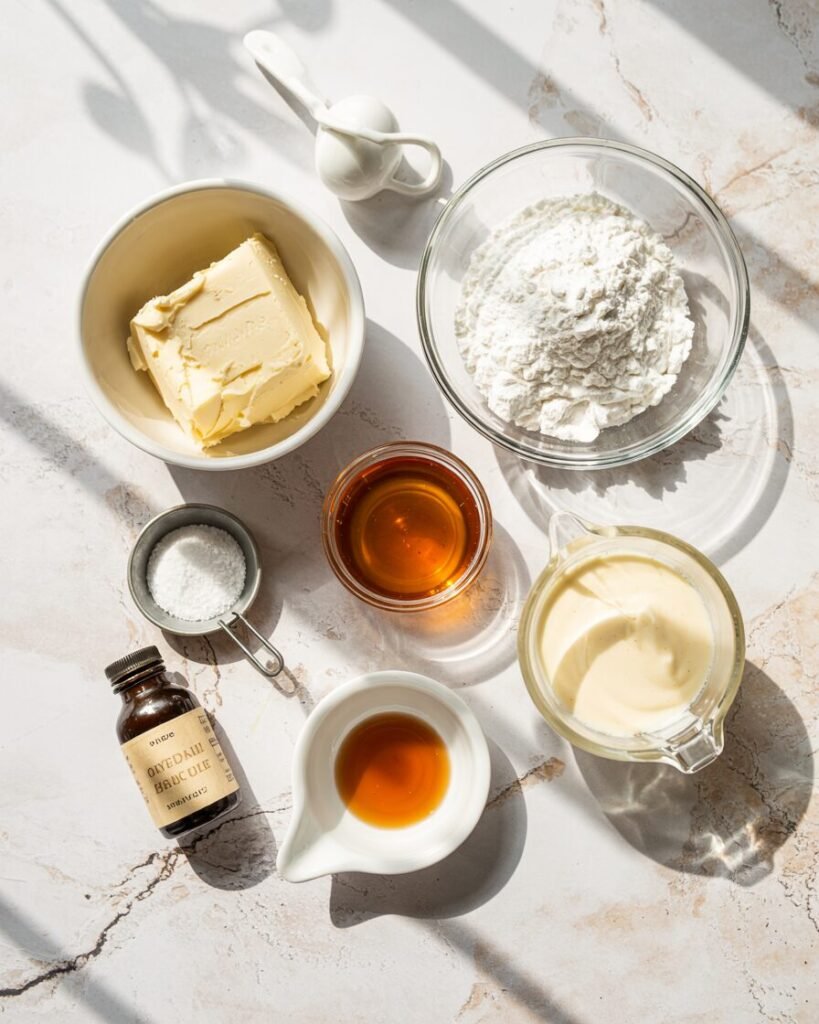
- Unsalted butter — 226 g (1 cup / 2 sticks)
Provides structure and richness. Use good-quality butter for the best flavor. - Powdered sugar — 360 g (3 cups)
Sweetens and stabilizes the frosting. - Honey — 85 g (¼ cup)
Adds floral sweetness and smooth texture. Use mild honey like clover or wildflower. - Heavy cream or milk — 30–45 g (2–3 tbsp)
Adjusts consistency and makes the frosting creamy. - Vanilla extract — 5 g (1 tsp)
Enhances flavor and balances honey sweetness. - Salt — 1 g (¼ tsp)
Prevents the frosting from tasting overly sweet.
Equipment
Required
- Hand mixer or stand mixer
- Large mixing bowl
- Rubber spatula
- Kitchen scale (recommended for accuracy)
Nice-to-Have
- Fine mesh sieve (for lump-free powdered sugar)
- Offset spatula for frosting cakes
- Piping bags and tips
Step-by-Step Instructions
Step 1: Prepare the Butter (2–3 minutes)
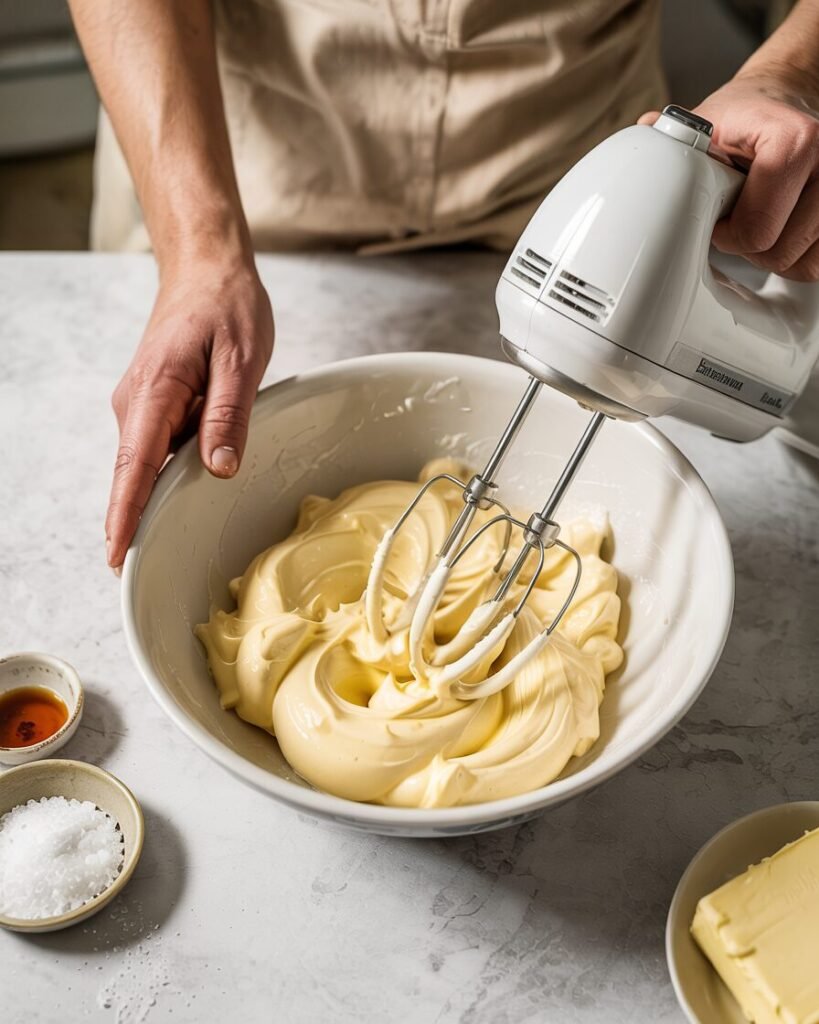
Place softened butter (226 g) in a mixing bowl.
Beat on medium speed for 2–3 minutes until light and creamy.
Visual cue: Butter should look pale and fluffy, not greasy.
Avoid this: If butter is too cold, it will look chunky. If too warm, it becomes shiny and oily.
Step 2: Add Powdered Sugar (3–4 minutes)
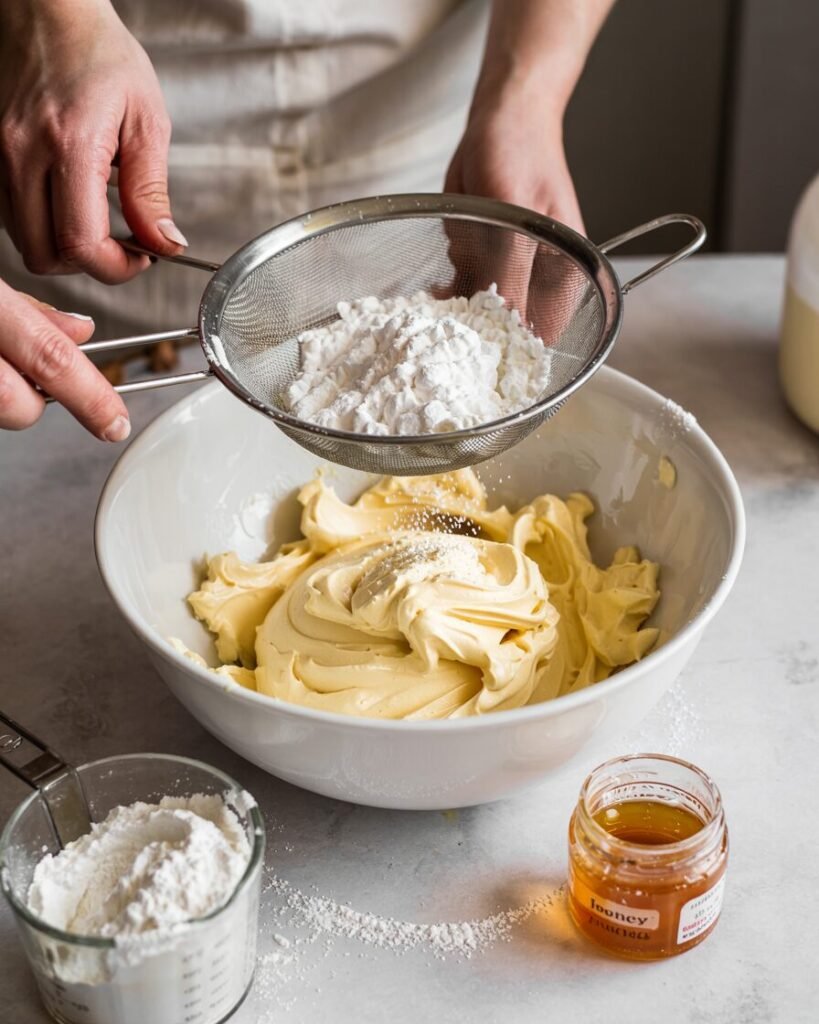
Add powdered sugar in two batches, mixing on low speed to avoid a sugar cloud.
Once combined, increase speed to medium and beat until fluffy.
Visual cue: Frosting should look thick and smooth like whipped cream cheese.
Step 3: Add Honey and Flavorings (2 minutes)
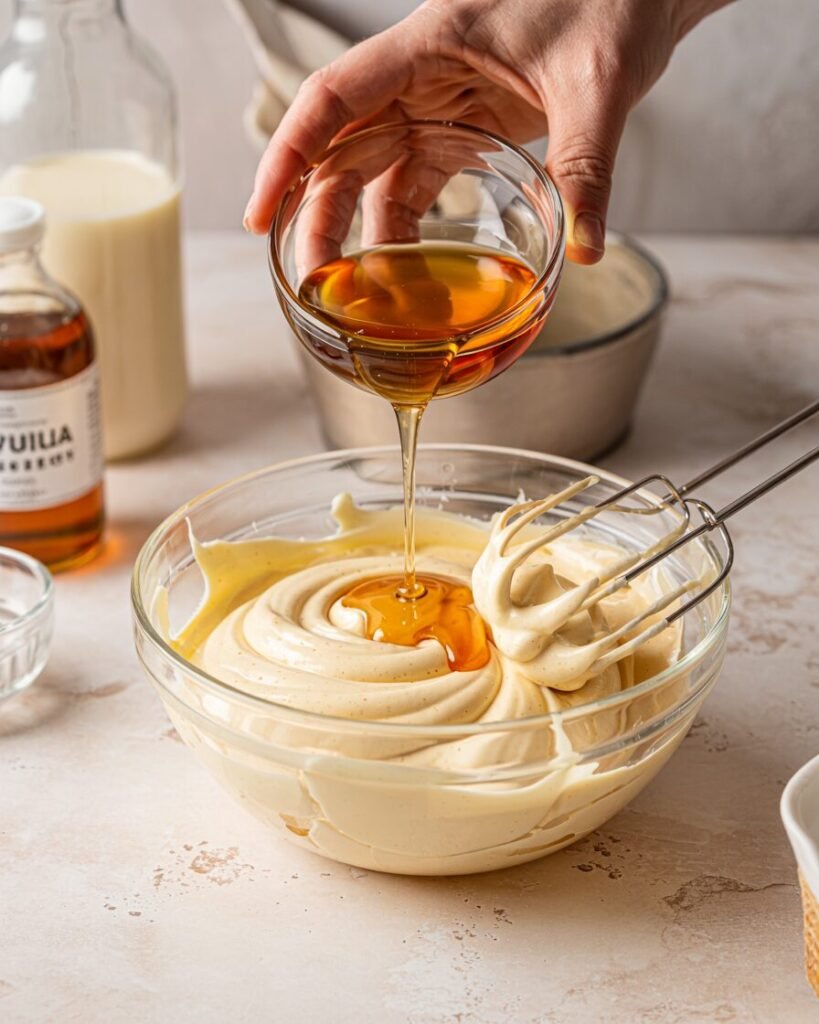
Warm honey slightly for 10 seconds in the microwave (just until pourable).
Add honey, vanilla, and salt.
Mix on medium speed for 2 minutes.
Visual cue: Frosting should look silky and slightly glossy.
Step 4: Adjust Consistency (1–2 minutes)
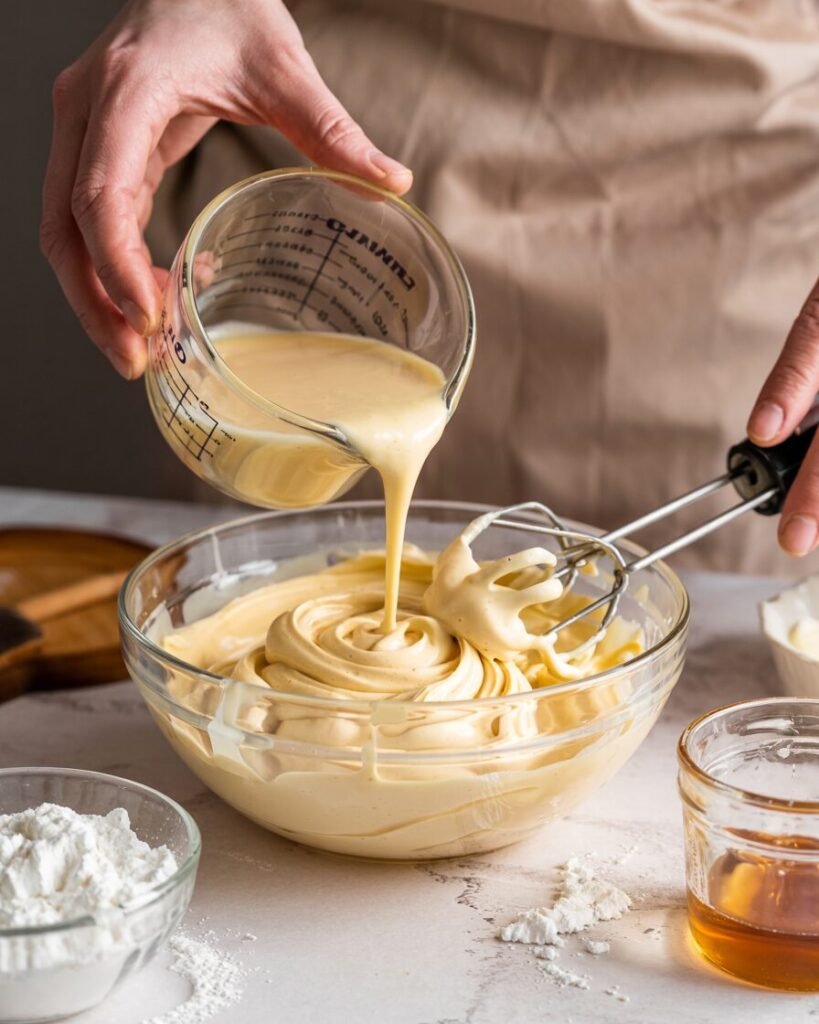
Add 1 tbsp cream at a time, beating after each addition.
Stop when frosting becomes soft, spreadable, and pipeable.
Checkpoint: Frosting should hold a soft peak that gently folds over like a hook.
Step 5: Final Whip (1 minute)
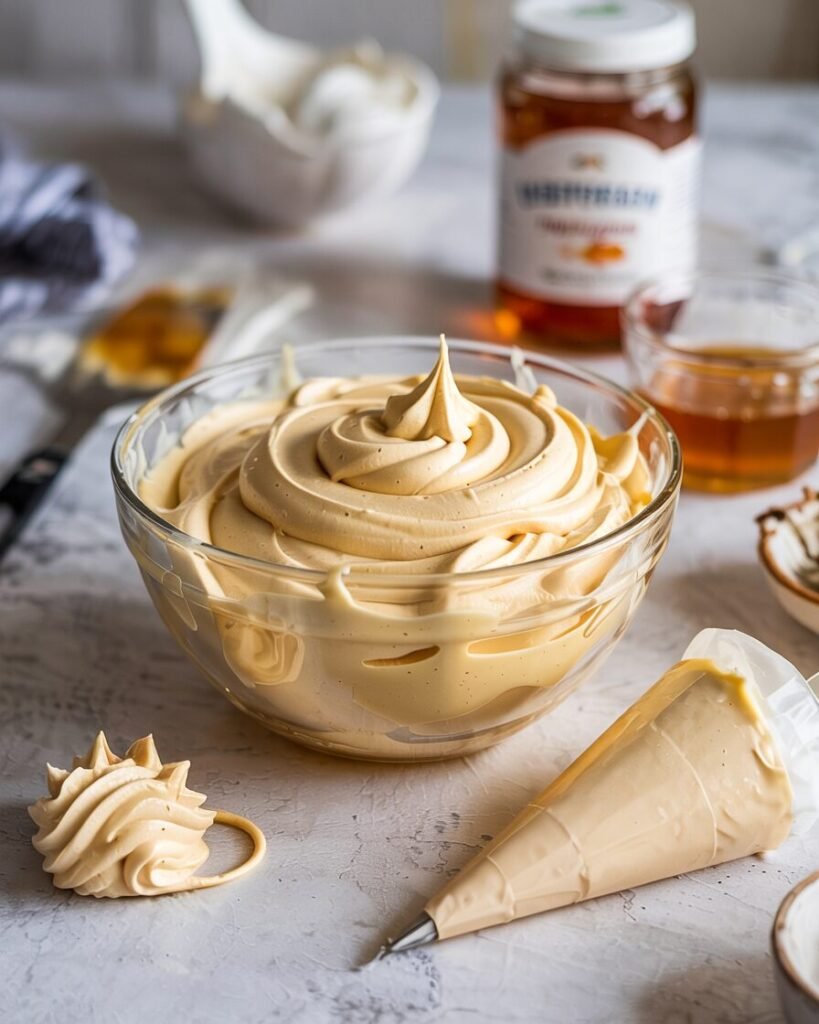
Beat on medium-high speed for 1 minute to incorporate air.
This step makes the frosting lighter and smoother.
Troubleshooting Common Problems
Frosting is too runny
Likely causes:
Too much honey or warm butter.
Fix next time:
Add 30–60 g (¼–½ cup) powdered sugar.
Frosting looks curdled
Cause: Butter was too cold.
Fix: Beat longer until smooth.
Frosting tastes overly sweet
Cause: Too much powdered sugar.
Fix: Add a pinch more salt or a splash of cream.
Frosting is too thick
Cause: Too much powdered sugar.
Fix: Add cream 1 tsp at a time.
Frosting melts on cake
Cause: Kitchen temperature too warm.
Fix: Chill frosting 10–15 minutes before using.
Substitutions and Variations
Dairy-Free Version
Replace butter with vegan butter (226 g) and cream with plant milk.
Note: Texture may be slightly softer.
Gluten-Free
This frosting is naturally gluten-free as long as powdered sugar is certified gluten-free.
Flavor Variations
Cinnamon Honey Buttercream
Add ½ tsp ground cinnamon.
Lemon Honey Buttercream
Add 1 tsp lemon zest.
Salted Honey Buttercream
Sprinkle flaky salt on finished frosting.
Scaling Guide
| Yield | Butter | Sugar | Honey |
|---|---|---|---|
| Small batch | 113 g | 180 g | 40 g |
| Standard | 226 g | 360 g | 85 g |
| Double | 452 g | 720 g | 170 g |
Storage, Make-Ahead, and Freezing
Counter
Store frosted desserts 1 day at room temperature in an airtight container.
Refrigerator
Frosting alone can be stored 5 days refrigerated.
Bring to room temperature and whip again before using.
Freezer
Freeze for up to 2 months in an airtight container.
Thaw overnight in the refrigerator and re-whip before using.
Avoid freezing: Fully decorated cakes with delicate piping, as texture may soften.
Serving Suggestions
Honey buttercream pairs beautifully with:
- Vanilla cupcakes
- Lemon cake
- Carrot cake
- Banana cake
- Spice cake
The mild honey flavor complements cakes with warm spices or citrus acidity, creating a balanced dessert.
FAQs
Can I replace honey with maple syrup?
Yes, but the flavor will change slightly and the frosting may be softer.
Can I make this frosting without a mixer?
Yes. Use a whisk and softened butter, but expect it to take 8–10 minutes of mixing.
How do I make the frosting less sweet?
Reduce powdered sugar slightly and add 1 tbsp cream cheese.
Can I pipe this frosting?
Yes. It holds rosettes and swirls well, especially if chilled for 10 minutes first.
Can I double the recipe?
Absolutely. Just maintain the same ingredient ratios and whip thoroughly.
Notes From My Kitchen (Testing Log)
Batch 1:
Used raw honey straight from the jar. Frosting separated slightly because honey was too thick.
Adjustment: Warm honey before adding.
Batch 2:
Reduced powdered sugar slightly. Result was softer but less stable for piping.
Batch 3:
Added a pinch of salt. Flavor improved dramatically and sweetness balanced.
Final version:
3 cups powdered sugar and ¼ cup honey provided the best balance of flavor, stability, and texture.
Nutrition and Disclaimer
Approximate nutrition per serving (2 tbsp frosting):
- Calories: ~140
- Fat: 8 g
- Carbohydrates: 18 g
- Sugar: 17 g
Values are estimates and vary by ingredient brand and portion size.
Always follow standard food-safety practices, including proper storage and refrigeration.
Conclusion
Honey buttercream is one of those simple upgrades that instantly makes homemade cakes taste bakery-level. The natural sweetness of honey adds depth while the classic buttercream base keeps everything fluffy and stable.
Once you try this frosting, you may find yourself reaching for honey more often in your baking. It’s easy, versatile, and perfect for everything from cupcakes to celebration cakes.