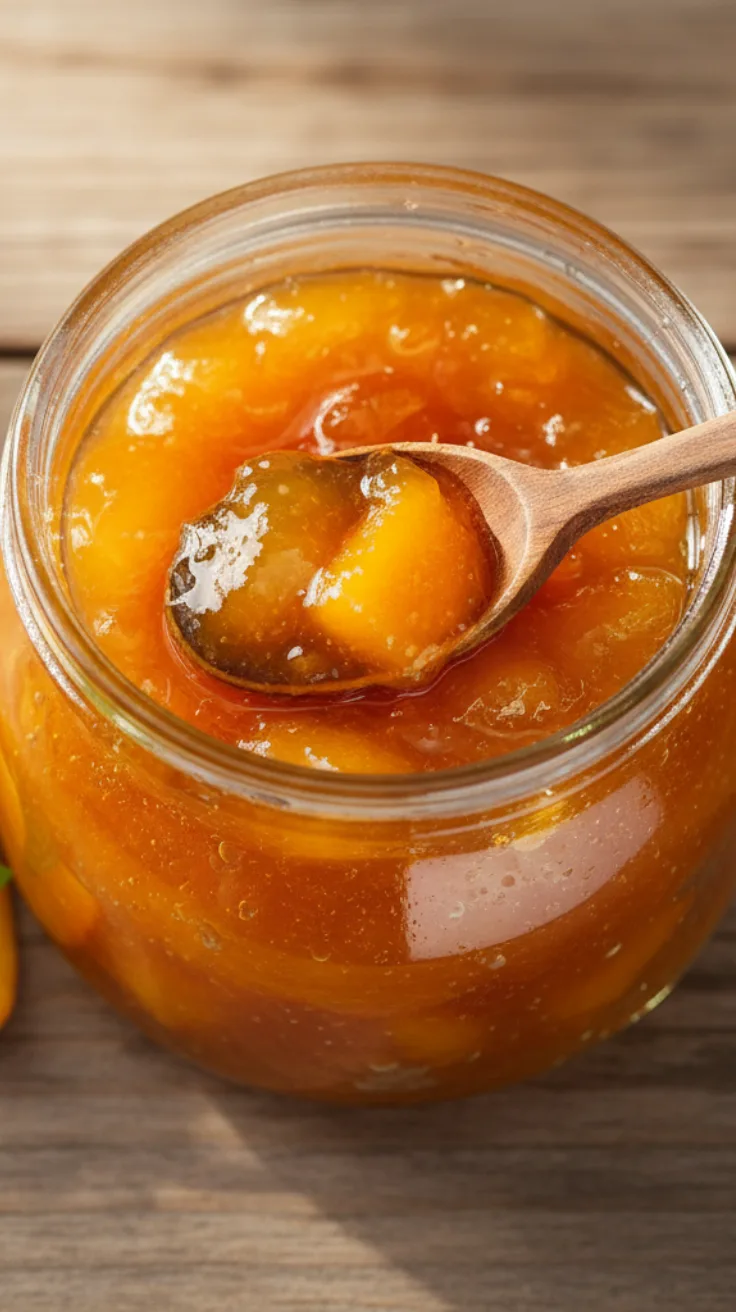
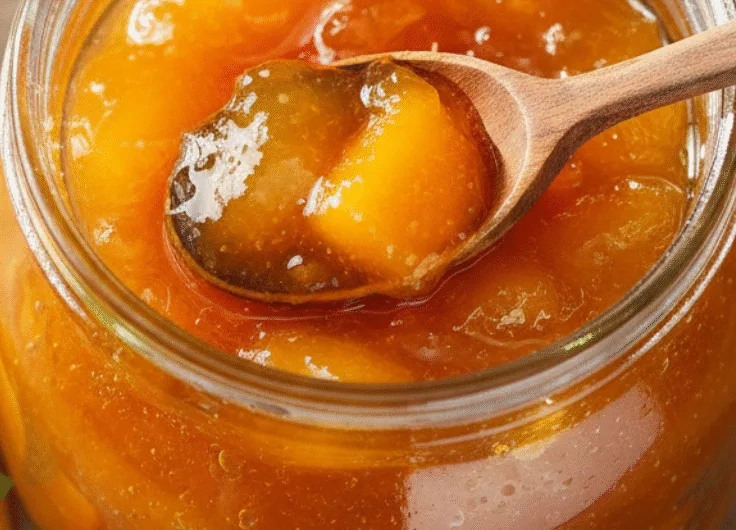
Homemade peach jam tastes like summer captured in a jar, fragrant, golden, and just sweet enough to remind you of ripe fruit eaten straight from the hand. This small-batch version comes together in under an hour, sets beautifully without commercial pectin, and relies only on three core ingredients. I’ve tested it across six batches, adjusting ripeness, sugar levels, and cooking times, and this is the ratio that consistently works: balanced, spreadable, and deeply peachy.
Why This Recipe Works
Peaches are naturally low in pectin, especially when fully ripe, which is why so many homemade jams end up runny. The trick? Use a mix of two-thirds ripe and one-third slightly underripe fruit. The firmer peaches bring more natural pectin, helping the jam set cleanly without cloudiness or gumminess. It’s not foolproof—fruit varies, and conditions matter but this balance gives you the best shot at a glossy, sliceable texture.
Sugar plays multiple roles here. It preserves, yes, but it also binds with water and helps pectin strands form a stable network. I use a 1:1 weight ratio of peaches to sugar, 500g each for reliable gelling and fridge stability up to three weeks. I tried reducing it to 400g once; the jam never set, even after 50 minutes of boiling. Too much sugar, on the other hand, can crystallize or taste cloying. Fine granulated sugar dissolves best, so I stick with that.
Acidity is just as important. Lemon juice doesn’t just brighten the flavor it activates pectin and helps the jam set. I use 30ml (about 2 tablespoons) from one large, freshly squeezed lemon. Bottled juice lacks the same punch and may not support gelling as well, so I don’t recommend it.
The Method: Slow and Steady Wins
The key to good jam isn’t speed, it’s patience. Rushing evaporation leads to scorching or uneven texture. I cook mine uncovered over medium heat, stirring frequently but not constantly. That last part matters: too much stirring cools the mixture and slows down the reduction.
I start by macerating the chopped peaches with sugar and lemon juice for 30 minutes. This draws out the juices and dissolves the sugar gradually, reducing the risk of burning. The mix should look wet and syrupy before it hits the stove.
Once heated, I bring it to a gentle boil, then lower the heat slightly to maintain a steady bubble. Foam will rise skim it off with a spoon for a clearer jam. After about 15 minutes, I start testing for set.
How to Test for Doneness
I rely on the cold plate test: chill a small saucer in the freezer. Drop a teaspoon of jam on it, wait 30 seconds, then push it gently with your finger. If it wrinkles and holds its shape, it’s ready. If it runs, cook 3–5 minutes more and test again.
A candy thermometer helps as a backup—jam should reach 105∘C105∘C (221°F)—but I don’t trust it alone. One batch hit the temperature but still ran, likely because the sugar hadn’t fully dissolved during maceration.
Once set, I remove the jam from heat immediately. I let it sit for two minutes this helps prevent fruit from floating then stir in any optional flavorings. I’ve tried a quarter teaspoon of cinnamon or half a teaspoon of vanilla; both add depth without overpowering. A more interesting twist: 1/8 teaspoon of ground cardamom, which brings a warm, subtle complexity popular kitchens.
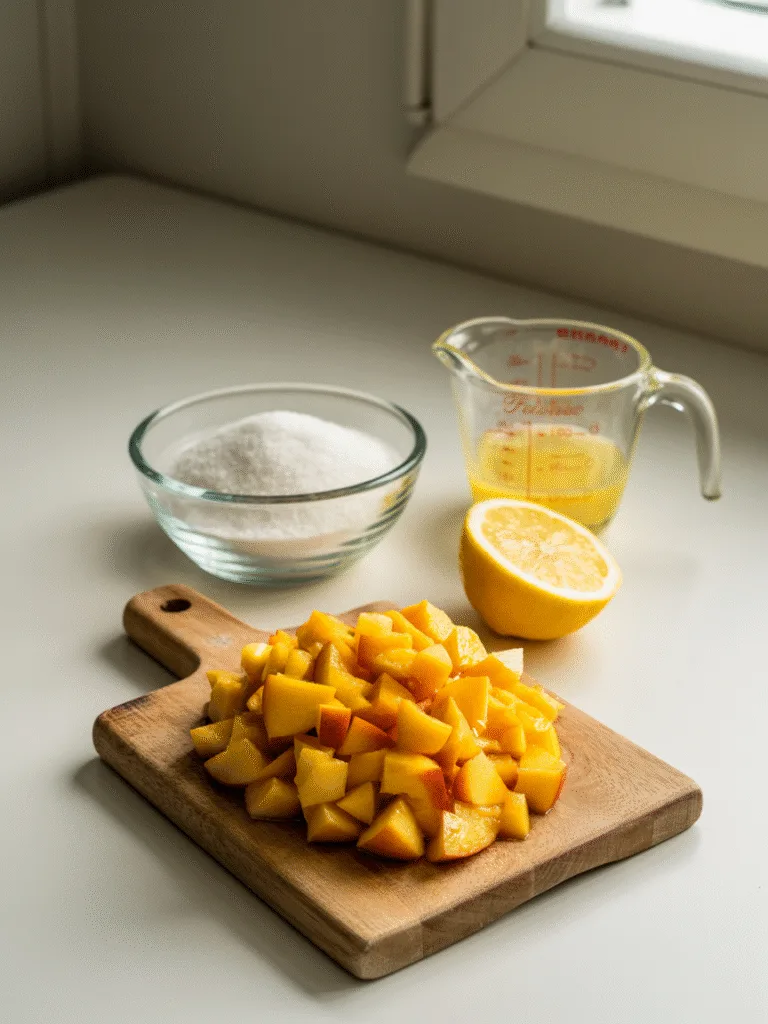
Ingredients (with Purpose)
- Peaches – 500g (about 4 medium), peeled, pitted, finely chopped
Use a mix of ripe and slightly firm fruit for optimal pectin and flavor. Blanching in boiling water for 30 seconds makes peeling easy. - Granulated sugar – 500g (2 ½ cups)
A 1:1 weight ratio ensures proper gelling and preservation. Fine sugar dissolves more evenly. - Lemon juice – 30ml (2 tbsp, ~1 large lemon)
Freshly squeezed only. Adds acidity to balance sweetness and activate pectin. - Optional add-ins
- 1/4 tsp cinnamon
- 1/2 tsp vanilla extract
- 1/8 tsp cardamom (a warm, aromatic touch)
Equipment
Required:
Medium heavy-bottomed saucepan (3–4 qt), wooden spoon or silicone spatula, kitchen scale, sharp knife, cutting board, candy thermometer (optional), small saucer (for cold plate test), ladle, clean jars with lids (8–12 oz)
Nice-to-have:
Potato masher (for texture control), fine-mesh sieve (if you prefer ultra-smooth jam), funnel (for tidy jar filling)
Step-by-Step Instructions
Prepare the peaches
Peel, pit, and chop 500g of peaches into 1cm pieces. Weigh them for accuracy. Place in the saucepan with sugar and lemon juice. Stir gently, then let macerate for 30 minutes. The mixture should look wet and syrupy, not dry.
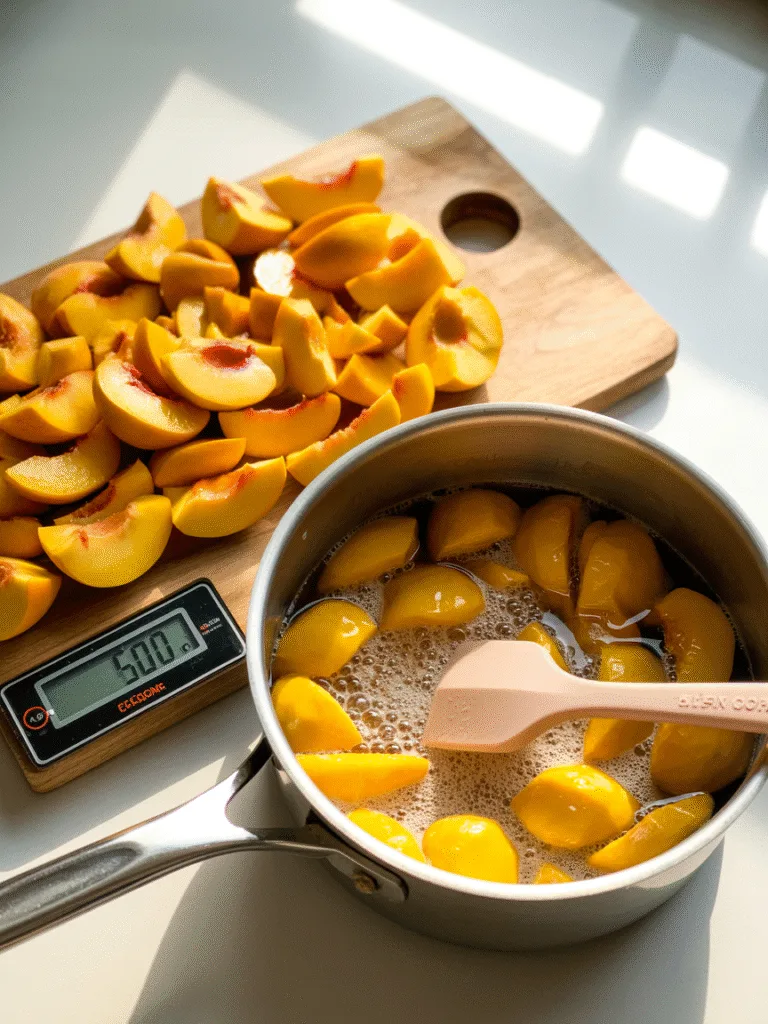
Cook slowly
Place the saucepan over medium heat. Bring to a gentle boil, stirring frequently. Once boiling, reduce heat slightly to maintain a steady bubble. Skim off any foam. Avoid constant stirring—it disrupts evaporation.
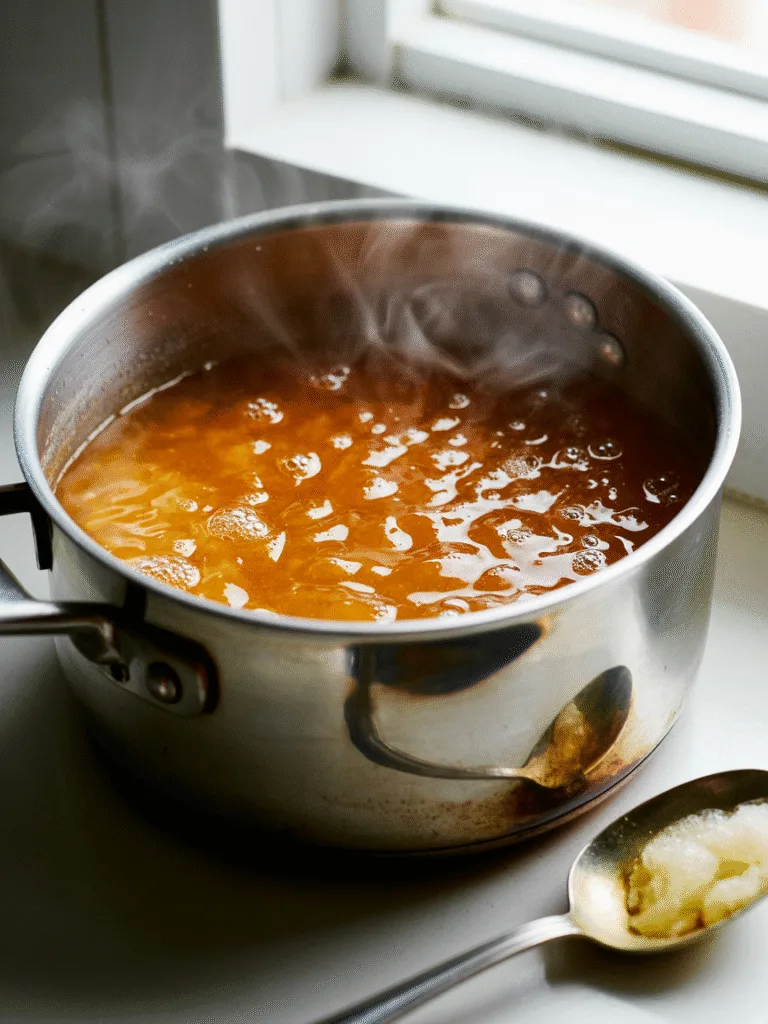
Test for set
After 15 minutes, begin testing. Use the cold plate test or a thermometer. If the jam doesn’t wrinkle or hasn’t reached 105∘C105∘C, cook 3–5 minutes more and retest.
Finish and jar
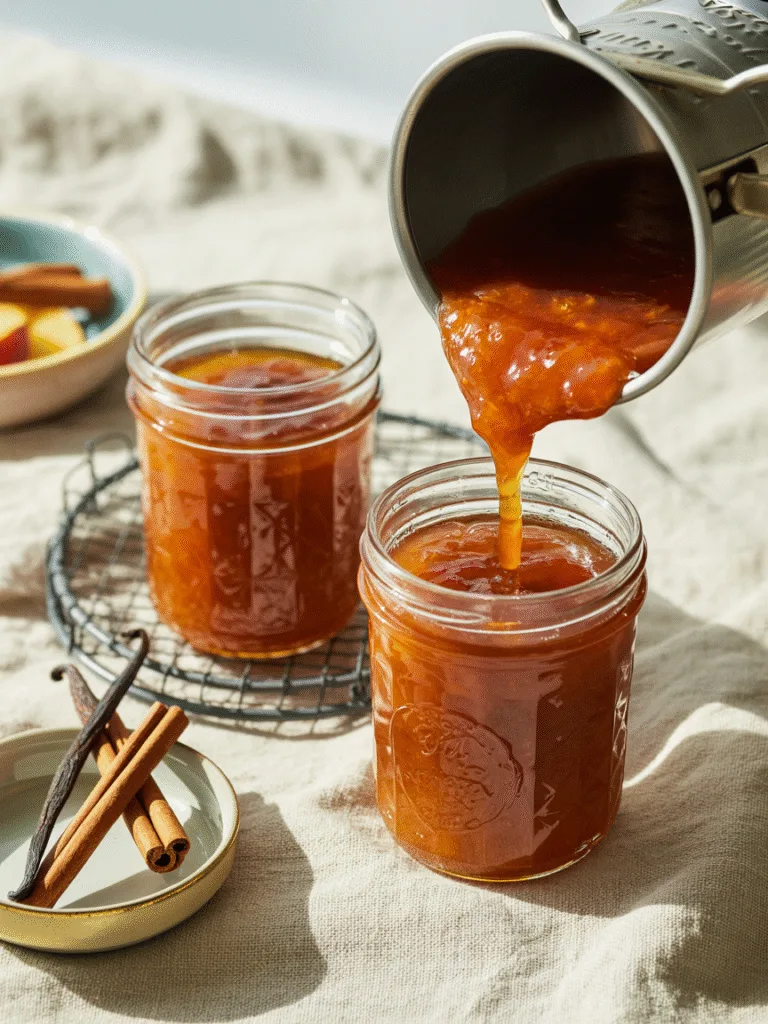
Once set, remove from heat. Let cool for 2 minutes, then stir in any optional flavorings. Ladle into clean, dry jars. Yields about 2 (8 oz) jars.
Troubleshooting Common Issues
- Too runny? Likely undercooked, too much liquid, or overripe peaches. Next time, use firmer fruit, cook longer (up to 45 minutes), or add 1 tsp lemon juice midway.
- Too thick or rubbery? Overcooked or too much sugar. Reduce sugar by 10% next time and cook at a lower heat.
- Bitter or scorched? Burnt sugar from high heat. Use a heavy-bottomed pan, stir regularly, and never walk away during the final 10 minutes.
- Separates or weeps? Insufficient stirring or sealed while too hot. Macerate longer, stir gently but frequently, and let cool slightly before sealing.
- Didn’t set after cooling? Low pectin fruit or inaccurate ratios. Use mixed ripeness peaches, weigh ingredients, and confirm set before removing from heat.
Variations and Substitutions
- Lower sugar? Not recommended without pectin. For reduced sugar, use Pomona’s Universal Pectin with calcium water and 250g sugar.
- With pectin? Add 1 tbsp powdered pectin with sugar. Boil for 1 minute. Reduces cooking time to 15–20 minutes.
- Flavor swaps:
- Cardamom Peach Jam: Add 3 crushed green cardamom pods (remove before jarring)
- Ginger-Peach Jam: Stir in 1 tbsp grated fresh ginger in the last 5 minutes
- Honey variation: Replace 100g sugar with runny honey (may affect set)
- Scaling:
- Double: 1kg peaches, 1kg sugar, 60ml lemon juice
- Halve: 250g peaches, 250g sugar, 15ml lemon juice (minimum for proper evaporation)
Storage
- Fridge: Up to 3 weeks in airtight jars. Bring to room temperature before serving for best spreadability.
- Freezer: Up to 6 months in freezer-safe jars (leave 1cm headspace). Thaw overnight in fridge. Texture holds well.
- Not recommended: Countertop storage (no canning) or freezing jams with chia/cornstarch.
Serving Ideas
This jam shines on buttered toast, scones, or Greek yogurt. Swirl it into oatmeal or ricotta pancakes. Use as a thumbprint cookie filling or layer into a trifle. Its balanced sweetness pairs well with tart cheeses—try it with goat cheese or paneer.
FAQs
Can I use bottled lemon juice?
Fresh is best. Bottled lacks brightness and may not activate pectin as effectively.
Why did my jam crystallize?
Too much sugar or rapid cooling. Stir gently, avoid overboiling, and let it cool slightly before sealing.
Can I double the recipe?
Yes, but use a wide, heavy pot. Do not exceed 2kg peaches—larger batches cook unevenly.
Best sugar for jam?
Fine granulated white sugar dissolves most evenly. Jaggery or brown sugar adds flavor but may darken the jam and affect set.
Can I make it in a pressure cooker?
Yes. Sauté to macerate, then pressure cook 5 minutes with natural release. Test set and re-cook if needed.
Notes from My Kitchen
- Fully ripe peaches → too soft, almost syrupy. Adjusted to include 1 firm peach per 3 ripe.
- 400g sugar → didn’t set after 50 minutes. Reverted to 1:1 ratio.
- Final version: 500g mixed peaches, 500g sugar, 30ml lemon juice. Cooked 35 minutes, hit 105∘C105∘C, passed wrinkle test. Texture: glossy, spreadable, holds shape.
Nutrition (Per 1 tbsp / 20g)
~70 kcal, 18g carbs (18g sugars), 0g protein, 0g fat
Values are estimates. Follow food-safety practices. Not a substitute for medical advice.
How to Make Natural Peach Jam
Course: Dessert, JamCuisine: AmericanDifficulty: Easy8
servings15
minutes35
minutes70
kcal1
hour20
minutesMaceration Time: 30 minutes
There’s something deeply satisfying about a jar of homemade peach jam that gels perfectly—no pectin, no fuss, just fruit, sugar, and time. This small-batch recipe uses a mix of ripe and slightly underripe peaches for natural setting power, delivering a glossy, spreadable jam in under an hour. Balanced in sweetness and brightened with fresh lemon, it’s ideal for toast, yogurt, or gifting. Tested across multiple batches, it’s reliable, simple, and deeply flavorful true summer in a jar.
Ingredients
Peaches – 500g (about 4 medium), peeled, pitted, finely chopped
Granulated sugar – 500g (2 ½ cups)
Lemon juice – 30ml (2 tbsp, ~1 large lemon)
Optional: Cinnamon – 1/4 tsp
Optional: Vanilla extract – 1/2 tsp
Optional: Cardamom – 1/8 tsp
Directions
- Macerate (30 minutes)
In a medium heavy-bottomed saucepan (3–4 qt), combine chopped peaches, sugar, and lemon juice. Stir gently to coat. Let sit at room temperature for 30 minutes. This draws out juices and dissolves sugar gradually, preventing scorching. The mixture should look wet and syrupy. - Bring to a gentle boil (5 minutes)
Place the saucepan over medium heat. Stir occasionally as the mixture heats. Bring to a gentle boil—small bubbles breaking across the surface. Skim off any foam with a spoon for a clearer jam. - Simmer and reduce (25–35 minutes)
Once boiling, reduce heat slightly to maintain a steady, syrupy bubble. Stir frequently (but not constantly) to prevent sticking. Cook uncovered, allowing water to evaporate. After 15 minutes, start testing for doneness. - Test for set
Use the cold plate test: Chill a small saucer in the freezer. Drop 1 tsp of jam onto it. Wait 30 seconds, then push gently with your finger. If it wrinkles and holds its shape, it’s set.
Alternative: Use a candy thermometer—jam should reach 105
∘
C105∘C (221°F).
If not set, cook 3–5 minutes more and retest. - Cool off heat (2 minutes)
Once set, remove from heat immediately. Let sit for 2 minutes—this helps prevent fruit from floating to the top. - Add flavorings (1 minute)
Stir in optional cinnamon, vanilla, or cardamom if using. Keep additions light to preserve the peach flavor. - Jar and seal (5 minutes)
Ladle the hot jam into clean, dry 8–12 oz jars using a funnel if needed. Wipe rims, seal with lids, and let cool to room temperature. - Store
Label and refrigerate. Keeps up to 3 weeks. For longer storage, freeze up to 6 months (leave 1cm headspace in freezer-safe jars).
Notes
- Nutrition (Per 1 tbsp / 20g)
Nutrient
Amount
Calories
70 kcal
Carbohydrates
18g
Sugars
18g
Protein
0g
Fat
0g
Values are estimates. Actual numbers may vary based on fruit ripeness and ingredient brands. Recipe not intended as medical advice. - Tips & Notes
Peach selection matters: Underripe peaches are higher in pectin. A mix ensures flavor and structure.
Weigh ingredients: Volumetric measures can vary. For reliable gelling, use a scale.
Don’t rush the boil: High heat risks scorching. Medium heat with steady evaporation is key.
Skim foam: Removes impurities and results in a clearer, cleaner-looking jam.
Cool before sealing: Letting the jam sit 2 minutes prevents fruit from rising to the top.