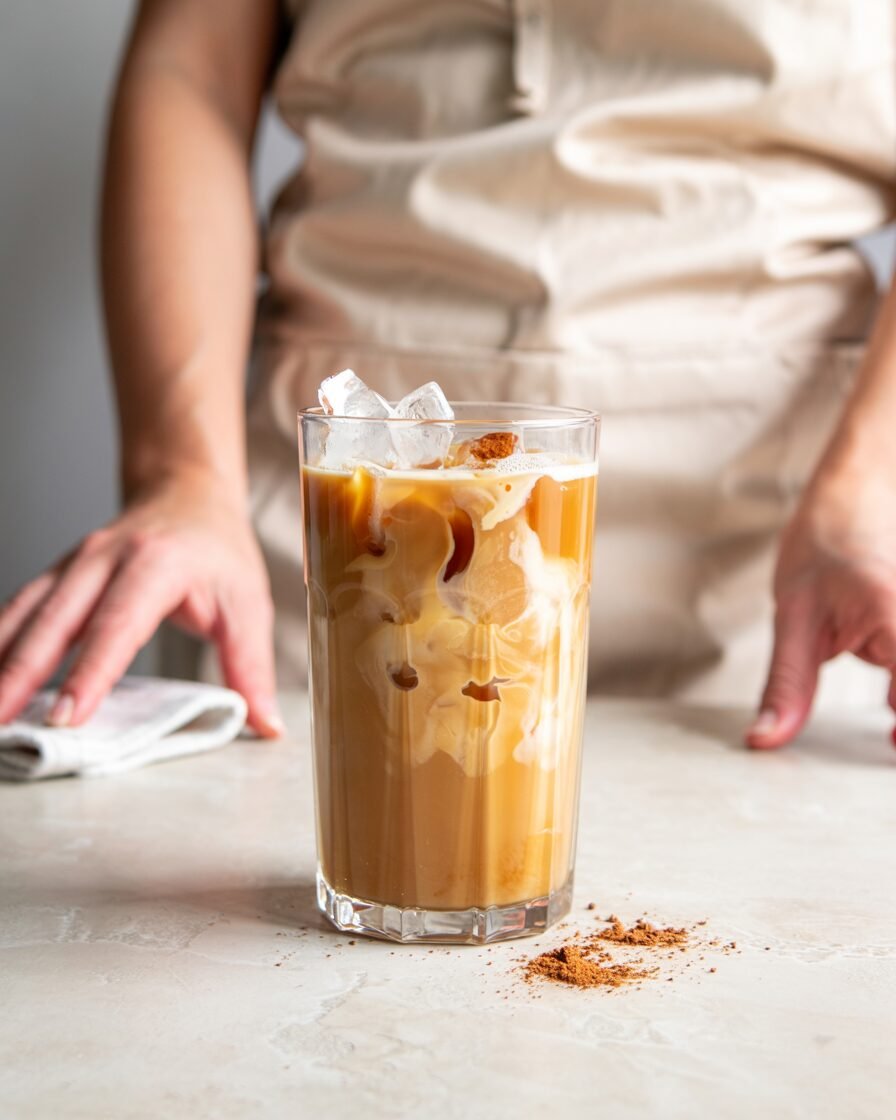
There are days when plain iced coffee feels a little flat, and this iced honey latte is exactly what I make instead. It has the boldness of espresso, the soft floral sweetness of honey, and a creamy finish that tastes coffee-shop worthy without syrups, blenders, or specialty gear. My goal with this version was simple: make it reliable for home bakers and coffee lovers who want a smooth, balanced drink on the first try. The pro tip that changes everything is this: stir the honey into warm espresso first, because honey does not dissolve well once the drink is fully cold.
Why this recipe works
This recipe works because it uses heat where it matters and cold where it matters. Honey blends far more evenly into hot or warm coffee than into cold milk, so you get sweetness throughout the glass instead of a sticky layer at the bottom.
The flavor balance also matters. A latte is usually built around a coffee-to-milk ratio close to 1:3, which softens bitterness while keeping the coffee noticeable, and that ratio makes honey taste rounded instead of sharply sweet. If you use cold brew instead of espresso, the drink turns smoother and less acidic, which is great for beginners who find espresso too intense.
Ingredients with weights and purpose
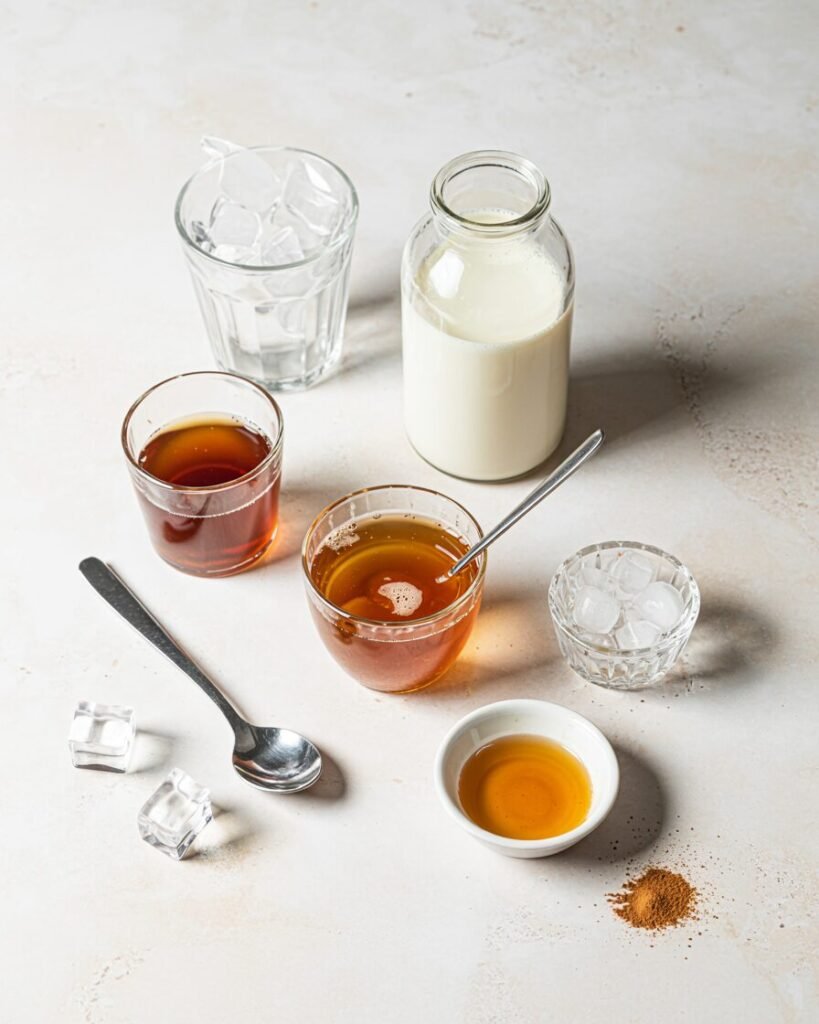
- Espresso or very strong coffee — 60 g (1/4 cup) — the coffee base; gives body and bold flavor. Two espresso shots work best.
- Honey — 15 to 21 g (2 to 3 teaspoons) — sweetens the drink and adds floral depth; start lower if your milk is sweet.
- Cold milk — 180 g (3/4 cup) — adds creaminess and balances the espresso; whole milk gives the richest texture, but oat milk is also excellent.
- Ice — 140 to 180 g (about 1 to 1 1/2 cups) — chills the latte and creates the layered iced texture.
- Optional vanilla extract — 1 g (1/4 teaspoon) — softens bitterness and rounds out the honey notes.
- Optional fine cinnamon — a pinch — adds warmth, but keep it light so it does not overpower the honey.
Ingredient notes
Use a mild, runny honey if possible. Strong dark honey can taste earthy or medicinal in coffee, while lighter honey keeps the latte sweet and clean. For milk, whole milk gives the smoothest finish, but extra-creamy oat milk is the best dairy-free option I tested for body and foam.
Equipment
Required
- 350 to 475 ml glass (12 to 16 oz)
- Espresso machine, moka pot, Aeropress, or strong brewed coffee method
- Digital scale or measuring spoons/cups
- Spoon or small whisk
- OTG, oven, or mixer not needed
Nice to have
- Milk frother for cold foam
- Cocktail shaker or jar with lid for extra chill and light froth
- Instant-read thermometer if you want to avoid pouring very hot espresso directly over lots of ice
Step-by-step instructions
Step 1: Brew the coffee
Brew 60 g (1/4 cup) espresso or very strong coffee. This takes about 2 to 5 minutes depending on your method. The coffee should smell deep and roasty, not burnt.
Visual cue: The espresso should have a thin layer of crema if you’re using an espresso machine, or the coffee should look dark and concentrated, not watery. If it looks pale brown and transparent, it is too weak and the latte will taste milky.
Step 2: Dissolve the honey
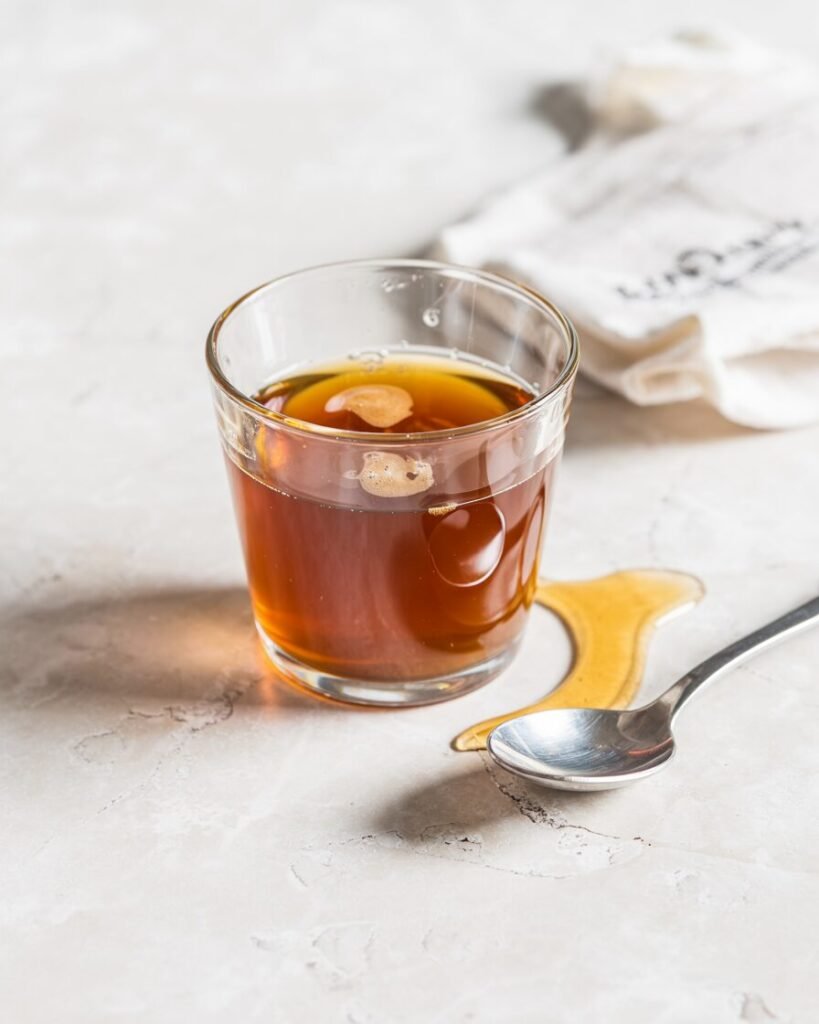
Add 15 to 21 g honey directly to the warm espresso and stir for 20 to 30 seconds until fully dissolved. This is the key step for a smooth drink because honey can settle in cold liquid instead of blending evenly.
Visual cue: The mixture should look glossy and uniform, with no golden streaks clinging to the spoon or base of the cup.
Avoid this: Adding honey after the milk and ice are in the glass; it usually sinks and stays there.
Step 3: Cool slightly
Let the sweetened espresso sit for 2 to 3 minutes. You do not need it fully cold, just not piping hot.
Visual cue: The cup should feel warm rather than too hot to hold. This short rest helps prevent fast ice melt and keeps the latte tasting full instead of watered down.
Step 4: Prep the glass
Fill a tall glass with 140 to 180 g ice. Use larger cubes if you have them because they melt more slowly.
Visual cue: The glass should be generously packed but still leave room for milk and coffee. Too little ice makes the drink lukewarm fast.
Step 5: Add the milk
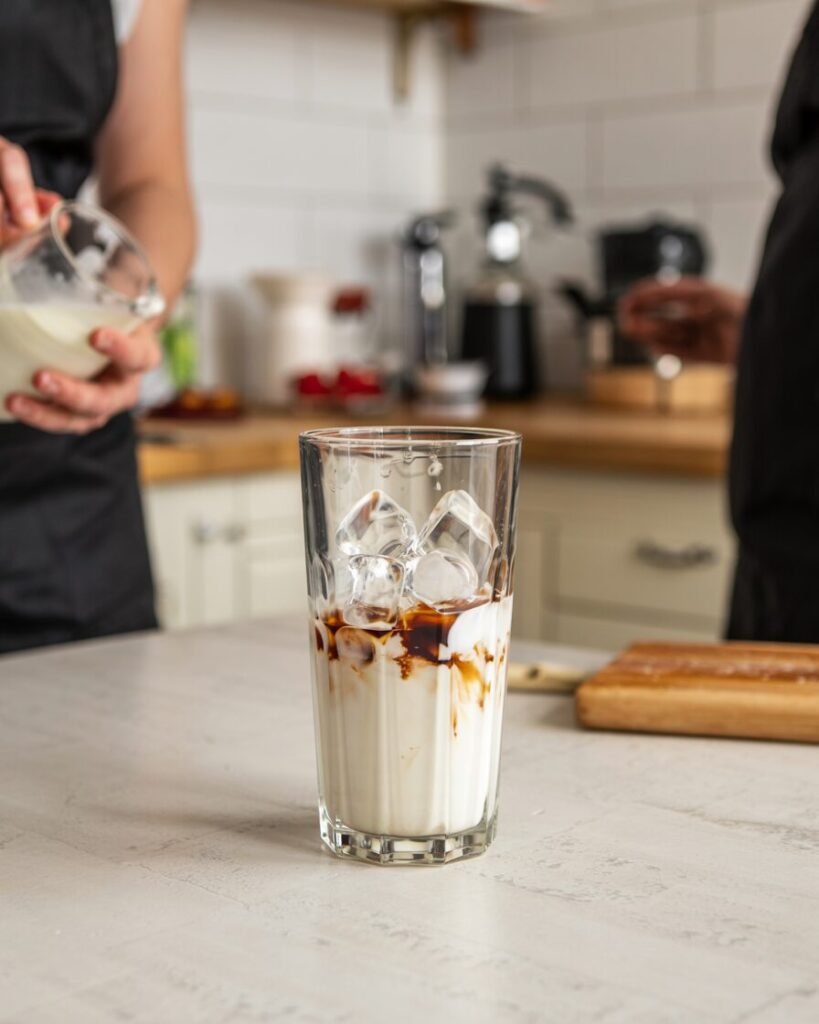
Pour 180 g (3/4 cup) cold milk over the ice. If using a frother, froth 2 to 3 tablespoons of the milk first and spoon it on top at the end.
Visual cue: The milk should stay cold and opaque. If it already looks thin and slushy, your coffee was too hot or your ice amount was too low.
Step 6: Finish the latte
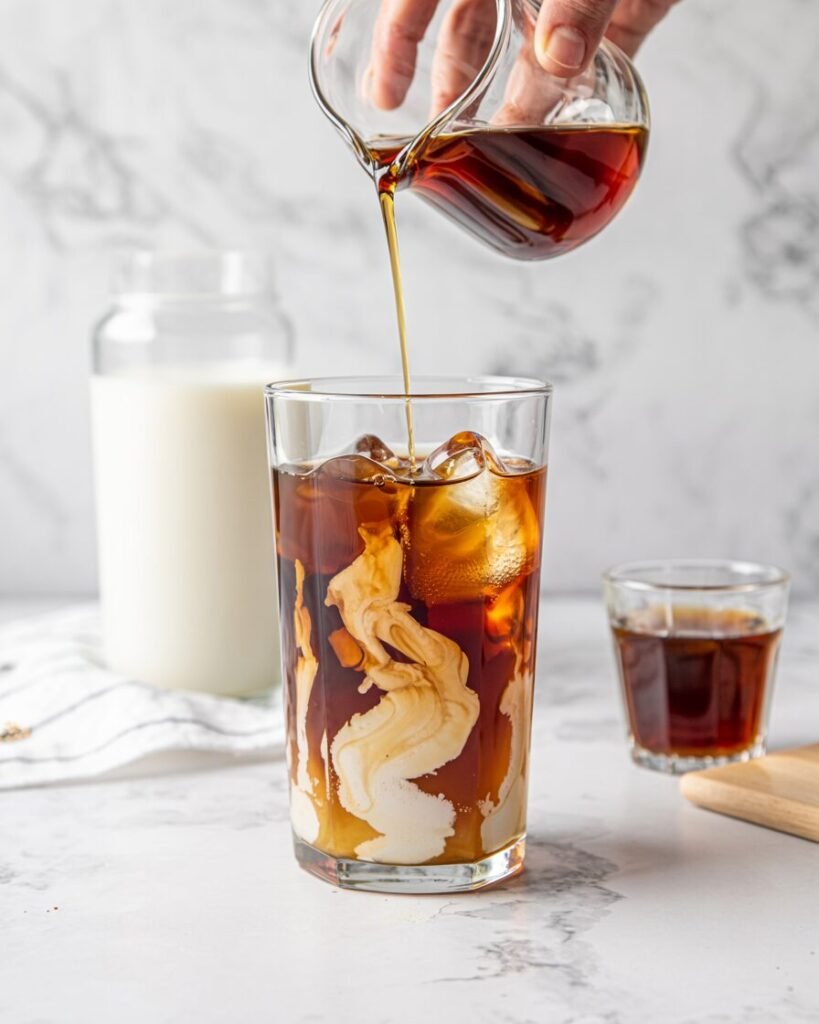
Pour the honey-espresso mixture slowly over the milk. Stir for a fully blended drink, or leave it layered for photos and then stir before drinking.
Visual cue: Before stirring, you should see distinct layers: pale milk at the bottom, darker coffee above or through the middle. After stirring, the latte should turn a light caramel beige.
Step 7: Taste and adjust
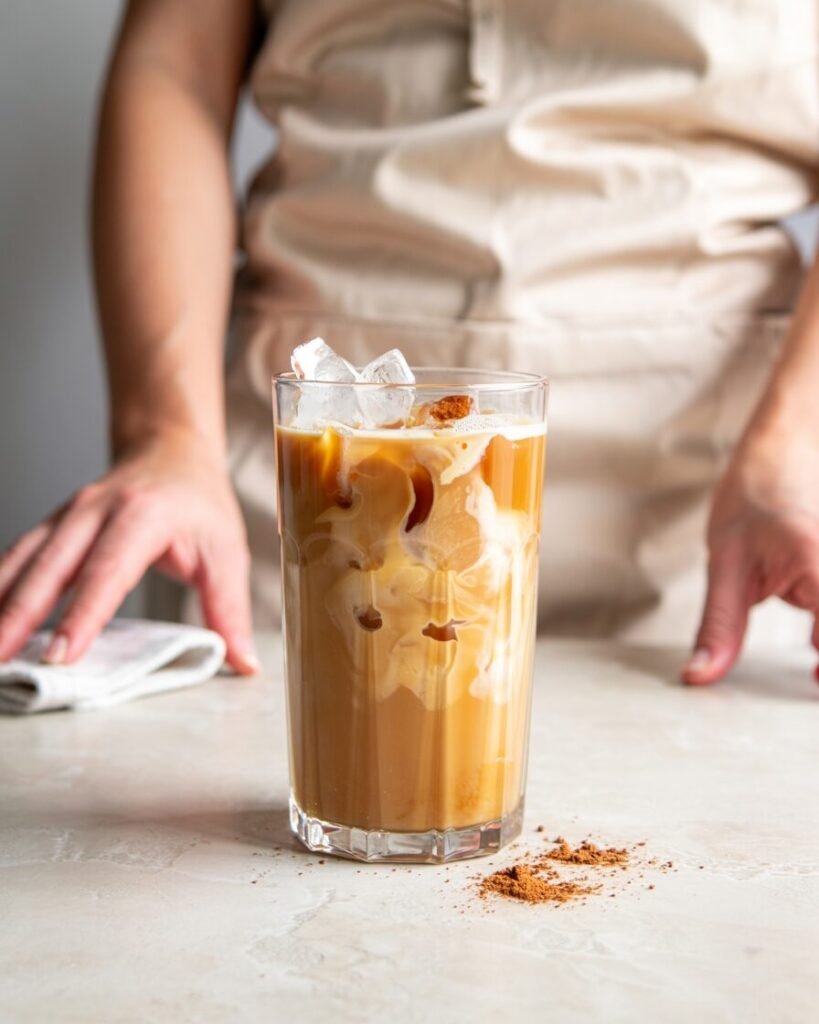
Taste with a straw or spoon. Add 1 more teaspoon honey if needed, or 1 to 2 tablespoons extra milk if the coffee is stronger than you like.
Checkpoint: A good iced honey latte should taste balanced, lightly sweet, creamy, and clearly coffee-forward. If it tastes sharp or hollow, it usually needs either a little more honey or a splash more milk.
Troubleshooting
- Problem: Honey settles at the bottom.
Likely causes: Added to cold milk or added after the ice.
Fix next time: Stir honey into warm espresso first. - Problem: Latte tastes watery.
Likely causes: Espresso poured over too much ice while very hot, or weak coffee base.
Fix next time: Cool coffee for 2 to 3 minutes first and use concentrated coffee. - Problem: Too sweet.
Likely causes: Sweetened plant milk plus too much honey.
Fix next time: Start with 2 teaspoons honey and taste before adding more. - Problem: Too bitter.
Likely causes: Over-extracted espresso or not enough milk.
Fix next time: Pull a shorter shot, use smoother coffee, or add 30 to 60 g more milk. - Problem: Flat flavor.
Likely causes: Bland milk or mild coffee.
Fix next time: Add a drop of vanilla or a tiny pinch of salt to sharpen flavor. - Problem: No creamy café-style feel.
Likely causes: Very low-fat milk with no froth.
Fix next time: Use whole milk or extra-creamy oat milk and froth a small portion first.
Substitutions and variations
For a dairy-free iced honey latte, use 180 g extra-creamy oat milk. It gives the closest texture to dairy milk and complements honey especially well.
For a stronger version, use 90 g coffee instead of 60 g and increase honey by 3 to 5 g. For a cinnamon variation, add a pinch of cinnamon to the espresso or make a honey-cinnamon version, but keep the spice subtle so the drink still tastes like honey latte first.
For a no-espresso option, use 60 g very strong instant coffee or concentrated brewed coffee. If making it fully vegan, replace honey with 15 g maple syrup; the flavor changes, but the method stays the same.
Scaling guide
| Yield | Coffee | Honey | Milk | Ice |
|---|---|---|---|---|
| 1 glass | 60 g (1/4 cup) | 15–21 g (2–3 tsp) | 180 g (3/4 cup) | 140–180 g |
| 2 glasses | 120 g (1/2 cup) | 30–42 g | 360 g (1 1/2 cups) | 280–360 g |
Storage, make-ahead, and freezing
This drink is best served immediately because ice dilution changes the flavor quickly. You can brew the espresso up to 24 hours ahead and chill it in the fridge, then stir it with honey just before assembling, or dissolve the honey while warm and chill the sweetened coffee base.
Do not freeze the finished latte. Milk-based iced drinks separate after thawing, and melted ice leaves the flavor dull and watery. Store any leftover brewed coffee in the fridge for up to 2 days in a sealed jar.
Serving suggestions and pairing ideas
This latte pairs especially well with not-too-sweet bakes such as vanilla muffins, cinnamon tea cake, banana bread, or oat cookies. Honey already adds rounded sweetness, so pairing it with desserts that are lightly spiced or buttery works better than pairing it with very sugary frostings.
For a brunch tray, serve it with baked donuts, coffee loaf cake, or a simple butter cookie. A tiny dusting of cinnamon on top also looks pretty, but use restraint so the honey remains the main flavor.
FAQs
Can I replace honey with sugar?
Yes, but the flavor will be flatter. Honey adds floral sweetness and a slightly fuller mouthfeel, while sugar simply sweetens.
Can I make this with instant coffee?
Yes. Use a concentrated mix so the latte does not taste thin. Dissolve the honey into the warm coffee exactly the same way.
What is the best milk for an iced honey latte?
Whole milk gives the richest result, while extra-creamy oat milk is the best dairy-free choice for texture and balance.
How do I stop the drink from getting watery?
Cool the coffee for a couple of minutes before pouring, use enough ice, and keep the coffee concentrated.
Can I make it in an OTG or air fryer?
No baking appliance is needed. You only need brewed coffee, a glass, ice, and a spoon or frother.
Notes from my kitchen
Batch 1: I stirred honey straight into cold milk. It sank fast and the last sips were overly sweet.
Batch 2: I added honey to hot espresso first; huge improvement in even sweetness and texture.
Batch 3: Using too little ice made the drink lukewarm within minutes. A fuller glass of ice fixed that.
Batch 4: A dark, strong honey overpowered the coffee. A lighter honey gave a cleaner café-style flavor.
Batch 5: Whole milk made the most balanced version, but extra-creamy oat milk was the best non-dairy option.
Batch 6: A pinch of cinnamon was pleasant, but too much hid the honey completely, so I keep it optional.
Final method: Warm espresso + dissolved honey + cold milk + plenty of ice gave the smoothest, most repeatable result with the least fuss.
Nutrition and disclaimer
Approximate per serving, using 2 teaspoons honey and whole milk: 110 to 140 calories, 5 to 6 g protein, 4 to 5 g fat, 12 to 18 g carbohydrates, depending on milk and honey amount. Values are estimates; adjust for brands and portion size.
Honey should not be given to infants under 1 year because of botulism risk, and anyone sensitive to lactose may prefer a dairy-free milk option. Follow basic food-safety practice by using fresh milk, clean ice, and chilled coffee if making ahead.
Conclusion
If you want a homemade iced coffee that feels a little more special than the usual latte, this iced honey latte is the one to try. The method is simple, but dissolving the honey into warm espresso first makes the difference between a drink that tastes homemade and one that tastes polished.