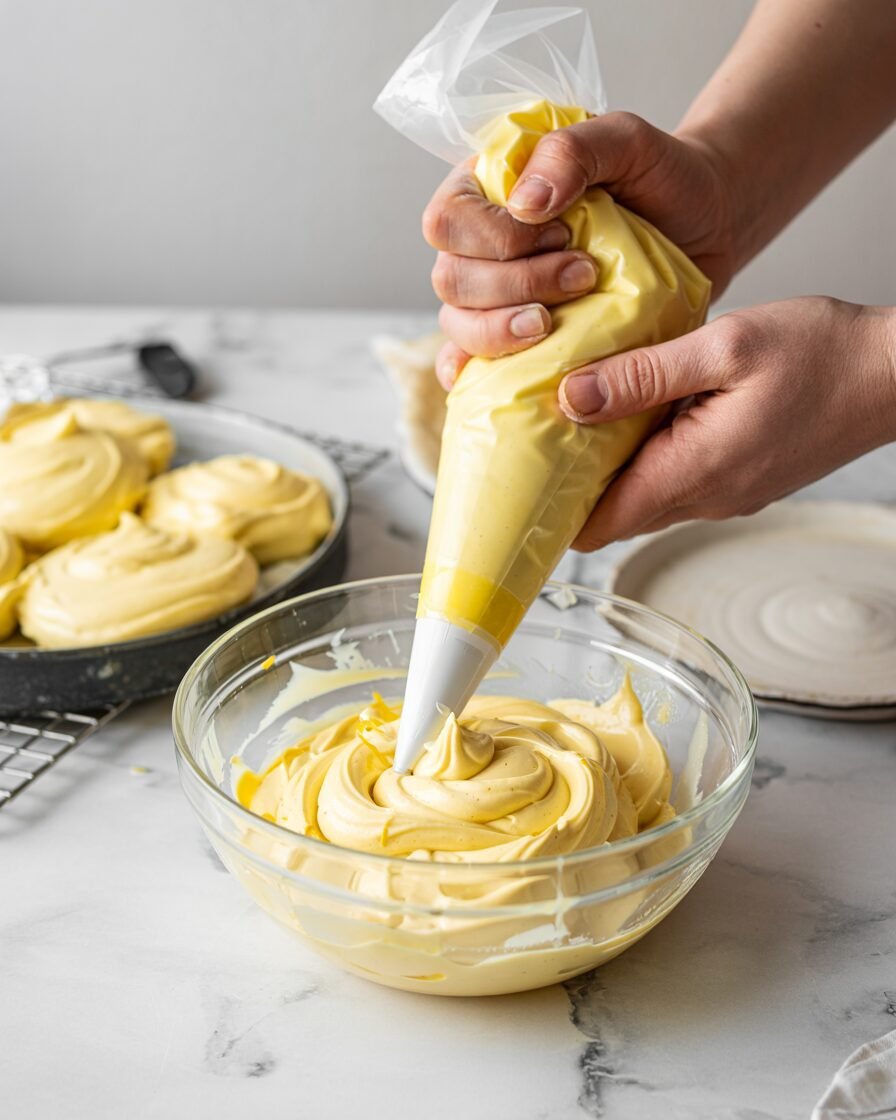
If you love a frosting that’s bright, creamy, and not overly sweet, this Lemon Cream Cheese Frosting might become your new go-to. It’s silky, tangy, and spreads beautifully on cakes, cupcakes, and even quick breads. Unlike traditional buttercream that can feel heavy, this frosting balances rich cream cheese with fresh lemon for a light, zesty finish.
This recipe is designed for beginner to intermediate home bakers, even if you only have a hand mixer or whisk and an OTG oven setup. The result? A smooth frosting that pipes cleanly and holds its shape without tasting overly sugary.
Pro tip: Always beat the butter and cream cheese separately until completely smooth before adding sugar. This small step prevents lumps and creates a velvety texture.
Why This Recipe Works
A good cream cheese frosting is all about balance and emulsion. Too much sugar makes it grainy, while too much liquid causes it to become runny. This recipe carefully balances fat, sugar, and acidity to maintain structure.
1. Fat balance creates stability
Cream cheese contains around 33% fat, while butter contains about 80% fat. Combining both creates a frosting that’s creamy yet stable enough to pipe.
2. Lemon acidity enhances flavor and structure
Fresh lemon juice adds brightness but also slightly tightens the frosting structure because acidity interacts with dairy proteins. That’s why a small amount goes a long way.
3. Powdered sugar stabilizes the frosting
Powdered sugar contains a small amount of starch, which helps absorb moisture and thicken the frosting without cooking or chilling.
Did you know? Cold cream cheese creates lumps because the fat solidifies. Room-temperature ingredients blend more smoothly and trap air for a lighter texture.
Ingredients
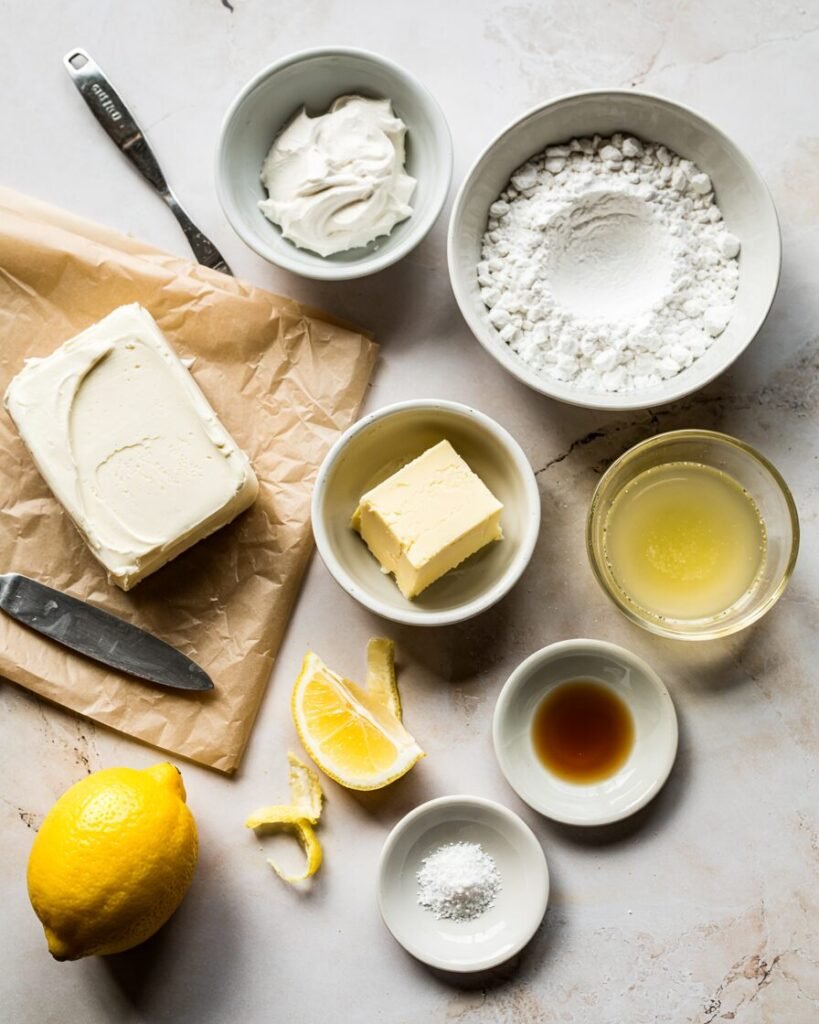
- Cream cheese — 225 g (8 oz / 1 cup) — Provides tangy flavor and creamy body. Use full-fat block cream cheese, not spreadable tubs.
- Unsalted butter — 115 g (½ cup) — Adds richness and structure so the frosting holds its shape.
- Powdered sugar — 360 g (3 cups) — Sweetens and thickens the frosting.
- Fresh lemon juice — 15 g (1 tbsp) — Adds bright citrus flavor.
- Lemon zest — 1 tsp — Intensifies lemon flavor without adding extra liquid.
- Vanilla extract — 1 tsp — Rounds out the tangy flavor.
- Salt — 1 g (⅛ tsp) — Balances sweetness.
Yield: About 2½ cups frosting, enough for:
- 12 cupcakes
- 1 single-layer 8-inch cake
- Thin filling for a 2-layer cake
Equipment
Required
- Mixing bowl
- Hand mixer or stand mixer
- Kitchen scale (recommended)
- Rubber spatula
- Microplane or fine grater for zest
Nice-to-have
- Offset spatula for spreading
- Piping bag with round or star tip
- Fine sieve for powdered sugar
Step-by-Step Instructions
Step 1: Prepare Ingredients (5 minutes)
Bring butter and cream cheese to room temperature for about 30–40 minutes.
Visual cue: When pressed lightly, they should dent easily but still hold their shape.
Avoid this: Soft but greasy butter will cause the frosting to separate.
Step 2: Beat Butter Until Smooth (2 minutes)
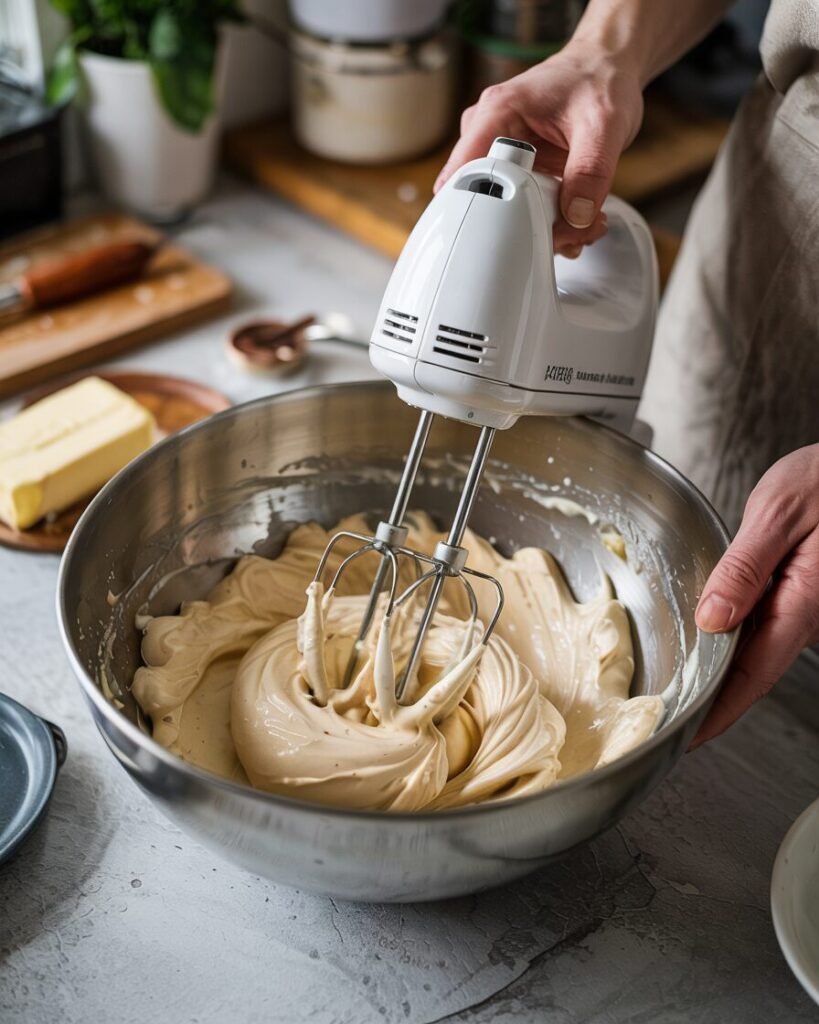
Using a hand mixer on medium speed, beat the butter until creamy.
Visual cue: Butter becomes pale and fluffy with no visible lumps.
Step 3: Add Cream Cheese (2–3 minutes)
Add cream cheese and beat until fully combined.
Visual cue: The mixture should look smooth, thick, and slightly glossy.
Checkpoint: No white cream cheese lumps should remain.
Step 4: Add Sugar Gradually (3–4 minutes)
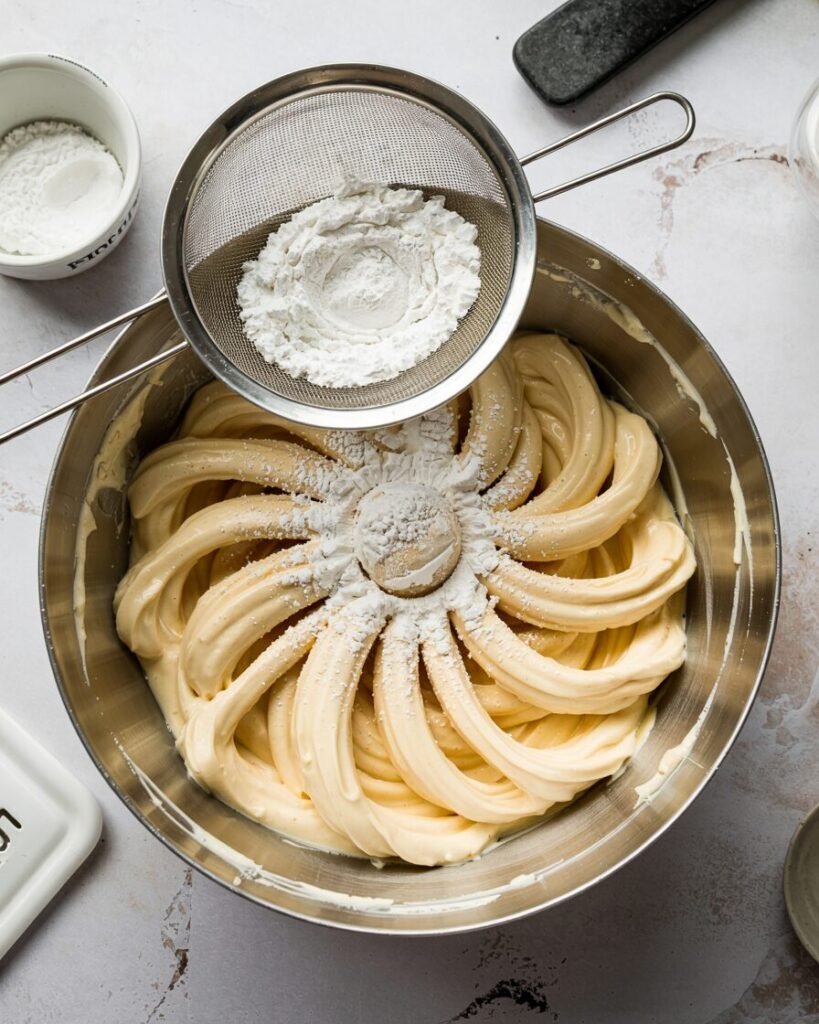
Add powdered sugar ½ cup at a time, mixing on low speed first.
Once combined, increase to medium speed for 1–2 minutes.
Visual cue: Frosting thickens and holds soft peaks.
Step 5: Flavor the Frosting (1 minute)
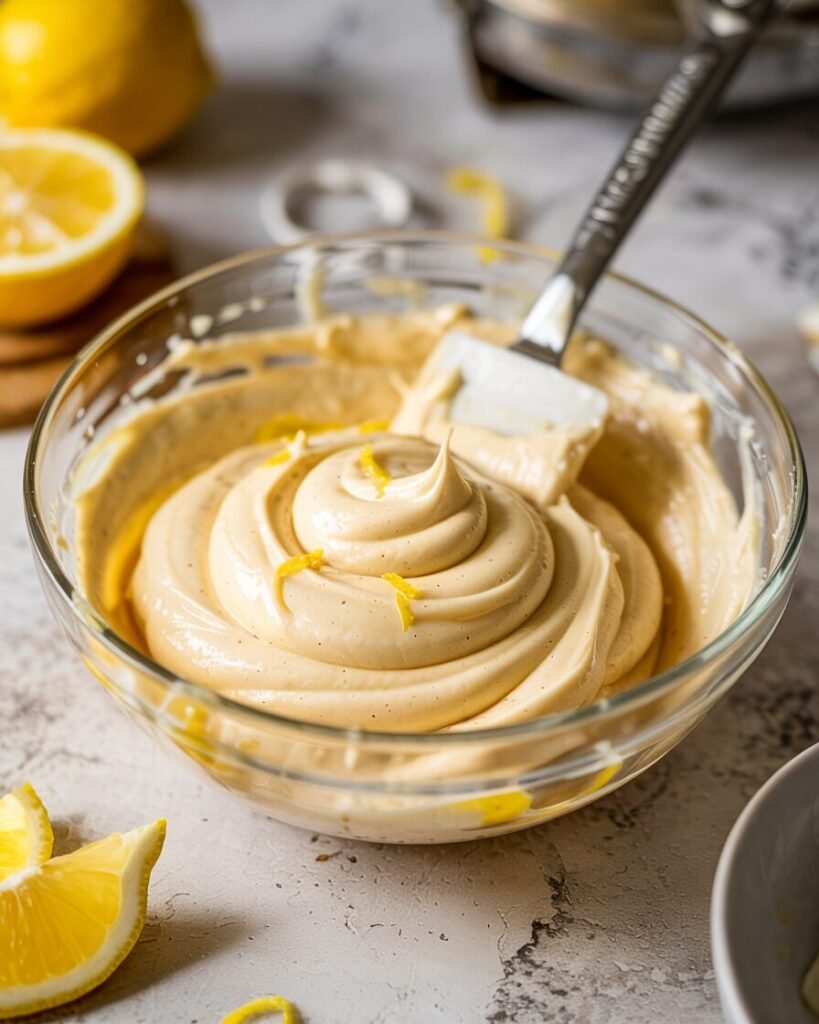
Add lemon juice, zest, vanilla, and salt. Mix until smooth.
Visual cue: The frosting should be creamy and spreadable with a light citrus aroma.
Texture test: Lift a spatula — the frosting should form a soft peak that slowly folds over.
Step 6: Chill if Needed (10–15 minutes)
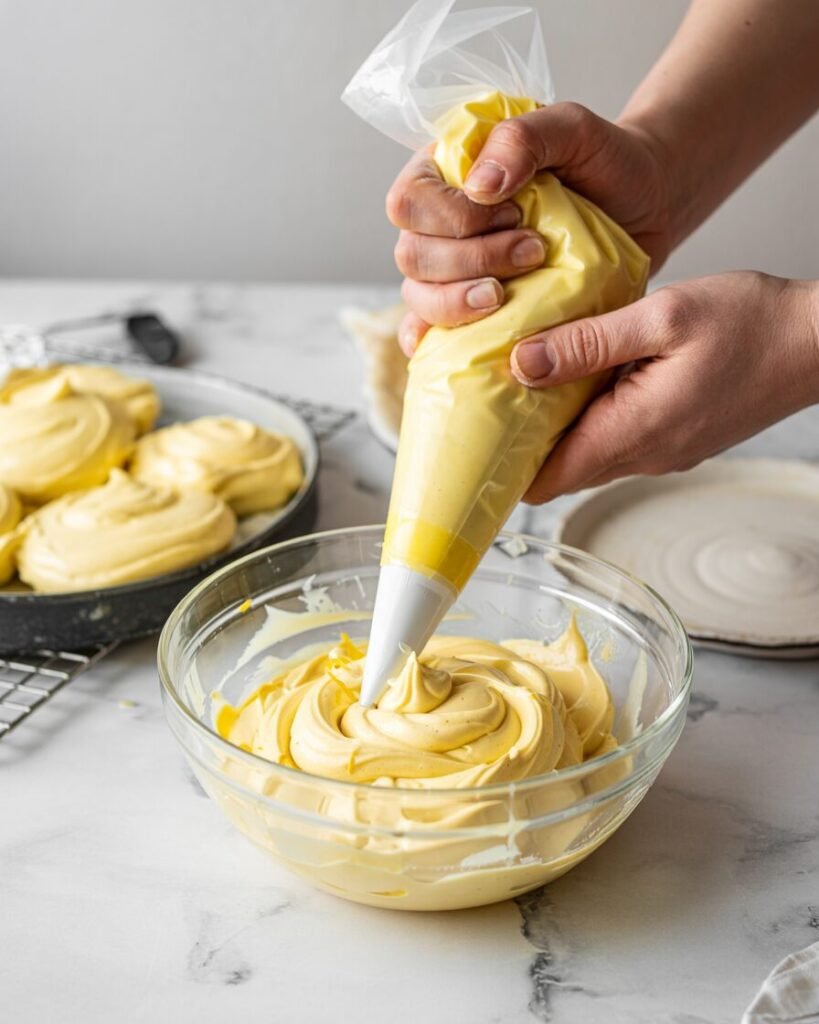
If the frosting feels soft, refrigerate briefly.
Visual cue: After chilling, it should hold firmer peaks and pipe cleanly.
Troubleshooting: Common Failures and Fixes
Frosting is Runny
Likely causes:
- Cream cheese too warm
- Too much lemon juice
Fix next time:
Add powdered sugar in 30 g increments or chill for 15 minutes.
Frosting is Lumpy
Likely causes:
- Cold cream cheese
- Overmixing after sugar addition
Fix next time:
Ensure ingredients are fully room temperature before mixing.
Frosting Too Sweet
Likely causes:
- Too much powdered sugar
Fix:
Add ½ tsp lemon juice or a pinch of salt to rebalance flavor.
Frosting Too Soft for Piping
Likely causes:
- Warm kitchen
- Excess liquid
Fix:
Chill frosting for 20 minutes before piping.
Frosting Looks Grainy
Likely causes:
Powdered sugar not sifted.
Fix next time:
Sift sugar before adding.
Substitutions and Variations
Dairy-Free Version
- Use plant-based cream cheese (225 g)
- Replace butter with vegan butter (115 g)
Note: Frosting will be slightly softer.
Less Sweet Version
Reduce powdered sugar to 300 g (2½ cups) and add 1 tbsp cornstarch to maintain thickness.
Flavor Variations
Lemon Vanilla Frosting
Add extra ½ tsp vanilla extract.
Lemon Berry Frosting
Fold in 1 tbsp freeze-dried raspberry powder.
Orange Cream Cheese Frosting
Replace lemon juice with orange juice and add orange zest.
Scaling the Recipe
| Yield | Cream Cheese | Butter | Sugar |
|---|---|---|---|
| 12 cupcakes | 225 g | 115 g | 360 g |
| 24 cupcakes | 450 g | 230 g | 720 g |
Storage, Make-Ahead, and Freezing
Counter:
Up to 4 hours if room temperature is below 24°C (75°F).
Refrigerator:
Store in an airtight container for 3–4 days.
Before using:
Bring to room temperature and whip for 30 seconds.
Freezer:
Freeze up to 2 months.
Thaw method:
Defrost overnight in the refrigerator and re-whip.
What not to freeze: Frosted cakes with fresh fruit toppings — they release moisture when thawed.
Serving Suggestions and Pairings
This frosting pairs beautifully with:
- Lemon layer cakes
- Vanilla cupcakes
- Carrot cake
- Red velvet cake
- Blueberry muffins
The tangy lemon flavor helps balance sweeter cakes, making each bite feel lighter.
FAQs
Can I use bottled lemon juice?
Fresh lemon juice is best because bottled versions can taste slightly bitter. If using bottled juice, reduce the amount to 2 teaspoons.
Can I make this frosting without butter?
Yes, but it will be softer. Replace butter with 60 g extra cream cheese and chill longer before piping.
How do I prevent runny frosting?
Use full-fat block cream cheese, avoid overmixing, and chill the frosting briefly before use.
Can I double the recipe?
Yes. Simply double all ingredients and mix in a large bowl to ensure even blending.
Can I make this in an OTG kitchen setup?
Absolutely. This recipe doesn’t require baking equipment — just a mixer or whisk.
Notes From My Kitchen (Testing Log)
Batch 1:
Used cold cream cheese. Result: small lumps in the frosting. Lesson learned — room temperature is essential.
Batch 2:
Added too much lemon juice (2 tbsp). Frosting became too soft. Fix: increased powdered sugar slightly.
Batch 3:
Tested with sifted sugar and gradual mixing. Texture improved dramatically.
Batch 4:
Tried chilling before piping — frosting piped cleaner and held shape better.
Batch 5 (Final Version):
Balanced lemon juice and zest produced the best flavor — tangy but not overpowering.
Final method chosen because it produces smooth texture, balanced sweetness, and stable piping consistency.
Nutrition and Disclaimer
Approximate per serving (2 tbsp frosting):
- Calories: ~140
- Fat: 8 g
- Carbohydrates: 16 g
- Sugar: 15 g
Values are estimates and may vary depending on brands and portion sizes.
Follow standard food-safety practices: keep dairy-based frostings refrigerated if not used immediately.
Conclusion
A great frosting should enhance a cake, not overpower it. This Lemon Cream Cheese Frosting delivers exactly that — a smooth, tangy, and lightly sweet topping that pairs beautifully with a wide range of baked goods.
The key to success lies in room-temperature ingredients, gradual sugar addition, and balanced lemon flavor. Once you master those steps, you’ll have a frosting that spreads easily, pipes cleanly, and tastes fresh and vibrant.