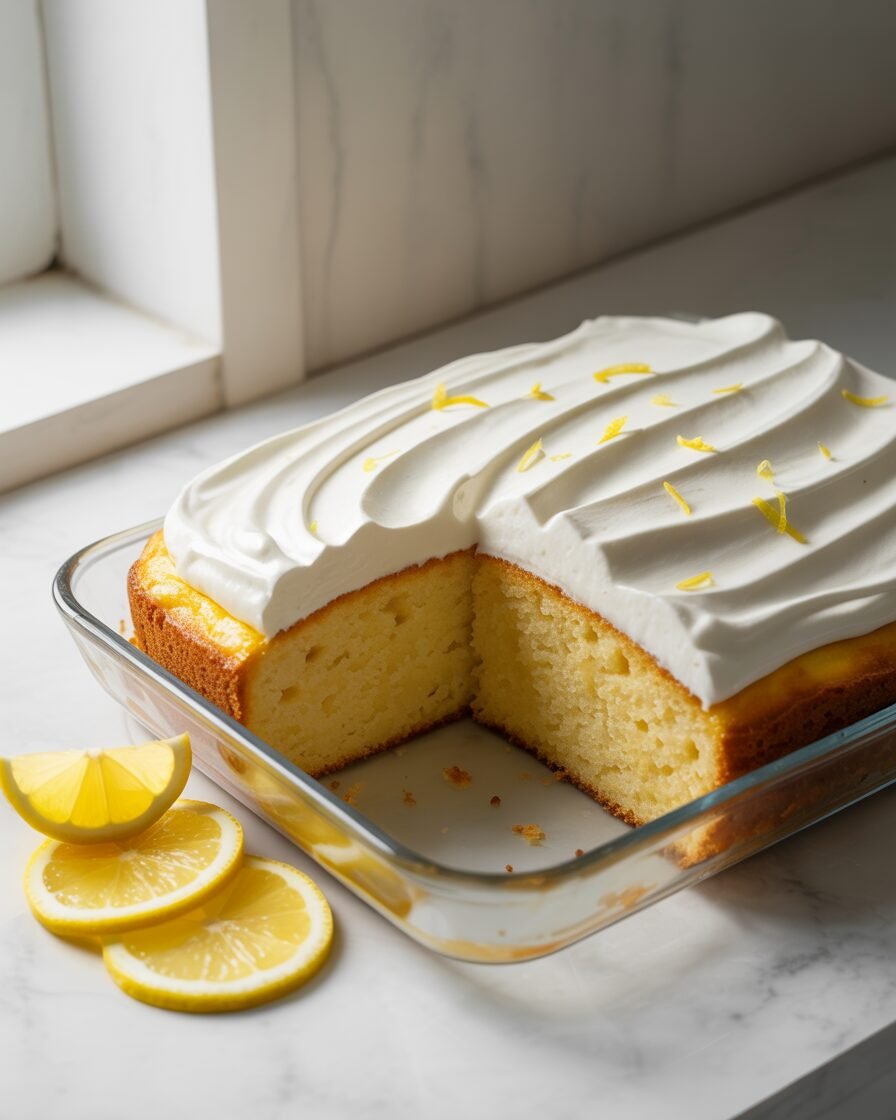
This lemon poke cake with whipped topping is a bright, easy dessert that’s perfect for weeknight treats or weekend gatherings. The cake itself is soft and moist, soaked with a tangy lemon syrup, then crowned with a light, slightly sweetened whipped cream that melts on your tongue.
What makes this version special is that it’s fully from scratch (no cake mix), uses oil for extra moisture, and the whipped topping is lightly stabilized so it holds overnight without weeping. If you want a one‑pan, make‑ahead dessert that feels impressive but still bakes like a simple sheet cake, this is it.
Pro tip: Poke the holes while the cake is still warm, then pour the syrup in 2–3 passes so it sinks deep into the crumb instead of pooling on top.
Why this recipe works
The success of a lemon poke cake comes down to three things: moisture balance, acidity, and structure.
- Oil instead of butter keeps the crumb extra soft and tender because liquid oil coats flour proteins more evenly than solid butter, which helps suppress gluten and extend freshness.
- Fresh lemon juice and zest add acidity that enhances flavor and helps tenderize the cake, while the cornstarch in the syrup thickens just enough to cling to the cake without turning it soggy.
- The egg‑yolk‑rich whipped topping, lightly stabilized with a bit of gelatin, holds its shape for hours in the fridge and doesn’t separate like plain whipped cream, which makes it ideal for make‑ahead desserts.
This recipe emerged from testing several oils, leavening ratios, and syrup thicknesses to balance sweetness, tang, and moisture so the cake doesn’t taste artificial or oversaturated.
Ingredients with weights and purpose
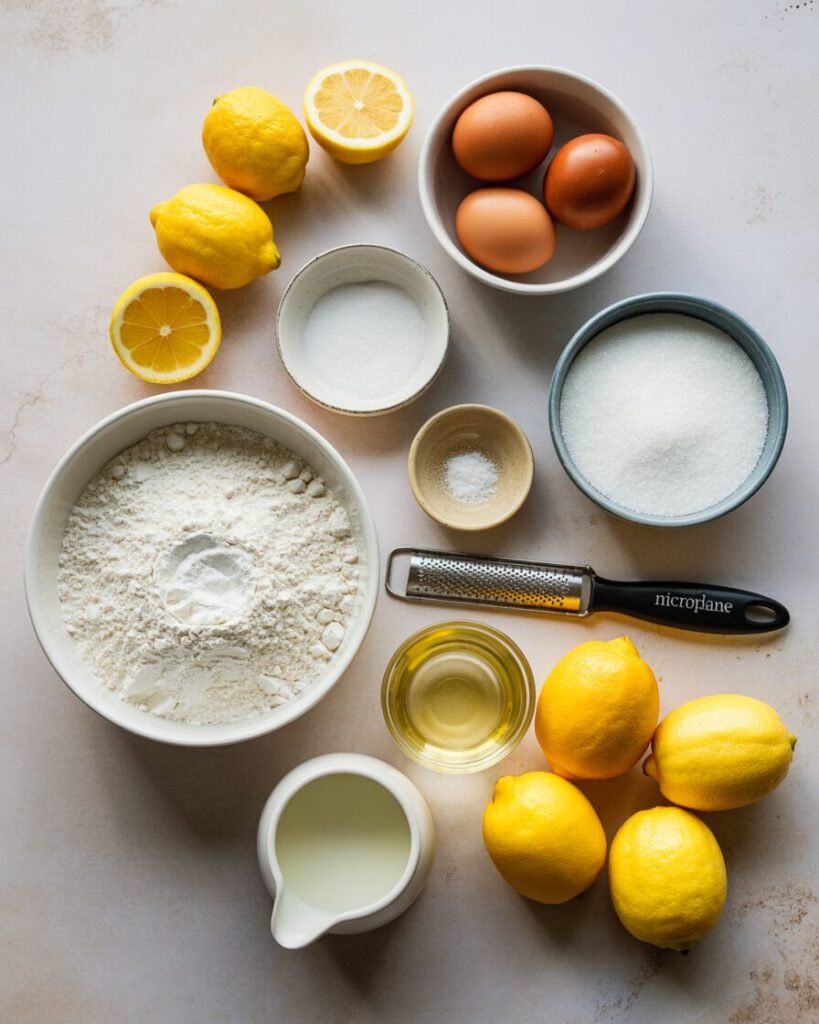
All measurements are metric first, with US cups in parentheses. Use room‑temperature eggs and fresh lemons for best flavor.
Lemon cake (9×13 inch / 23×33 cm pan)
- All‑purpose flour – 250 g (2 cups) – provides structure and crumb.
- Granulated sugar – 200 g (1 cup) – sweetens and helps aerate the batter.
- Baking powder – 12 g (1½ tsp) – lifts the cake so it stays light even when soaked.
- Salt – 2 g (¼ tsp) – balances sweetness and supports flavor.
- Eggs, large – 3 (150 g) – bind and add richness.
- Vegetable (or neutral) oil – 120 g (½ cup) – adds moisture and tenderness.
- Milk (whole or 2%) – 120 g (½ cup) – hydrates the flour and thins the batter.
- Lemon zest – from 2 medium lemons (about 10 g) – gives intense lemon flavor without extra liquid.
- Lemon juice, fresh – 30 g (2 tbsp) – adds acidity and brightness.
- Vanilla extract, pure – 5 g (1 tsp) – rounds out the citrus flavor.
Lemon poke syrup
- Granulated sugar – 100 g (½ cup) – sweetens and thickens slightly.
- Water – 120 g (½ cup) – dissolves the sugar and carries the lemon.
- Lemon juice, fresh – 60 g (¼ cup) – flavor and acidity.
- Cornstarch – 5 g (1 tsp) – lightly thickens the syrup so it clings to the cake.
- Lemon zest – from 1 medium lemon (about 5 g) – deepens the lemon aroma.
Whipped topping
- Heavy whipping cream, cold – 300 g (1¼ cups) – gives body and lightness.
- Powdered sugar – 40 g (⅓ cup) – sweetens without deflating peaks.
- Lemon zest – from 1 medium lemon (about 5 g) – adds citrus fragrance.
- Unflavored gelatin, powdered – 2 g (½ tsp) – stabilizes the whipped cream so it holds overnight.
- Cold water – 15 g (1 tbsp) – dissolves the gelatin.
- Vanilla extract – 3 g (½ tsp) – rounds the flavor.
Equipment
- 9×13 inch / 23×33 cm metal baking pan (or 23×33 cm rectangular pan).
- Handheld electric mixer or whisk (stand mixer works but is not required).
- Digital kitchen scale (highly recommended).
- Measuring cups and spoons (for volume users).
- Mixing bowls – 1 large, 1 medium.
- Silicone spatula – for folding and spreading.
- Fine sieve or strainer – for sifting flour and dusting powdered sugar.
- Small saucepan – for the syrup.
- Whisk or fork – for the syrup and thickening.
- Chilled metal mixing bowl – for whipping cream.
- Wire cooling rack – for the cake after baking.
Nice‑to‑have: offset spatula (for smooth topping), parchment rectangle (for easy unmolding), and a squeeze bottle or small jug for drizzling syrup.
Step‑by‑step
Preheat oven: 175°C (350°F).
Pan position: Middle rack.
Pan prep: Lightly grease the 9×13 inch pan and line the bottom with a parchment rectangle for easy removal.
Step 1: Make the lemon cake batter (10–12 minutes)
- In a medium bowl, whisk together the flour (250 g), baking powder (12 g), and salt (2 g) until fully combined. Set aside.
- In a large bowl, beat the eggs (3, 150 g), oil (120 g), and milk (120 g) until smooth and slightly lightened, about 1–2 minutes.
- Add the sugar (200 g), lemon zest (10 g), lemon juice (30 g), and vanilla (5 g). Beat for another 2 minutes until the mixture is smooth and slightly pale.
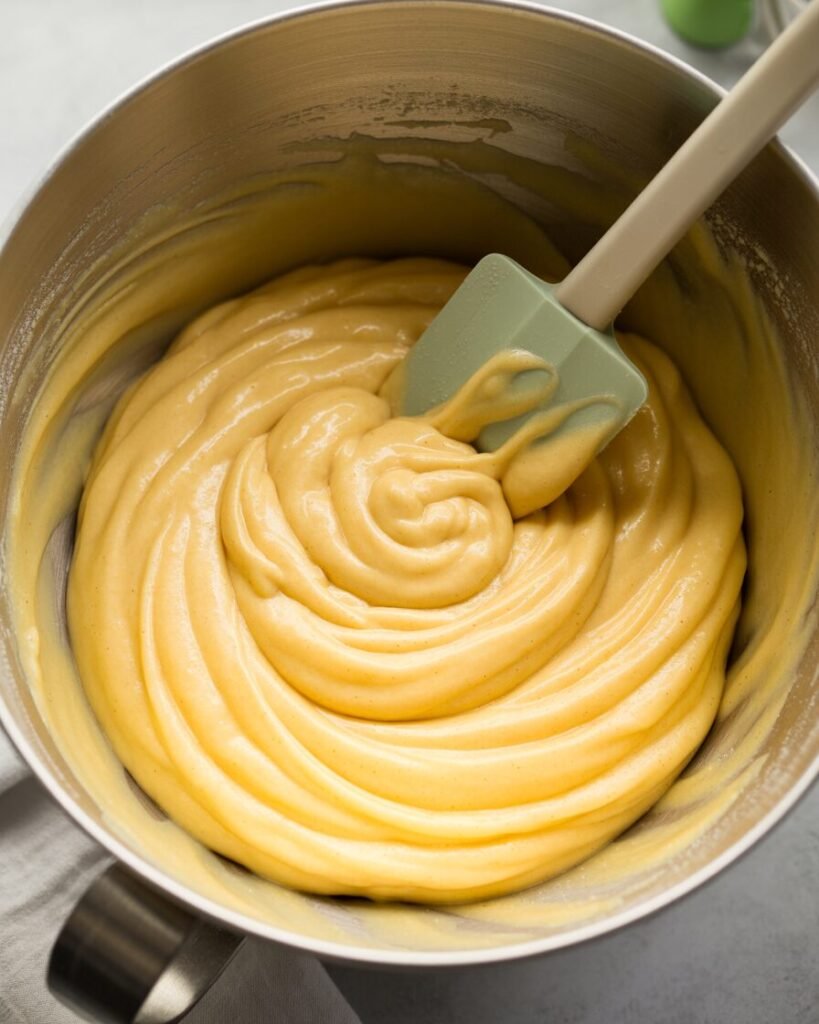
- Gradually add the dry ingredients in 2–3 batches, folding gently with a spatula until just combined. Do not overmix; the batter should be smooth with a few small lumps, but not runny or watery.
Visual cue: The batter should ribbon slightly when you lift the whisk or spatula, but still fall quickly. It should coat the spatula but not cling in thick strands.
- Pour into the prepared pan and spread evenly with the spatula. Tap the pan lightly on the counter to remove air bubbles.
Step 2: Bake the cake (25–35 minutes)
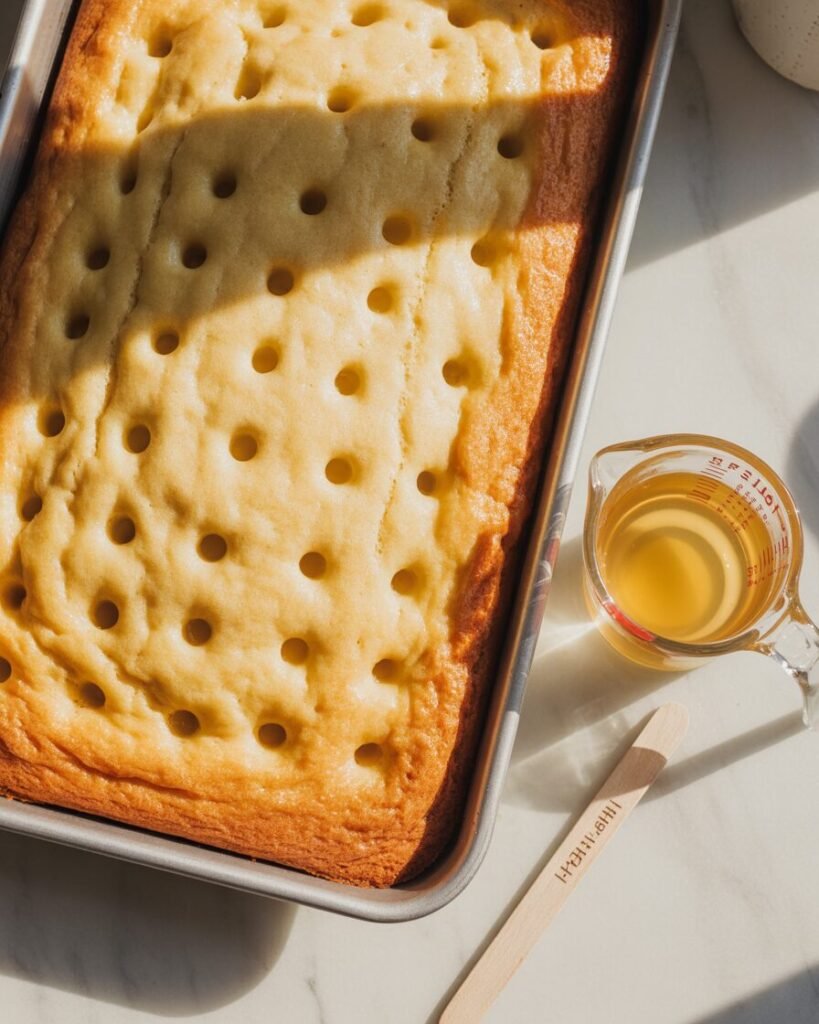
- Bake at 175°C (350°F) for 25–30 minutes, or until a thin skewer inserted into the center comes out clean and the edges are lightly golden.
- The cake should feel springy to the touch and the center should not jiggle when you gently shake the pan.
Doneness test: Internal temperature should be around 96–98°C (205–208°F).
- Let the cake cool in the pan for 5 minutes, then use the parchment to lift it slightly and continue cooling on the rack for 10–15 minutes. It should still be warm, not hot, when you poke it.
Step 3: Make the lemon poke syrup (8–10 minutes)
- In a small saucepan, combine sugar (100 g), water (120 g), and lemon zest (5 g). Cook over medium heat, stirring until the sugar dissolves.
- In a small bowl, mix the cornstarch (5 g) with lemon juice (60 g) until smooth.
- Pour the slurry into the simmering syrup and whisk continuously until it thickens slightly and becomes lightly glossy, about 1–2 minutes.
- Remove from heat and let cool for 2–3 minutes so it’s warm but not boiling.
Visual cue: The syrup should coat the back of a spoon but still pour easily; it should not be gel‑like.
Step 4: Poke and soak the cake (5 minutes)
- Using the back of a wooden spoon, a skewer, or the end of a chopstick, poke holes all over the top of the warm cake, about 1–1.5 cm apart.
- Slowly pour the warm syrup over the cake in 2–3 passes, letting it soak into the holes before adding more.
Visual cue: The syrup should disappear into the cake within a few seconds, leaving only a thin sheen. The cake will puff slightly where soaked but should not collapse.
- Let the cake cool completely at room temperature (1–1.5 hours) before adding the whipped topping.
Step 5: Make the whipped topping (8–10 minutes)
- In a small bowl, sprinkle the gelatin (2 g) over the cold water (15 g). Let it bloom for 5–10 minutes until it looks like jelly.
- Heat the bloomed gelatin briefly until liquid, then set aside to cool slightly.
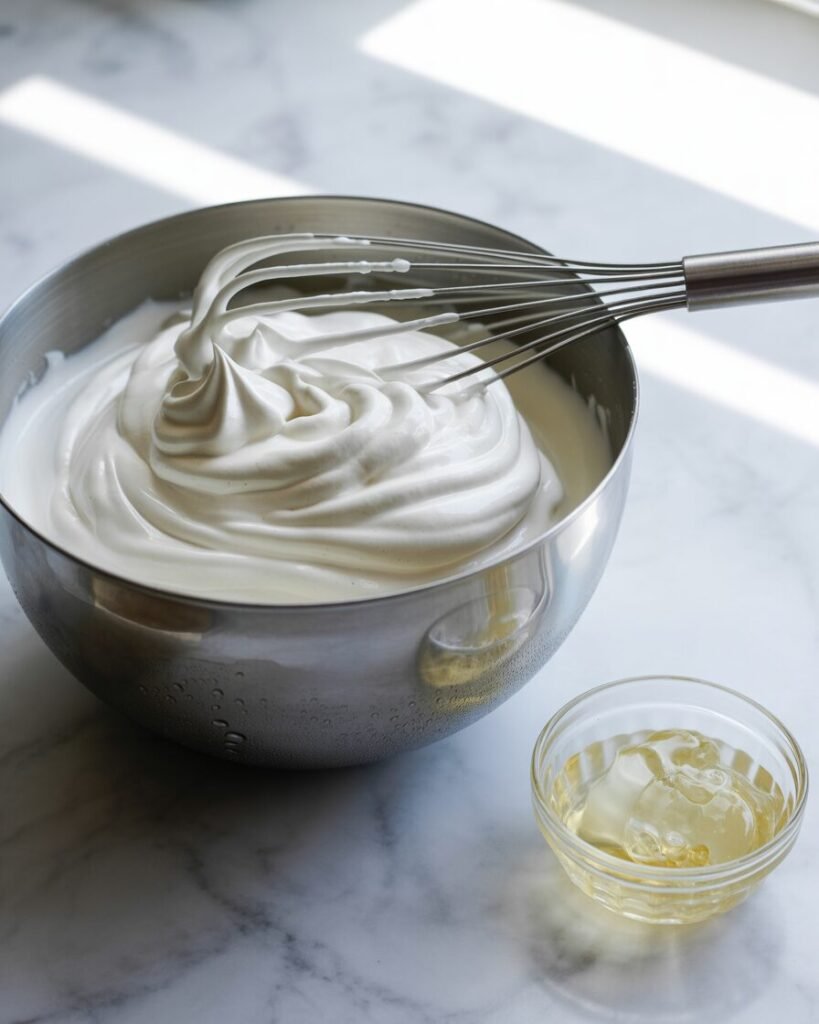
- In a chilled metal bowl, pour the cold heavy cream (300 g). Whip on medium‑high speed until soft peaks form.
- Add powdered sugar (40 g), lemon zest (5 g), vanilla (3 g), and the cooled gelatin. Whip again until the peaks are firm but not stiff.
Visual cue: The peaks should hold their shape when you lift the whisk and the tip curls over gently; the texture should be smooth and glossy, not curdled.
- Dollop the whipped topping over the cooled cake and spread gently, leaving some peaks for a rustic look.
Step 6: Chill and serve (30 minutes–overnight)
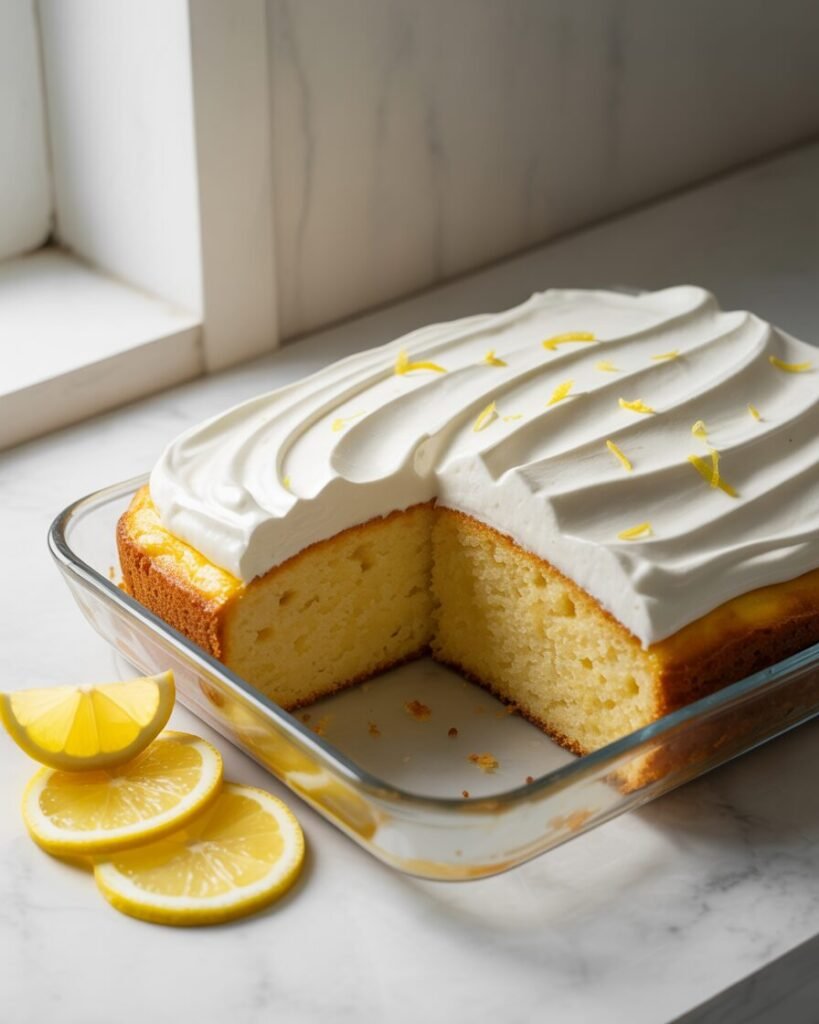
- Refrigerate the cake for at least 30 minutes to set the topping and let the syrup settle.
- For best texture, let sit at room temperature for 10–15 minutes before slicing.
Troubleshooting: common failures and fixes
- Cake sinks after baking: Underbaked, too much leavening, or oven door opened early. Bake until skewer‑clean and internal temp 96–98°C; reduce baking powder by 1–2 g if needed.
- Cake is dry despite syrup: Overbaked or too much flour. Measure by weight; bake until just done.
- Whipped topping weeps or separates: Overwhipped or warm bowl. Whip to soft–firm peaks only; keep everything cold.
- Holes close up and syrup runs off: Poke too late or too shallow. Use a skewer and poke while the cake is warm.
Substitutions and variations
Dietary swaps
- Egg‑free: Replace each egg with 60 g (¼ cup) unsweetened applesauce or commercial egg replacer. Texture will be denser but still moist.
- Dairy‑free: Use full‑fat coconut milk for milk and coconut oil for oil; use chilled coconut cream for whipped topping (stabilizer may be less effective).
- Gluten‑free: Use a 1:1 gluten‑free flour blend plus 1–2 g xanthan gum if your blend lacks it. Expect a slightly denser crumb.
Flavor swaps
- Swap lemons for lime or orange in both cake and syrup.
- Add 1 tsp cinnamon or ½ tsp cardamom to the cake for a spiced twist.
- Fold in 30 g lemon curd into the batter for extra richness.
Scaling
- 6‑inch square pan (15×15 cm): Roughly halve the recipe; bake 20–25 minutes.
- 12 cupcakes: Use the same recipe; bake 175°C for 18–22 minutes.
Storage, make‑ahead, and freezing
- Counter: Up to 1 day in a covered container.
- Fridge: 3–4 days covered.
- Freezer: Freeze the untopped cake for up to 2 months; thaw overnight in the fridge and add fresh whipped topping before serving.
- What not to freeze: Whipped topping becomes grainy; always make it fresh.
Serving suggestions and pairings
Serve slices with powdered sugar dusting, fresh berries, or a spoon of lemon curd. Pair with tea or sparkling water to balance sweetness and acidity.
FAQs
- Can I replace sugar with honey or maple syrup?
Yes, but reduce liquid by 15–20 g and expect a denser, moister crumb. - How to prevent whipped topping from deflating?
Use gelatin, chill tools and cream, and whip only to firm peaks. - Can I double or halve this recipe?
Yes; halve for a 6‑inch pan; double for a larger pan. Watch for doneness earlier. - Best oil for this cake?
Use neutral oil like canola, vegetable, or sunflower. Avoid strongly flavored olive oil. - Can I bake in an air fryer or OTG?
Yes; in an OTG at 175°C, same timing; in an air fryer, use mini pans and reduce time to 12–18 minutes.
Notes from my kitchen
- Batch 1: Used only butter; cake was drier and less soft.
- Batch 2: Too much lemon juice in syrup; cake was overly tart and slightly gummy.
- Final version: Balanced oil‑based moistness, just‑enough syrup, and stabilized whipped topping for a cake that slices cleanly and still tastes fresh.
Nutrition and disclaimer
Approximate per serving (1 of 12): 250–300 kcal, 25–35 g carbs, 12–18 g fat.
Values are estimates; adjust for brands and portion size. Follow standard food‑safety practices.
Final thoughts
This lemon poke cake with whipped topping blends brightness, ease, and make‑ahead convenience in one pan. It’s forgiving enough for beginners but still impressive enough to serve to guests. With the right balance of oil, lemon, and stabilized cream, you get a dessert that feels light, moist, and satisfying—perfect for everyday baking and weekend treats.