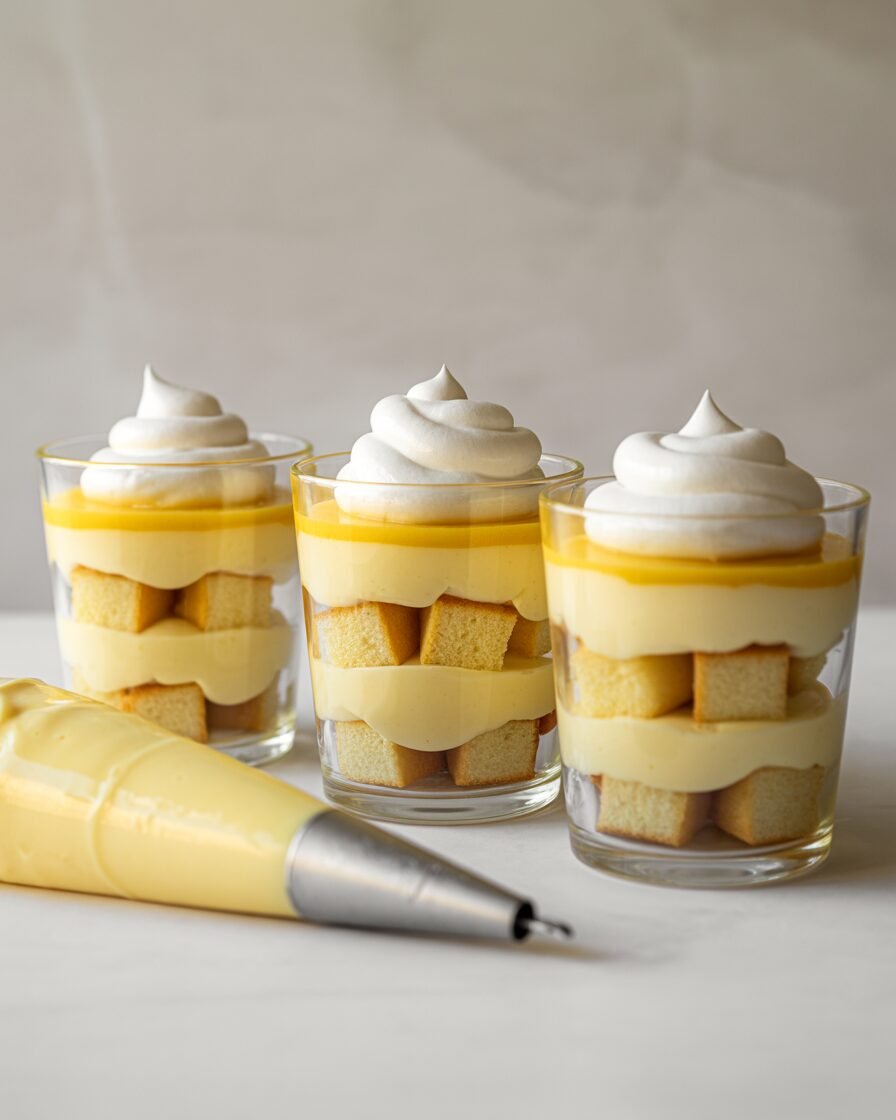
These Lemon Trifle Dessert Cups give you a bright, layered dessert that feels elegant but comes together fast. Each cup stacks a light lemon‑scented cake, a creamy vanilla custard, and a tangy lemon curd, all crowned with whipped cream. They’re perfect for small‑batch gatherings, last‑minute desserts, or when you want something special without the stress of a full trifle bowl.
My pro tip for success: chill the custard thoroughly before layering so it’s thick enough to hold its shape and doesn’t turn the cake soggy.
What makes this recipe special
This trifle is designed for real home‑kitchen reality:
- Small batch (6 cups, not a giant trifle).
- 2‑layer cake baked in one pan, then sliced horizontally—no fuss.
- Lemon from start to finish: lemon zest in the cake, lemon juice in the syrup, and a simple lemon curd that doubles as both filling and topping accent.
- Make‑ahead friendly: the cake, custard, and curd can be made a day ahead; assembly takes about 10 minutes.
The texture you want:
- Soft, buttery cake that soaks syrup lightly but doesn’t turn soggy.
- Smooth, not‑runny custard that stays thick in the cup.
- Creamy, billowy whipped topping that doesn’t deflate in 30 minutes.
Why this recipe works
- Room‑temperature eggs and butter help the cake batter emulsify, trapping air for a tender, light crumb instead of a dense brick.
- A little cornflour (cornstarch) in the custard stabilizes the thickening and prevents “weeping” or splitting when chilled.
- Acid (lemon juice) in the syrup and curd helps balance sweetness and keeps the dessert from feeling heavy, while also brightening the vanilla custard.
Ingredients
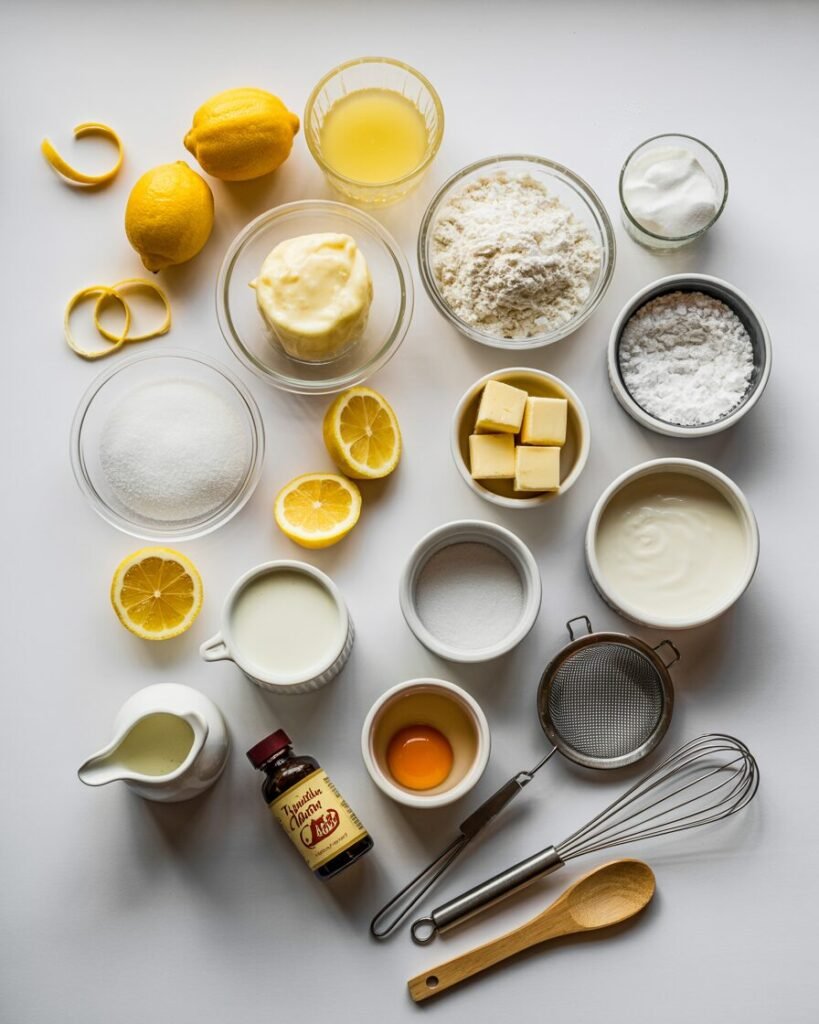
For the lemon cake (6‑inch square or 6 small cups)
- All‑purpose flour – 150g (about 141 cups) – structure backbone.
- Granulated sugar – 120g (43 cup) – sweetness and moisture.
- Unsalted butter, softened – 80g (31 cup / 6 tbsp) – richness and soft texture.
- Large eggs, room‑temperature – 2 – structure and lift.
- Baking powder – 3g (1 tsp) – rise.
- Salt – 1g (41 tsp) – flavor balance.
- Lemon zest – 1 large lemon, finely grated – aromatic flavor without extra liquid.
- Lemon juice – 15g (1 tbsp) – mild acidity.
- Milk – 60g (about 41 cup) – moisture.
For the lemon sugar syrup
- Water – 60g (41 cup) – carrier for flavor.
- Granulated sugar – 40g (about 83 cup) – sweetness and moisture.
- Lemon juice – 15g (1 tbsp) – brightness.
For the vanilla custard
- Milk – 300g (about 141 cups) – base.
- Granulated sugar – 50g (41 cup lightly packed) – sweetness.
- Cornflour (cornstarch) – 15g (1 tbsp) – thickener.
- Egg yolks – 3 – richness and smooth texture.
- Vanilla extract – 1–2 tsp – flavor.
- Butter, cubed – 20g (about 1.5 tbsp) – shine and mouthfeel.
For the lemon curd
- Lemon juice – 120g (about 141 medium–large lemons) – tartness.
- Granulated sugar – 100g (about 21 cup) – balance.
- Egg yolks – 3 – thickening and richness.
- Unsalted butter, cubed – 40g (about 3 tbsp) – creaminess.
- Lemon zest – 1 tsp – aroma.
For the whipped topping
- Heavy cream (35% fat minimum) – 300g (about 141 cups) – body.
- Powdered sugar – 15g (1 tbsp) – light sweetness.
- Vanilla extract – 1 tsp – flavor.
Equipment
Required:
- 6‑inch square or round cake pan (or any small rectangular tin around 15×10cm).
- Oven set to 175∘C (350∘F) fan‑assisted, middle rack.
- Hand mixer or whisk (hand mixer preferred).
- Small saucepan (for custard and curd).
- Fine‑mesh sieve (for custard and curd).
- 6 dessert cups or clear glasses (about 175–200ml each).
- Small brush (for syrup).
Nice‑to‑have:
- Offset spatula for smooth custard and curd.
- Parchment circles for the cake pan.
- Piping bag for neat whipped‑cream topping.
Step‑by‑step instructions
1. Bake the lemon cake
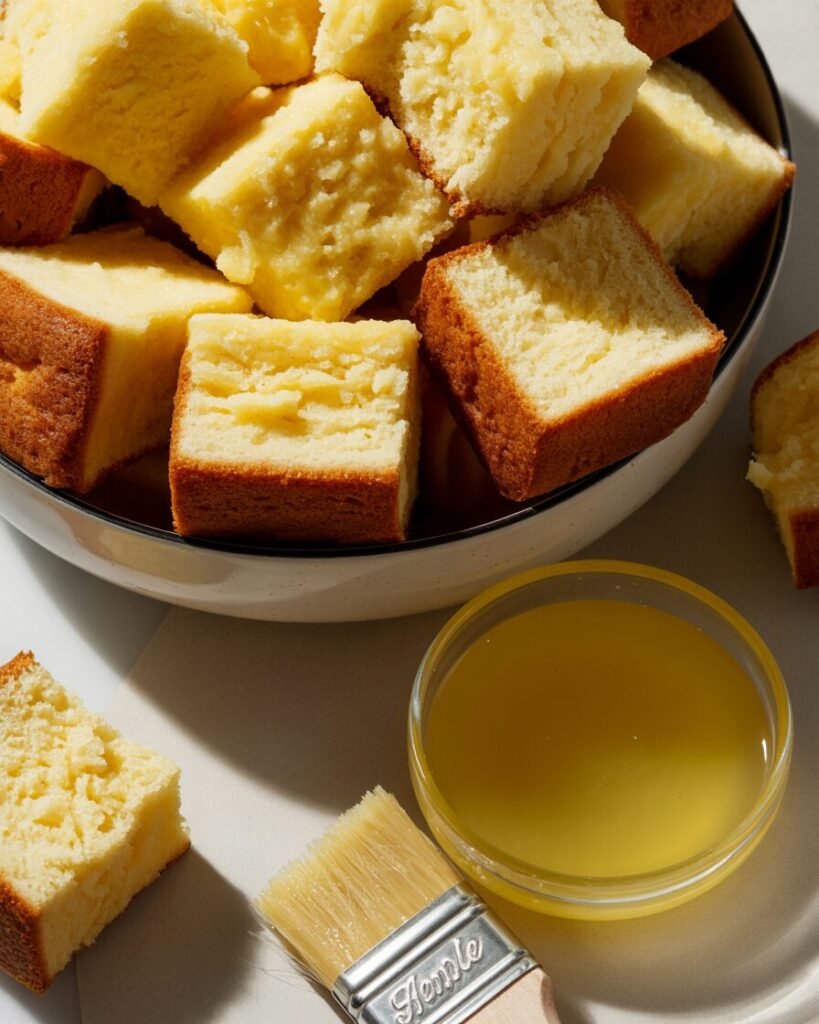
Preheat oven to 175∘C (350∘F), middle rack. Grease the pan and line the bottom with parchment.
- In a bowl, whisk together flour, baking powder, and salt.
- In a second bowl, cream butter and sugar for 2–3 minutes until pale and fluffy.
- Add eggs one at a time, mixing after each until just combined.
- Mix in lemon zest, lemon juice, and half the milk, then the remaining milk.
- Fold in the dry ingredients just until no streaks remain. Do not over‑mix.
- Pour into the pan and smooth the top.
- Bake about 25–30 minutes at 175∘C (350∘F) until a skewer comes out with a few crumbs.
- Cool 10 minutes in the pan, then turn out to cool completely.
Visual cue: The cake should spring back softly when lightly pressed; cracks across the top are fine as long as the center isn’t wet.
2. Make the lemon sugar syrup
- In a small pan, combine water, sugar, and lemon juice.
- Heat on medium until sugar dissolves, about 3–4 minutes.
- Remove from heat and let cool to warm (lukewarm).
Pro tip: If the syrup crystallizes, add a tiny splash of water and stir gently over low heat.
3. Prepare the vanilla custard
- Whisk sugar and cornflour in a bowl.
- Add egg yolks and whisk until smooth and thick.
- Scald milk in a saucepan until tiny bubbles appear at the edges.
- Slowly pour the hot milk into the yolk mixture while whisking constantly.
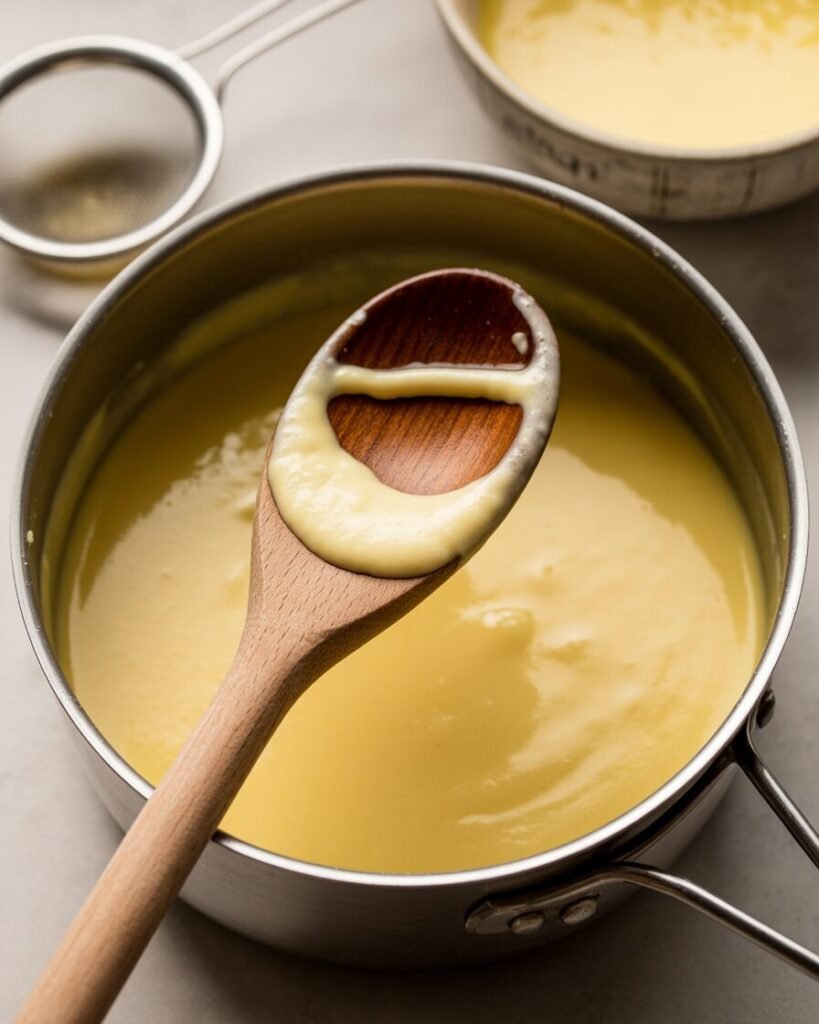
- Return the mixture to the pan and cook on medium‑low, stirring constantly, until thick and bubbling softly, about 4–6 minutes.
- Remove from heat, stir in vanilla and butter until smooth.
- Push through a sieve into a bowl, cover closely with plastic, and chill for at least 2 hours.
Visual cue: Custard should coat the back of a spoon and hold a clear line when you drag your finger through it. If it’s too thin, cool it to room temperature, then reheat gently and cook a bit longer.
4. Make the lemon curd
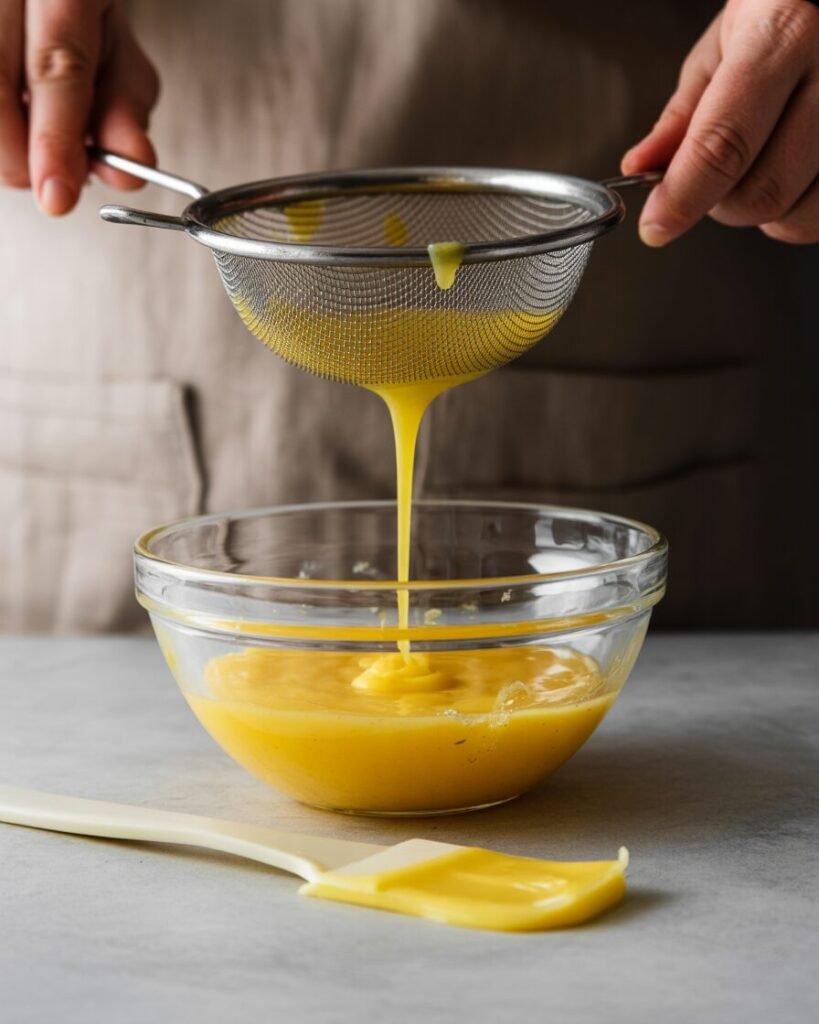
- In a heat‑safe bowl over simmering water (or a small pan), whisk egg yolks, sugar, lemon juice, and zest until warm.
- Place the bowl over the simmering water again, whisking constantly until the mixture thickens to about satiny pudding consistency (about 6–8 minutes).
- Remove from heat and whisk in butter until smooth.
- Strain through a sieve, cover with plastic touching the surface, and chill until set.
Did you know? Overcooking the curd can scramble the yolks; if it’s lumpy, strain it well and accept a slightly rustic texture instead of smooth.
5. Whip the cream
- Chill the bowl and beaters for 10 minutes.
- Whip cream, powdered sugar, and vanilla until soft to medium peaks.
- Refrigerate until ready to assemble.
Pro tip: For piped cream, whip to firmer peaks; for spooned mounds, keep it soft.
6. Assemble the trifle cups
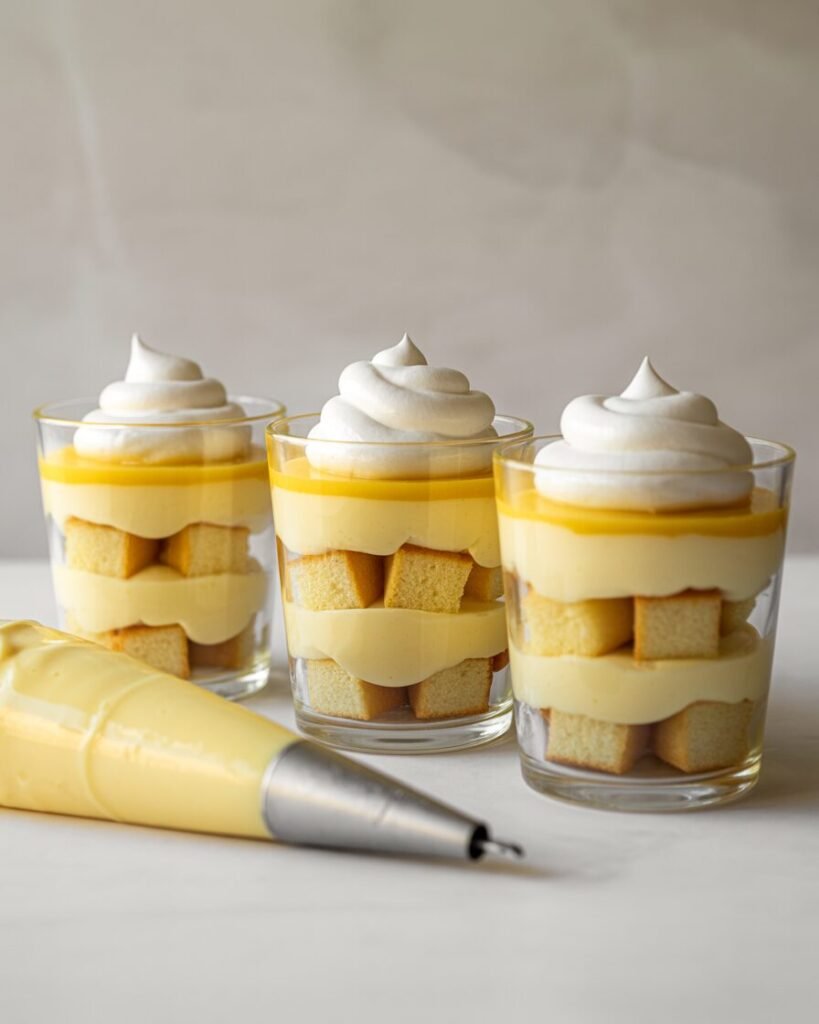
- Cut the cooled cake into two horizontal layers.
- Brush each slice with lemon syrup (about 10–15g per slice) until lightly moist but not soggy.
- Cut cake into cubes and divide among 6 cups.
- Top with an equal layer of vanilla custard, then lemon curd.
- Finish with a big swirl of whipped cream.
- Chill for at least 30 minutes before serving.
Visual cue: Each layer should be distinct but merge slightly at the edges; the cake should feel soft, not wet or mushy.
Troubleshooting common issues
Problem: Cake turns soggy in the cups.
Likely causes: Too much syrup, cake cut while still warm, or custard not chilled enough.
Fix: Use syrup sparingly, let cake cool fully, and chill custard until thick.
Problem: Custard is runny or broken.
Likely causes: Not enough thickener, undercooking, or not whisking constantly.
Fix: Next time, increase cornflour by 2–3g and cook until thick, whisking without stopping.
Problem: Cream deflates or separates.
Likely causes: Overwhipping, warm environment, or using low‑fat cream.
Fix: Use cold cream (35%+ fat), chill everything, and stop whipping once you reach soft peaks.
Problem: Lemon curd tastes too tart or too sweet.
Likely causes: Inconsistent lemon acidity or sugar–liquid ratio.
Fix: Taste the lemon juice first; if very tart, increase sugar by 10–15g next time.
Problem: Layers sink or mix too much.
Likely causes: Too‑warm custard or curd, or jiggling while assembling.
Fix: Chill custard and curd until set; assemble carefully and refrigerate soon after.
Substitutions and variations
Egg‑free:
- Replace cake eggs with 120 g applesauce and 1 tbsp ground flax in 3 tbsp water; texture will be denser but still moist.
- For custard and curd, use cornflour–milk thickened custard instead of egg‑based custard; skip the curd or use a starch‑thickened lemon filling.
Dairy‑free:
- Use plant‑based butter in the cake and syrup.
- Replace milk in custard with full‑fat coconut milk and use coconut cream in the whipped topping; chill it well and whip while very cold.
Gluten‑free:
- Use a 1:1 gluten‑free flour blend with xanthan gum in the cake. Texture will be slightly more crumbly but still works here.
Flavor swaps:
- Orange trifle: Swap lemon zest and juice for orange; keep the same structure.
- Berry twist: Add a thin layer of raspberry compote between cake and custard.
Storage, make‑ahead, and freezing
- Counter: Store assembled cups covered for up to 4–6 hours if environment is cool; longer and the cream may soften.
- Fridge: Keep in an airtight container for 2–3 days; let sit 10–15 minutes at room temperature before serving for best texture.
- Freezer:
- Freeze unfrosted cups (cake + custard + curd) for up to 2 weeks. Thaw overnight in the fridge, then top with fresh whipped cream.
- Do not freeze already whipped‑cream topped cups; cream will weep and lose shape.
Serving suggestions and pairing ideas
Serve these Lemon Trifle Dessert Cups with:
- A light herbal tea (chamomile, mint) or sparkling water with lemon to balance the sweetness.
- A drizzle of extra lemon curd for a more intense citrus hit.
- A sprinkle of crushed meringue or buttered shortbread crumbs for extra crunch.
They work beautifully after a simple weeknight dinner, as a Sunday brunch dessert, or as a small contribution to a potluck.
FAQs
1. Can I make this with a store‑bought cake or sponge?
Yes, but use a light, buttery sponge rather than a very dense cake. Brush it with the lemon syrup and proceed with the same layers.
2. Why is my custard too thick or starchy‑tasting?
Too much cornflour or not enough liquid can make it claggy. Next time, reduce cornflour by 2g and increase milk by 20–30g.
3. How do I scale this for 4 or 8 cups?
For 4 cups, use about two‑thirds of each component; for 8 cups, multiply by roughly 1.3. Adjust cake thickness slightly rather than overloading cups.
4. Can I bake in an OTG or air fryer?
Yes, for the cake:
- OTG: Use the same temperature, middle rack, and reduce time if plates are closer to the element.
- Air fryer: Use a small oven‑safe pan, bake at 170∘C (340∘F) and check at 15–20 minutes.
Notes from my kitchen (testing log)
Batch 1: I used very little lemon syrup and skipped straining the custard. The cake stayed dry and the custard had a few lumps. Texture was okay but not elegant.
Batch 2: Increased syrup a bit, strained the custard, and chilled it longer. The layers were much smoother, but the custard was a touch too thick when layered.
Batch 3: Reduced syrup further, kept custard slightly looser, and chilled the cups before serving. The final chosen method balances moisture in the cake with a thick enough custard that doesn’t sink. The whipped cream stays lifted, and the lemon flavor is bright but not harsh.
Nutrition and disclaimer (estimate)
Per serving (1 cup, approximate):
- Calories: ≈350–400kcal
- Fat: ≈20–25g
- Carbohydrates: ≈35–40g
- Protein: ≈5–7g
Values are estimates and vary by brands, portion size, and exact cake thickness. Always follow food‑safety best practices, especially with raw eggs and dairy.
Final thoughts
These Lemon Trifle Dessert Cups bring the showiness of a classic trifle into a neat, individual format that’s easy to multiply or scale down. The combination of lemon cake, vanilla custard, and lemon curd gives you both brightness and comfort, while the make‑ahead steps mean you can impress without last‑minute stress.
If you try this, I’d love to hear how your custard turned out and whether you opted for a store‑bought sponge or baked the cake from scratch.