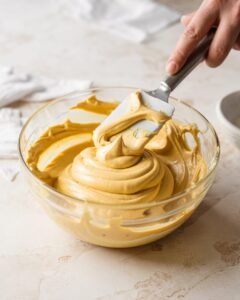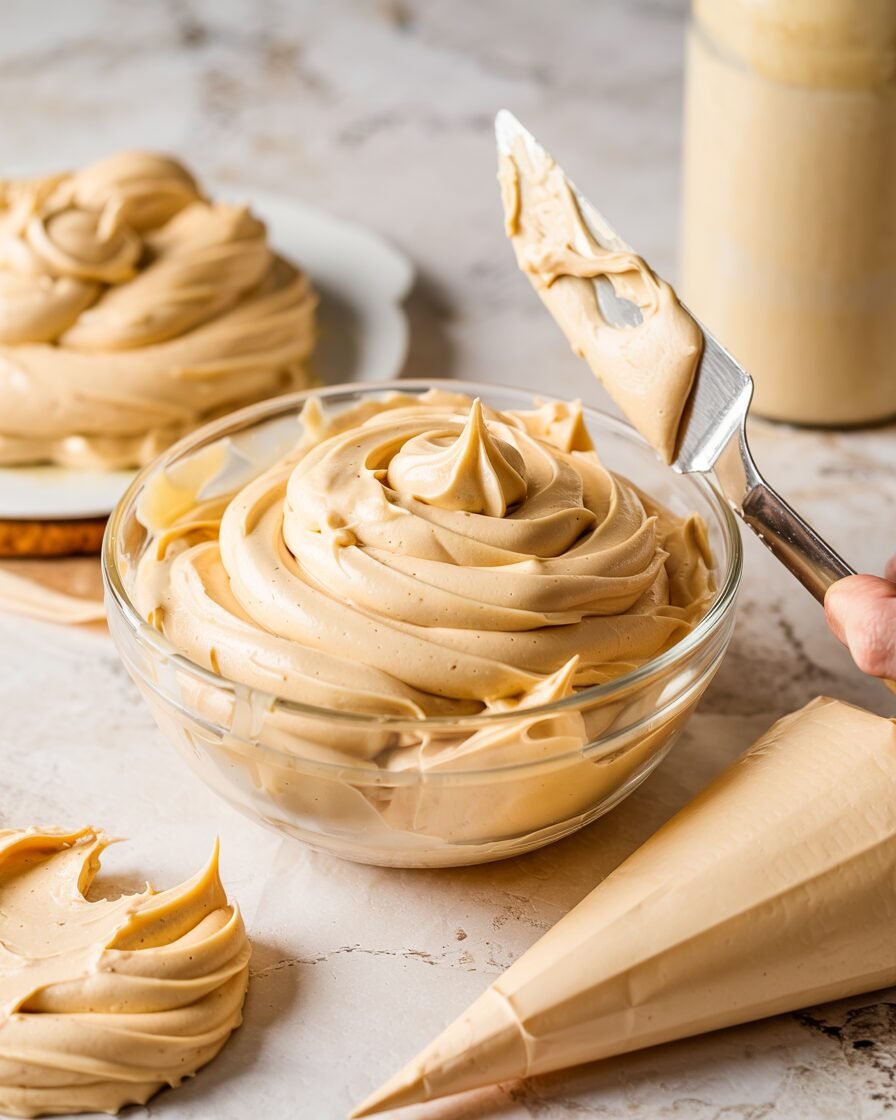
If you love the cozy flavor of maple syrup, this Maple Buttercream Frosting might become your new go-to frosting. It’s silky, lightly sweet, and packed with warm maple flavor that pairs beautifully with cakes, cupcakes, and even cookies. Unlike overly sugary frostings that overpower desserts, this one stays balanced and creamy with a smooth, pipeable texture.
The best part? You don’t need fancy equipment or complicated techniques. With just a bowl, mixer (or sturdy whisk), and a few pantry ingredients, you can whip up bakery-style frosting in minutes.
Pro tip: Use pure maple syrup, not pancake syrup. It makes a massive difference in flavor and prevents the frosting from tasting artificial.
Why This Recipe Works
Great buttercream is about structure, fat balance, and sweetness control. This recipe works because of how each ingredient supports those elements.
Butter creates the structure and creamy mouthfeel. Butter is about 80% fat, which traps air when beaten. This creates a light, fluffy frosting rather than a dense paste.
Powdered sugar stabilizes the mixture. Because it contains a small amount of cornstarch, powdered sugar thickens the frosting and prevents it from becoming runny when liquid ingredients are added.
Maple syrup adds both flavor and moisture. Pure maple syrup contributes subtle caramel notes and helps soften the buttercream slightly, making it easier to spread or pipe.
A pinch of salt balances sweetness. Even sweet frostings benefit from salt because it sharpens flavors and keeps the buttercream from tasting flat.
Did you know?
Buttercream texture changes dramatically with temperature. Butter that is too cold won’t whip properly, while butter that is too warm creates greasy frosting. Room-temperature butter (about 18–21°C / 65–70°F) is the sweet spot.
Ingredients
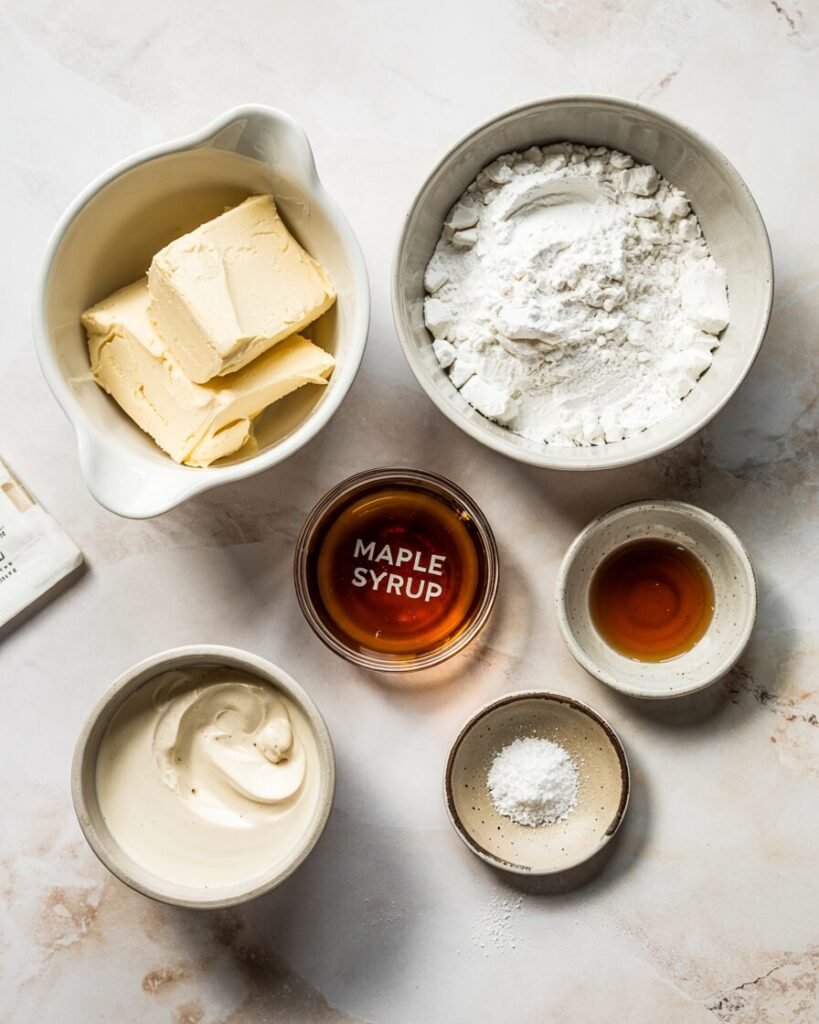
- Unsalted butter — 170 g (¾ cup)
Provides structure and creamy texture. - Powdered sugar — 360 g (3 cups)
Sweetens and stabilizes the frosting. - Pure maple syrup — 60 ml (¼ cup)
Adds maple flavor and slight moisture. - Heavy cream or milk — 15–30 ml (1–2 tbsp)
Adjusts consistency for spreading or piping. - Vanilla extract — 5 ml (1 tsp)
Enhances maple flavor. - Fine salt — 1 g (¼ tsp)
Balances sweetness and enhances flavor.
Ingredient note:
Use Grade A pure maple syrup for the best flavor. Artificial pancake syrup often contains corn syrup and flavorings that taste flat in frosting.
Equipment
Required
- Mixing bowl
- Hand mixer or whisk
- Digital kitchen scale (recommended for accuracy)
- Rubber spatula
Nice-to-have
- Stand mixer
- Fine sieve for powdered sugar
- Offset spatula for frosting cakes
- Piping bag and tip
Step-by-Step Instructions
Step 1: Prepare the butter
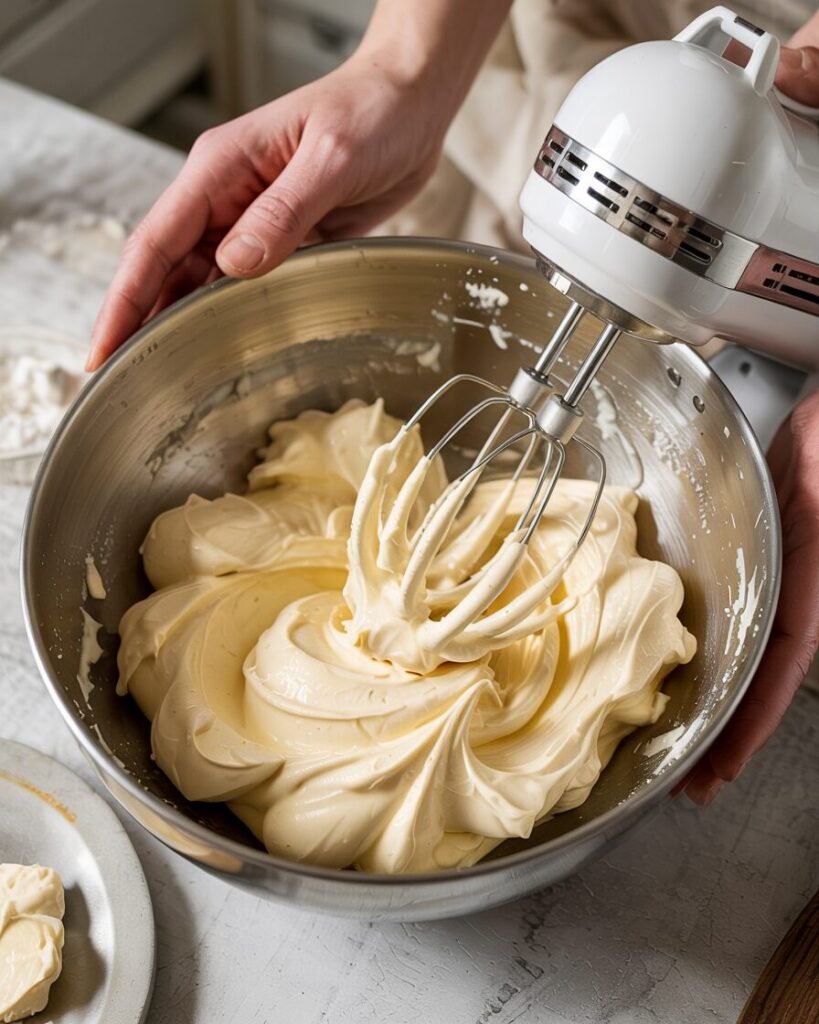
Beat 170 g softened butter in a bowl for 2–3 minutes on medium speed until smooth and pale.
Visual cue: The butter should look creamy and slightly lighter in color. If it still looks dense or yellow, keep beating.
Avoid this:
Do not melt the butter. Melted butter will create a greasy frosting.
Step 2: Add powdered sugar gradually
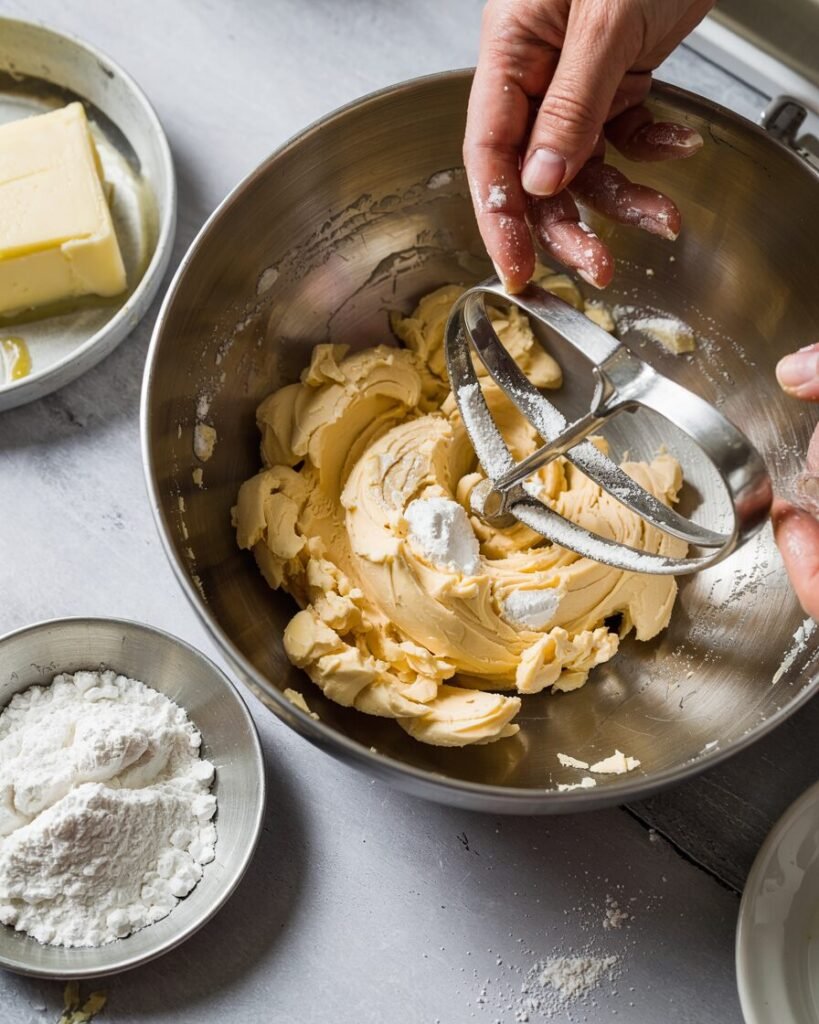
Sift the powdered sugar if it has lumps. Add 360 g powdered sugar in 3 additions, mixing on low speed.
Mix each addition for 30–45 seconds before adding more.
Visual cue: The mixture will look crumbly at first, like damp sand.
Step 3: Add maple syrup and flavorings
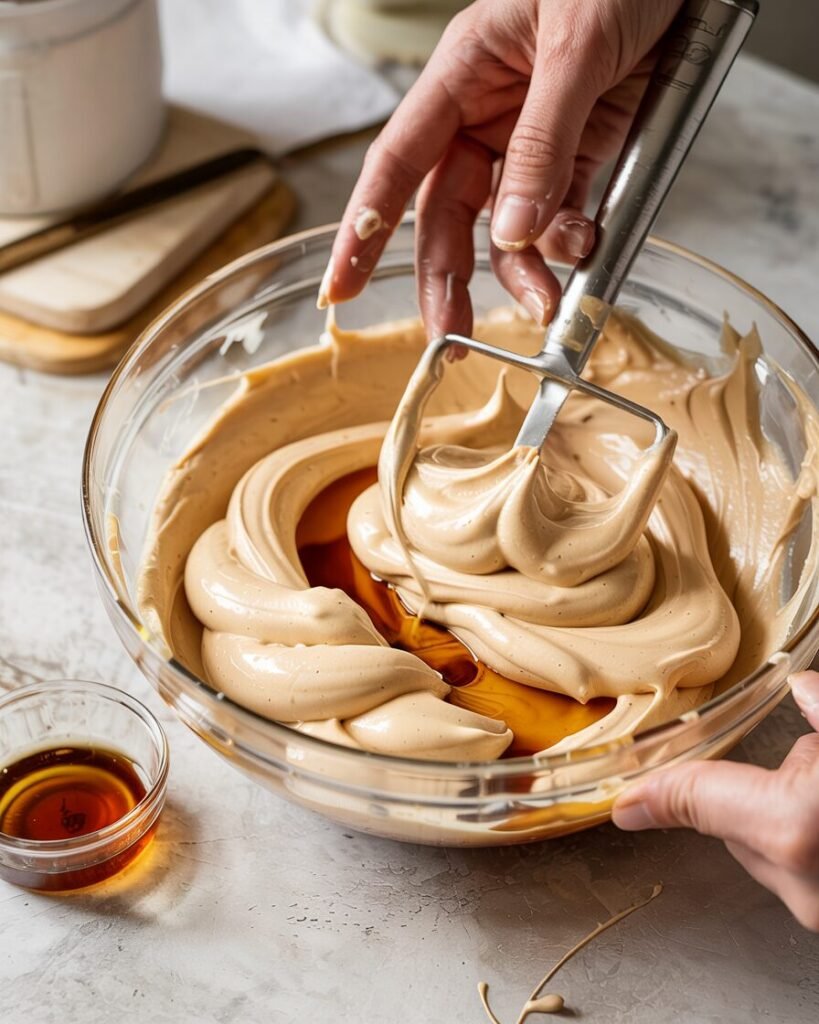
Pour in:
- 60 ml maple syrup
- 1 tsp vanilla extract
- ¼ tsp salt
Beat on medium speed for 1–2 minutes.
Visual cue: The frosting will begin to smooth out and look glossy.
Step 4: Adjust the texture
Add 1 tablespoon cream or milk, then beat another 1 minute.
If the frosting feels thick, add another teaspoon of cream.
Checkpoint:
When you lift the mixer, the frosting should form soft peaks that slowly bend over.
Step 5: Final whip
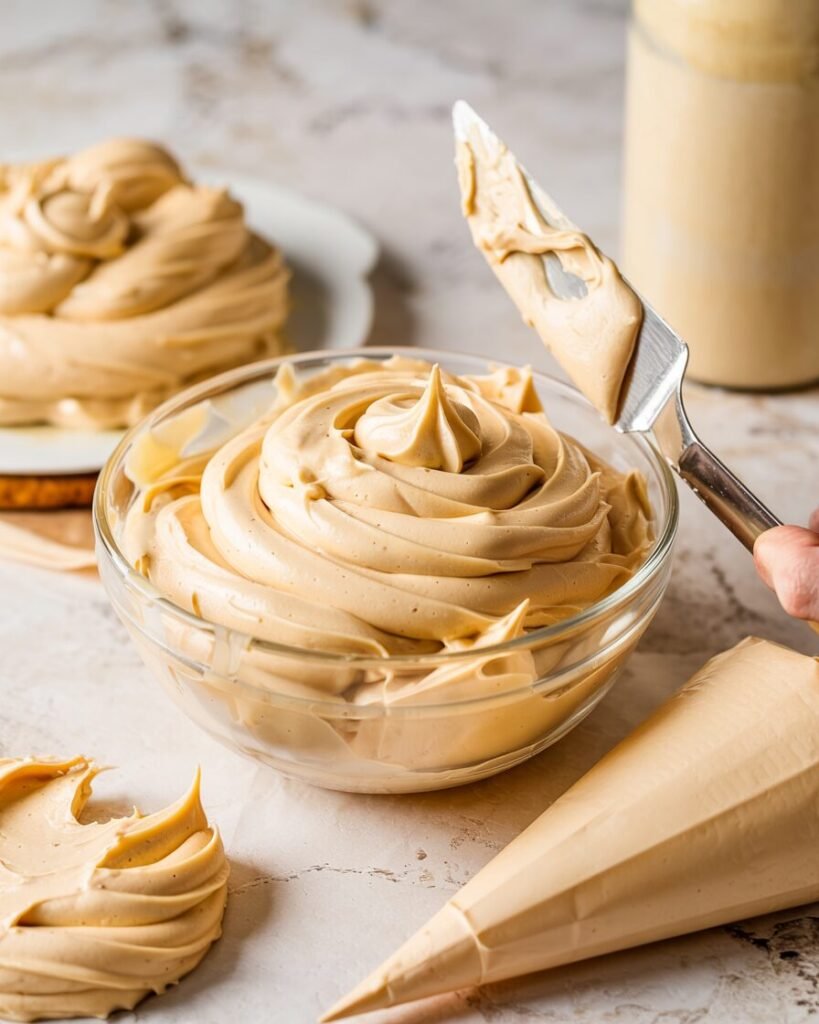
Beat the frosting for 1–2 minutes on medium-high speed.
This final whipping adds air and makes the buttercream lighter.
Visual cue: The frosting should be smooth, fluffy, and spreadable. When dragged with a spatula, it should hold soft ridges.
Troubleshooting: Common Failures and Fixes
Problem: Frosting is too runny
Likely causes: Too much maple syrup or warm butter.
Fix next time: Add 2–3 tablespoons powdered sugar or chill for 10 minutes before whipping again.
Problem: Frosting tastes too sweet
Likely causes: Powdered sugar imbalance.
Fix: Add a pinch of salt or ½ teaspoon lemon juice.
Problem: Frosting looks curdled
Likely causes: Butter too cold.
Fix: Let the bowl sit at room temperature for 5 minutes, then whip again.
Problem: Greasy texture
Likely causes: Butter too warm.
Fix: Chill bowl 10 minutes, then re-whip.
Problem: Maple flavor is weak
Likely causes: Low-quality syrup.
Fix: Reduce cream slightly and add 1–2 teaspoons extra maple syrup.
Problem: Frosting too stiff for piping
Likely causes: Too much powdered sugar.
Fix: Add 1 teaspoon cream at a time until pipeable.
Substitutions and Variations
Dairy-free option
Replace butter with plant-based butter (170 g) and use coconut cream instead of dairy cream.
Note: Plant-based butter softens faster, so chill the frosting slightly before piping.
Lower-sugar option
Replace ¼ cup powdered sugar with 2 tablespoons maple powder if available. This boosts maple flavor while reducing sweetness.
Flavor variations
Maple cinnamon buttercream
Add ½ tsp ground cinnamon.
Maple pecan buttercream
Fold in ¼ cup finely chopped toasted pecans.
Maple coffee buttercream
Dissolve 1 tsp instant espresso powder into the maple syrup before mixing.
Scaling the recipe
| Batch Size | Butter | Powdered Sugar | Maple Syrup |
|---|---|---|---|
| Half batch | 85 g | 180 g | 2 tbsp |
| Standard | 170 g | 360 g | ¼ cup |
| Double batch | 340 g | 720 g | ½ cup |
Standard batch frosts 12 cupcakes or a 6-inch cake.
Storage, Make-Ahead, and Freezing
Counter:
Use within 6–8 hours if the room is cool.
Refrigerator:
Store in an airtight container for 4–5 days.
Before using, bring to room temperature and whip for 1 minute to restore texture.
Freezer:
Freeze up to 2 months.
Thaw overnight in the fridge, then re-whip with 1 teaspoon cream.
Avoid freezing frosted cakes with delicate decorations because condensation may affect the texture.
Serving Suggestions and Pairings
Maple buttercream pairs beautifully with:
- Vanilla sponge cake
- Carrot cake
- Banana cake
- Spice cupcakes
- Pumpkin cake
The warm maple flavor also balances desserts with light acidity, like apple or pear fillings.
For a bakery-style finish, sprinkle toasted pecans or drizzle a little maple syrup over the frosting.
FAQs
Can I replace maple syrup with maple extract?
Yes. Use ½ teaspoon maple extract plus 1 tablespoon milk instead of maple syrup.
How do I prevent runny frosting?
Make sure the butter is soft but cool, and add maple syrup gradually.
Can I double the recipe?
Yes. Double all ingredients and whip slightly longer to ensure even mixing.
What butter works best?
Use unsalted butter with at least 80% fat. Lower-fat butter produces softer frosting.
Can I make this frosting without a mixer?
Yes, but it requires patience. Use very soft butter and whisk vigorously for several minutes until fluffy.
Notes From My Kitchen (Testing Log)
Batch 1:
I used cold butter. The frosting stayed dense and slightly lumpy.
Adjustment: Let butter soften fully before mixing.
Batch 2:
Added all powdered sugar at once. Result: powder clouds everywhere.
Adjustment: Add sugar gradually.
Batch 3:
Used pancake syrup instead of pure maple syrup. The flavor was weak and artificial.
Lesson: Always use pure maple syrup.
Batch 4:
Added too much maple syrup. Frosting became loose.
Fix: Extra powdered sugar balanced the texture.
Final method:
Cream butter first, add powdered sugar slowly, then maple syrup. This gave the best texture and strongest maple flavor.
Nutrition and Disclaimer
Approximate per serving (2 tablespoons frosting):
- Calories: 150
- Fat: 9 g
- Carbohydrates: 18 g
- Sugar: 17 g
Values are estimates and will vary depending on ingredient brands and portion size. Follow safe food-handling practices when storing dairy-based frostings.
Final Thoughts
Whether you’re frosting cupcakes for a weekend treat or layering a celebration cake, this maple buttercream delivers consistent results with minimal effort. Once you master the texture and balance, it quickly becomes one of those reliable recipes you return to again and again.