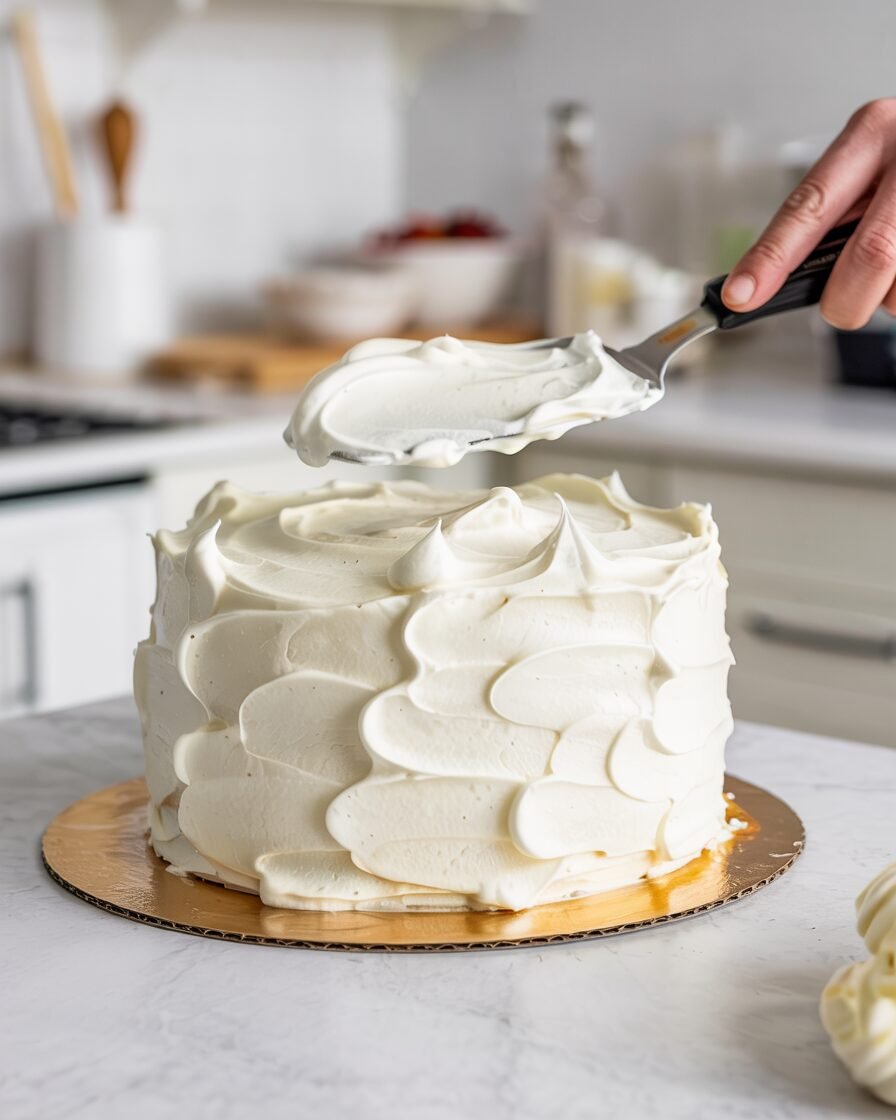
If you love frosting that’s light, fluffy, glossy, and not overly sweet, this marshmallow frosting recipe is about to become your go-to. Unlike heavy buttercream, marshmallow frosting has a soft, cloud-like texture that spreads beautifully and tastes like toasted marshmallows straight from the jar.
This recipe is designed for home bakers at beginner to intermediate level, and it works even if you only have a hand mixer or whisk and a basic OTG oven setup. The result is a silky frosting that pipes smoothly and holds soft peaks—perfect for cakes, cupcakes, and brownies.
Pro tip: The secret to perfect marshmallow frosting is heating the sugar mixture to the right temperature before whipping it with egg whites. That step creates the stable, glossy texture that makes this frosting irresistible.
Why This Recipe Works
Marshmallow frosting relies on a technique similar to Italian meringue, where a hot sugar syrup stabilizes whipped egg whites. This method creates a frosting that’s airy yet structured.
1. Hot sugar syrup stabilizes the egg whites
When sugar syrup heated to about 115–118°C (239–244°F) is slowly poured into whipped egg whites, the heat partially cooks them while dissolving the sugar completely. This prevents grainy texture and produces that signature glossy finish.
2. Cream of tartar improves structure
A small amount of acid (cream of tartar or lemon juice) helps egg proteins unfold and trap air more efficiently. The result is stronger peaks and better volume.
3. Continuous whipping cools and thickens the frosting
Whipping after adding the syrup allows the mixture to cool gradually while building a stable foam. This is what gives marshmallow frosting its fluffy, pipeable consistency.
Did you know?
Unlike buttercream, marshmallow frosting has no fat base, which is why it feels lighter on cakes and pairs well with rich desserts like chocolate cake.
Ingredients
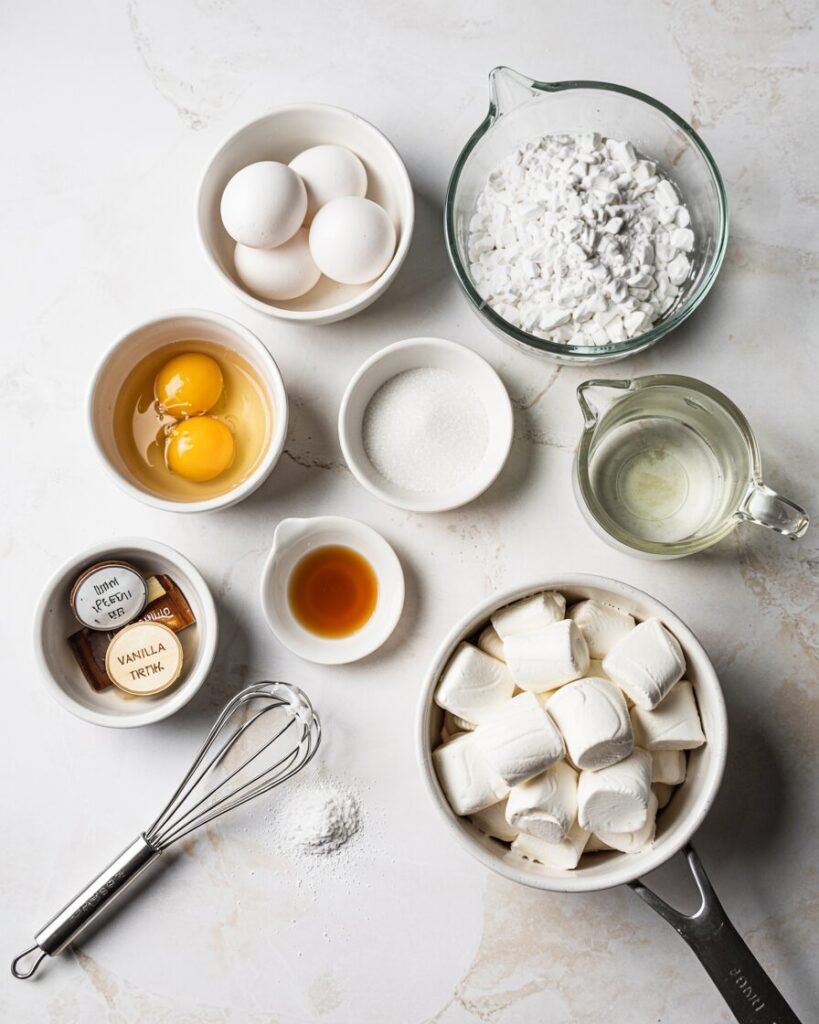
- Egg whites — 100 g (about 3 large egg whites / ½ cup) — provides the airy base
- Granulated sugar — 200 g (1 cup) — sweetens and stabilizes the foam
- Water — 60 g (¼ cup) — dissolves sugar to create syrup
- Cream of tartar — 1 g (¼ tsp) — stabilizes egg whites
- Vanilla extract — 5 g (1 tsp) — adds flavor
- Salt — 1 pinch — balances sweetness
Ingredient tip: Use fresh egg whites, not carton whites. Fresh whites whip faster and hold peaks better.
Equipment
Required
- Hand mixer or stand mixer
- Medium saucepan
- Candy thermometer
- Heatproof mixing bowl
- Silicone spatula
Nice-to-Have
- Offset spatula for spreading
- Piping bags and tips
- Kitchen scale (for accurate measurements)
Step-by-Step Instructions
Step 1: Prepare the Sugar Syrup
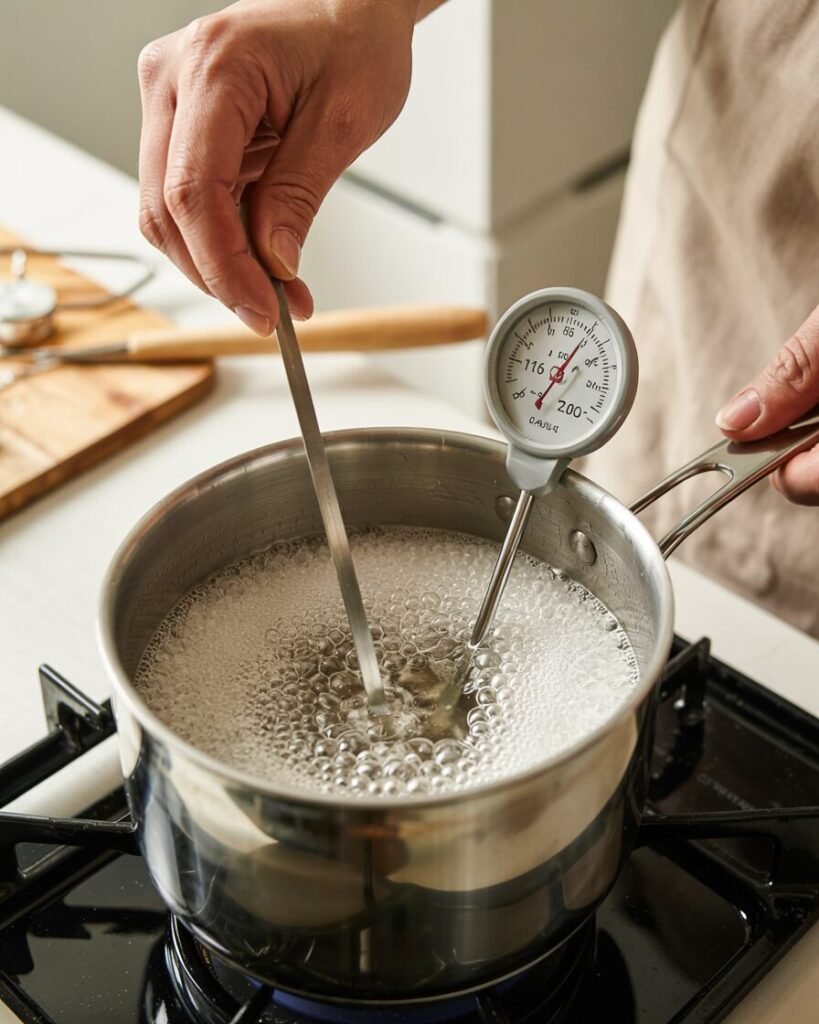
Combine 200 g sugar and 60 g water in a saucepan. Heat over medium heat until the sugar dissolves.
Bring to a simmer and cook until the syrup reaches 115–118°C (239–244°F).
Visual cue: The syrup should bubble steadily and appear slightly thicker than water.
Avoid this: Stirring too much once it boils can cause crystallization.
Step 2: Start Whipping Egg Whites
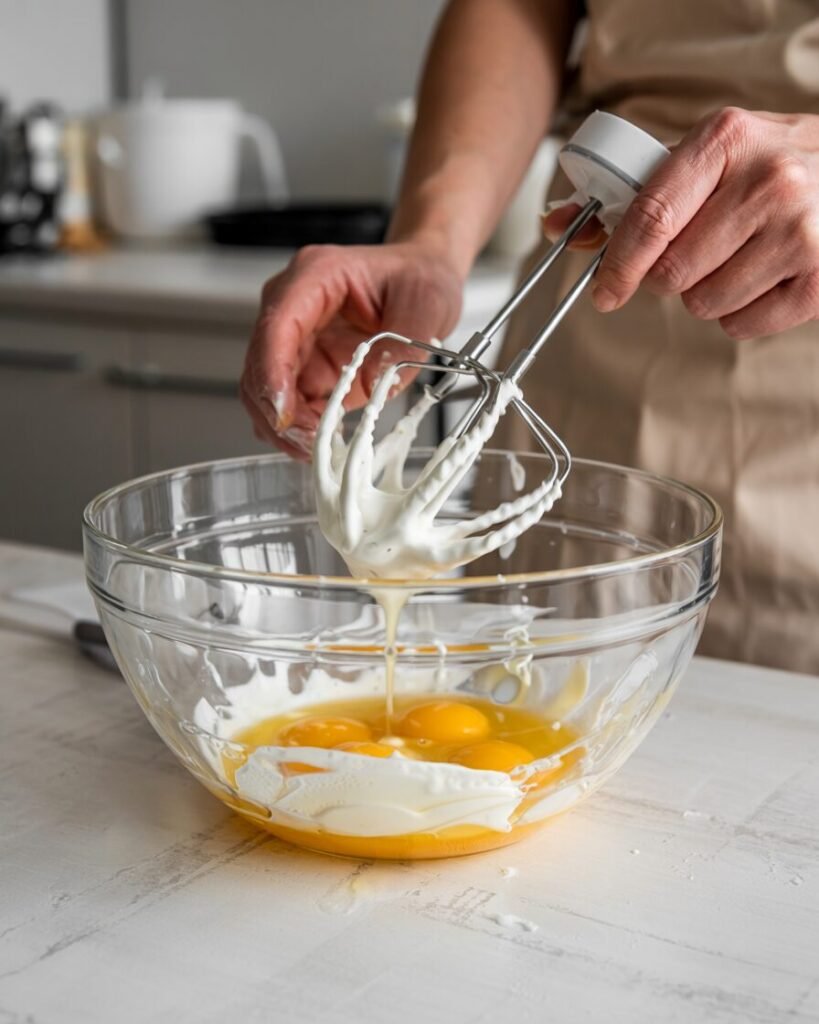
While the syrup heats, place 100 g egg whites and cream of tartar in a bowl.
Whip on medium speed for 2–3 minutes until the whites become foamy and soft peaks begin to form.
Visual cue: When lifting the whisk, the peak should bend like a small hook.
Step 3: Add Hot Syrup
With the mixer running on medium-high speed, slowly drizzle the hot sugar syrup down the side of the bowl.
Continue pouring steadily to avoid cooking the egg whites unevenly.
Checkpoint: The mixture will look glossy and slightly thick.
Step 4: Whip Until Fluffy
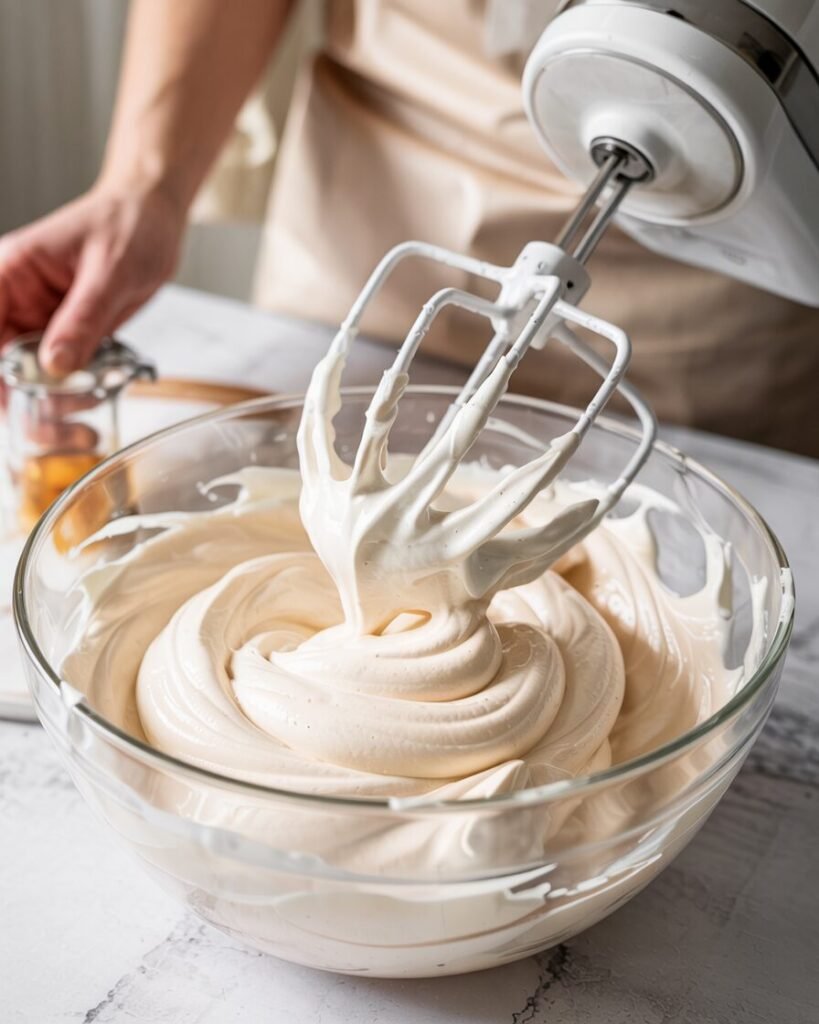
Increase speed to high and whip for 5–7 minutes.
Add vanilla extract and salt during the last minute.
Visual cue: The frosting should form soft, shiny peaks that hold their shape but still look silky.
Step 5: Use Immediately
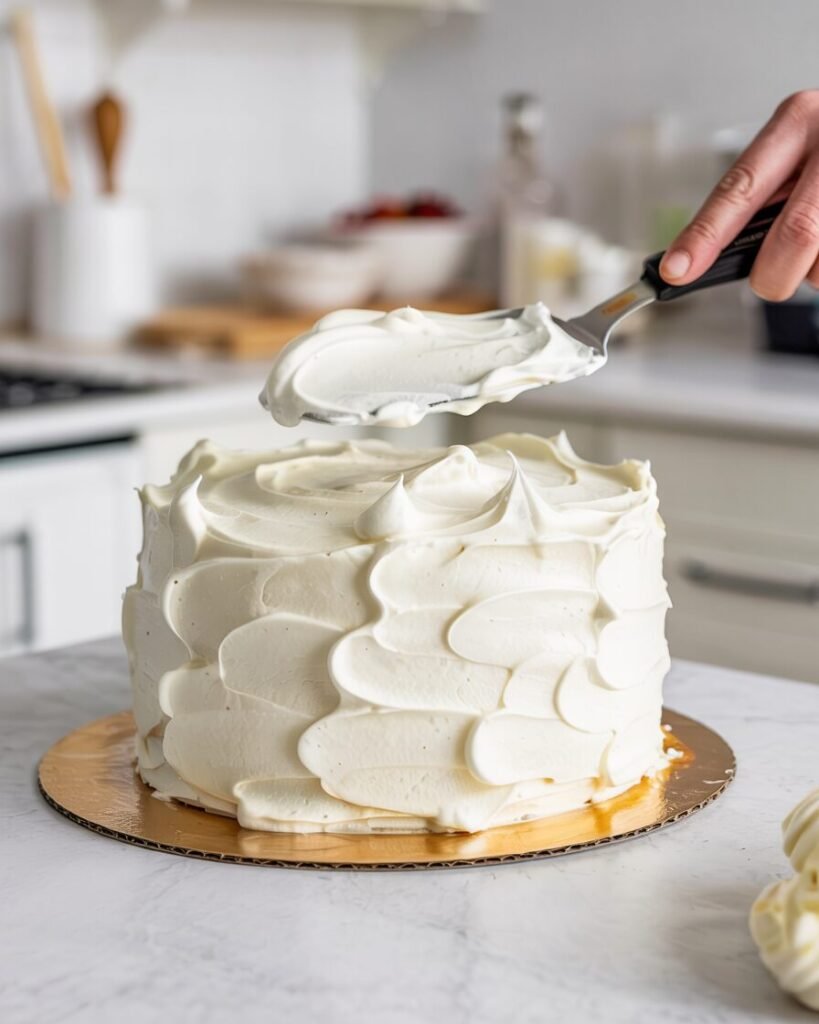
Marshmallow frosting is best used right after whipping.
Spread or pipe onto cakes or cupcakes.
Texture check: It should feel light, airy, and slightly sticky like melted marshmallows.
Troubleshooting Common Problems
Problem: Frosting turns grainy
Likely cause: Sugar crystallized during heating.
Fix next time: Avoid stirring syrup after boiling begins.
Problem: Frosting too runny
Likely cause: Syrup temperature too low.
Fix: Cook syrup to at least 115°C before adding.
Problem: Egg whites collapse
Likely cause: Bowl had grease or yolk contamination.
Fix: Clean bowl thoroughly and separate eggs carefully.
Problem: Frosting deflates after spreading
Likely cause: Under-whipping.
Fix: Whip longer until peaks hold their shape.
Problem: Frosting tastes overly sweet
Fix: Add a small pinch of salt or a few drops of lemon juice.
Substitutions and Variations
Egg-Free Option
Use aquafaba (chickpea liquid) instead of egg whites.
- 120 g aquafaba replaces 100 g egg whites
- Whip slightly longer (about 8 minutes)
Note: Texture will be slightly softer.
Dairy-Free
This frosting is naturally dairy-free.
Flavor Variations
Chocolate marshmallow frosting
Add 20 g melted dark chocolate after whipping.
Citrus version
Add ½ tsp lemon or orange zest with the vanilla.
Toasted marshmallow flavor
Lightly torch the finished frosting for a caramelized surface.
Scaling Guide
| Pan Size | Egg Whites | Sugar | Water |
|---|---|---|---|
| 6-inch cake | 70 g | 140 g | 40 g |
| 8-inch cake | 100 g | 200 g | 60 g |
| 12 cupcakes | 80 g | 160 g | 50 g |
| 24 cupcakes | 160 g | 320 g | 100 g |
Storage, Make-Ahead, and Freezing
Room temperature:
Best used within 6–8 hours.
Refrigerator:
Up to 2 days in an airtight container. Re-whip briefly before using.
Freezer:
Not recommended. Freezing breaks the airy foam structure.
Tip: If frosting becomes soft, whip again for 30–60 seconds to restore volume.
Serving Suggestions
Marshmallow frosting pairs beautifully with:
- Chocolate layer cake
- Vanilla cupcakes
- Brownies
- Red velvet cake
- S’mores-style desserts
For flavor balance, combine it with slightly acidic fillings like raspberry jam or lemon curd.
FAQs
Can I replace granulated sugar with powdered sugar?
No. Powdered sugar contains cornstarch and won’t create the stable syrup needed for marshmallow frosting.
How do I prevent egg whites from collapsing?
Ensure the bowl is completely grease-free and add cream of tartar to stabilize the foam.
Can I double the recipe?
Yes. Simply double all ingredients, but ensure your mixer bowl has enough capacity.
Can this frosting be piped?
Yes. It pipes beautifully for about 1–2 hours after whipping before softening.
Can I make this in an OTG oven setup?
Yes—since the frosting is stovetop-based, the oven is not required.
Notes From My Kitchen (Testing Log)
Batch 1:
I heated the syrup only to 110°C, and the frosting turned runny. Lesson learned: proper sugar temperature is critical.
Batch 2:
Used carton egg whites. The volume was lower and the texture less stable.
Batch 3:
Fresh eggs and syrup at 116°C produced the fluffiest texture.
Batch 4:
Tried whipping longer after adding syrup—this improved stability significantly.
Final method:
Fresh egg whites, syrup at 116°C, and 6 minutes whipping gave the best balance of structure, shine, and softness.
Nutrition and Disclaimer
Approximate nutrition per serving (2 tbsp frosting):
- Calories: 70
- Carbohydrates: 17 g
- Protein: 1 g
- Fat: 0 g
Values are estimates and may vary depending on ingredient brands and portion sizes. Always follow safe food-handling practices when working with egg-based recipes.
Conclusion
Marshmallow frosting is one of those recipes that looks fancy but is surprisingly simple once you understand the technique. With the right sugar temperature and a few minutes of whipping, you can create a frosting that’s fluffy, glossy, and incredibly light.
Whether you’re topping cupcakes, layering a celebration cake, or creating a s’mores-inspired dessert, this frosting delivers a soft marshmallow texture that feels special without being overly sweet.