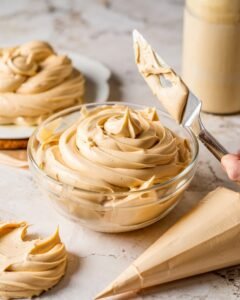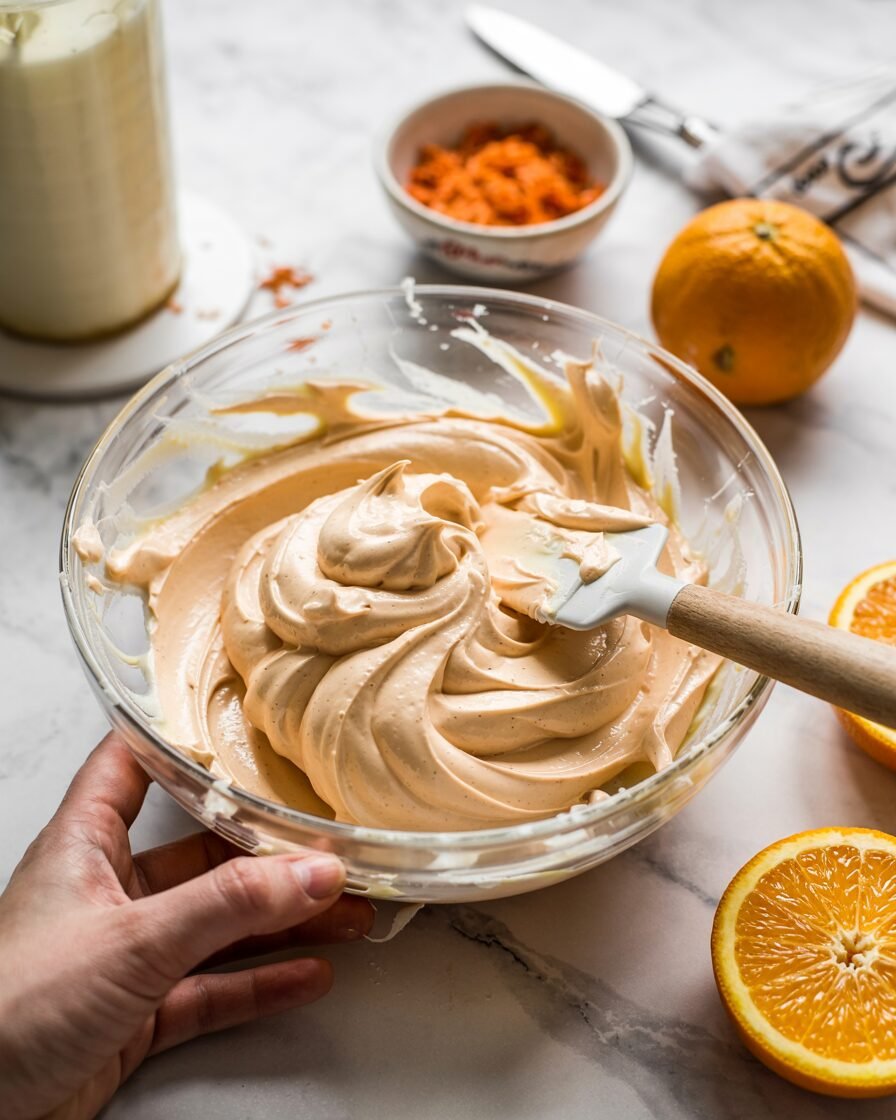
If you love bright citrus flavors, this Orange Buttercream Frosting will instantly elevate your cakes and cupcakes. It’s silky, lightly sweet, and packed with fresh orange flavor without tasting artificial or overly sugary. I created this recipe after testing multiple versions that either tasted too buttery or too tangy. The final version strikes the perfect balance — smooth texture, vibrant orange aroma, and stable structure for piping.
This frosting is ideal for vanilla cakes, chocolate cupcakes, citrus loaf cakes, and even sandwich cookies. The secret pro tip? Using both orange zest and fresh juice. The zest provides concentrated citrus oils, while the juice adds natural sweetness and acidity. The result is a frosting that tastes fresh, fluffy, and bakery-quality.
Why This Recipe Works (The Baking Science)
Buttercream may look simple, but a few small details make a huge difference in texture and flavor.
1. Butter Temperature Controls Texture
Butter at 20–22°C (68–72°F) is ideal. Too cold and the frosting turns grainy; too warm and it becomes greasy or loose. Properly softened butter traps air when whipped, which creates the fluffy structure of buttercream.
2. Powdered Sugar Stabilizes the Emulsion
Powdered sugar (also called icing sugar) contains a small amount of starch. This helps absorb moisture from the orange juice and prevents the frosting from separating. It also gives buttercream its signature silky texture.
3. Citrus Oils Intensify Flavor
Orange zest contains natural oils that are far more aromatic than juice alone. By rubbing the zest into the sugar before mixing, the oils release and distribute evenly throughout the frosting.
Did you know?
Citrus acidity slightly balances sweetness, which is why fruit buttercreams taste less sugary than plain vanilla versions.
Ingredients with Weights and Purpose
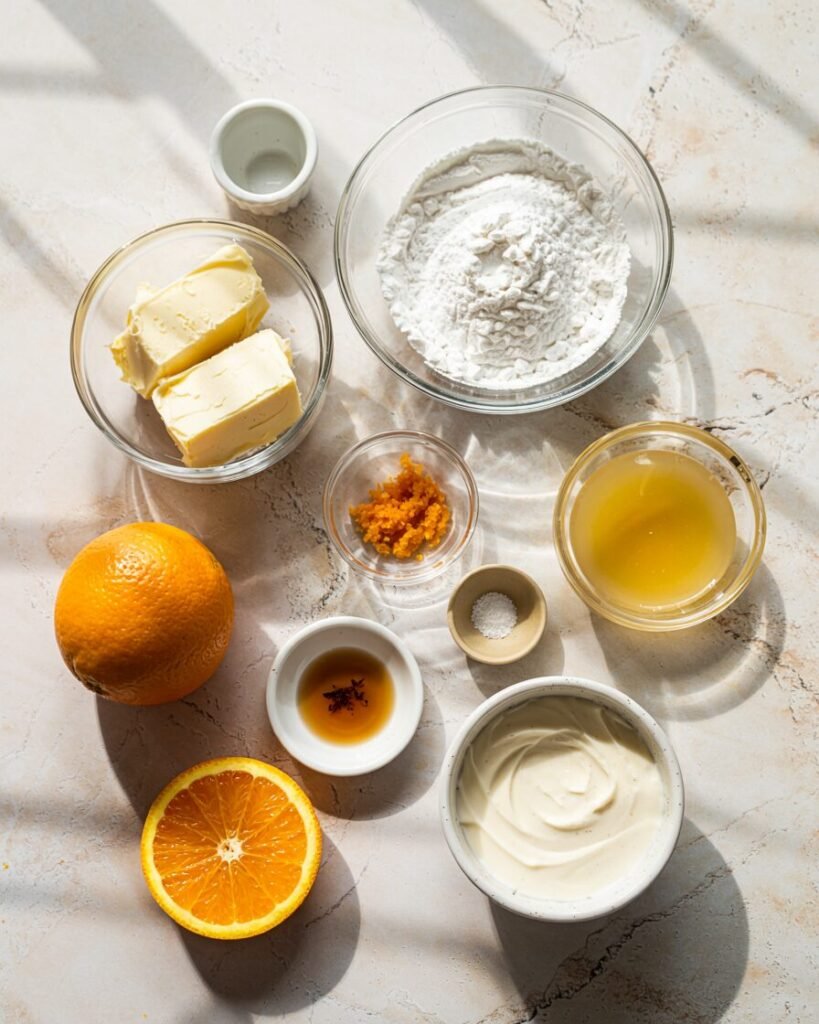
- Unsalted Butter — 227 g (1 cup)
Provides structure and creamy texture. Use unsalted so the sweetness stays balanced. - Powdered Sugar — 480 g (4 cups)
Sweetens and stabilizes the frosting. - Fresh Orange Juice — 30 ml (2 tbsp)
Adds fresh citrus flavor and softens the frosting. - Orange Zest — 2 tsp (about 1 large orange)
Intensifies orange aroma and flavor. - Vanilla Extract — 1 tsp
Rounds out the citrus flavor and adds depth. - Salt — 1/8 tsp
Balances sweetness. - Heavy Cream or Milk — 15–30 ml (1–2 tbsp)
Adjusts consistency for spreading or piping.
Yield:
Enough to frost 12 cupcakes or one 8-inch cake.
Equipment
Required
- Mixing bowl
- Hand mixer or stand mixer
- Digital kitchen scale
- Citrus zester or microplane
- Rubber spatula
Nice-to-Have
- Offset spatula for frosting cakes
- Piping bags and tips
- Fine mesh sieve for powdered sugar
Step-by-Step Instructions with Timing and Visual Cues
Step 1: Prepare the butter
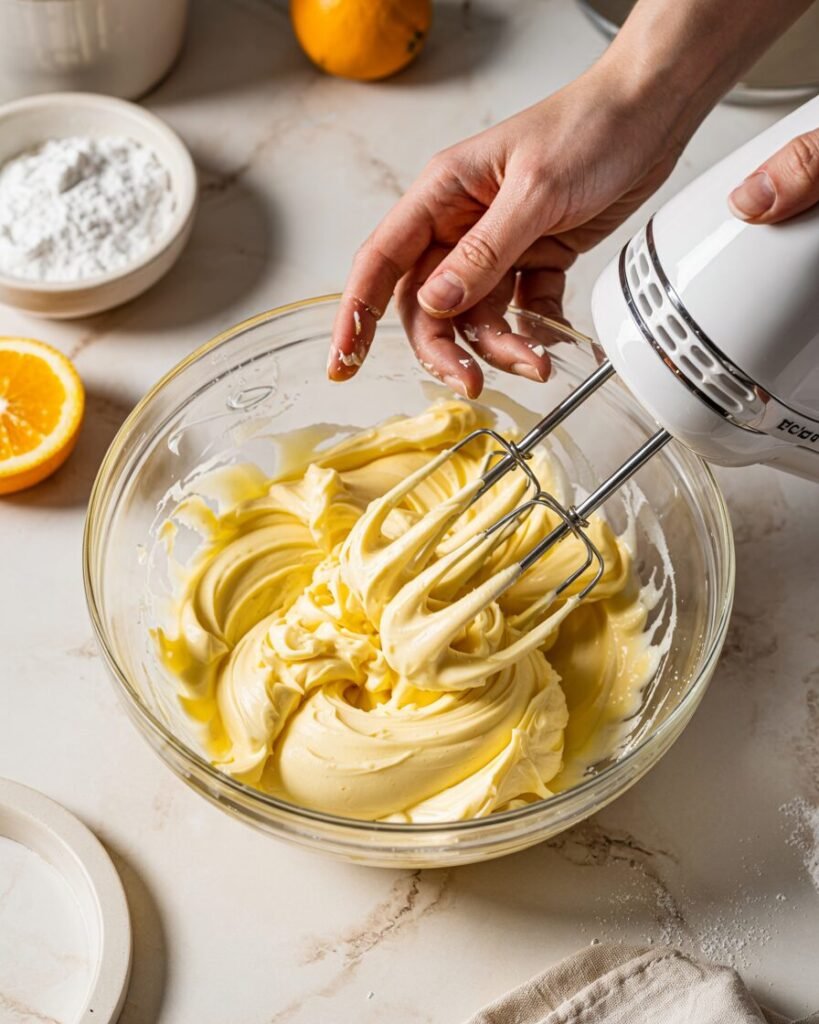
Beat 227 g softened butter in a mixing bowl for 2–3 minutes on medium speed.
Visual cue:
Butter should become pale, fluffy, and slightly glossy. If it still looks dense or yellow, continue beating.
Step 2: Release the citrus oils
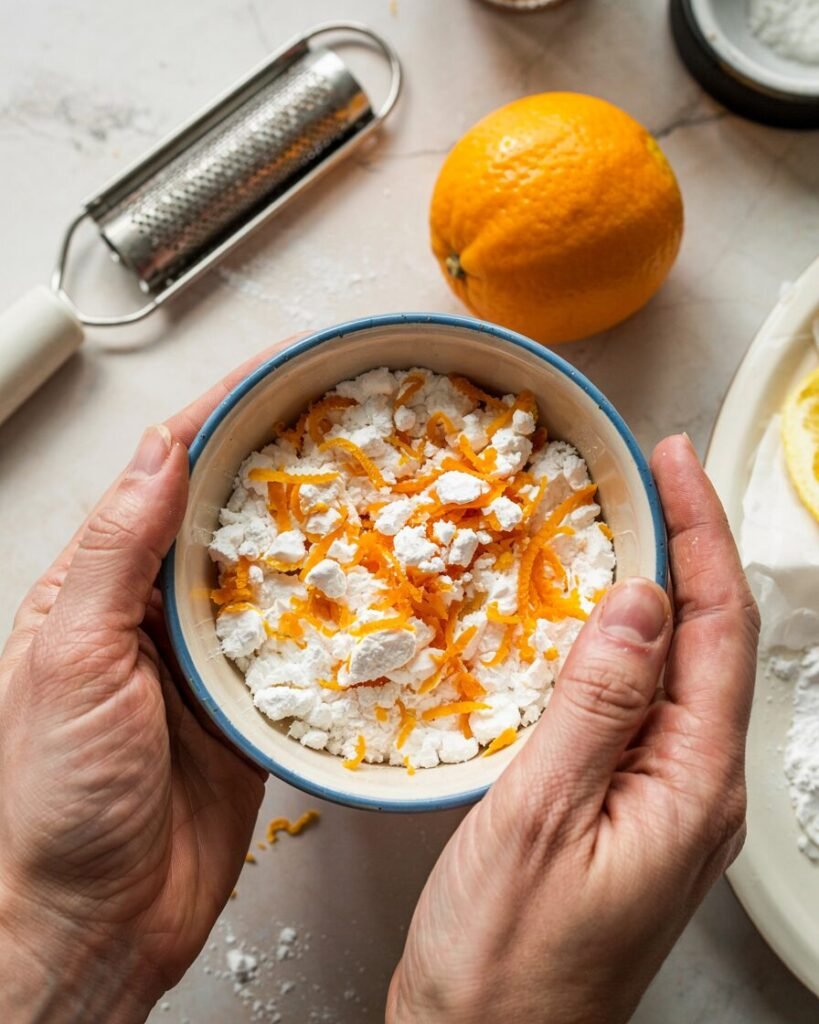
In a small bowl, rub the orange zest into 1 cup of the powdered sugar using your fingers.
Visual cue:
The sugar should smell strongly of orange and look slightly damp from the oils.
Pro tip: This simple step dramatically boosts citrus flavor.
Step 3: Add powdered sugar gradually
Add the powdered sugar mixture to the butter and beat on low speed for 30 seconds, then increase to medium.
Continue adding the remaining powdered sugar 1 cup at a time.
Visual cue:
The mixture should look thick but creamy, not powdery.
Step 4: Add flavorings
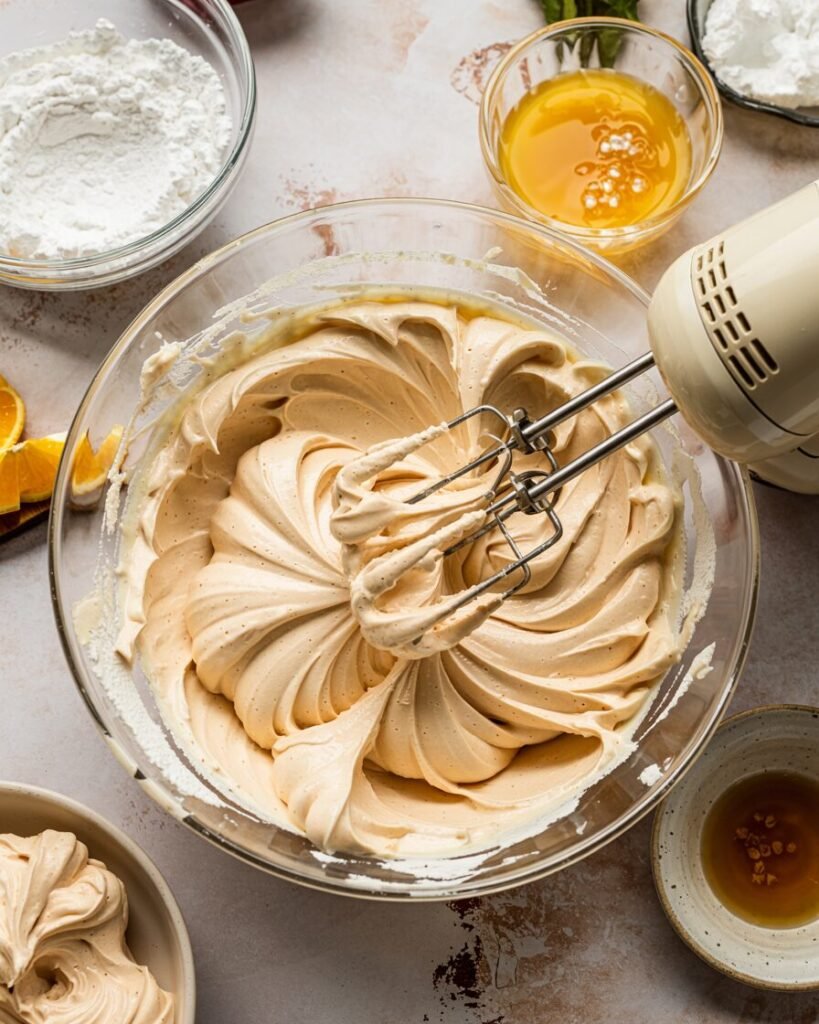
Mix in:
- Orange juice
- Vanilla extract
- Salt
Beat for 2 minutes on medium-high speed.
Visual cue:
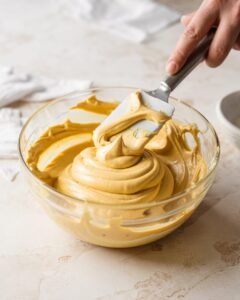
The frosting should become light and airy, holding soft peaks.
Step 5: Adjust consistency
Add 1–2 tbsp cream or milk if needed.
- For spreading: softer texture
- For piping: slightly thicker
Beat another 30–60 seconds.
Checkpoint:
When you lift the whisk, the frosting should form peaks that slowly bend over.
Step 6: Final texture check
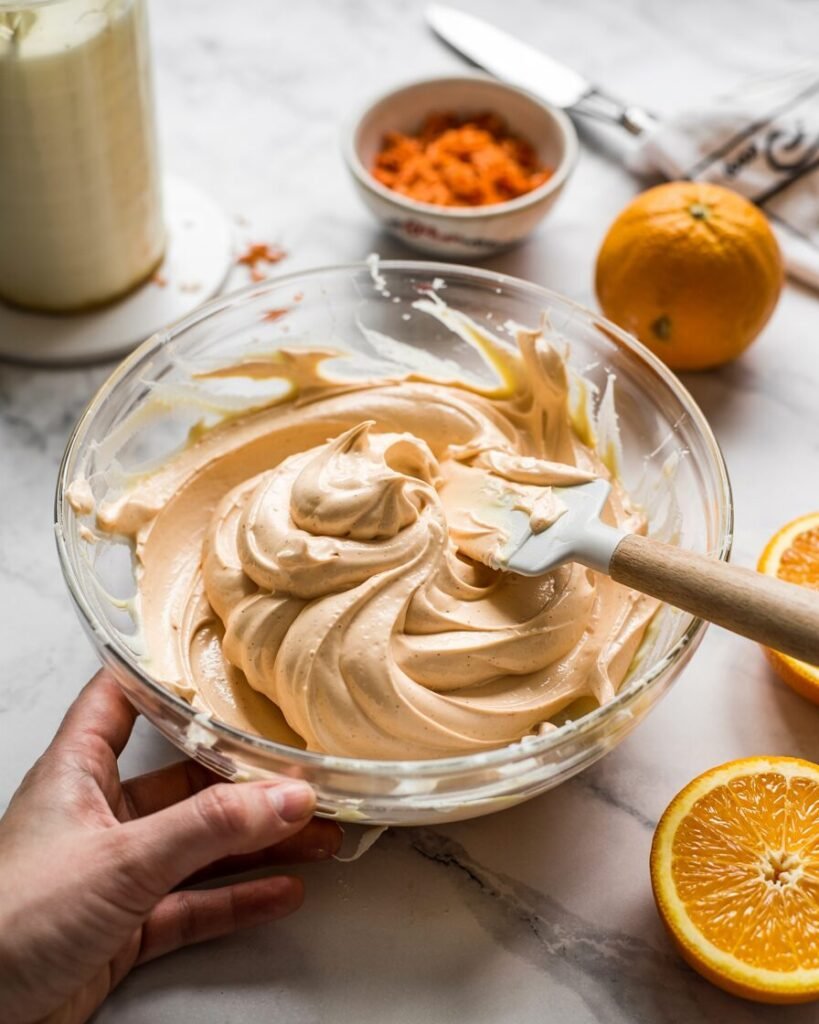
Scrape down the bowl and beat for 30 seconds to remove air pockets.
Correct texture:
Smooth, fluffy, and easy to spread.
Incorrect texture:
Grainy or separated — usually caused by butter that is too cold or too warm.
Troubleshooting: Common Failures and Fixes
Problem: Frosting is too runny
Likely cause: Butter too warm or too much juice.
Fix next time: Chill frosting for 10 minutes or add 30 g powdered sugar.
Problem: Frosting looks curdled
Likely cause: Butter too cold.
Fix: Continue beating until smooth.
Problem: Frosting tastes too sweet
Likely cause: Lack of acidity.
Fix: Add ½ tsp extra orange juice or a pinch of salt.
Problem: Weak orange flavor
Likely cause: Not enough zest.
Fix next time: Add zest from 1½ oranges.
Problem: Frosting is grainy
Likely cause: Powdered sugar not sifted.
Fix next time: Sift sugar before mixing.
Problem: Frosting melts while piping
Likely cause: Warm kitchen or over-soft butter.
Fix: Chill frosting for 15 minutes.
Substitutions and Variations
Dairy-Free Option
Replace butter with plant-based butter (227 g) and use coconut cream instead of milk.
Egg-Free
This recipe is naturally egg-free.
Gluten-Free
Most powdered sugars are gluten-free, but check the label to confirm.
Flavor Variations
Orange Chocolate Buttercream
Add 30 g cocoa powder and 1 tbsp extra cream.
Orange Creamsicle Frosting
Add ½ tsp orange extract and increase vanilla to 1½ tsp.
Blood Orange Buttercream
Replace juice with blood orange juice for a deeper citrus flavor.
Scaling Guide
| Yield | Butter | Powdered Sugar | Orange Juice |
|---|---|---|---|
| 12 cupcakes | 227 g | 480 g | 30 ml |
| 24 cupcakes | 454 g | 960 g | 60 ml |
| 6 cupcakes | 115 g | 240 g | 15 ml |
Storage, Make-Ahead, and Freezing
Counter:
Store frosted cakes at room temperature for up to 24 hours in a covered container.
Refrigerator:
Buttercream keeps 5 days in an airtight container. Let it come to room temperature and re-whip for 1 minute before using.
Freezer:
Freeze buttercream for up to 3 months. Thaw overnight in the fridge, then beat again until fluffy.
What not to freeze:
Fully decorated cakes with delicate piping may lose shape after thawing.
Serving Suggestions and Pairing Ideas
This frosting pairs beautifully with:
- Vanilla sponge cake
- Chocolate cupcakes
- Lemon loaf cakes
- Orange olive oil cakes
- Sugar cookies
For balance, pair with slightly less sweet cakes so the citrus flavor shines.
FAQs
Can I use bottled orange juice?
Fresh juice is best because it contains natural oils and brighter flavor. Bottled juice may taste flat.
Can I make this frosting without a mixer?
Yes. Use a whisk and beat vigorously for 5–7 minutes, though the texture may be slightly less fluffy.
How do I double the recipe?
Simply double all ingredients by weight. Mixing time stays roughly the same.
Why is my buttercream yellow?
This happens with very yellow butter. Beat longer or add a tiny drop of purple food coloring to neutralize the tone.
Can I pipe this frosting?
Yes. Chill the frosting for 10 minutes if the room is warm so it holds its shape.
Notes From My Kitchen (Testing Log)
Batch 1:
Used only orange juice. Flavor was mild and slightly watery.
Batch 2:
Added zest but didn’t rub it into sugar. Flavor improved but wasn’t evenly distributed.
Batch 3:
Rubbed zest into sugar first. Huge difference — strong citrus aroma.
Batch 4:
Reduced orange juice slightly. Frosting held piping shape better.
Batch 5:
Added pinch of salt. Balanced sweetness perfectly.
Final version:
Uses zest + juice + salt for balanced citrus flavor and stable buttercream texture.
Nutrition and Disclaimer
Approximate per-serving nutrition (based on 12 servings):
- Calories: ~210
- Fat: 11 g
- Carbohydrates: 29 g
- Sugar: 28 g
Values are estimates and may vary depending on ingredients used. Always follow standard food-safety practices when storing and serving baked goods.
Conclusion
This Orange Buttercream Frosting is one of those simple recipes that can completely transform a cake. It’s bright, creamy, and easy to make with everyday ingredients. The combination of fresh zest, juice, and fluffy whipped butter creates a frosting that tastes vibrant rather than overly sweet.
Once you master the base recipe, you can easily adapt it with chocolate, vanilla, or other citrus flavors.
Final Thoughts
Baking is often about small details — butter temperature, mixing time, and ingredient balance. Paying attention to these simple steps ensures your buttercream comes out smooth and flavorful every time.
If you try this frosting, experiment with different cake flavors and piping styles. It’s a versatile recipe that quickly becomes a staple in any home baker’s kitchen.