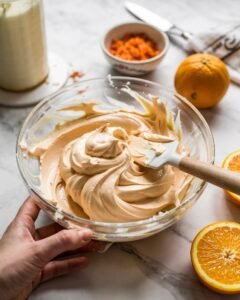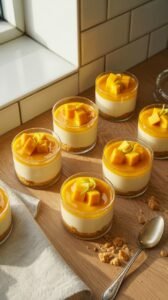
If you love bright, tropical flavors in your bakes, this passionfruit buttercream frosting might become your new favorite. It’s silky, balanced between sweet and tangy, and stable enough for piping swirls on cupcakes or frosting layer cakes. The natural tartness of passionfruit cuts through the sweetness of buttercream, giving it a fresh flavor that doesn’t feel heavy.
This recipe produces a smooth, pipeable frosting with a vibrant fruit flavor and stable structure that spreads easily without becoming runny. My biggest pro tip: reduce the passionfruit juice slightly before adding it—this intensifies flavor without thinning the buttercream.
Why This Recipe Works
Buttercream might look simple, but the balance of fat, sugar, and liquid is what determines texture and stability.
1. Butter creates structure and aeration
Butter is about 80% fat. When whipped, it traps tiny air bubbles that make buttercream fluffy rather than dense. Starting with soft but cool butter (around 18–20°C / 65–68°F) helps achieve a smooth texture without melting.
2. Passionfruit acidity balances sweetness
Classic American buttercream can taste overly sweet. Passionfruit’s natural acidity (pH around 3) cuts through sugar and adds brightness. Reducing the juice slightly concentrates flavor without adding too much moisture.
3. Powdered sugar stabilizes the emulsion
Powdered sugar contains cornstarch, which helps absorb liquid and stabilize the buttercream. This prevents the frosting from splitting when fruit juice is added.
Did you know?
Adding acidic fruit directly to buttercream can sometimes cause curdling. Mixing the juice slowly while whipping keeps the emulsion stable.
Ingredients
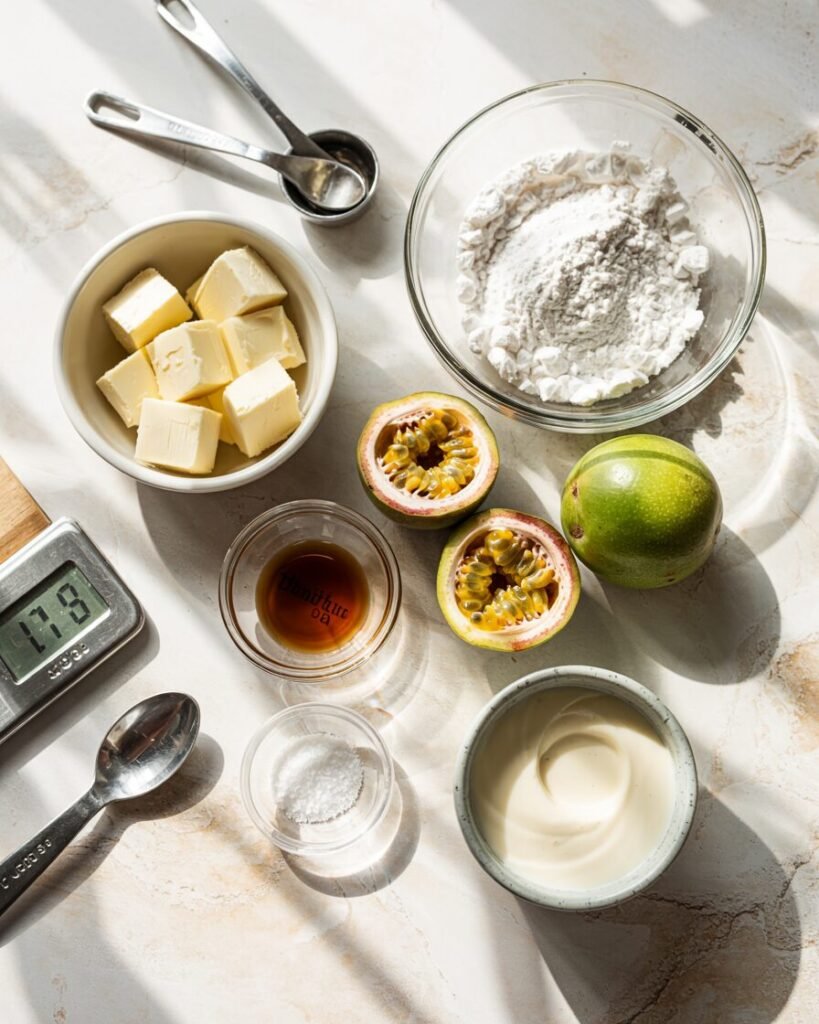
Yield: Frosting for 12 cupcakes or one 8-inch (20 cm) layer cake
- Unsalted butter — 226 g (1 cup / 2 sticks)
Base fat for structure and creamy texture. - Powdered sugar — 360 g (3 cups)
Sweetens and stabilizes the frosting. - Passionfruit pulp or juice — 45 g (3 tbsp)
Adds tangy flavor and aroma. - Vanilla extract — 5 g (1 tsp)
Enhances sweetness and balances fruit acidity. - Fine salt — 1 g (¼ tsp)
Prevents the frosting from tasting overly sweet. - Heavy cream or milk — 15–30 g (1–2 tbsp)
Adjusts texture if frosting is too thick.
Ingredient note:
Fresh passionfruit works best, but frozen pulp (unsweetened) also produces great flavor.
Equipment
Required
- Electric hand mixer or stand mixer
- Mixing bowl
- Digital kitchen scale
- Rubber spatula
Nice-to-have
- Fine mesh sieve (to remove passionfruit seeds)
- Offset spatula for frosting cakes
- Piping bags and tips
Step-by-Step Instructions
Step 1: Prepare the passionfruit reduction (5 minutes)
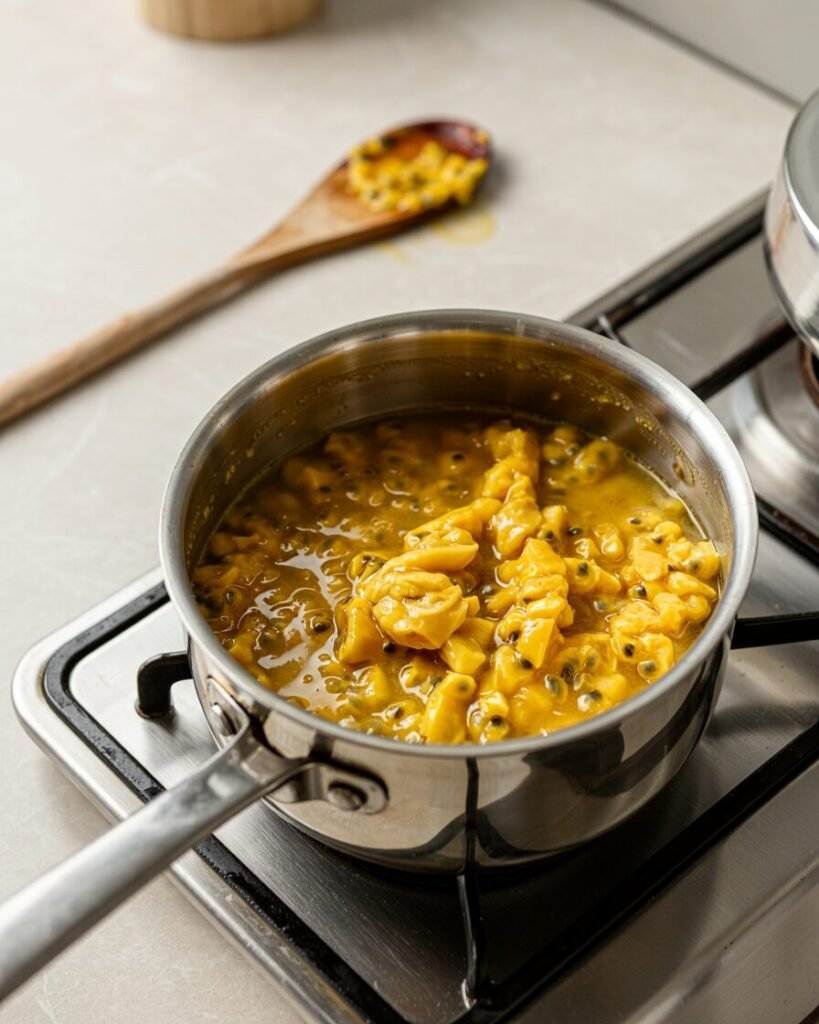
Place the passionfruit pulp or juice in a small saucepan and simmer gently over medium heat for about 3–4 minutes until slightly thickened.
Visual cue: The juice should reduce slightly and coat the back of a spoon.
Cool completely before using.
Avoid this: Adding hot juice to buttercream will melt the butter.
Step 2: Cream the butter (3 minutes)
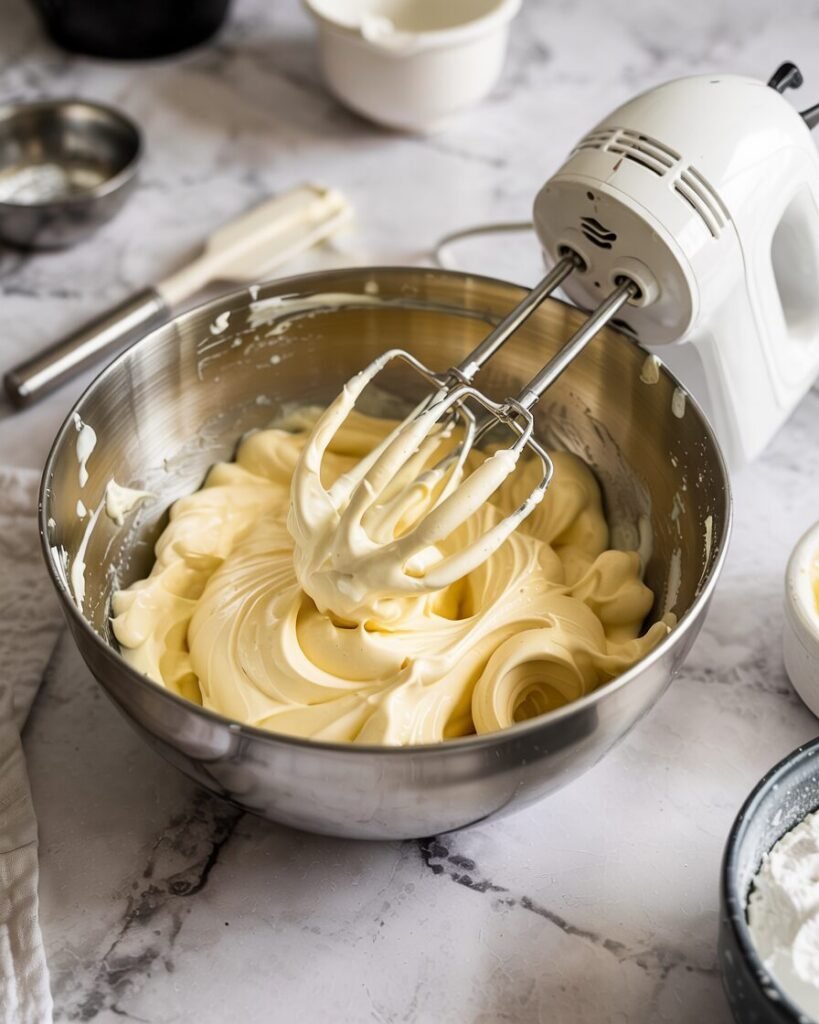
In a mixing bowl, beat 226 g softened butter on medium speed for 2–3 minutes.
Visual cue: Butter should turn pale, fluffy, and smooth.
Checkpoint: When you scrape the bowl, the butter should look creamy rather than greasy.
Step 3: Add powdered sugar gradually (4 minutes)
Add 360 g powdered sugar in 3 additions, mixing on low speed each time.
Once combined, increase speed to medium and beat for 2 minutes.
Visual cue: The mixture should look light and fluffy, not gritty.
Step 4: Add flavorings (2 minutes)
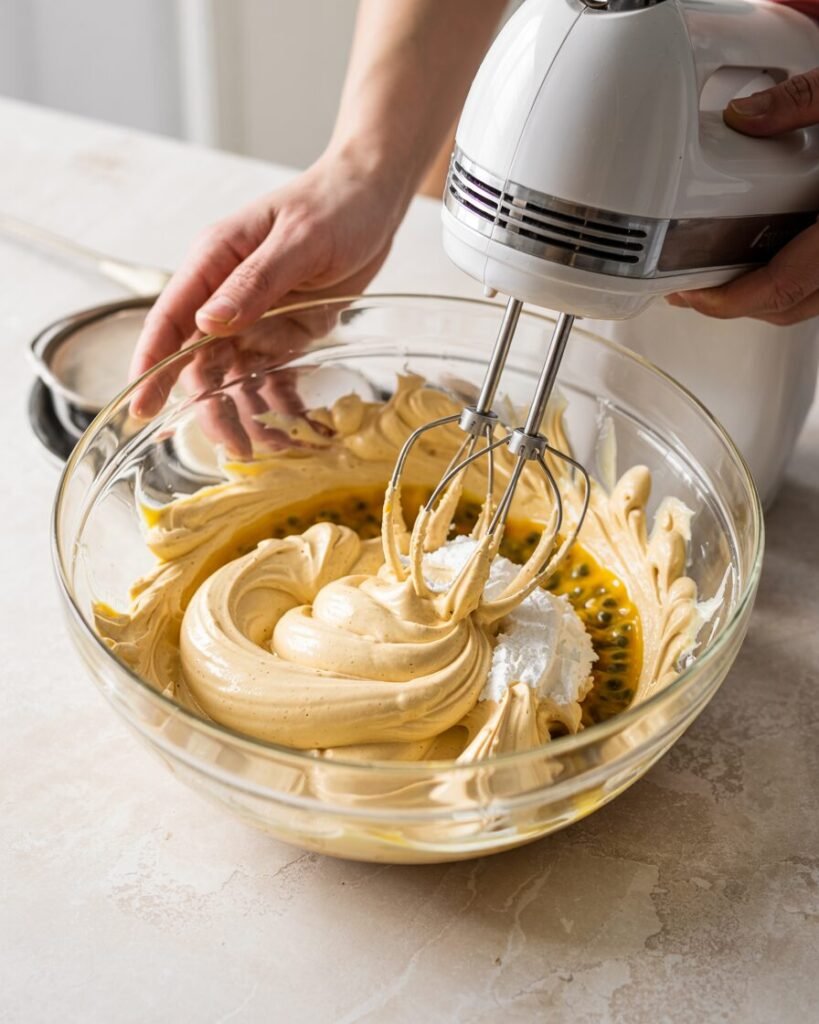
Add the cooled passionfruit reduction, vanilla extract, and salt.
Beat on medium speed until fully incorporated.
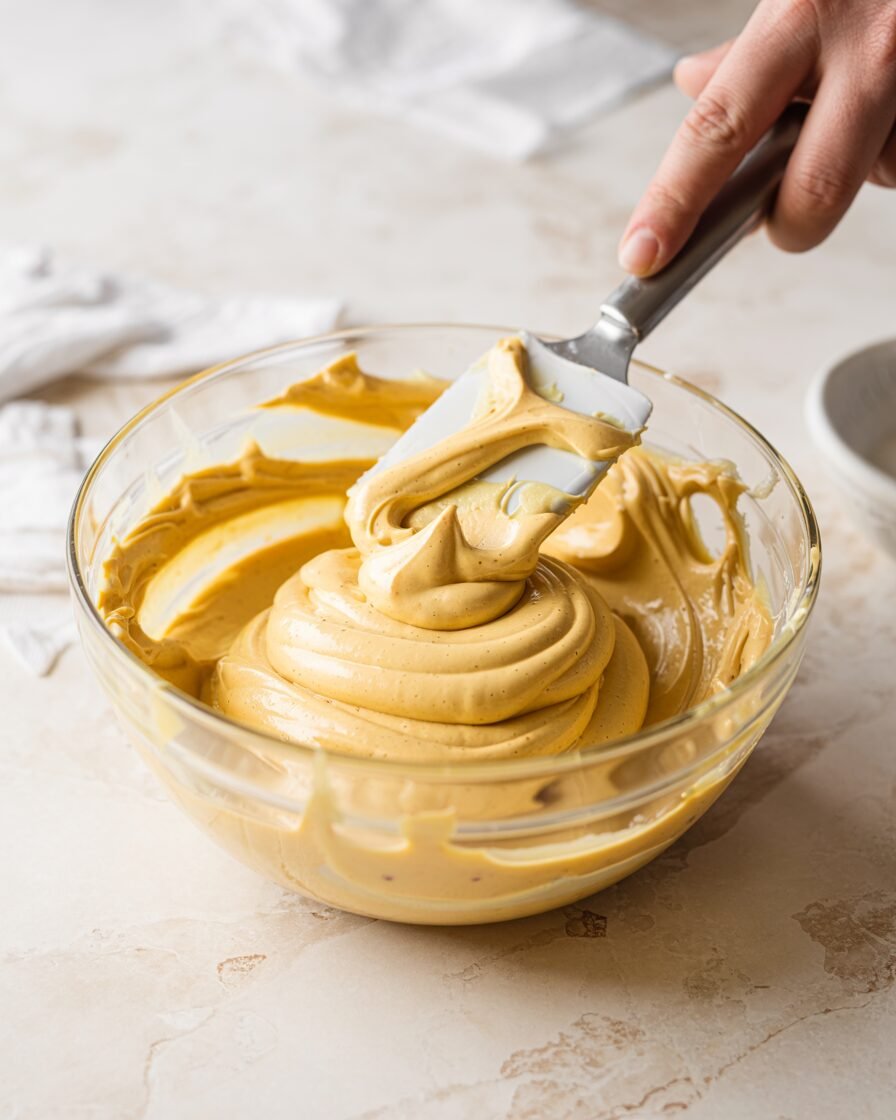
Visual cue: Frosting should become pale yellow with a smooth, creamy consistency.
Step 5: Adjust consistency (1 minute)
If frosting is too thick, add 1 tablespoon cream or milk and mix again.
Visual cue: The buttercream should hold soft peaks and spread easily.
Checkpoint: When lifted with a spatula, the frosting should form a soft curl that slowly falls back into the bowl.
Step 6: Final whip (1 minute)
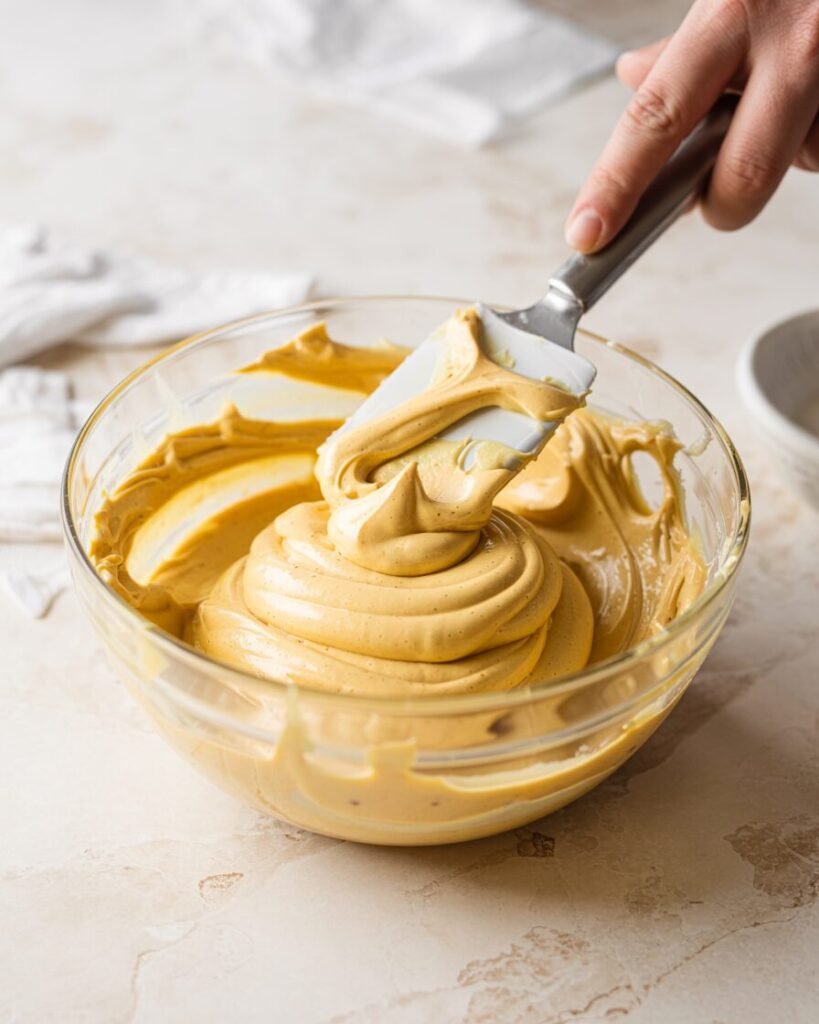
Beat the buttercream on medium-high speed for 1 minute to incorporate air.
This step gives the frosting a lighter texture.
Troubleshooting: Common Failures and Fixes
Problem: Frosting looks curdled
Likely cause: Juice added too quickly or butter too cold.
Fix next time: Add liquid gradually and ensure butter is softened.
Problem: Frosting too runny
Likely cause: Too much liquid or warm kitchen.
Fix: Add 2–3 tbsp powdered sugar or chill the bowl for 10 minutes.
Problem: Frosting too sweet
Likely cause: Too much sugar.
Fix: Add 1 tsp extra passionfruit reduction or a pinch of salt.
Problem: Greasy texture
Likely cause: Butter too warm.
Fix: Chill mixture briefly and whip again.
Problem: Frosting won’t hold piping shape
Likely cause: Too soft.
Fix: Chill 15 minutes before piping.
Substitutions and Variations
Dairy-Free
Replace butter with plant-based butter sticks (226 g).
Use coconut cream instead of milk if needed.
Vegan Option
Use vegan butter plus unsweetened passionfruit purée.
Texture will be slightly softer.
Lower-Sugar Version
Replace ¼ of the powdered sugar with cornstarch (15–20 g) to reduce sweetness slightly.
Flavor Variations
- Passionfruit Lime: Add ½ tsp lime zest.
- Passionfruit Coconut: Replace milk with coconut cream.
- Mango Passionfruit: Replace half the juice with mango purée.
Scaling the Recipe
| Yield | Butter | Powdered Sugar | Passionfruit |
|---|---|---|---|
| 6 cupcakes | 113 g | 180 g | 1½ tbsp |
| 12 cupcakes | 226 g | 360 g | 3 tbsp |
| 24 cupcakes | 452 g | 720 g | 6 tbsp |
Storage, Make-Ahead, and Freezing
Counter:
Up to 1 day in a covered bowl (cool kitchen).
Fridge:
Store for 5 days in an airtight container.
Bring to room temperature and re-whip before using.
Freezer:
Freeze for 2 months. Thaw overnight in the fridge and re-whip with 1–2 tsp milk.
Avoid freezing: Frosted cakes with fresh fruit fillings—they can release moisture.
Serving Suggestions and Pairings
This buttercream pairs beautifully with:
- Vanilla sponge cakes
- Coconut cupcakes
- Lemon loaf cakes
- Tropical fruit layer cakes
The tart flavor also balances rich chocolate cakes, creating a sweet-tangy contrast.
FAQs
Can I use bottled passionfruit juice?
Yes, but choose 100% unsweetened juice. Sweetened juice can make the frosting overly sweet.
Why is my buttercream grainy?
The powdered sugar may not have dissolved fully. Beat longer or sift the sugar before mixing.
Can I double this recipe?
Absolutely. Use a large bowl and mix slightly longer to incorporate air.
What type of butter is best?
Use unsalted butter with at least 80% fat for the best flavor and stability.
Can I make this in an OTG oven kitchen environment?
Yes. Buttercream doesn’t require baking—just keep your kitchen cool to prevent melting.
Notes From My Kitchen (Testing Log)
Batch 1:
Used fresh passionfruit pulp without reducing it. The frosting tasted good but became slightly runny after 30 minutes.
Adjustment: Reduced the juice by simmering.
Batch 2:
Added reduced juice slowly while mixing. Texture improved but flavor was slightly mild.
Adjustment: Reduced the juice a little more for stronger flavor.
Batch 3:
Perfect balance—tangy flavor with stable structure. This became the final method.
What I learned:
- Reducing fruit juice concentrates flavor without thinning buttercream.
- Adding liquid slowly prevents curdling.
- Slight chilling before piping improves definition.
Nutrition and Disclaimer
Approximate nutrition per serving (1/12 batch):
- Calories: ~210
- Fat: 11 g
- Carbohydrates: 28 g
- Sugar: 26 g
Values are estimates and vary by ingredient brands and portion size. Always follow safe food-handling practices when storing and serving buttercream.
Conclusion
Passionfruit buttercream is one of those frostings that instantly makes a cake feel special. The bright tropical flavor cuts through sweetness and gives desserts a fresh twist that feels perfect for spring and summer baking.
With the simple technique of reducing the juice and whipping the butter properly, you’ll get a smooth, flavorful frosting that spreads easily and pipes beautifully.