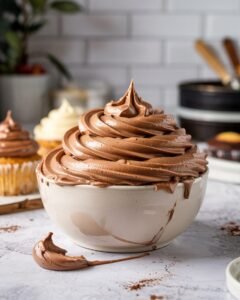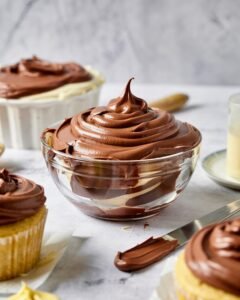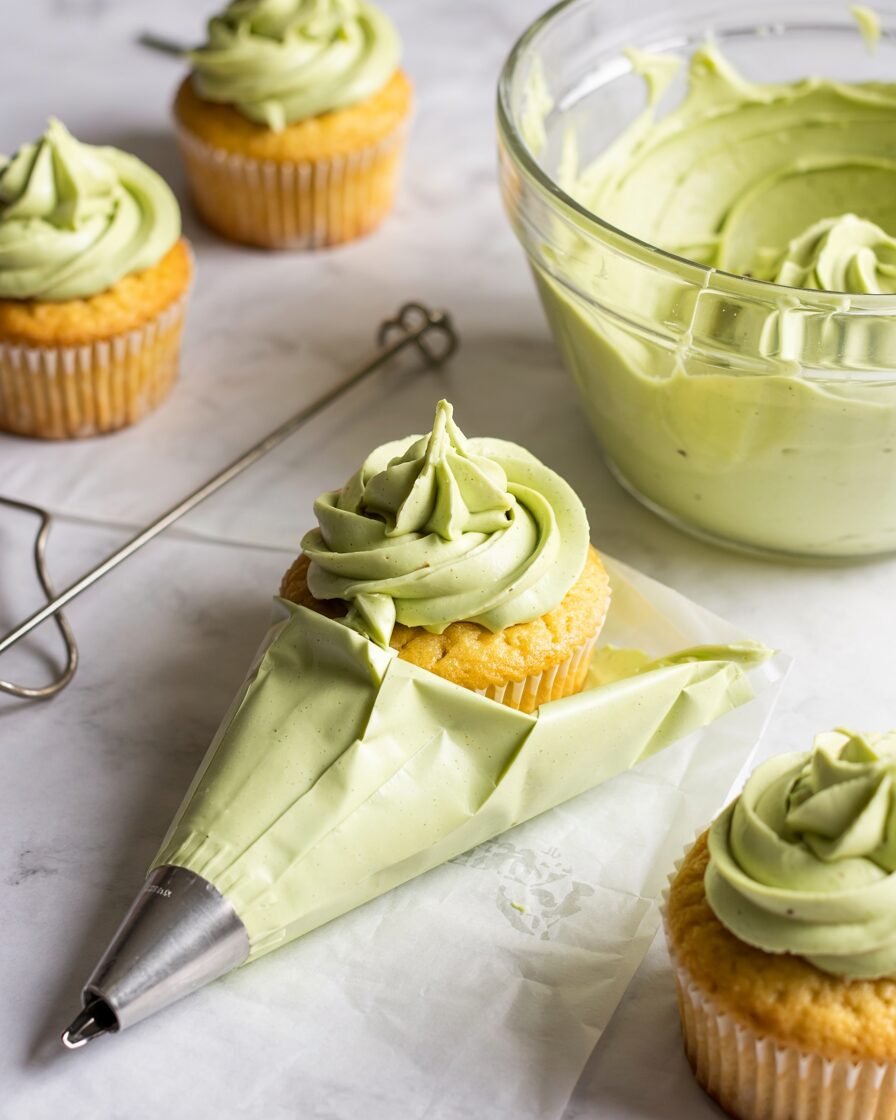
If you’ve ever wanted a frosting that tastes luxurious but isn’t overly sweet, this Pistachio Buttercream might become your new favorite. Unlike standard vanilla buttercream, this version delivers a naturally nutty flavor, subtle sweetness, and silky texture that pairs beautifully with cakes, cupcakes, and even macarons.
What makes this recipe special is the use of real pistachio paste, not artificial flavoring. That single choice creates a frosting that’s rich, aromatic, and perfectly balanced.
Pro tip: Toasting the pistachios lightly before blending them into paste intensifies the flavor dramatically. It’s a tiny step that transforms the final buttercream.
By the end, you’ll have a smooth, pipeable frosting with a delicate pistachio flavor and stable structure, perfect for frosting a two-layer cake or decorating 12–18 cupcakes.
Why This Recipe Works (The Baking Science)
Great buttercream is about emulsion and balance. In this pistachio buttercream, each ingredient plays a key role.
First, butter provides structure and stability. When beaten correctly, it traps tiny air pockets that create a light texture rather than a dense frosting. Butter at the right temperature (about 20–22°C / 68–72°F) allows sugar to dissolve evenly while maintaining a creamy consistency.
Second, pistachio paste adds fat and flavor. Nuts contain natural oils that enhance richness while helping the frosting stay smooth. Because pistachios are naturally slightly sweet, they also reduce the need for excessive powdered sugar.
Third, powdered sugar stabilizes the buttercream. It contains a small amount of cornstarch that thickens the frosting and prevents it from separating.
Finally, cream or milk loosens the texture. Adding liquid slowly creates the ideal spreadable consistency without breaking the emulsion.
Did you know?
Nuts like pistachios contain natural emulsifiers, which help bind fat and liquid. That’s why nut-based frostings often feel silkier than plain buttercream.
Ingredients (with weights and purpose)
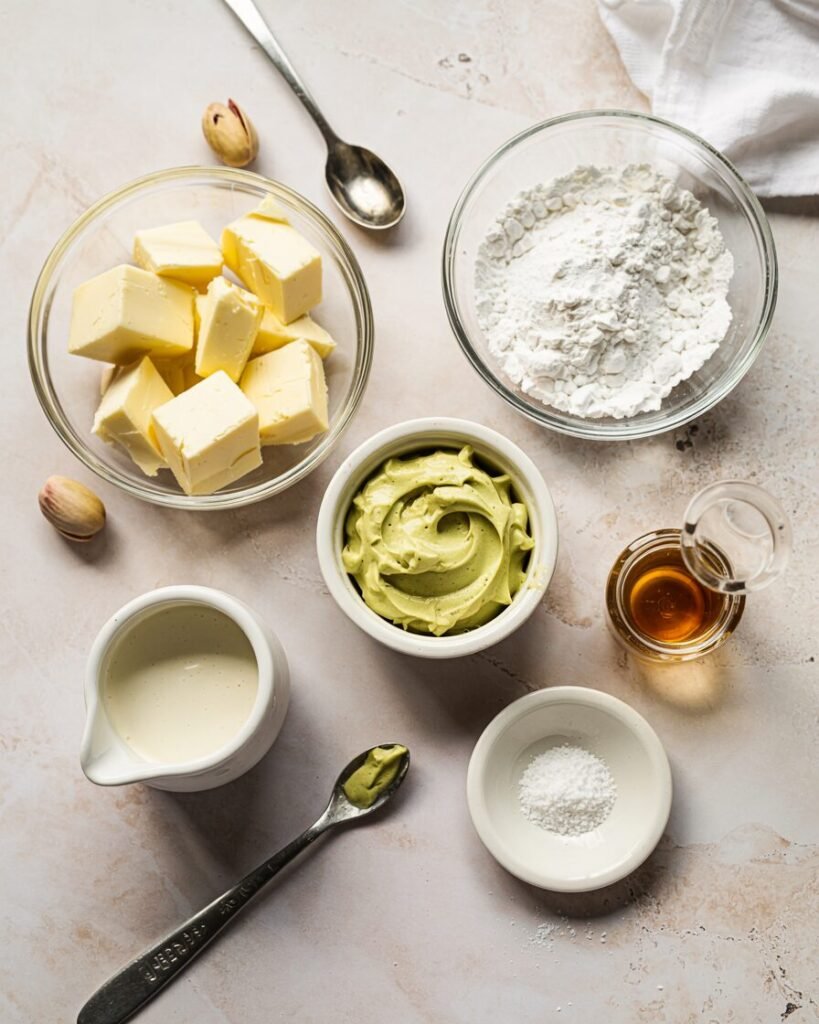
- Unsalted butter — 225 g (1 cup) — Base structure and creaminess
- Powdered sugar — 300 g (2½ cups) — Sweetness and stability
- Pistachio paste (unsweetened) — 80 g (⅓ cup) — Flavor and natural fat
- Heavy cream or milk — 30–45 ml (2–3 tbsp) — Adjust consistency
- Vanilla extract — 5 ml (1 tsp) — Enhances nut flavor
- Salt — 1 g (¼ tsp) — Balances sweetness
Optional (for color):
- 1–2 drops natural green food color — purely aesthetic.
Ingredient note:
Choose unsalted, shelled pistachios if making paste at home. Bright green pistachios give the best color and flavor.
Equipment
Required
- Hand mixer or stand mixer
- Mixing bowl
- Kitchen scale (recommended)
- Rubber spatula
- Fine sieve (for powdered sugar)
Nice-to-have
- Offset spatula for frosting cakes
- Piping bags and tips
- Food processor (for homemade pistachio paste)
Step-by-Step Instructions
Step 1: Prepare the butter
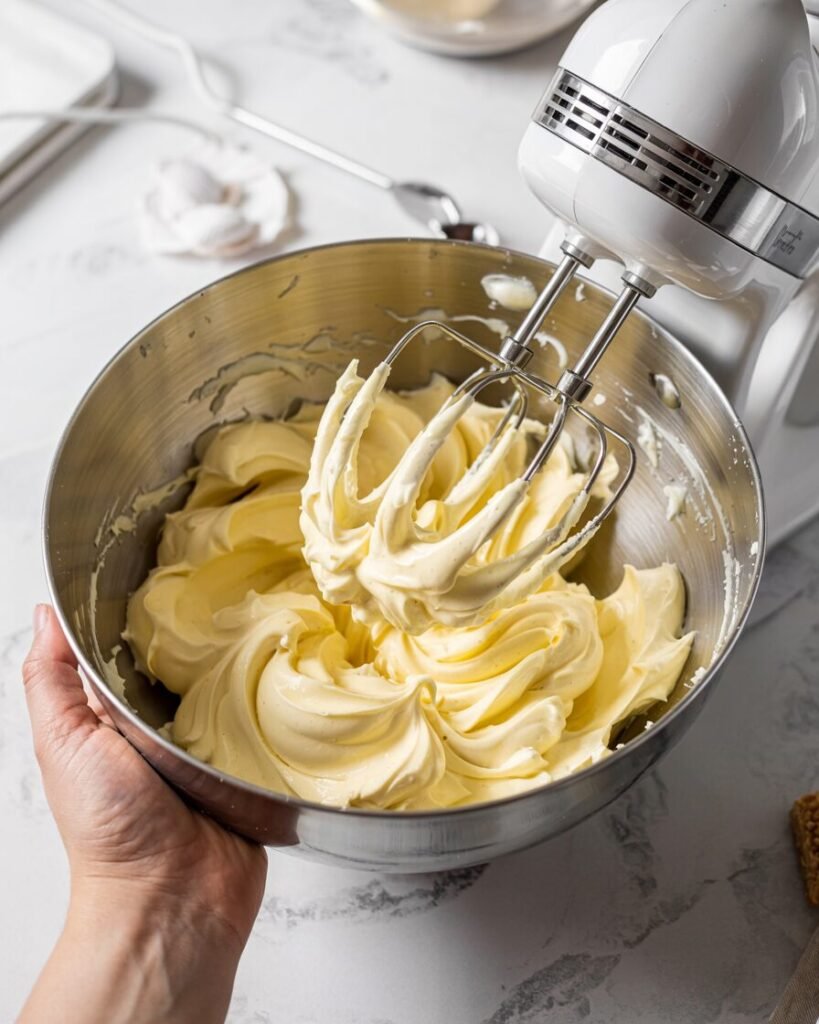
Beat 225 g softened butter on medium speed for 2–3 minutes until pale and fluffy.
Visual cue:
Butter should lighten in color and look creamy, not greasy.
Avoid this:
Butter that looks shiny or melted means it’s too warm.
Step 2: Add powdered sugar gradually
Sift in half the powdered sugar and beat on low speed for 1 minute, then increase to medium for another 1–2 minutes.
Repeat with remaining sugar.
Checkpoint:
The mixture should look thick but smooth, like whipped cream cheese.
Step 3: Add pistachio paste
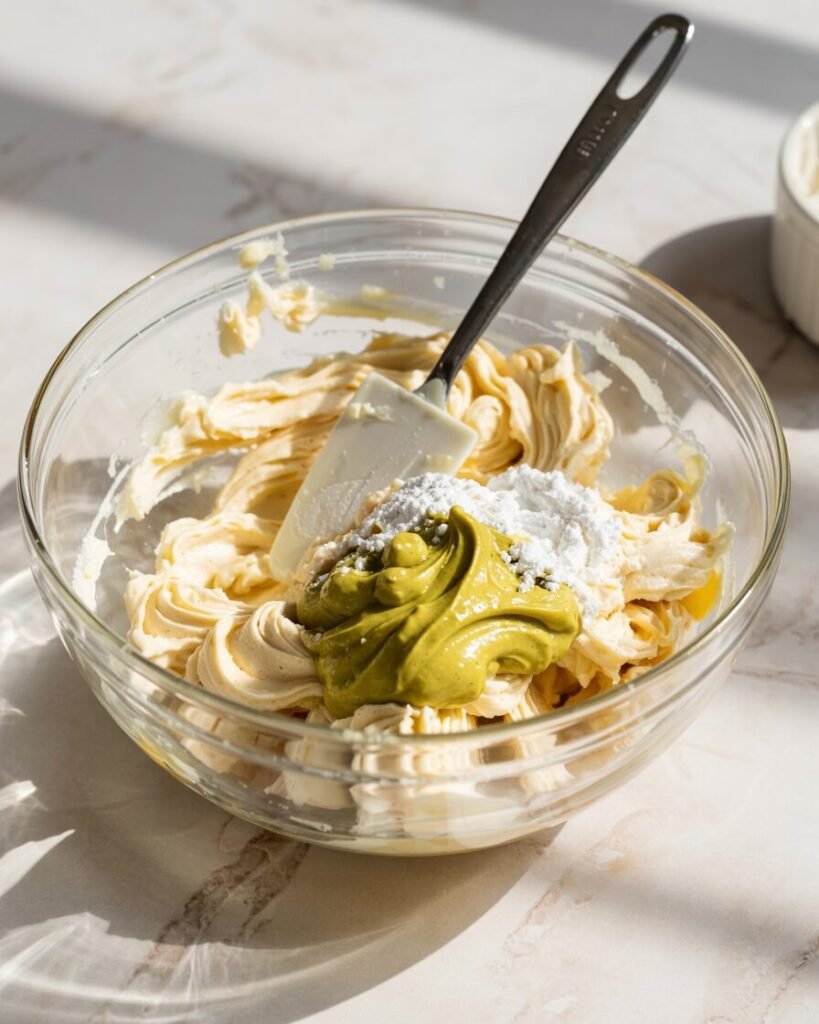
Add 80 g pistachio paste, vanilla, and salt.
Beat for 2 minutes on medium speed.
Visual cue:
The frosting will turn pale green and become slightly softer.
Step 4: Adjust texture
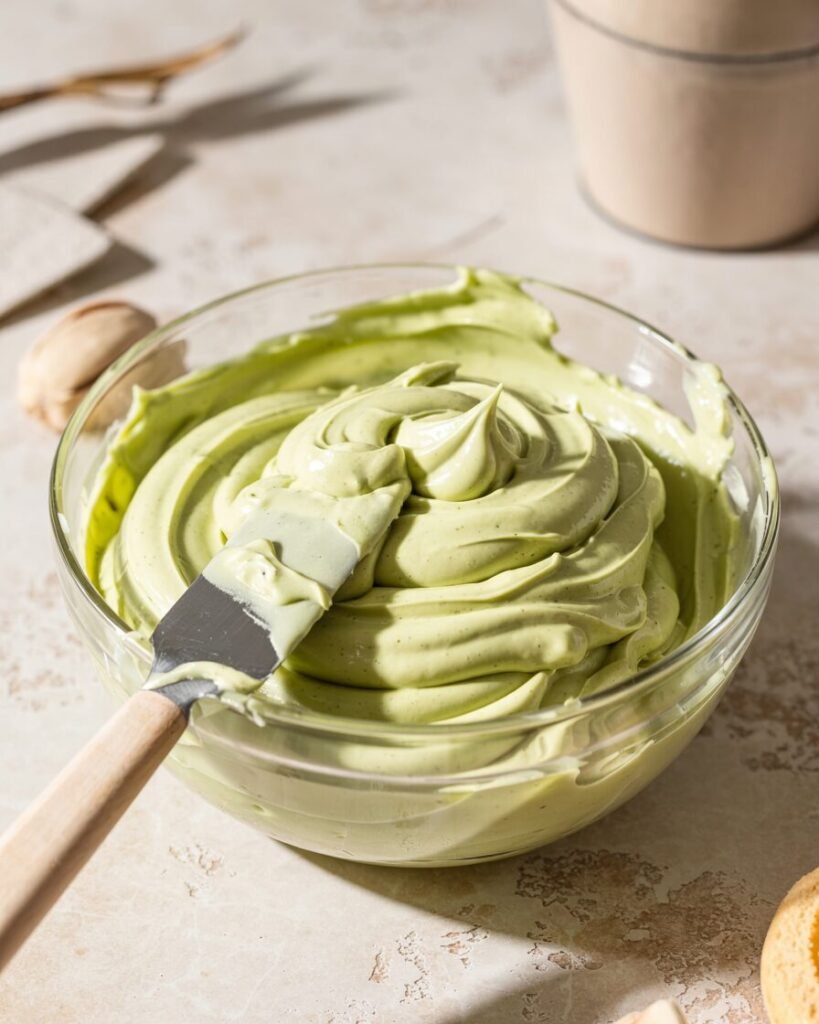
Add cream 1 tablespoon at a time while mixing on low speed.
Stop when the frosting becomes smooth and spreadable.
Correct texture:
When lifted with a spatula, the frosting should hold soft peaks that gently fold over.
Too thick → add 1 tsp cream
Too loose → add 1 tbsp powdered sugar
Step 5: Final whip
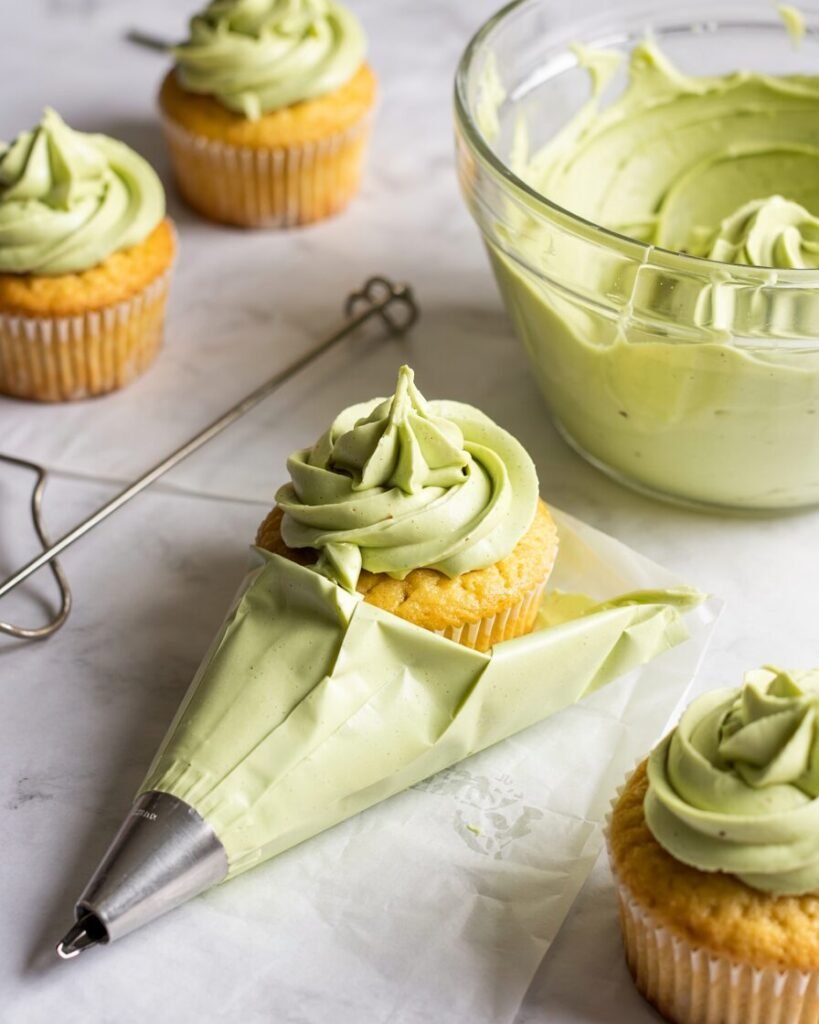
Beat on medium-high speed for 1 minute to incorporate air.
Result:
A silky, pipeable pistachio buttercream ready for frosting cakes or cupcakes.
Troubleshooting: Common Failures and Fixes
Problem: Buttercream looks curdled
Likely causes: butter too cold.
Fix next time: ensure butter is at 20–22°C (68–72°F).
Problem: Frosting too sweet
Cause: too much powdered sugar.
Fix: add 1–2 tbsp pistachio paste or a pinch of salt.
Problem: Frosting too runny
Cause: butter too warm or too much cream.
Fix: chill bowl for 10 minutes, then re-whip.
Problem: Grainy texture
Cause: unsifted sugar.
Fix: always sift powdered sugar.
Problem: Weak pistachio flavor
Cause: low-quality paste.
Fix: use roasted pistachios or homemade paste.
Substitutions and Variations
Dairy-Free
Use vegan butter (225 g) and plant milk instead of cream.
Note: texture may be slightly softer.
Reduced Sugar Version
Replace 50 g powdered sugar with 30 g pistachio paste.
This intensifies flavor while reducing sweetness.
Flavor Variations
- Chocolate Pistachio: add 30 g melted dark chocolate
- Rose Pistachio: add ½ tsp rose water
- Citrus Pistachio: add 1 tsp lemon or orange zest
Scaling
| Yield | Butter | Sugar | Pistachio Paste |
|---|---|---|---|
| 12 cupcakes | 150 g | 200 g | 50 g |
| 24 cupcakes | 300 g | 400 g | 110 g |
| 8-inch layer cake | 350 g | 450 g | 120 g |
Storage, Make-Ahead, and Freezing
Counter:
Up to 1 day in a covered bowl if the room is cool.
Refrigerator:
Store for 5 days in an airtight container. Bring to room temperature and re-whip before using.
Freezer:
Freeze up to 2 months in a sealed container.
Thawing:
Defrost overnight in the fridge, then whip again for 1 minute.
Avoid freezing fully frosted cakes with delicate piping — thawing can soften details.
Serving Suggestions and Pairing Ideas
Pistachio buttercream pairs beautifully with:
- Vanilla sponge cake
- Chocolate cupcakes
- Cardamom cake
- Lemon loaf
- Macarons or sandwich cookies
The nutty flavor also balances tart fruit fillings like raspberry or cherry.
FAQs
Can I make pistachio paste at home?
Yes. Blend 120 g roasted pistachios with 1–2 tbsp neutral oil until smooth.
Why is my buttercream pale instead of green?
Natural pistachio buttercream is often light beige-green. Add a tiny drop of food color if desired.
Can I halve or double the recipe?
Absolutely. Maintain the same ingredient ratios and mixing times.
Can I use salted pistachios?
Yes, but omit the added salt in the recipe.
Can I make this without a mixer?
Yes, but it requires vigorous whisking for 5–7 minutes to achieve the correct texture.
Notes from My Kitchen (Testing Log)
Batch 1:
Used raw pistachios. Flavor was mild and color dull.
Batch 2:
Tried roasted pistachios. Flavor improved dramatically.
Batch 3:
Added pistachio paste earlier in mixing. Result: slightly oily frosting.
Batch 4:
Added paste after sugar incorporation. Texture much smoother.
Batch 5 (final):
Used roasted pistachio paste and whipped frosting longer for a lighter texture.
Final result: balanced sweetness, strong pistachio flavor, and stable piping consistency.
Nutrition and Disclaimer
Approximate per serving (2 tbsp frosting):
- Calories: ~160
- Fat: 11 g
- Carbohydrates: 15 g
- Protein: 1 g
Values are estimates and vary by ingredient brand and portion size. Always follow safe food-handling practices when storing butter-based frostings.
Conclusion
A good buttercream should elevate a cake rather than overpower it. This Pistachio Buttercream Recipe delivers exactly that — a frosting that’s rich, nutty, and balanced in sweetness.
The key is simple: use quality pistachios, whip the butter properly, and adjust the texture gradually.
Once you master this method, you’ll have a versatile frosting that works on everything from cupcakes to celebration cakes.