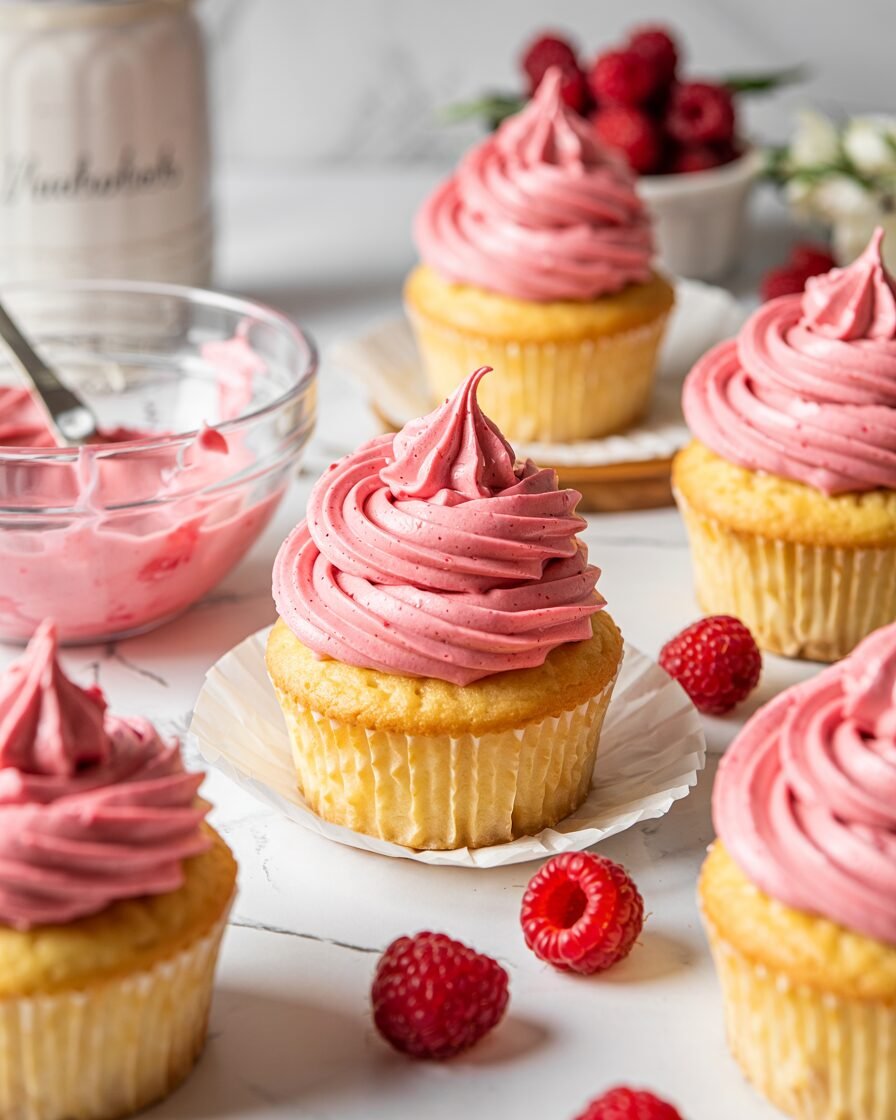
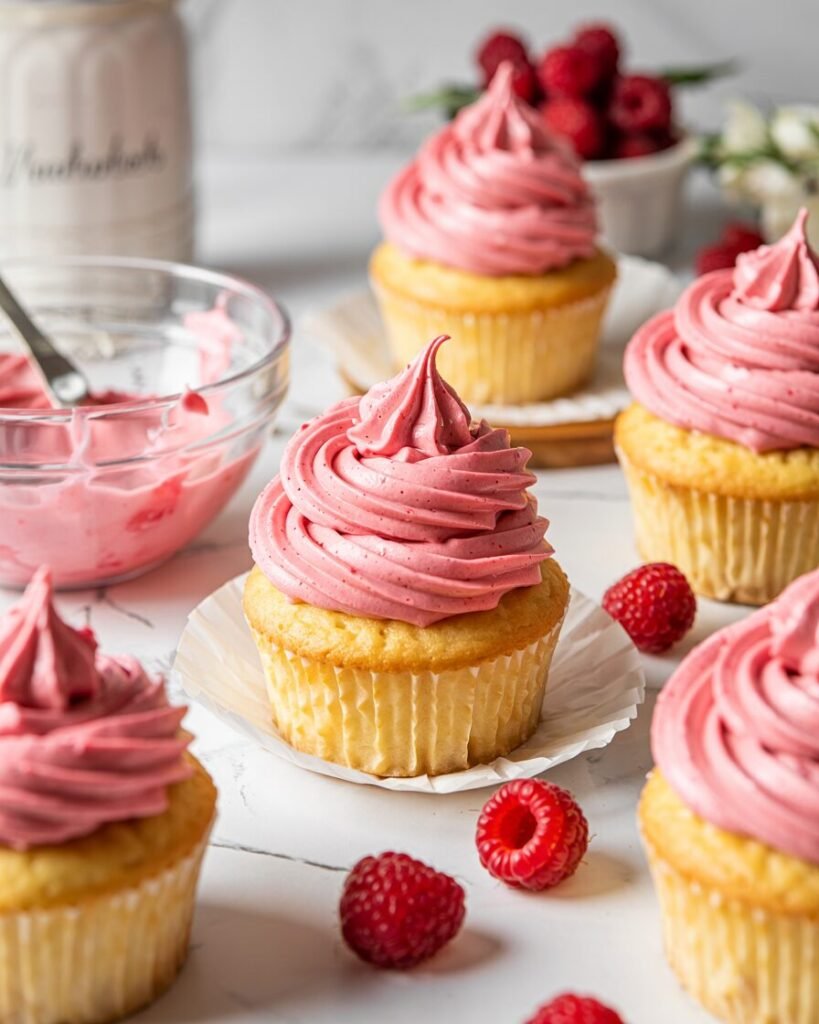
If you love frosting that’s fruity, silky, and naturally vibrant, this raspberry buttercream frosting is about to become your go-to recipe. It’s smooth enough for piping, bold enough in flavor to stand up to rich cakes, and balanced so it isn’t overwhelmingly sweet. The secret? Using a concentrated raspberry reduction instead of plain puree so the frosting stays fluffy without becoming runny.
This recipe creates a light, creamy buttercream with a natural raspberry tang and a stable piping texture—perfect for cupcakes, layer cakes, macarons, and sandwich cookies.
Pro tip: Always strain the raspberry puree to remove seeds before reducing it. Even tiny seeds can ruin the smooth piping texture.
Why This Recipe Works
Buttercream frosting seems simple, but small changes in ingredients and technique dramatically affect the final texture.
1. Raspberry reduction concentrates flavor without thinning the frosting
Fresh or frozen raspberries contain a lot of water. If you mix puree directly into buttercream, the frosting can split or become loose. Reducing the puree by half evaporates excess water while intensifying flavor and color.
2. Proper butter temperature creates the right emulsion
Butter around 20–22°C (68–72°F) holds air pockets that trap sugar particles during mixing. Too cold and the frosting becomes lumpy; too warm and it turns greasy.
3. Powdered sugar stabilizes and sweetens
Powdered sugar contains a small amount of cornstarch that helps stabilize the buttercream structure. This allows the frosting to hold peaks for piping decorations.
Did you know? A small pinch of salt balances the natural sweetness of buttercream and enhances the berry flavor.
Ingredients with Weights and Purpose
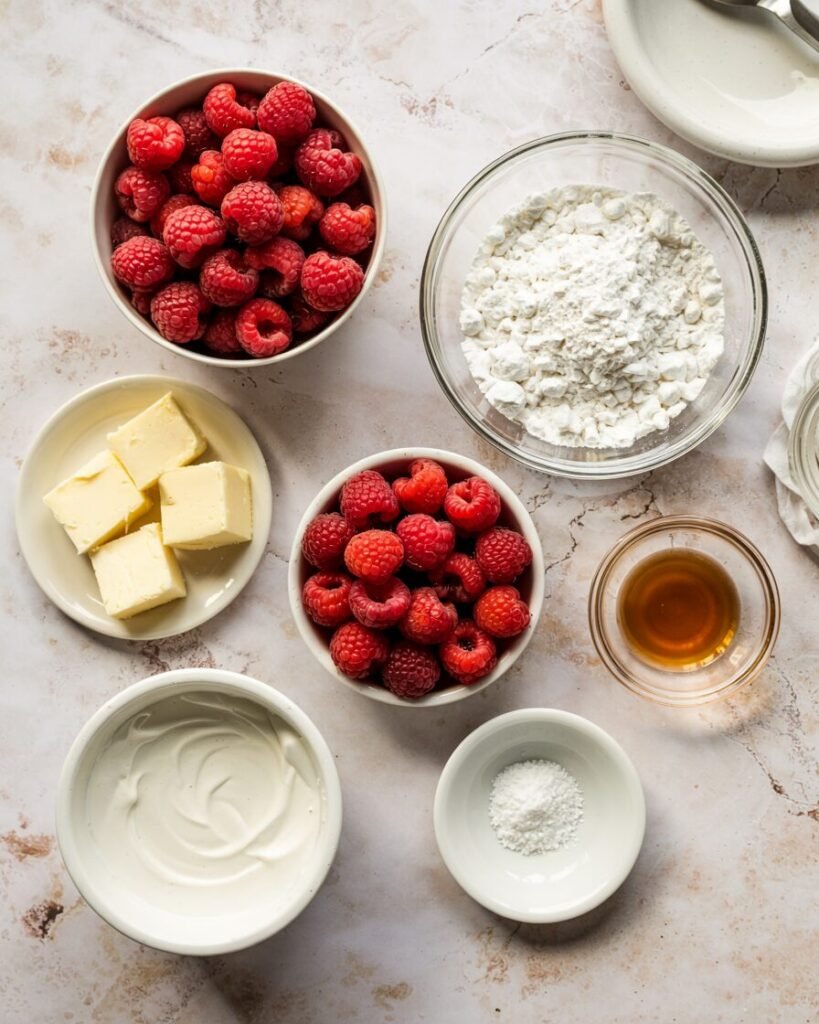
Yield: About 3 cups frosting (enough for 12 cupcakes or a 6-inch layer cake)
- Unsalted butter — 227 g (1 cup / 2 sticks)
Provides structure and creamy texture. - Powdered sugar — 360 g (3 cups)
Sweetens and stabilizes the buttercream. - Fresh or frozen raspberries — 150 g (1 cup)
Creates the natural raspberry flavor and color. - Heavy cream or milk — 15–30 g (1–2 tbsp)
Adjusts frosting consistency. - Vanilla extract — 5 g (1 tsp)
Adds depth and rounds out fruit flavor. - Salt — 1 g (⅛ tsp)
Balances sweetness.
Optional:
- Freeze-dried raspberry powder — 5 g (1 tbsp) for extra color and flavor.
Equipment
Required
- Mixing bowl
- Hand mixer or whisk
- Small saucepan
- Fine mesh sieve
- Digital scale
- Rubber spatula
Nice-to-have
- Stand mixer with paddle attachment
- Offset spatula for spreading
- Piping bags and tips
- Thermometer for checking reduction
Step-by-Step Instructions
Step 1: Make the Raspberry Puree
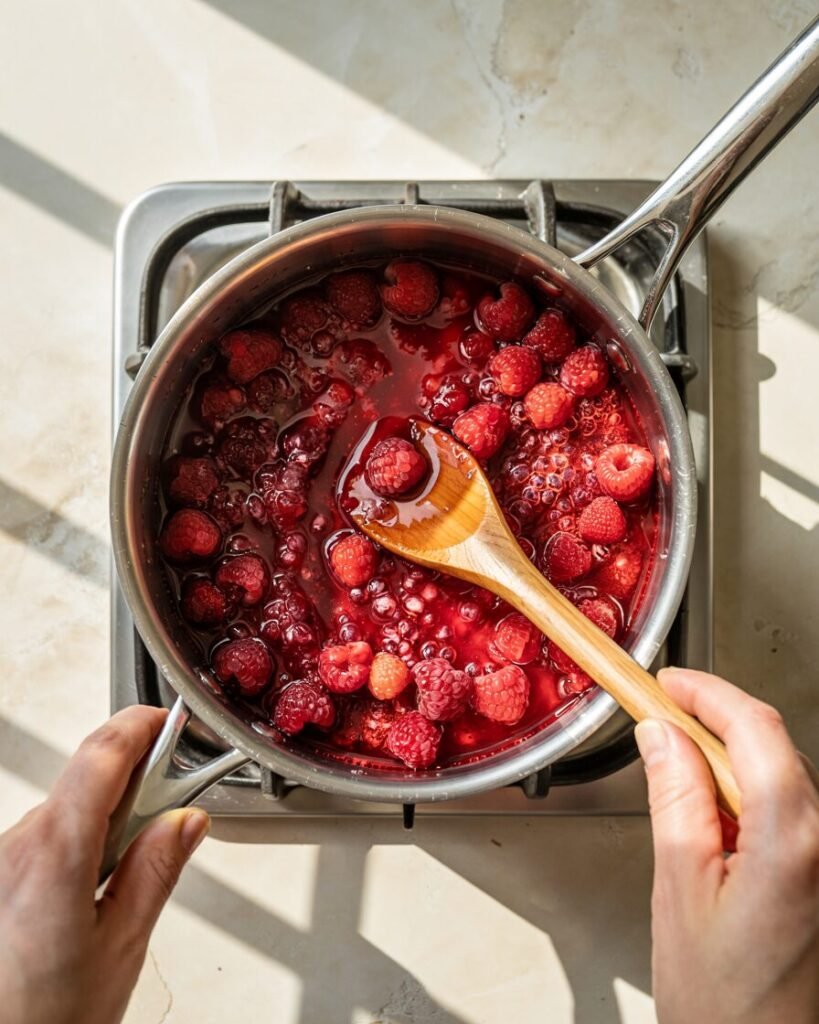
Time: 5 minutes
Place 150 g raspberries in a small saucepan over medium heat. Cook for 3–4 minutes, stirring and gently crushing berries.
Visual cue: berries should release juice and look like thick jam.
Step 2: Strain the Seeds
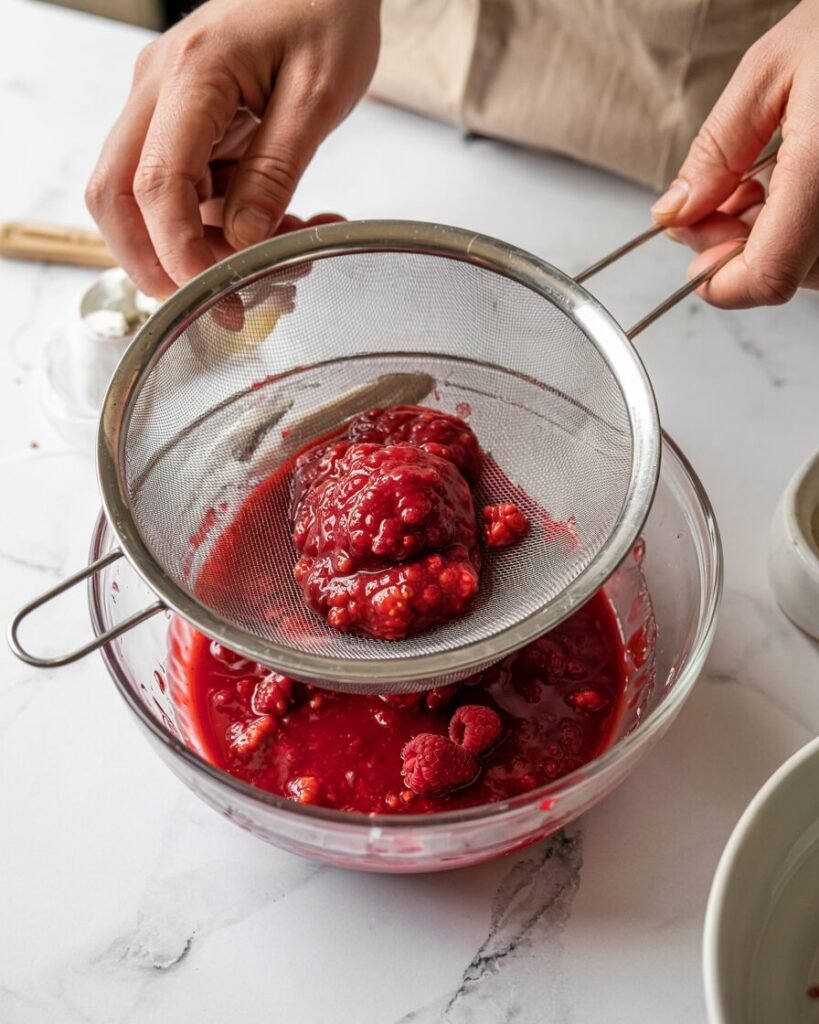
Time: 2 minutes
Pour the cooked berries through a fine mesh sieve into a bowl. Press with a spoon to extract as much puree as possible.
Visual cue: puree should be smooth and glossy, no seeds.
Step 3: Reduce the Puree
Time: 5–7 minutes
Return the strained puree to the saucepan and simmer until reduced to about 2 tablespoons (30 g).
Temperature: medium-low heat.
Visual cue: mixture thickens and leaves a visible trail when stirred.
Allow it to cool completely to room temperature (about 20–22°C / 68–72°F).
Avoid this: Adding warm puree to buttercream will melt the butter and ruin the texture.
Step 4: Beat the Butter
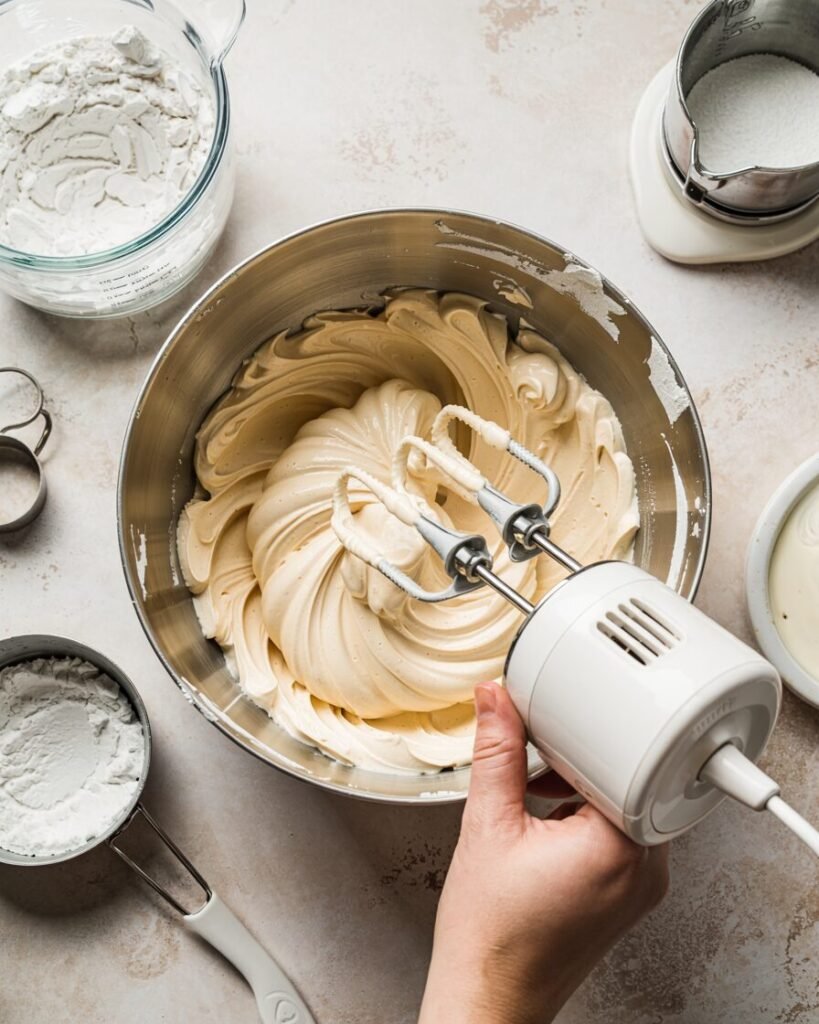
Time: 2–3 minutes
Place 227 g softened butter in a mixing bowl and beat on medium speed until pale and fluffy.
Visual cue: butter turns lighter in color and increases slightly in volume.
Step 5: Add Powdered Sugar Gradually
Time: 3–4 minutes
Add powdered sugar in three additions, mixing on low speed each time.
Visual cue: frosting becomes thick and smooth without visible sugar clumps.
Checkpoint: texture should resemble thick whipped cream.
Step 6: Add Raspberry Reduction and Flavorings
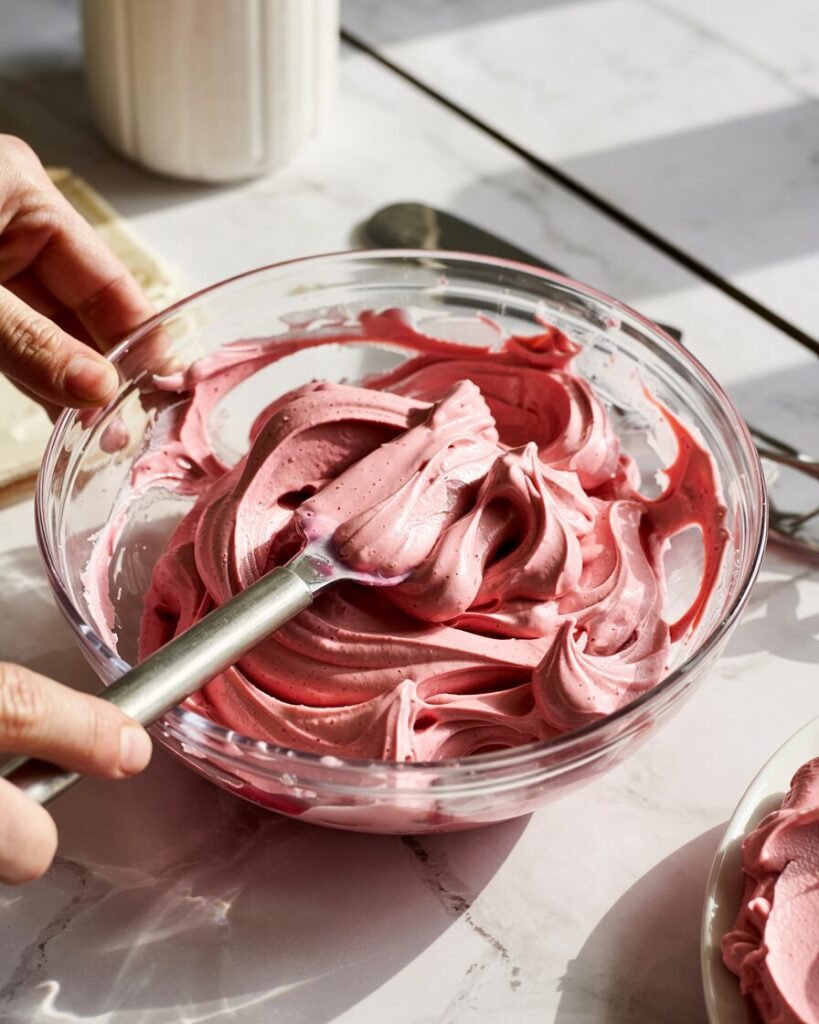
Time: 1–2 minutes
Mix in:
- cooled raspberry reduction
- vanilla extract
- salt
Beat on medium speed until fully incorporated.
Visual cue: frosting becomes soft pink and silky.
Step 7: Adjust Consistency
If frosting feels too thick, add 1 tablespoon cream or milk.
If too soft, add 1–2 tablespoons powdered sugar.
Beat for another 1 minute until fluffy.
Correct texture: holds peaks but spreads easily.
Troubleshooting Common Failures
Problem: Frosting looks curdled
Likely causes: puree too warm or butter too cold.
Fix next time: ensure puree is completely cool before mixing.
Problem: Frosting too runny
Likely causes: too much liquid or butter too warm.
Fix: chill for 10 minutes, then beat again.
Problem: Grainy texture
Likely cause: powdered sugar not fully mixed.
Fix: beat longer or sift sugar before adding.
Problem: Weak raspberry flavor
Cause: puree not reduced enough.
Fix: reduce puree until thick and concentrated.
Problem: Frosting too sweet
Cause: too much powdered sugar.
Fix: add a pinch of salt or extra raspberry powder.
Substitutions and Variations
Dairy-Free
Replace butter with vegan butter (same weight).
Use plant milk instead of cream.
Note: texture may be slightly softer.
Reduced Sugar Option
Replace ¼ of the powdered sugar with raspberry powder for stronger fruit flavor and slightly less sweetness.
Flavor Variations
Lemon Raspberry Buttercream
Add 1 tsp lemon zest for brightness.
Chocolate Raspberry Buttercream
Mix in 20 g cocoa powder and increase cream by 1 tbsp.
Scaling the Recipe
| Cake Size | Butter | Sugar | Raspberry |
|---|---|---|---|
| 6-inch cake | 227 g | 360 g | 150 g |
| 8-inch cake | 340 g | 540 g | 220 g |
| 12 cupcakes | same as base | same | same |
| 24 cupcakes | double recipe | double | double |
Storage, Make-Ahead, and Freezing
Room temperature:
Up to 1 day in an airtight container (cool room).
Refrigerator:
Store for 4–5 days. Before using, let sit at room temperature 30 minutes, then re-whip.
Freezer:
Freeze up to 2 months in airtight container.
To thaw:
Move to fridge overnight, then bring to room temp and whip again.
Do not freeze: fully decorated cakes with delicate piping—condensation can ruin the texture.
Serving Suggestions and Pairings
This frosting pairs beautifully with:
- Vanilla sponge cake
- Lemon cupcakes
- Chocolate cake
- Almond cupcakes
- Macarons or sandwich cookies
The tangy raspberry flavor cuts through sweet cakes, making desserts taste balanced rather than overly sugary.
FAQs
Can I use raspberry jam instead of fresh raspberries?
Yes, but reduce the powdered sugar by 2 tablespoons because jam is already sweet.
Why is my buttercream separating?
Usually the butter temperature is wrong. Butter should be soft but cool to the touch.
Can I double the recipe?
Yes. Use a large mixing bowl or stand mixer so the frosting whips evenly.
Can I make this frosting without a mixer?
Yes. Use a whisk and mix vigorously for 4–5 minutes, though it requires more effort.
Can I pipe decorations with this frosting?
Yes. Chill the frosting 10 minutes if you need sharper piping details.
Notes From My Kitchen (Testing Log)
Batch 1:
Used fresh raspberry puree without reducing. Frosting became runny and separated slightly.
Batch 2:
Reduced puree by half. Flavor improved but frosting still slightly loose.
Batch 3:
Reduced puree to about 2 tablespoons. Texture finally stable for piping.
Batch 4:
Tested frozen raspberries instead of fresh. Result identical after reduction.
Batch 5:
Added freeze-dried raspberry powder. Color deepened and flavor intensified—great option for bright pink frosting.
Final Method:
The reduced raspberry puree + softened butter method gives the best balance of flavor, color, and stable piping texture.
Nutrition and Disclaimer
Approximate per serving (2 tbsp frosting):
- Calories: ~160
- Fat: 9 g
- Carbohydrates: 20 g
- Sugar: 19 g
Values are estimates and vary based on ingredient brands and portion size. Always follow safe food-handling practices and refrigerate dairy-based frostings when not in use.
Final Thoughts
Baking at home is often about small techniques that make a big difference. With this recipe, you get a frosting that looks beautiful, tastes bright and fresh, and holds its shape beautifully on cakes and cupcakes.
If you try this recipe, experiment with different pairings—raspberry buttercream is especially magical with lemon, chocolate, or vanilla cakes.