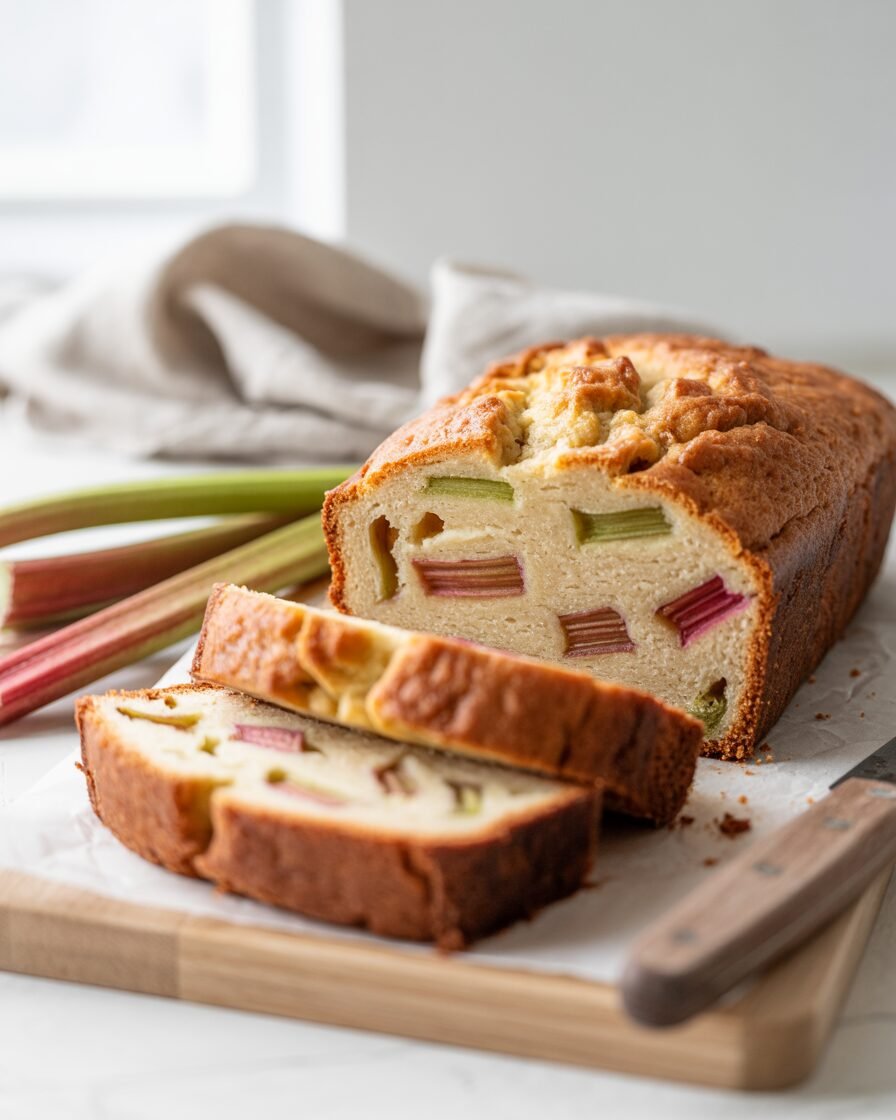
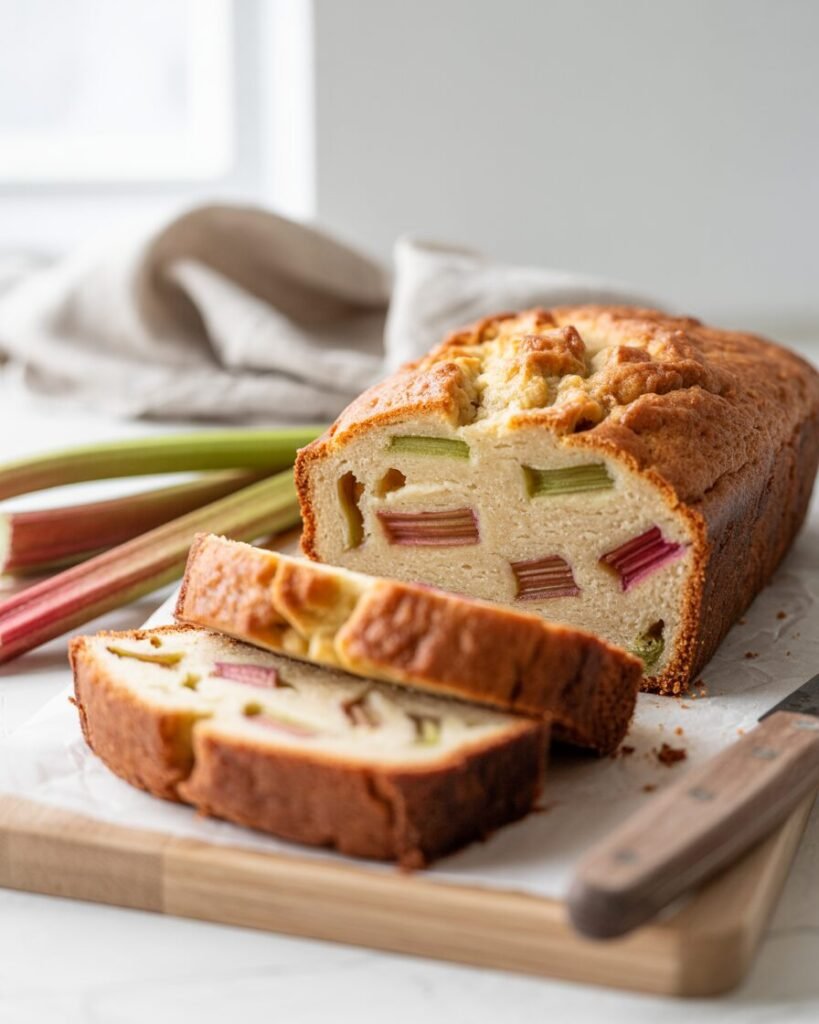
Every spring when rhubarb hits the market, I bake this loaf at least four times. It’s a quick bread — no yeast, no stand mixer — with a tight, moist crumb, a caramelized brown sugar crust, and those jammy-tart pockets of rhubarb you look forward to in every slice. The secret? Coating your rhubarb in a spoon of sugar before folding it in. It draws out just enough juice to create little soft bursts without turning the loaf soggy.
Why This Recipe Works
Rhubarb is roughly 94% water, which means it actively competes with your leavening and structure. Here’s how this recipe balances that:
- Oil over butter: Oil stays liquid at room temperature, keeping the crumb moist for days. Butter-based loaves firm up as they cool and go stale faster.
- Buttermilk + baking soda: The acid in buttermilk reacts with baking soda to create a quick, reliable lift — and it softens gluten slightly, giving you a tender (not chewy) crumb.
- Brown sugar: The molasses in brown sugar attracts moisture from the air, which is why this loaf stays soft on day two and three.
Ingredients
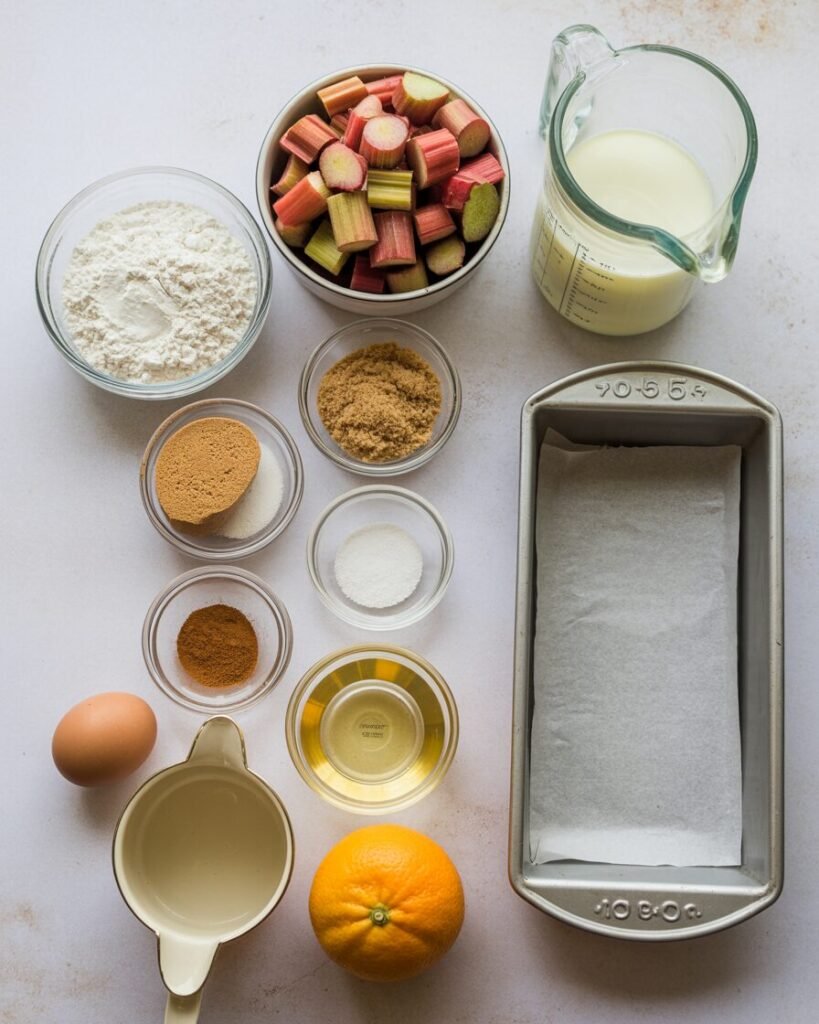
(Makes 1 loaf | 9×5-inch pan | 10–12 slices)
| Ingredient | Grams | Volume | Purpose |
|---|---|---|---|
| All-purpose flour | 240 g | 2 cups | Structure |
| Baking soda | 5 g | 1 tsp | Lift (reacts with buttermilk) |
| Baking powder | 4 g | 1 tsp | Extra rise |
| Ground cinnamon | 3 g | 1 tsp | Warm spice base |
| Salt | 3 g | ½ tsp | Flavor balance |
| Brown sugar (packed) | 200 g | 1 cup | Sweetness, moisture retention |
| Vegetable oil | 120 ml | ½ cup | Tenderness, long shelf life |
| Large egg | 1 (50 g) | 1 | Binder, structure |
| Buttermilk | 240 ml | 1 cup | Acid for leavening, tenderness |
| Pure vanilla extract | 5 ml | 1 tsp | Depth of flavor |
| Fresh rhubarb, chopped | 200 g | 1½ cups | Star ingredient |
| Orange zest | 1 tbsp | 1 tbsp | Brightness, cuts tartness |
| Brown sugar (topping) | 15 g | 1 tbsp | Crunchy caramel crust |
Pro tip: Use stalks that are deep red to pink — they’re more tart and hold their color better after baking. Pale green stalks work but taste milder.
Equipment
Required: 9×5-inch (23×13 cm) metal loaf pan, kitchen scale, mixing bowls (2), rubber spatula, wire rack
Nice-to-have: Fine-mesh sieve (for dry ingredients), microplane (for zest), digital oven thermometer
Most home ovens run 10–15°C hot or cool. An oven thermometer is the single tool that fixed more of my failed loaves than anything else.
Step-by-Step Instructions
Prep (10 min): Preheat oven to 175°C (350°F) — middle rack. Grease your loaf pan well, then line with a parchment sling for easy lifting. Toss chopped rhubarb with 1 tsp sugar and set aside.
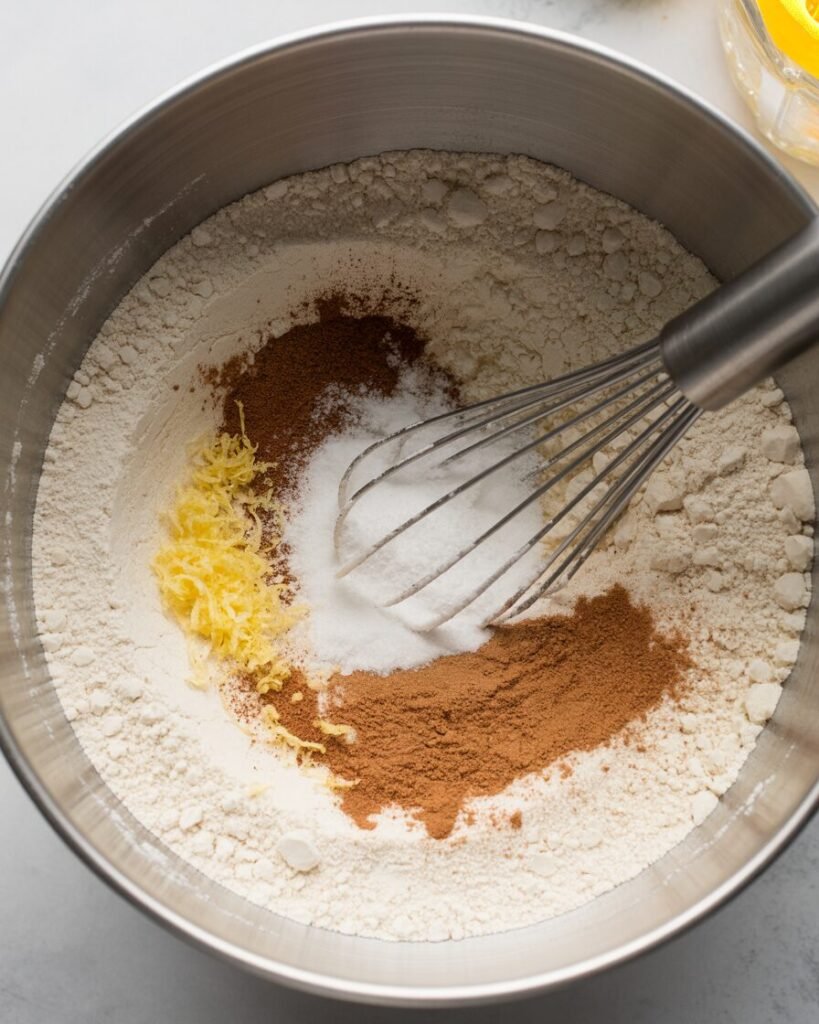
Step 1 — Dry bowl: Whisk flour, baking soda, baking powder, cinnamon, salt, and orange zest together. Visual cue: Should look uniformly speckled, no white clumps.
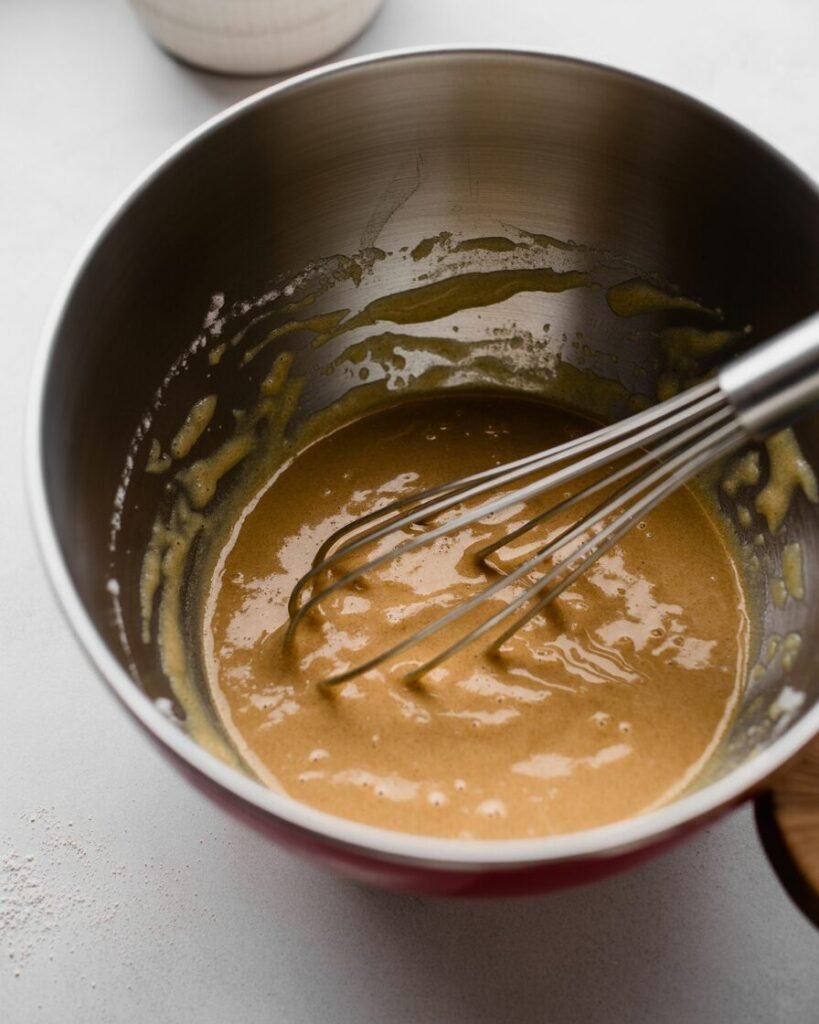
Step 2 — Wet bowl: Whisk oil, brown sugar, egg, buttermilk, and vanilla until smooth, about 90 seconds by hand. Visual cue: The mixture should look caramel-colored and slightly thick — no sugar clumps visible.
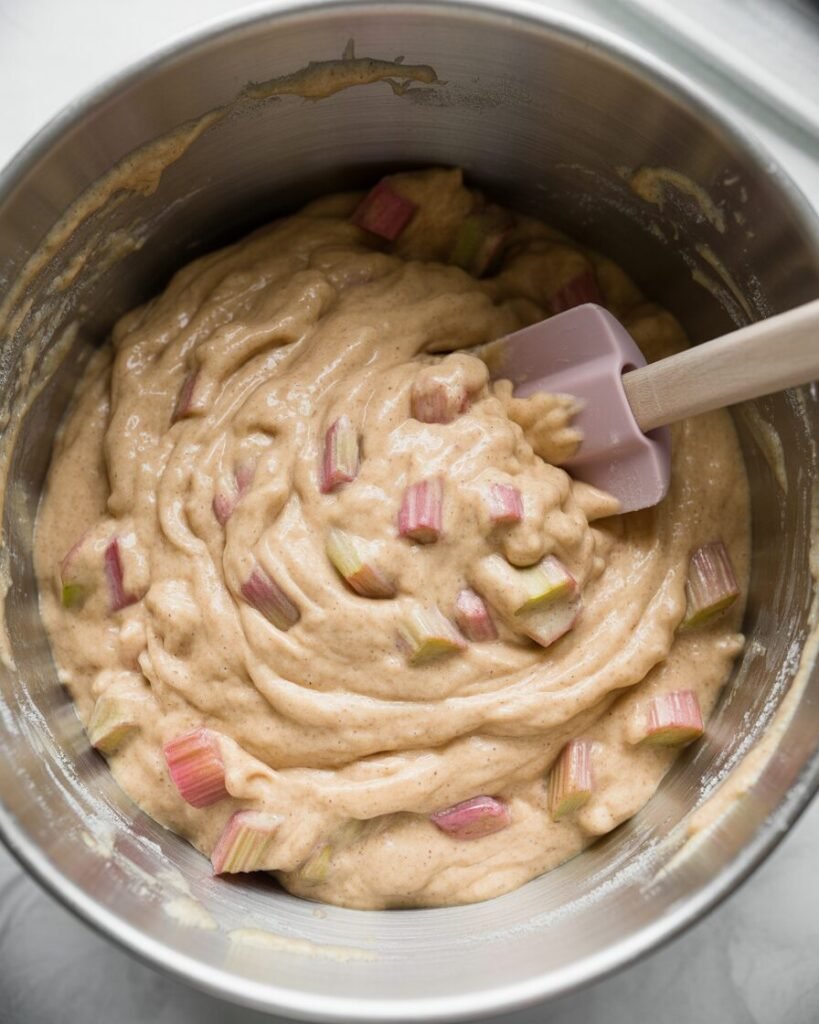
Step 3 — Combine: Pour dry into wet (not the other way around — less overmixing risk). Fold with a spatula in broad strokes, 10–12 folds maximum. Stop when just a few flour streaks remain.
Step 4 — Add rhubarb: Fold in the sugared rhubarb with 3–4 more strokes. The last streaks of flour disappear here. Avoid this: Stirring until fully smooth — overmixed quick bread turns dense and tunneled.
Step 5 — Pan and top: Transfer batter to the prepared pan (it should sit about ¾ full). Sprinkle the 1 tbsp brown sugar evenly over the top. Visual cue: The top should look dimpled from the rhubarb pieces, not flat.
Step 6 — Bake: Bake at 175°C (350°F) for 50–60 minutes. At the 40-minute mark, tent loosely with foil if the top is darkening too fast. Done when a skewer inserted in the center comes out with dry crumbs (not wet batter), and the internal temp reads 93–96°C (200–205°F).
Step 7 — Cool: Rest in pan on a wire rack for 15 minutes, then lift out and cool completely (at least 45 minutes) before slicing. Cutting early = gummy, collapsed interior.
Troubleshooting
Substitutions and Variations
Egg-free: Replace 1 egg with 60g (¼ cup) unsweetened applesauce. Loaf will be slightly denser — bake an extra 5 minutes.
Dairy-free: Swap buttermilk with 240ml oat milk + 1 tbsp apple cider vinegar. Let sit 5 minutes before using.
Gluten-free: Use a 1:1 GF baking flour blend (one with xanthan gum already included). Expect a slightly more crumbly slice — chill before cutting for cleaner results.
Flavor swaps: Add ½ tsp ground ginger for a sharper warmth, or swap cinnamon for cardamom for a floral note. A handful of walnuts (50g) adds great texture contrast.
Storage, Make-Ahead, and Freezing
- Counter: Wrapped in beeswax wrap or airtight container — 3 days at room temperature
- Fridge: Up to 5 days; bring a slice to room temp 20 minutes before eating (cold mutes the flavor)
- Freezer: Slice, wrap each piece in cling film, freeze up to 3 months. Thaw overnight in the fridge or 1 hour on the counter. A quick 10-second microwave burst revives the moist texture
- Don’t freeze: The brown sugar topping loses its crunch — enjoy that fresh from the oven
Notes from My Kitchen
Batch 1: Used all-purpose flour + butter (not oil). Loaf was great fresh but went crumbly by Day 2. Switched to oil.
Batch 2: Added rhubarb straight without pre-sugaring. Bottom third turned slightly soggy from juice release. Fixed with the sugar-toss step.
Batch 3: Tried skipping the orange zest — missed it immediately. That zest does something crucial to balance the tartness.
Batch 4 (final): Oil + buttermilk + pre-sugared rhubarb + zest = the version I bake every spring. Stays moist for 3 days without any compromise in texture.
FAQs
Can I use frozen rhubarb? Yes — thaw completely, then pat very dry with paper towels before using. Excess ice water = soggy bread.
Can I double the recipe? Yes. Use two 9×5 pans and bake side by side on the same rack. Add 5–10 extra minutes and test each individually.
Why did my bread sink in the middle? Almost always underbaked or sliced too early. Always test with a skewer and check the internal temperature.
Best sugar type? Dark brown sugar gives a deeper molasses flavor; light brown is more subtle. Both work — I prefer dark brown.
Can I bake this in an OTG? Yes — use the middle rack with both top and bottom heating elements on. Preheat for at least 15 minutes. Watch the top more carefully; OTGs can run hot on the upper element.
Nutrition Estimate (per slice, 1/10 of loaf)
~220 kcal | Fat: 9g | Carbs: 33g | Protein: 3g | Sugar: 17g
Values are estimates based on standard ingredients; adjust for brands and portion size. Rhubarb leaves are toxic — use stalks only and follow standard food-safety practices.
The Last Slice
This rhubarb bread is the kind of recipe that becomes a seasonal ritual — simple enough for a weeknight, special enough to wrap up and give as a gift. With a few key techniques (oil for moisture, pre-sugared rhubarb, and strict no-overmixing), it comes together reliably every single time. Make it once and you’ll understand why it disappears before it has a chance to go stale.