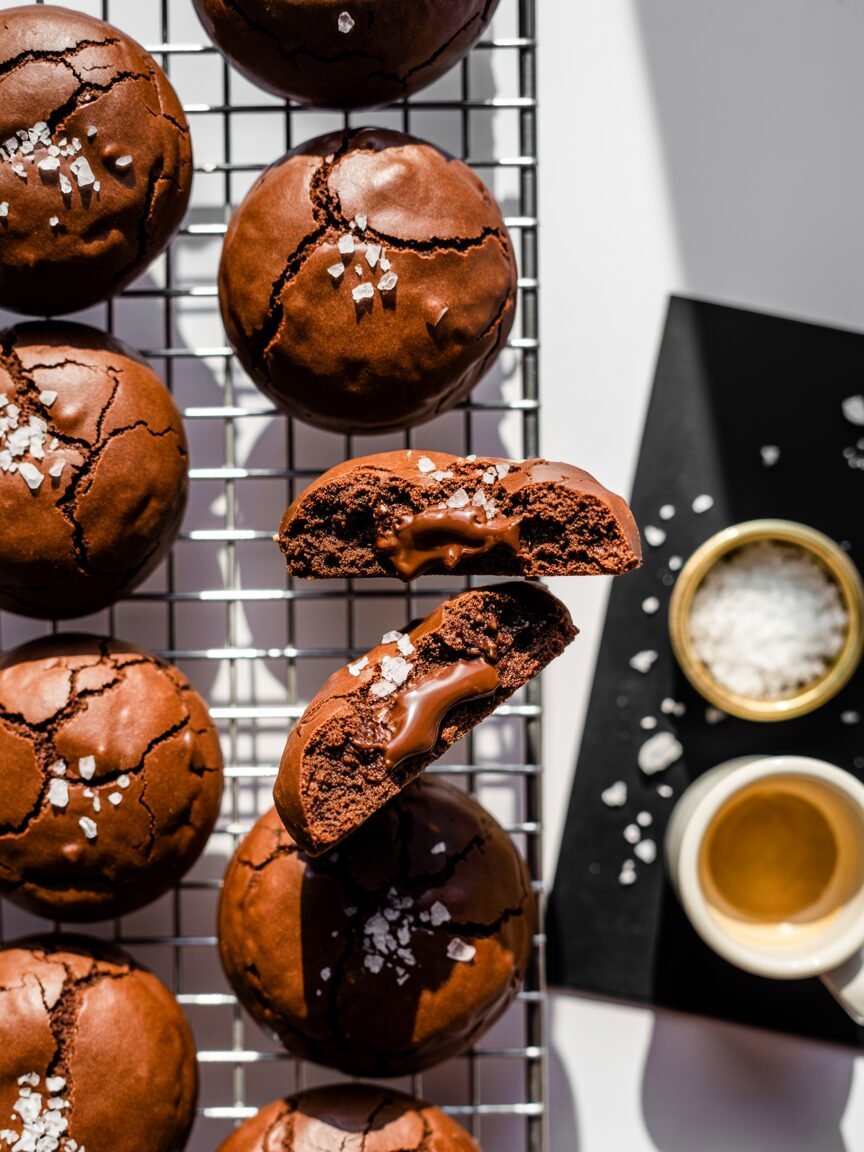
Salted Brownie Cookies deliver crackly, shiny tops, fudgy middles, chewy edges, and a clean pop of sea salt that sharpens the chocolate flavor without making the cookies taste salty. Bake these when you want something richer than a classic chocolate chip cookie but faster than a full pan of brownies, especially for gifting or party platters where crisp edges and soft centers hold well for hours. Pro tip: whip the eggs and sugar until pale and voluminous, then fold in warm melted chocolate to create that signature crinkle and gloss on top.
Why this works
- Egg–sugar aeration builds a fragile meringue-like crust; when warm chocolate is folded into a thick, low-hydration batter, the surface dries and cracks into glossy crinkles while the center remains fudgy. Low water and high sugar/fat ratios favor crinkle formation.
- Using Dutch‑process cocoa deepens color and rounds bitterness; alkalization neutralizes sharp acidity, reading as darker, smoother chocolate. Natural cocoa skews lighter and fruitier; both are unsweetened but behave differently in color and perceived intensity.
- Lean flour relative to fat and chocolate keeps crumbs dense and brownie‑like; brownie-style ratios prioritize sugar, fat, and chocolate over flour for chew and fudginess rather than cakiness.
Ingredients
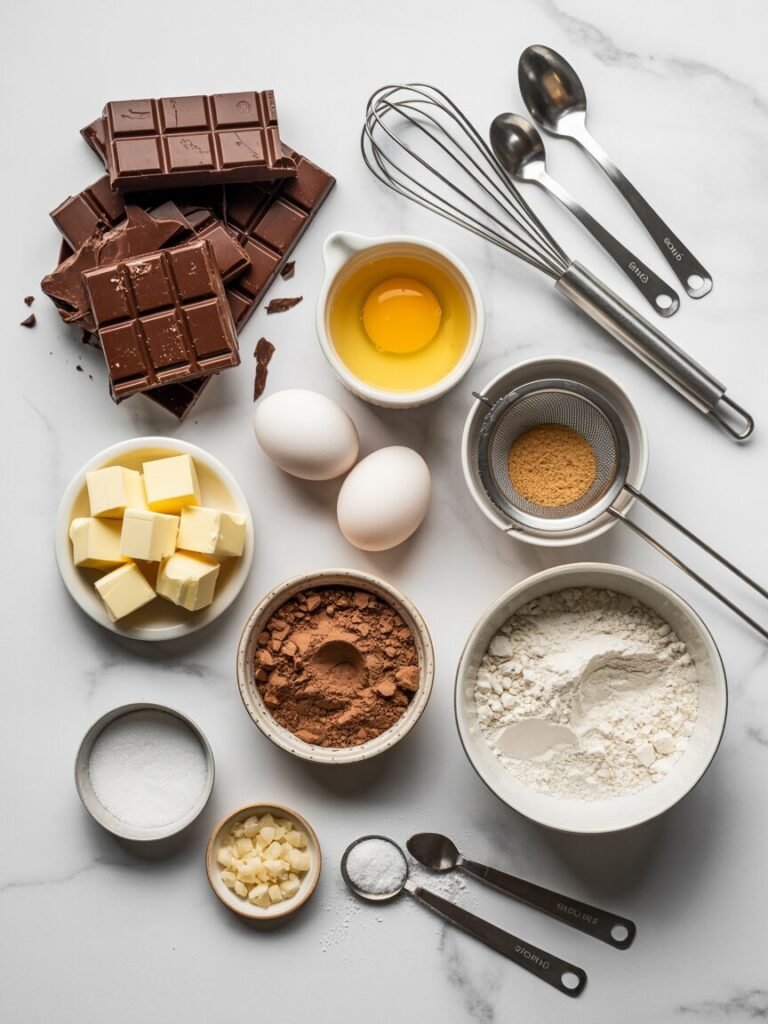
- 170 g dark chocolate, 60–70% (about 1 cup chopped) — base chocolate flavor and cocoa butter for fudgy chew.
- 90 g unsalted butter (6 tbsp) — fat for tenderness; blends with melted chocolate for gloss.
- 150 g granulated sugar (3/4 cup) — structure, crinkle top via meringue-like foam, shine.
- 65 g light brown sugar (1/3 cup, packed) — moisture and chew from molasses.
- 2 large eggs, room temperature (100 g without shells) — emulsify, trap air for shiny tops.
- 1 tsp vanilla extract — rounds chocolate notes.
- 85 g all-purpose flour (2/3 cup leveled) — minimal structure while staying fudgy.
- 20 g Dutch‑process cocoa (3 tbsp) — deeper color, smoother cocoa notes.
- 1/2 tsp baking powder — gentle lift without cakiness.
- 1/4 tsp fine sea salt — balances sweetness in dough.
- 60–90 g semi‑sweet chocolate chips or chunks (1/3–1/2 cup) — pockets of melt.
- Flaky sea salt, for topping — bright finish that sharpens chocolate.
Note: Dutch‑process cocoa recommended for deep color and smooth flavor; natural cocoa will taste slightly brighter and look lighter. Avoid black cocoa alone; it can taste flat without blending.
Equipment
- Required: 2 light-colored sheet pans (30×40 cm), parchment, heatproof bowl, saucepan or double boiler, hand mixer or stand mixer, silicone spatula, medium cookie scoop (1.5 tbsp), kitchen scale, oven or OTG.
- Nice‑to‑have: Infrared thermometer (for chocolate ~45–50°C/113–122°F), instant‑read probe (cookie surface temp checks), fine sieve for cocoa, offset spatula for neat scoops.
Step‑by‑step instructions
Preheat and prep: Preheat oven to 175°C (350°F) with rack in upper‑middle position; line 2 pans with parchment. Preheat for a full 20 minutes for even heat recovery. Visual cue: oven thermometer reads steady 175°C (350°F).
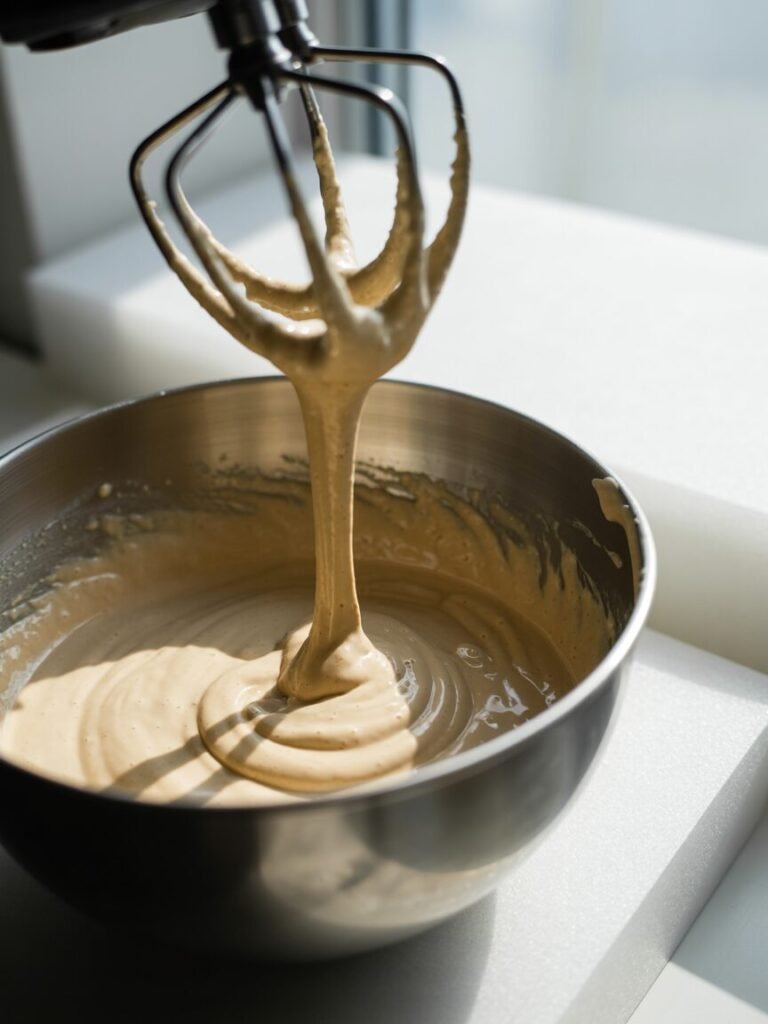
Melt chocolate and butter: Combine chocolate and butter in a heatproof bowl; set over barely simmering water and stir until smooth, 3–5 minutes; target 45–50°C (113–122°F) warm, not hot. Visual cue: glossy, fluid, no lumps.
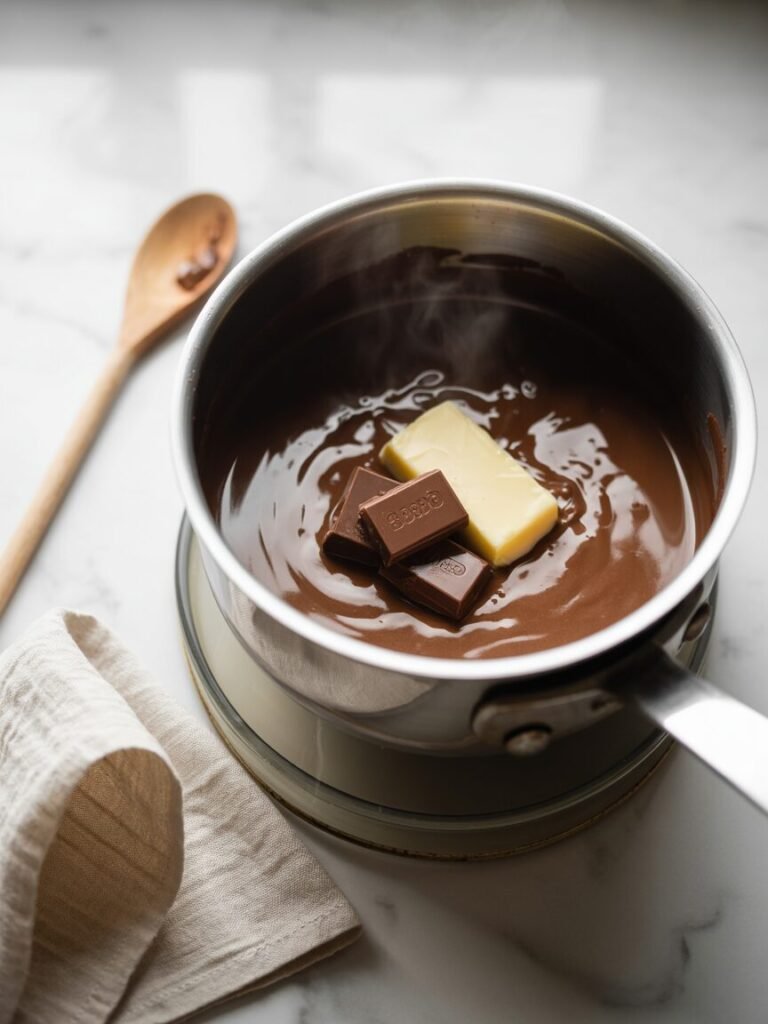
Aerate eggs and sugars: In a mixing bowl, beat eggs, granulated sugar, and brown sugar on medium‑high 4–5 minutes until pale and thick; stream in vanilla. Visual cue: mixture ribbons off beaters and lightens notably. This step drives crinkly tops.
Emulsify chocolate: With mixer on low, pour warm melted chocolate mixture in a slow stream; mix just to combine, then switch to a spatula to finish. Visual cue: batter turns deep brown and shiny.
Dry mix: Whisk flour, Dutch‑process cocoa, baking powder, and fine salt to eliminate lumps. Visual cue: cocoa evenly dispersed, uniform color.
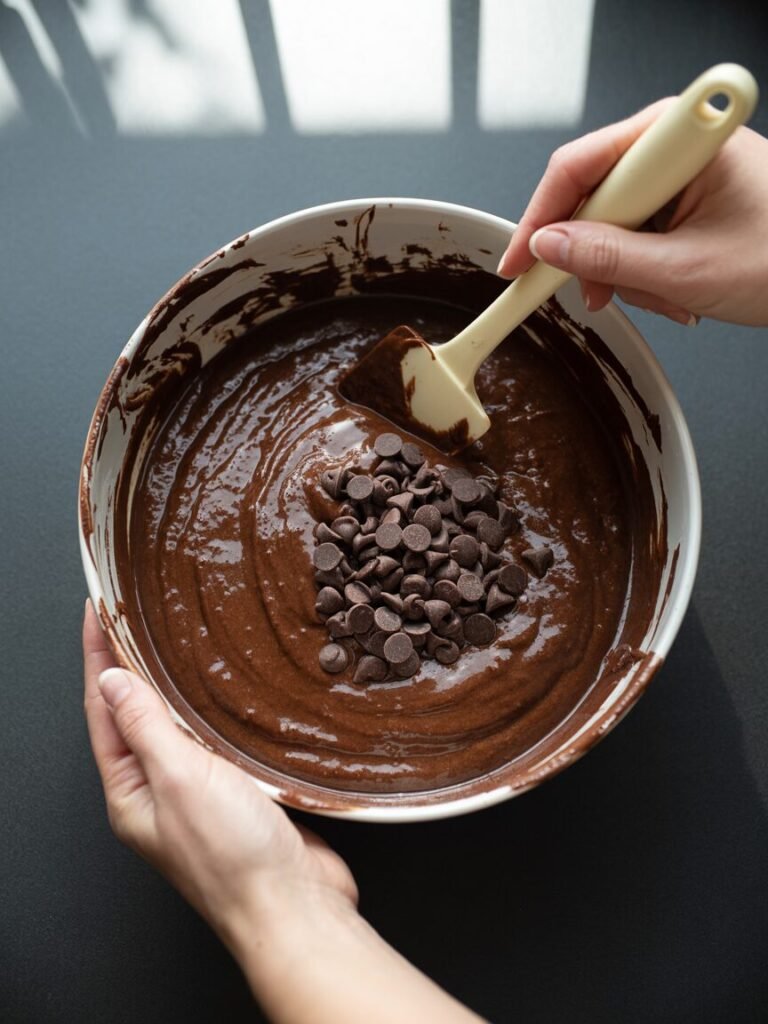
Fold: Fold dry mix into wet in 2 additions until just combined; fold in chips. Visual cue: thick, brownie‑like batter that slowly levels; not runny, not dough‑stiff. Overmixing dulls shine.
Rest briefly: Let batter stand 10–15 minutes at room temp to hydrate; it will thicken slightly for easier scooping. Visual cue: batter mounds hold soft peaks. Chilling 20–30 minutes yields thicker cookies; skip for thinner, shinier crinkles.
Scoop: Use a 1.5 tbsp scoop; 12 mounds per sheet, 5 cm apart. Sprinkle lightly with flaky salt. Visual cue: slightly domed mounds with visible sheen.
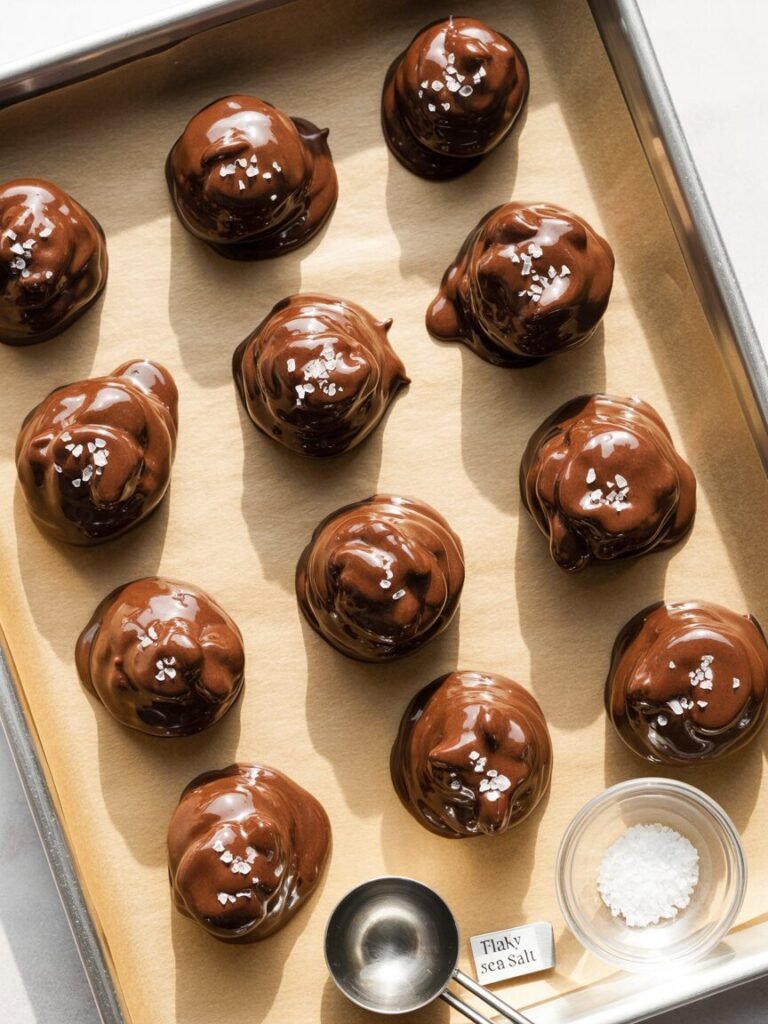
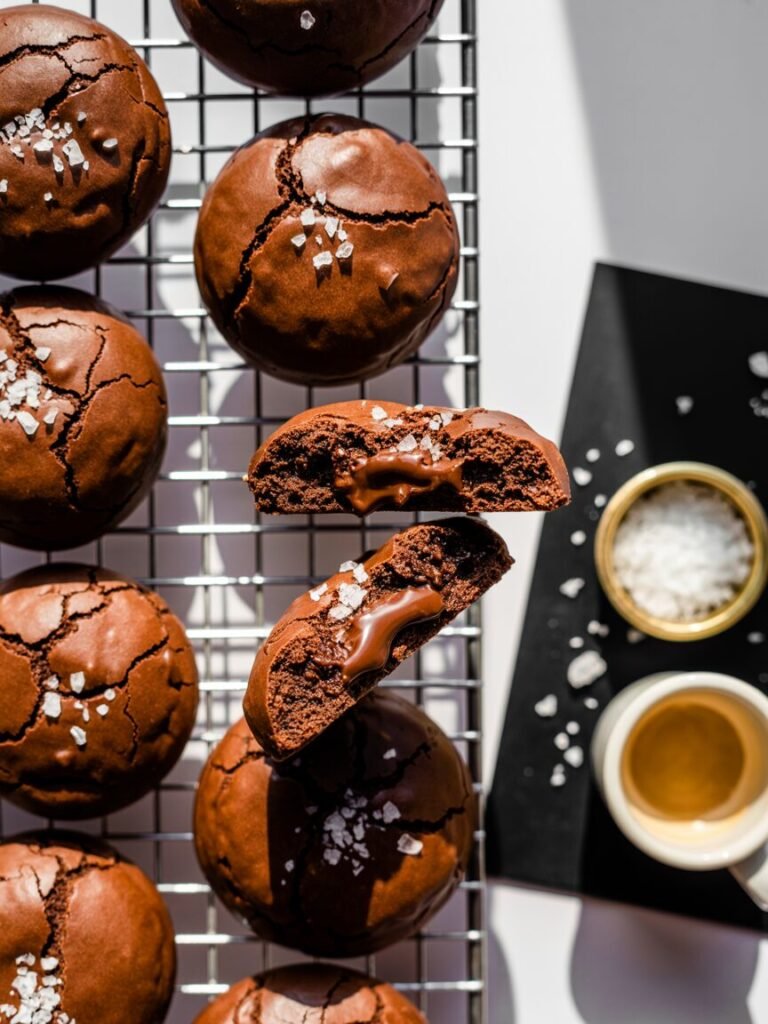
Bake: One sheet at a time at 175°C (350°F) for 10–12 minutes. Doneness: edges set and matte; centers look slightly underdone with hairline cracks. Internal center will continue to set as it cools. Visual cue: crackly, shiny surface.
Cool: Rest on pan 5 minutes, then move to rack. Cookies firm as they cool, staying fudgy inside. Visual cue: centers settle but remain soft when pressed gently.
Checkpoints:
- Whipped egg‑sugar mixture should ribbon for ~5–7 seconds; too short equals fewer crinkles.
- Warm (not hot) chocolate keeps batter glossy without deflating the foam.
- Pull cookies when centers are slightly underdone to preserve fudgy texture.
Troubleshooting: common failures and fixes
- Problem: No crinkly top. Likely causes: under‑whipped eggs/sugar, batter too cold, over‑floured. Fix: whip 4–5 minutes to pale ribbon; fold warm chocolate; weigh flour precisely.
- Problem: Dry/crumbly. Likely causes: overbaking, too much flour/cocoa, low fat chocolate. Fix: bake to set edges/soft centers; use 60–70% chocolate; stick to weights.
- Problem: Cookies spread too much. Likely causes: batter too warm/thin, hot pans reused. Fix: rest batter 10–30 minutes; cool pans between batches.
- Problem: Bitter taste. Likely causes: over‑cocoa or overbaked edges; harsh natural cocoa brand. Fix: use Dutch‑process; reduce bake by 1–2 minutes; blend cocoas if desired.
- Problem: Dull, matte tops. Likely causes: insufficient sugar aeration or overmixing after chocolate. Fix: beat eggs/sugar longer; fold gently once chocolate is added.
- Problem: Hollow shells/cracked then collapsed. Likely causes: over‑whipped foam with too little structure or rapid oven temp swings. Fix: do not exceed pale ribbon; bake one tray at a time at verified 175°C (350°F).
Substitutions and variations
- Egg‑free: Replace 2 eggs with 2 flax eggs (2 tbsp ground flax + 6 tbsp hot water; gel 10 minutes). Expect slightly less gloss and more chew; pull early to keep fudgy.
- Dairy‑free: Use refined coconut oil 90 g instead of butter; flavor will be cleaner and spread may increase—rest batter 20 minutes.
- Gluten‑free: Use a 1:1 gluten‑free all‑purpose blend (xanthan included), 85 g; avoid almond flour here to maintain crinkle.
- Cocoa choices: Dutch‑process for darker, smoother flavor; natural cocoa yields lighter color and brighter notes; avoid swapping Dutch for natural in formulas that depend on alkalinity without testing.
- Flavor swaps: Add 1 tsp espresso powder to intensify chocolate; fold 60 g toasted walnuts or pecans for crunch; finish with orange zest for a citrus‑chocolate profile.
Scaling (yields about 22 cookies at 1.5 tbsp; scale linearly)
- Half batch: divide all ingredients by 2; bake times unchanged; watch earlier doneness.
- Large cookies (2.5 tbsp): bake 12–14 minutes; expect thicker centers and broader cracks.
Storage, make‑ahead, and freezing
- Counter: Airtight container 3 days; layer with parchment to protect tops; flavors deepen after day 1.
- Fridge: 5 days in airtight; bring to room temp 30 minutes for best chew.
- Freeze, baked: Freeze in a single layer, then bag up to 2 months; thaw at room temp 30–45 minutes; re‑crisp 3–4 minutes at 160°C (320°F).
- Freeze, scooped batter: Freeze mounds on a tray, then bag up to 2 months; bake from frozen at 175°C (350°F) for 12–14 minutes; expect slightly thicker cookies.
- Do not freeze whipped batter in one bowl; aeration collapses and bakes dull later.
Serving suggestions and pairing ideas
- Dust with a touch of cocoa or serve with crème fraîche to balance sweetness and add tang.
- Pair with espresso or cold brew; coffee amplifies cocoa in both directions.
- Sandwich two cookies with a small scoop of vanilla or salted caramel ice cream for dramatic temperature and texture contrast.
FAQs
- Can I replace Dutch‑process cocoa with natural? Yes, but cookies will be lighter in color and slightly brighter in flavor; keep leavening the same for this recipe and expect subtle differences in intensity.
- How do I guarantee shiny crinkle tops? Whip eggs and sugar until pale and thick, fold in warm chocolate, and avoid over‑flouring; bake until edges set and centers are slightly underdone.
- How do I bake these in an OTG? Preheat fully to 175°C (350°F) with the middle rack and both rods on; bake one tray at a time and start checking at 10 minutes.
- Best chocolate percentage? 60–70% dark chocolate balances sweetness and melt; lower cocoa solids can taste too sweet and set softer.
- How do I double the recipe? Double all ingredients exactly by weight; use three trays and rotate batches, keeping batter covered between scoops to prevent drying.
Notes from my kitchen (testing log)
- Batch 1: Natural cocoa, 72% chocolate, no rest. Great flavor but lighter color and slightly excessive spread; crinkles were modest. Adjustment: switch to Dutch‑process, add 10‑minute rest.
- Batch 2: Dutch cocoa, 60% chocolate, batter chilled 30 minutes. Big crinkles and thick cookies but slightly less glossy top. Adjustment: shorten rest to 15 minutes and keep chocolate warm on mixing.
- Final: Dutch cocoa, 65% chocolate, 10–15 minute room‑temp rest, pulled at 11 minutes. Best balance of glossy crinkle, fudgy middle, and chew.
Nutrition and disclaimer
Approximate per‑cookie nutrition varies by chocolate and size; estimate with your calculator for accuracy based on the brands used and portion size. Values are estimates only; handle eggs and dairy safely, store promptly, and avoid cross‑contamination with allergens.
Crinkle & Fudge: Salted Brownie Cookies
Course: DessertCuisine: AmericanDifficulty: Easy, Medium20
servings20
minutes10
minutes145
kcal45
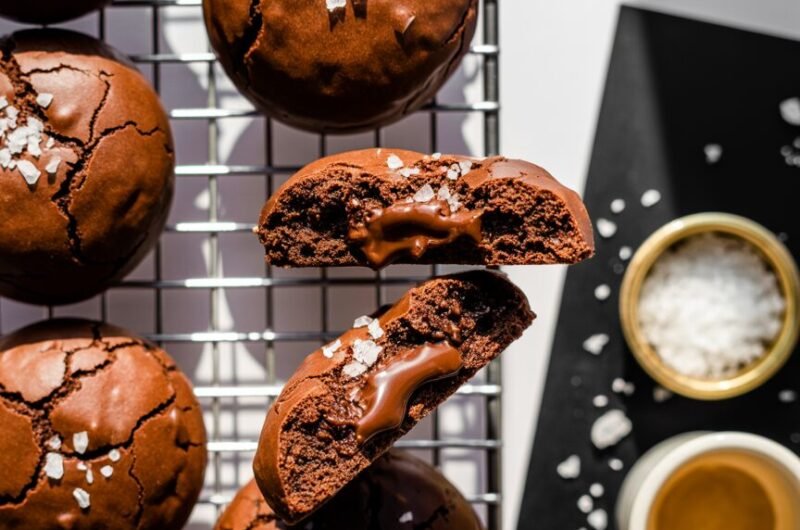
minutesFudgy salted brownie cookies with shiny, crackly tops, chewy edges, and a clean pop of flaky sea salt. Warm melted dark chocolate and Dutch‑process cocoa build depth, while whipping eggs and sugar to a pale ribbon guarantees glossy crinkles and a soft, brownie‑like center.
Ingredients
Dark chocolate 60–70%: 170 g (about 1 cup chopped)
Unsalted butter: 90 g (6 tbsp)
Granulated sugar: 150 g (3/4 cup)
Light brown sugar: 65 g (1/3 cup, packed)
Large eggs (room temp): 2 (about 100 g without shells)
Vanilla extract: 1 tsp
All‑purpose flour: 85 g (2/3 cup leveled)
Dutch‑process cocoa powder: 20 g (3 tbsp)
Baking powder: 1/2 tsp
Fine sea salt: 1/4 tsp
Semi‑sweet chocolate chips or chunks: 60–90 g (1/3–1/2 cup)
Flaky sea salt, for topping
Directions
- Preheat
Preheat oven to 175°C (350°F). Position rack in the upper‑middle. Line two sheet pans with parchment. Preheat for a full 20 minutes for stable heat. - Melt chocolate and butter
In a heatproof bowl over barely simmering water, melt 170 g dark chocolate and 90 g butter, stirring until smooth, glossy, and warm (about 45–50°C/113–122°F). Remove from heat and set aside; it should be warm, not hot. - Aerate eggs and sugars
In a mixing bowl, beat 2 eggs, 150 g granulated sugar, and 65 g light brown sugar on medium‑high for 4–5 minutes until pale, thick, and ribbony; the mixture should fall in a ribbon that sits on the surface for 5–7 seconds. Beat in 1 tsp vanilla. - Emulsify with chocolate
With the mixer on low, slowly stream in the warm melted chocolate mixture just until combined. Switch to a spatula and gently scrape the bowl; batter will be shiny. - Dry ingredients
Whisk 85 g flour, 20 g Dutch‑process cocoa, 1/2 tsp baking powder, and 1/4 tsp fine sea salt to remove lumps. - Fold and add chips
Fold dry mix into the batter in two additions until just combined. Fold in 60–90 g chocolate chips. Batter should be thick, glossy, and slowly level—not runny or stiff like dough. - Rest
Rest batter 10–15 minutes at room temperature to hydrate and thicken slightly. For thicker cookies with bolder crinkles, rest up to 30 minutes; for thinner, shinier tops, keep rest closer to 10 minutes. - Scoop and salt
Scoop 1.5 tbsp mounds, 12 per sheet, spaced about 5 cm (2 in) apart. Lightly sprinkle each mound with flaky sea salt. - Bake
Bake one sheet at a time at 175°C (350°F) for 10–12 minutes. Doneness cues: edges set and matte, hairline cracks on top, centers slightly underbaked and soft. Do not overbake - Cool
Cool on the pan for 5 minutes to set, then transfer to a rack to finish. Centers set fudgy as they cool.
Notes
- Pro tips
Crinkle insurance: whip eggs and sugars long enough and fold in warm (not hot) chocolate.
Scale everything: small flour/cocoa excess can dull shine and dry the crumb.
One tray at a time: maintains even heat for consistent crinkles. - Make‑ahead and storage
Counter: Airtight up to 3 days; layer with parchment to protect glossy tops.
Fridge: Up to 5 days; bring to room temp 20–30 minutes before serving.
Freeze, baked: Freeze single layer then bag up to 2 months. Refresh 3–4 minutes at 160°C (320°F).
Freeze, scooped batter: Freeze mounds on a tray, then bag up to 2 months. Bake from frozen 12–14 minutes at 175°C (350°F).
Do not freeze a whole bowl of whipped batter; aeration collapses. - Nutrition (estimate per cookie, 22‑cookie batch)
Calories: ~145 kcal
Carbohydrates: ~17 g
Sugar: ~12 g
Fat: ~8 g
Saturated fat: ~5 g
Protein: ~2 g
Sodium: ~60 mg
These values vary by chocolate brand/percentage and cookie size.