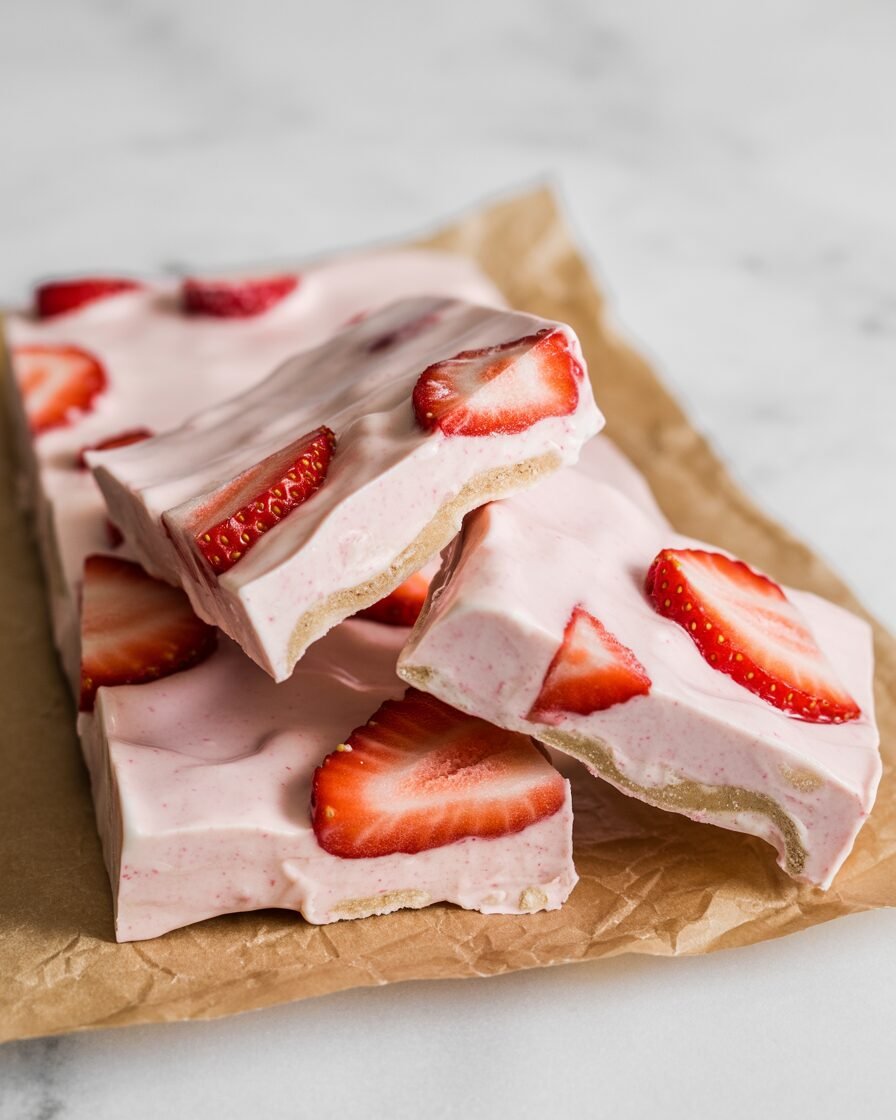
If you’ve got 10 minutes, a freezer, and a tub of Greek yogurt, you can make this Strawberry Greek Yogurt Bark. It’s creamy, lightly tangy, naturally sweet, and snaps just enough when frozen — not rock-hard, not icy.
What makes this version special? I tested different yogurt fat percentages, sweeteners, and fruit prep methods to avoid the dreaded icy yogurt slab. The result: smooth, sliceable bark that tastes like frozen cheesecake meets strawberry cream.
Pro tip: Drain watery strawberries before topping. Excess juice is the #1 reason yogurt bark turns icy instead of creamy.
Why This Recipe Works (A Little Kitchen Science)
Greek yogurt works beautifully here because it’s strained. Less water = fewer ice crystals. When frozen, regular yogurt tends to form larger crystals, which feel gritty. Greek yogurt (especially 5% fat) freezes smoother because fat and protein interfere with ice crystal formation.
A small amount of honey or maple syrup isn’t just for sweetness. Liquid sugars lower the freezing point slightly, which keeps the bark from becoming rock-solid. That’s why bark made only with granulated sugar feels harder.
Finally, spreading the yogurt 1–1.5 cm thick creates the right texture balance. Too thin and it freezes brittle; too thick and it’s difficult to bite. Thickness directly impacts mouthfeel.
Did you know? Fat doesn’t freeze solid the way water does. That’s why full-fat yogurt bark tastes creamier straight from the freezer.
Ingredients (With Weights & Purpose)
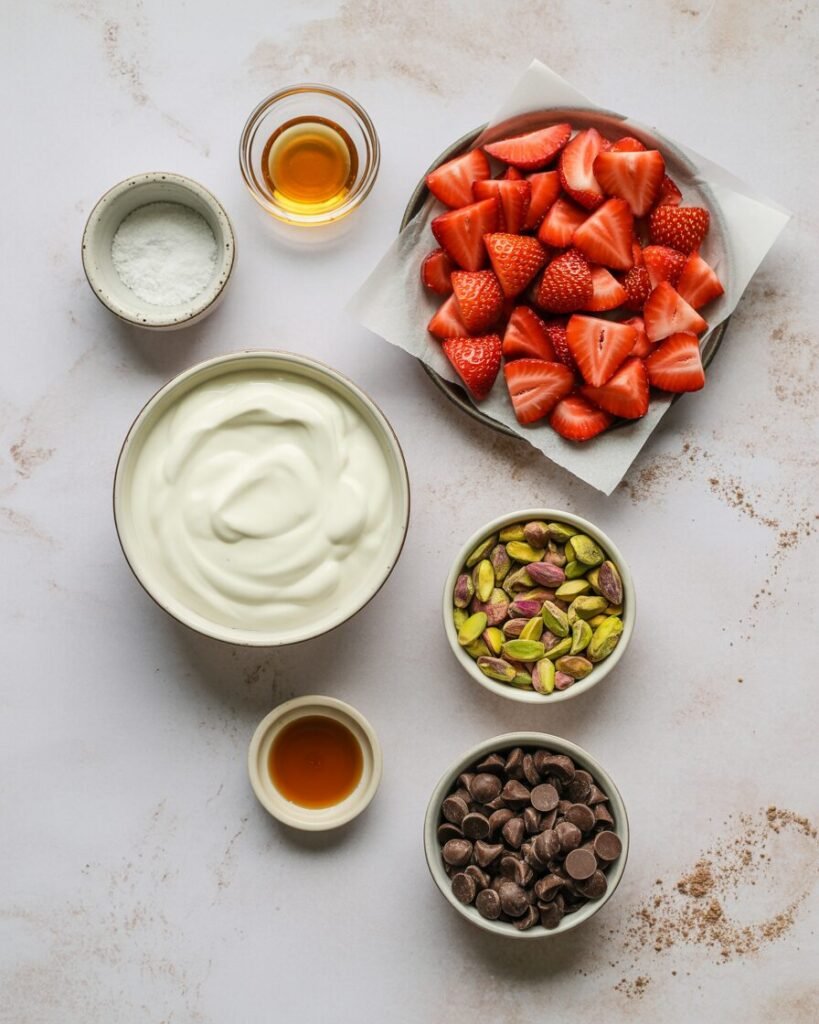
Yield: 8–10 pieces
Pan size: 20 × 25 cm (8 × 10 inch) lined tray
- Greek yogurt (full-fat, 5%) — 500 g (2 cups) — Creamy base; protein stabilizes structure
- Honey or maple syrup — 45 g (3 tbsp) — Sweetness + softer freeze
- Vanilla extract — 5 g (1 tsp) — Rounds flavor
- Fresh strawberries — 150 g (1 cup chopped) — Fresh fruit flavor
- Salt — 1 g (⅛ tsp) — Balances sweetness
Optional toppings (choose 1–2):
- Chopped pistachios — 20 g (2 tbsp)
- Dark chocolate chips (70%) — 30 g (3 tbsp)
- Toasted coconut — 15 g (2 tbsp)
Brand note: Use thick Greek yogurt (not “Greek style”). If liquid pools on top when opened, stir and drain through a sieve for 10 minutes.
Equipment
Required
- Digital kitchen scale
- Mixing bowl + spatula
- 20 × 25 cm (8 × 10 in) tray
- Parchment paper
- Freezer
Nice to Have
- Offset spatula (for even spreading)
- Thermometer (to check freezer temp, ideally −18°C / 0°F)
No stand mixer needed. No oven needed. Perfect for OTG-only kitchens.
Step-by-Step Instructions (With Visual Cues)
Step 1: Prep the Tray (2 minutes)
Line your tray with parchment, leaving overhang for lifting later.
Visual cue: Paper should sit flat with no major wrinkles. Wrinkles create uneven bark thickness.
Step 2: Prep the Strawberries (5 minutes)
Chop strawberries into small 1 cm cubes. Lay them on paper towel and gently blot.
Visual cue: They should look juicy but not dripping. If you press lightly, no visible liquid should pool.
Avoid this: Skipping blotting. Excess moisture = icy patches.
Step 3: Mix the Yogurt Base (2–3 minutes)
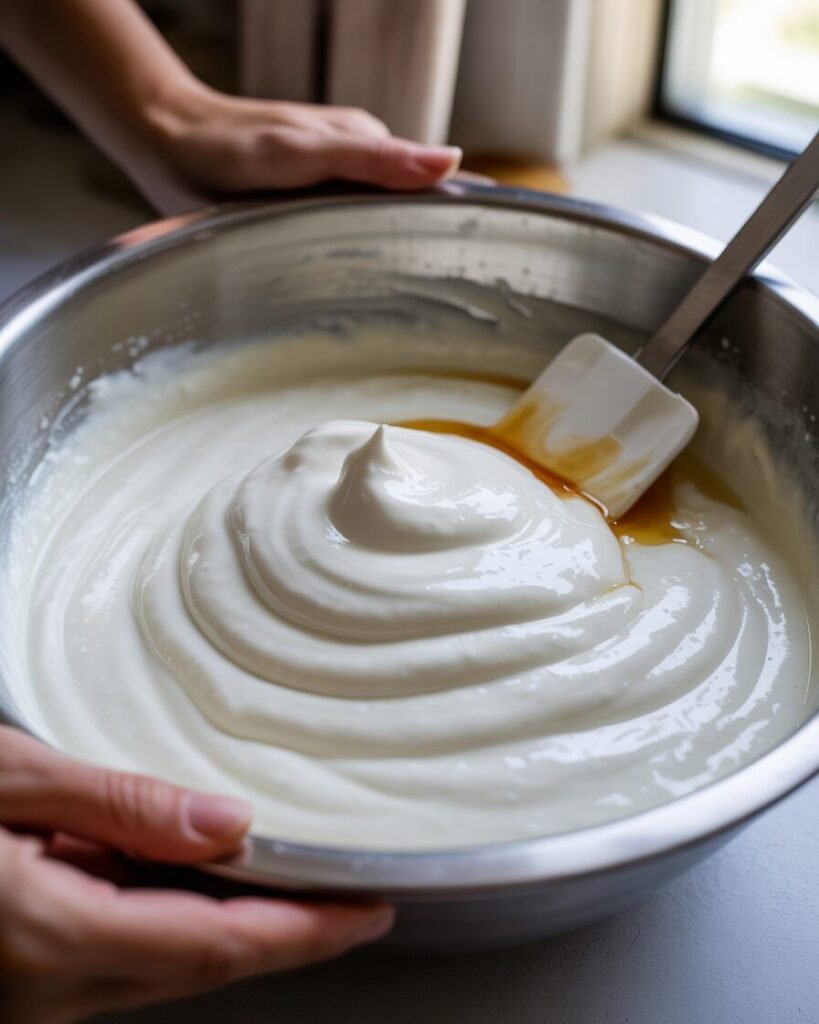
In a bowl, combine yogurt (500 g), honey (45 g), vanilla, and salt. Stir gently until smooth.
Visual cue: Mixture should look glossy and thick, like soft cream cheese. If runny, strain 5–10 minutes in a sieve.
Checkpoint: When you lift the spatula, the yogurt should fall slowly and mound slightly before settling.
Step 4: Spread (3 minutes)
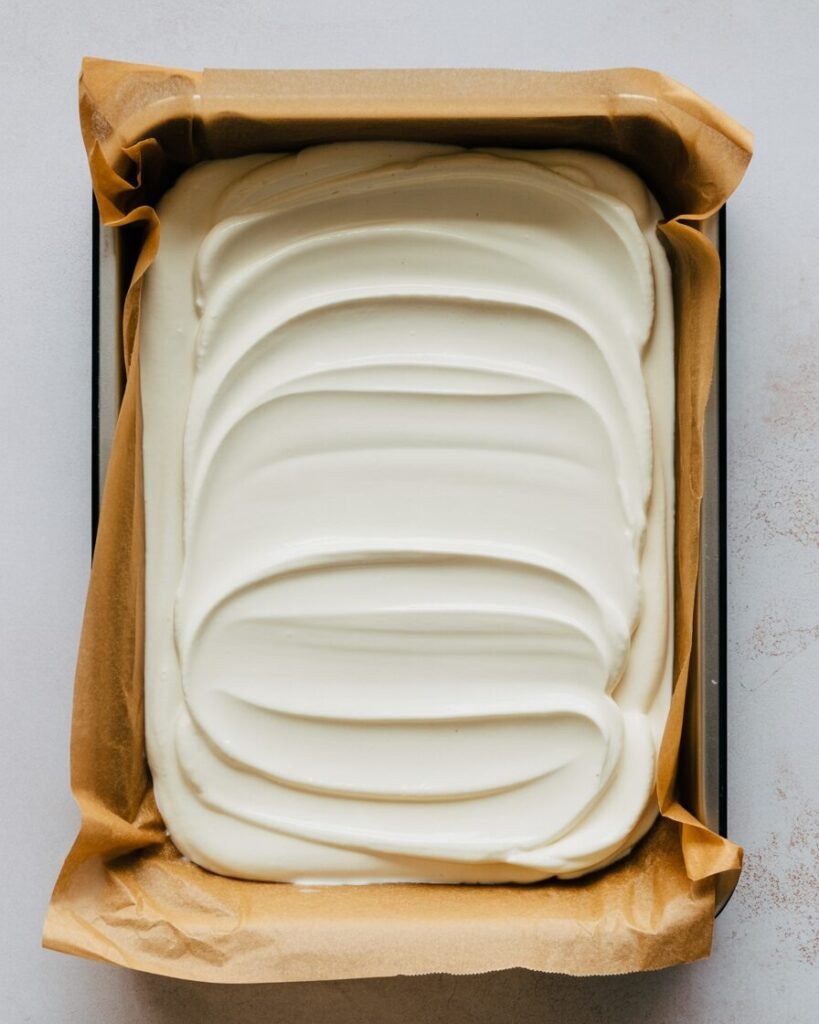
Transfer yogurt to lined tray. Spread to about 1–1.5 cm thick.
Visual cue: Surface should be even, edges slightly squared off. Thin corners freeze too hard.
Step 5: Add Toppings (2 minutes)
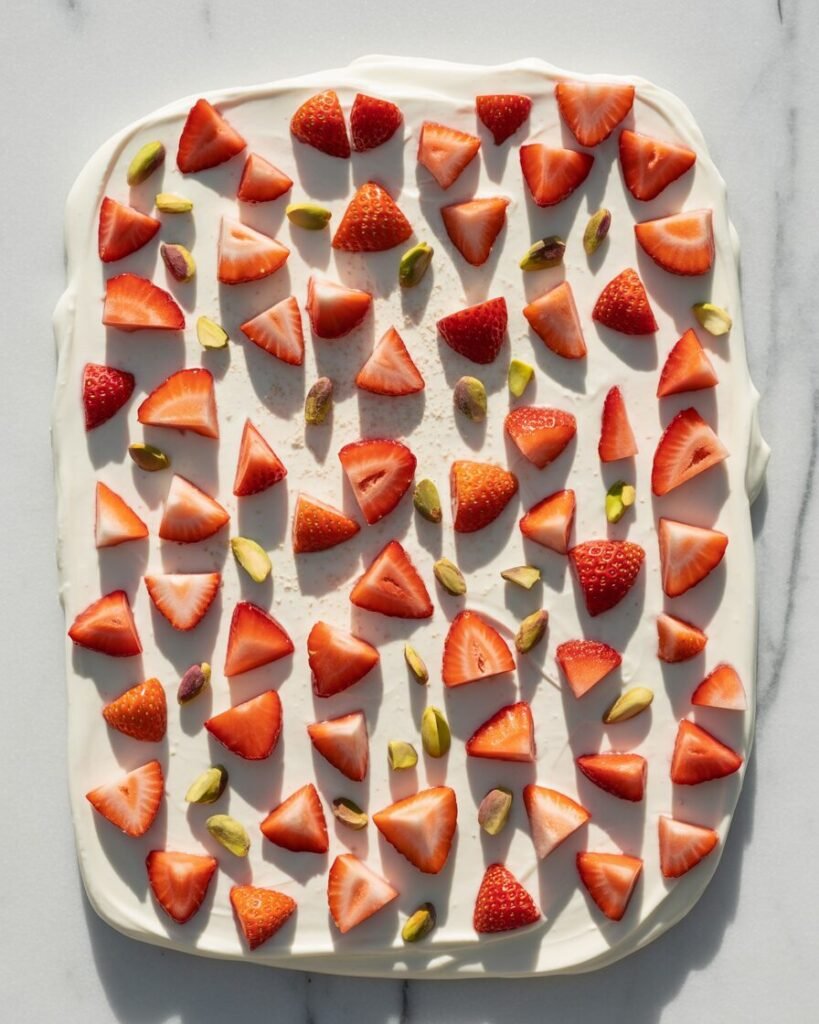
Scatter strawberries evenly. Press lightly so they adhere but don’t sink fully. Add optional toppings.
Visual cue: Fruit should sit partially embedded, not floating.
Step 6: Freeze (3–4 hours)
Place tray flat in freezer at −18°C (0°F). Freeze until fully firm.
Visual cue: Surface looks matte, not shiny. When touched, it feels solid with no soft center.
Step 7: Break & Serve
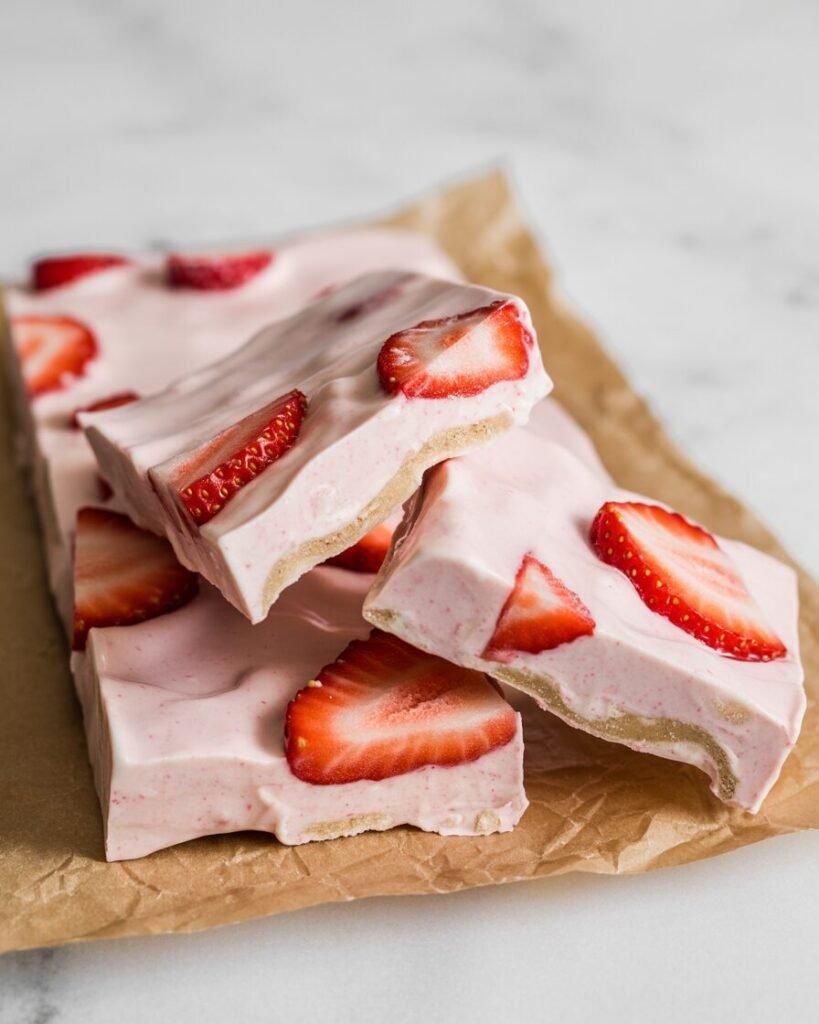
Lift parchment out. Break into rustic pieces with hands or knife.
Texture cue: Should snap with slight resistance, not shatter like glass.
Let sit 2–3 minutes before eating for best creaminess.
Troubleshooting: Common Failures & Fixes
Problem: Bark is icy and hard.
Likely causes: Low-fat yogurt; watery fruit.
Fix next time: Use 5% yogurt; blot fruit thoroughly; add 1 extra tbsp honey.
Problem: Too soft, bends instead of snapping.
Cause: Too thick or freezer not cold enough.
Fix: Spread thinner; check freezer temp (−18°C).
Problem: Fruit releases juice after freezing.
Cause: Not dried enough.
Fix: Macerate lightly with ½ tsp sugar, drain, then blot.
Problem: Sour taste.
Cause: Yogurt too tangy.
Fix: Increase honey by 10–15 g.
Problem: Uneven texture (hard edges).
Cause: Thin spreading near sides.
Fix: Keep consistent thickness.
Problem: Toppings fall off.
Cause: Added after partial freezing.
Fix: Add immediately before freezing.
Substitutions & Variations
Dairy-Free
Use thick coconut yogurt (500 g). Choose unsweetened. Add 1 tbsp lemon juice to balance sweetness. Texture will be slightly softer.
Lower Sugar
Reduce honey to 30 g (2 tbsp). Bark will freeze firmer.
Vegan
Coconut yogurt + maple syrup. Skip honey.
Flavor Variations
- Lemon zest (½ tsp) for brightness
- Swirl 30 g strawberry purée into yogurt before spreading
- Add crushed freeze-dried strawberries (10 g) for intense flavor without extra moisture
Scaling
| Pan Size | Yogurt | Honey | Strawberries |
|---|---|---|---|
| 6-inch square | 250 g | 22 g | 75 g |
| 8-inch square | 400 g | 35 g | 120 g |
| 9×13 inch | 750 g | 70 g | 220 g |
Thickness should remain 1–1.5 cm.
Storage, Make-Ahead & Freezing
Freezer: Store in airtight container up to 1 month. Separate layers with parchment.
Serving: Let sit at room temp 2–5 minutes before eating for creamier texture.
Do not refrigerate long term — it melts unevenly and becomes watery.
Make-ahead tip: Prepare up to 3 days before serving; keep sealed to prevent freezer odor absorption.
Serving Suggestions & Pairings
- Crumble over oatmeal
- Serve with fresh berries and drizzle of honey
- Pair with dark chocolate espresso
- Add to smoothie bowls for crunch
The tangy yogurt balances sweet fruit beautifully — if serving with something sweet (like granola), keep bark sweetness moderate.
FAQs
Can I use regular yogurt?
Not recommended unless strained for 30–60 minutes. Regular yogurt contains more water and freezes icy.
Can I use frozen strawberries?
Yes, but thaw completely and drain very well. Pat dry thoroughly.
How do I halve the recipe?
Use 250 g yogurt and spread in a small 15 cm (6 in) square pan.
Can I make this in an air fryer?
No baking required — freezer only.
Best yogurt fat percentage?
5% gives creamiest texture. 2% works but freezes harder.
Notes From My Kitchen (Testing Log)
Batch 1: Used 2% yogurt, no draining fruit. Result: icy edges, hard bite.
Adjustment: Switched to 5% yogurt.
Batch 2: Used full-fat but added fruit without blotting. Juice pooled and froze separately.
Fix: Blotted fruit thoroughly.
Batch 3: Tried granulated sugar. Texture too firm.
Learning: Liquid sweeteners improve softness.
Batch 4: Spread too thin (under 1 cm). Snapped like candy.
Fix: Increased thickness.
Batch 5 (Final): 5% yogurt, 45 g honey, blotted strawberries, 1.2 cm thickness. Creamy, balanced, clean snap.
I tested 3 sweetener ratios and 2 yogurt fat levels before settling on this method. This version holds together but doesn’t hurt your teeth straight from the freezer.
Nutrition & Food Safety Note
Approximate per piece (10 pieces):
~110 kcal | 7 g protein | 7 g sugar | 6 g fat
Values are estimates and vary by brand and toppings. Store frozen at −18°C (0°F). Avoid leaving at room temperature more than 15 minutes. Follow proper food-safety practices.
Conclusion
This Strawberry Greek Yogurt Bark is one of those quiet recipes that surprises you. It’s simple, but when done right, it feels intentional — creamy, balanced, refreshing.
If you’ve struggled with icy bark before, focus on three things: thick yogurt, drained fruit, and even spreading. That’s the difference between “meh” and “make it again.”
Try it once and you’ll keep a tray in your freezer all summer.