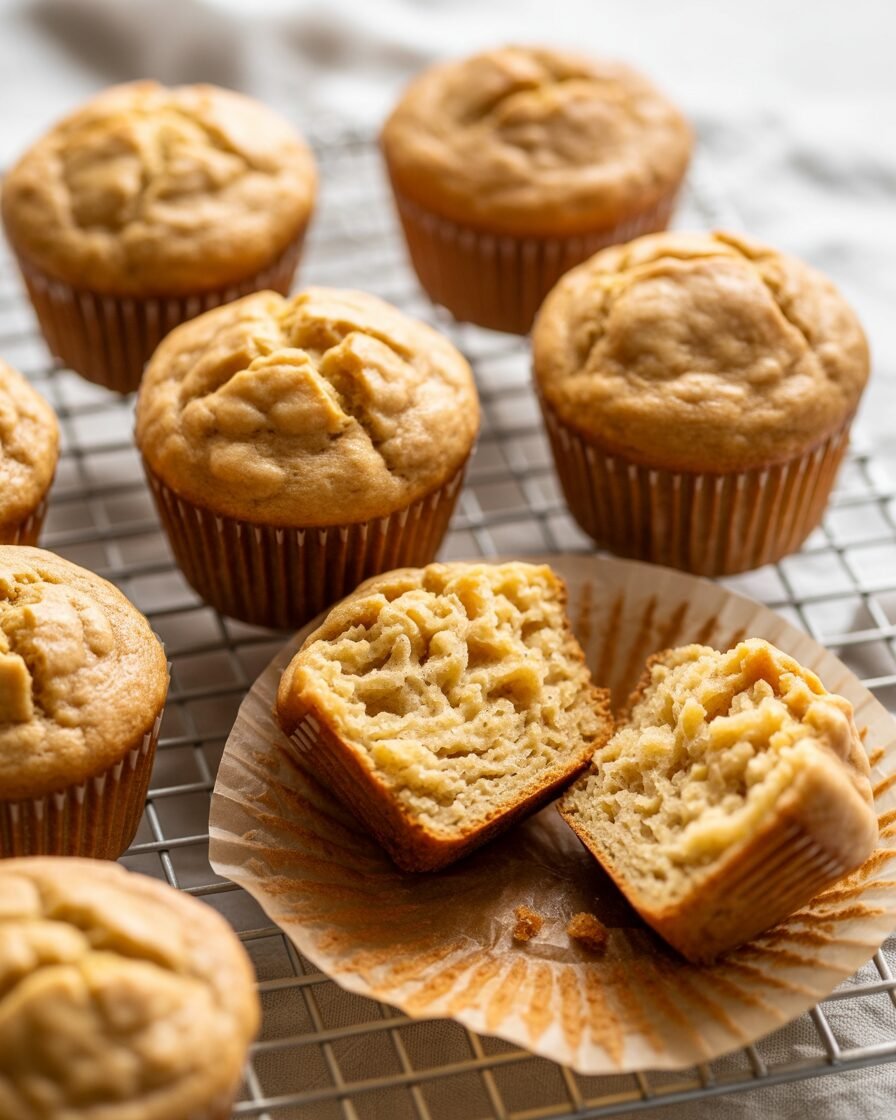
These sweet potato muffins are the kind you bake once… and then quietly add to your “reliable favorites” list. They’re tall, tender, and moist for days, with warm spice and a gentle sweetness that doesn’t scream dessert (but won’t complain if you add chocolate chips). Designed for beginner to intermediate home bakers, this recipe works with basic equipment only—no stand mixer, no fancy pans, just a bowl, a whisk, and an oven or OTG.
Result promise: soft crumb, lightly domed tops, zero gumminess.
Pro tip: roast the sweet potato until steaming-dry, not watery—excess moisture is the #1 reason muffins turn dense.
Why this recipe works (the baking science)
- Sweet potato = moisture + structure. Its natural starches gelatinize as the muffins bake, helping them stay plush without needing extra fat.
- Oil over butter. Oil coats flour proteins more evenly, limiting gluten formation—translation: a softer crumb that stays moist even on day 3.
- Balanced leavening. A modest mix of baking powder and baking soda gives lift without collapse; the sweet potato’s mild acidity activates the soda.
- Two-bowl method. Mixing wet and dry separately prevents overworking the batter, which is crucial for muffin texture.
Did you know? Muffins should never be mixed to “smooth.” A few small lumps = tenderness.
Ingredients (with weights, volumes & purpose)

Yields: 12 standard muffins
- Sweet potato purée (roasted) — 240 g (1 cup) — moisture, flavor, structure
- All-purpose flour — 190 g (1½ cups) — base structure
- Brown sugar (light or dark) — 120 g (⅔ cup) — sweetness + moisture
- Neutral oil (sunflower/canola) — 80 g (⅓ cup) — tender crumb
- Eggs (room temp) — 2 large (≈100 g without shells) — binding, lift
- Milk or buttermilk — 120 g (½ cup) — hydration, softness
- Baking powder — 6 g (1½ tsp) — main leavening
- Baking soda — 2 g (½ tsp) — lift + browning
- Salt — 3 g (½ tsp) — balances sweetness
- Cinnamon — 2 g (1 tsp) — warmth
- Nutmeg — ¼ tsp — depth
- Vanilla extract — 1 tsp — aroma
Equipment
Required:
- 12-cup muffin pan
- Paper liners
- Mixing bowls, whisk, spatula
- Oven or OTG
- Digital scale (recommended)
Nice-to-have:
- Sieve (for dry ingredients)
- Ice-cream scoop (even portions)
Step-by-step instructions (with visual cues)
Step 1: Roast & mash the sweet potato

200°C / 400°F, 45–60 min.
Roast whole or halved until a knife slides in easily and steam escapes when opened.
Visual cue: flesh looks fluffy, not wet or glossy. Mash smooth; cool completely.
Step 2: Prep the oven & pan
Preheat to 180°C / 350°F. Line a 12-cup pan. Place rack in the middle.
Step 3: Mix dry ingredients (2 min)
Whisk flour, baking powder, baking soda, salt, and spices.
Cue: evenly colored, no streaks of leavening.
Step 4: Mix wet ingredients (2–3 min)

Whisk purée, sugar, oil, eggs, milk, and vanilla until glossy.
Cue: thick but pourable; looks like loose hummus.
Step 5: Combine (30–40 sec)
Fold dry into wet just until combined.
Checkpoint: batter falls in slow ribbons; small lumps are fine.
Step 6: Bake

Fill liners ¾ full. Bake 18–22 min.
Doneness: tops spring back; skewer shows a few moist crumbs (or internal temp 96–98°C / 205–208°F).
Cool 5 min in pan, then move to a rack.
Troubleshooting: common failures & fixes
- Dense/gummy crumb: sweet potato too wet → roast longer; weigh purée.
- Flat muffins: overmixed batter → fold gently; stop early.
- Bitter taste: excess baking soda → reduce by 0.5 g.
- Dry muffins: overbaked → pull at first spring-back.
- Tunnels: aggressive stirring → switch to spatula folds.
- Pale tops: oven too cool → verify preheat; use middle rack.
- Greasy liners: oil pooling → reduce oil by 10 g next time.
Substitutions & variations
Egg-free (tested): Replace eggs with 120 g thick yogurt or 2 flax eggs (20 g ground flax + 100 g water). Slightly denser but moist.
Dairy-free: Use plant milk; keep oil the same.
Gluten-free: Use a 1:1 GF blend + ½ tsp xanthan gum if not included. Expect a softer rise.
Flavor swaps:
- Orange zest (½–1 tsp)
- Chocolate chips (100 g)
- Walnuts or pecans (80 g, toasted)
Avoid adding extra purée without reducing milk—hydration matters.
Scaling:
- Mini muffins: bake 11–13 min
- 24 muffins: double all ingredients; bake in batches
Storage, make-ahead & freezing
- Counter: 2 days in airtight container
- Fridge: 5 days; warm 10–15 sec before serving
- Freezer: up to 2 months. Wrap tightly; thaw at room temp.
Do not freeze with glaze—textures suffer.
Serving ideas
Lovely plain, or with cream cheese glaze, maple butter, or Greek yogurt + honey for balance.
FAQs
Can I use boiled sweet potato?
Yes, but drain and steam-dry first; weigh after draining.
Why did mine sink after baking?
Underbaked center or excess leavening. Bake to internal temp and measure carefully.
Best oil to use?
Neutral oils (canola/sunflower). Olive oil works but adds flavor.
Can I halve the recipe?
Yes—use 1 egg + 1 tbsp milk extra to balance moisture.
Notes from my kitchen (testing log)
- Batch 1: boiled potato → gummy crumb. Fixed by roasting.
- Batch 2: all baking powder → domes fell. Added soda for balance.
- Batch 3: melted butter → drier day-2 crumb. Switched back to oil.
- Final: oil + roasted purée + gentle fold = stable, moist muffins.
Nutrition & disclaimer
Approx. 210 kcal per muffin (estimate). Values vary by brands and portions. Follow food-safety best practices.
Conclusion & final thoughts
These sweet potato muffins are built for real kitchens and real schedules—forgiving, flexible, and consistently good. Once you nail the purée moisture and resist overmixing, you’ll get bakery-style results every time. If you try a variation, note what changes—you’ll learn faster and bake better. Happy baking!