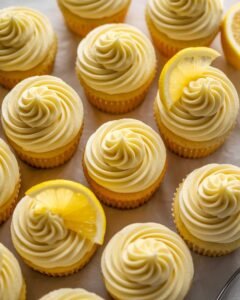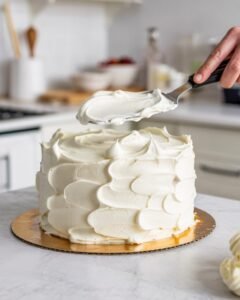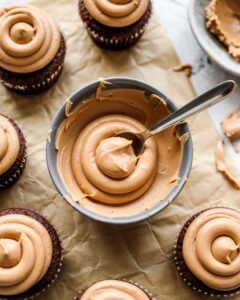
White chocolate buttercream is one of those frostings that instantly makes a cake feel bakery-level. It’s creamy, silky, lightly sweet, and has a delicate white chocolate flavor that pairs beautifully with vanilla, berry, or citrus cakes. But if you’ve ever tried making it at home, you might have run into issues like grainy texture, melted buttercream, or frosting that’s too sweet.
This white chocolate buttercream recipe is designed to be reliable for home bakers—especially beginners using basic equipment like a hand mixer or even just a whisk. The result is a smooth, stable buttercream that pipes beautifully and spreads easily.
Pro tip: The key to perfect white chocolate buttercream is letting the melted chocolate cool until it’s just barely warm before adding it to the butter. This prevents splitting and keeps the frosting silky.
Why This Recipe Works
Buttercream is essentially an emulsion—fat and liquid working together. White chocolate adds complexity to that structure.
1. Cocoa butter improves stability
White chocolate contains cocoa butter, which solidifies when cool. Once mixed into buttercream, it helps the frosting hold shape better for piping and decorating.
2. Powdered sugar stabilizes the emulsion
Powdered sugar isn’t just for sweetness. Its fine texture and small amount of starch help absorb moisture and keep the buttercream thick and smooth.
3. Proper temperature prevents splitting
If white chocolate is too hot, it melts the butter. If it’s too cold, it hardens into chunks. Cooling it to about 30–32°C (86–90°F) keeps the mixture smooth.
When these elements are balanced, the buttercream becomes fluffy, stable, and pipeable—not greasy or grainy.
Ingredients (Weights + Purpose)
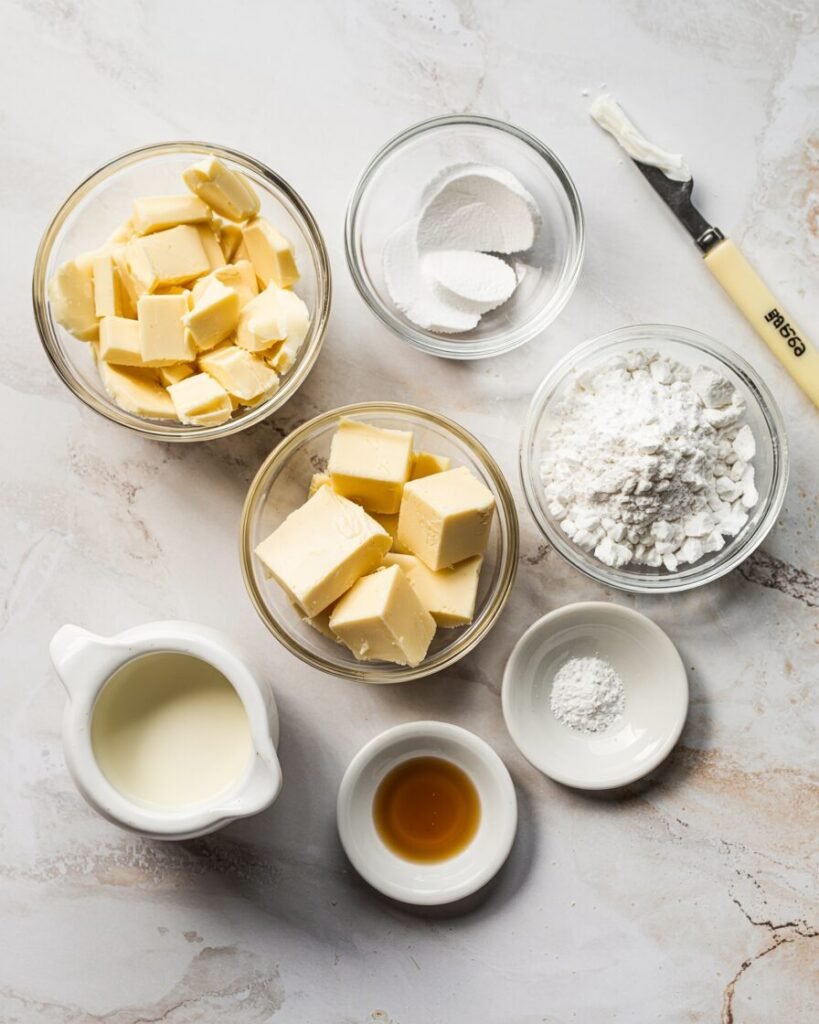
- Unsalted butter — 227 g (1 cup / 2 sticks)
Base of the buttercream. Provides richness and structure. - White chocolate — 170 g (6 oz)
Adds flavor and stability. Use real white chocolate, not compound or baking chips. - Powdered sugar — 300 g (2½ cups)
Sweetens and thickens the buttercream. - Heavy cream — 30 ml (2 tbsp)
Loosens the frosting slightly for a smoother texture. - Vanilla extract — 5 ml (1 tsp)
Enhances the white chocolate flavor. - Salt — 1 g (¼ tsp)
Balances sweetness.
Yield: About 3 cups frosting, enough for a two-layer 8-inch cake or 12–15 cupcakes.
Equipment
Required
- Hand mixer or stand mixer
- Heatproof bowl
- Saucepan or microwave for melting chocolate
- Rubber spatula
- Digital kitchen scale (recommended)
- Mixing bowl
Nice-to-Have
- Offset spatula
- Piping bags and tips
- Candy thermometer (helpful for chocolate temperature)
Step-by-Step Instructions
Step 1: Melt the white chocolate
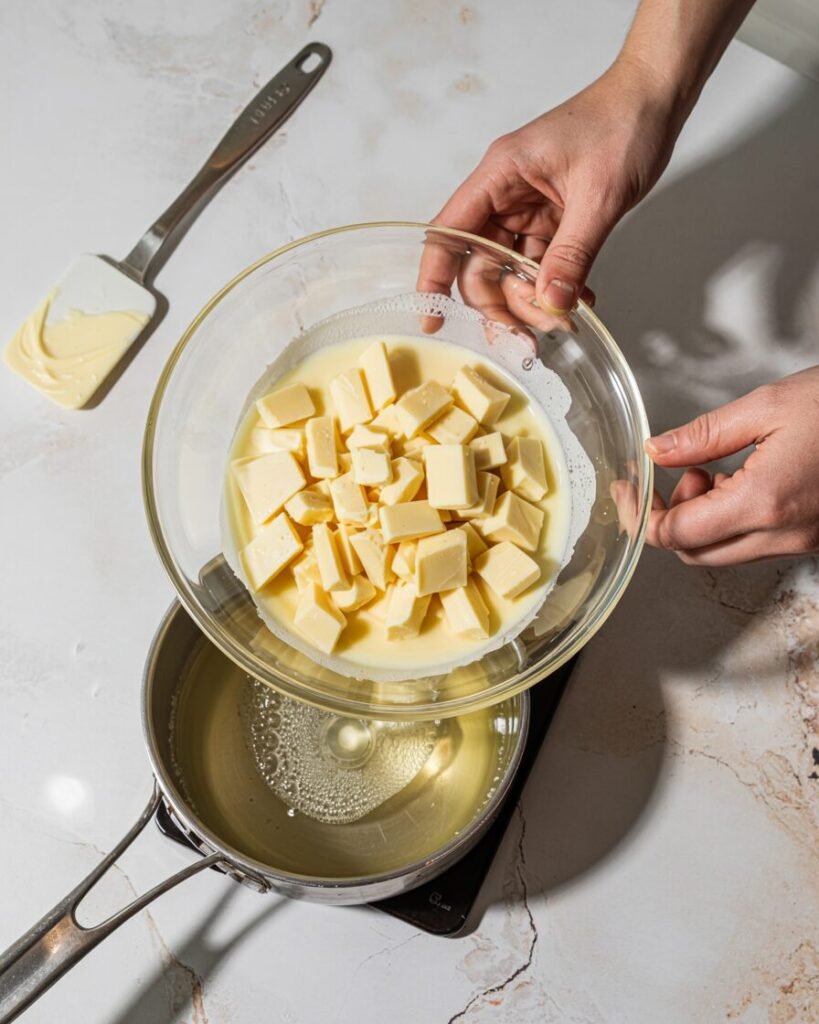
Chop 170 g white chocolate into small pieces.
Melt using either method:
Microwave:
Heat in 20-second bursts, stirring each time until smooth.
Double boiler:
Place bowl over simmering water and stir until melted.
Visual cue: Chocolate should be glossy and fluid, not thick or clumpy.
Let it cool to lukewarm (30–32°C / 86–90°F) before using.
Step 2: Cream the butter
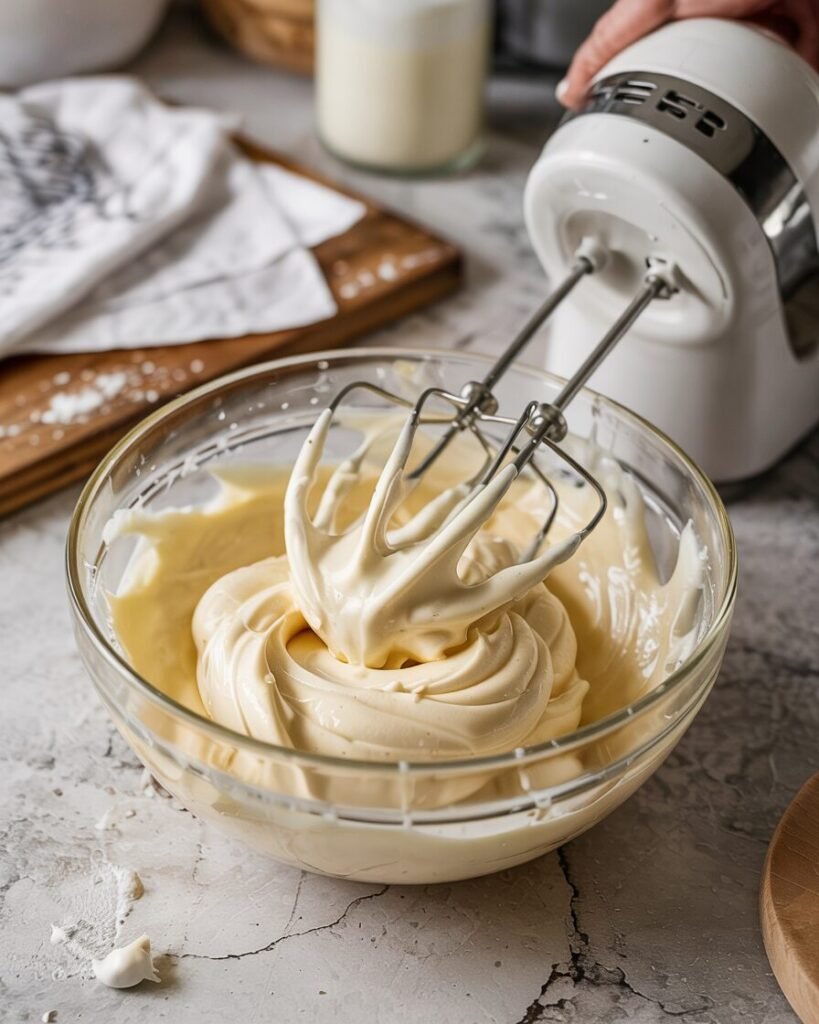
Place 227 g softened butter in a bowl.
Beat on medium speed for 2–3 minutes until pale and fluffy.
Visual cue: Butter should look lighter in color and increase slightly in volume.
Avoid this: butter that is too soft or melted will make runny frosting.
Step 3: Add powdered sugar
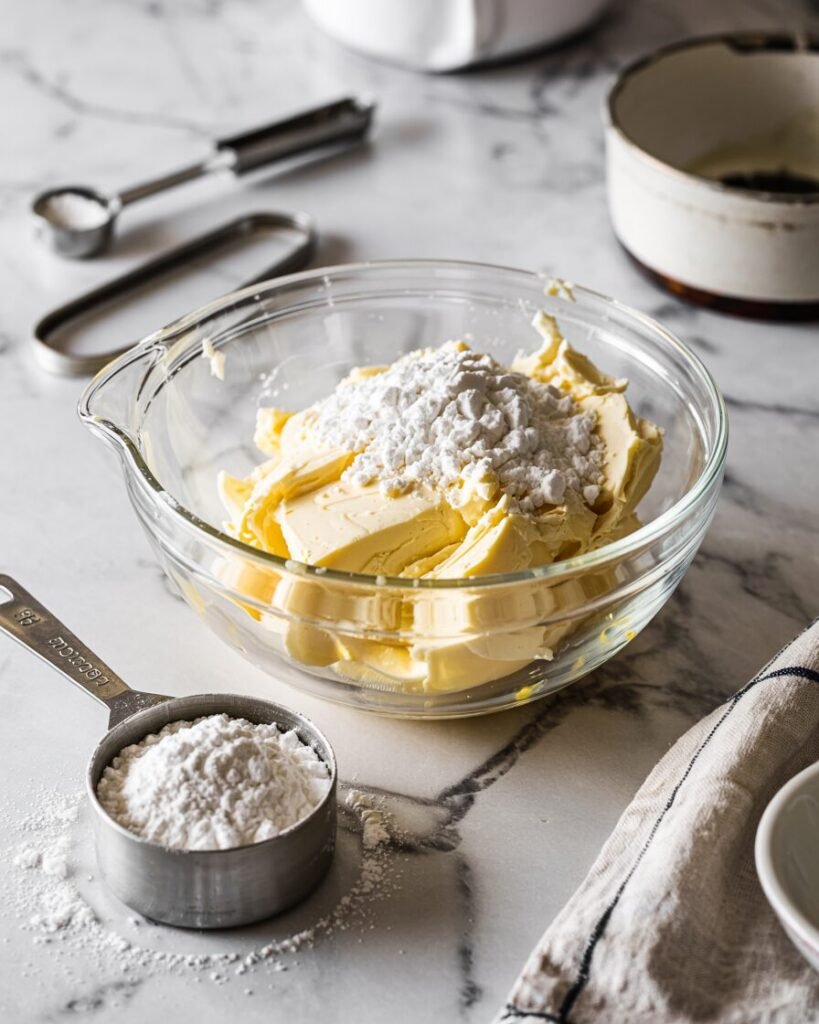
Add powdered sugar gradually, about ½ cup at a time.
Mix on low speed until incorporated.
Then beat 1 minute on medium.
Checkpoint: The mixture should look thick but smooth.
Step 4: Add white chocolate
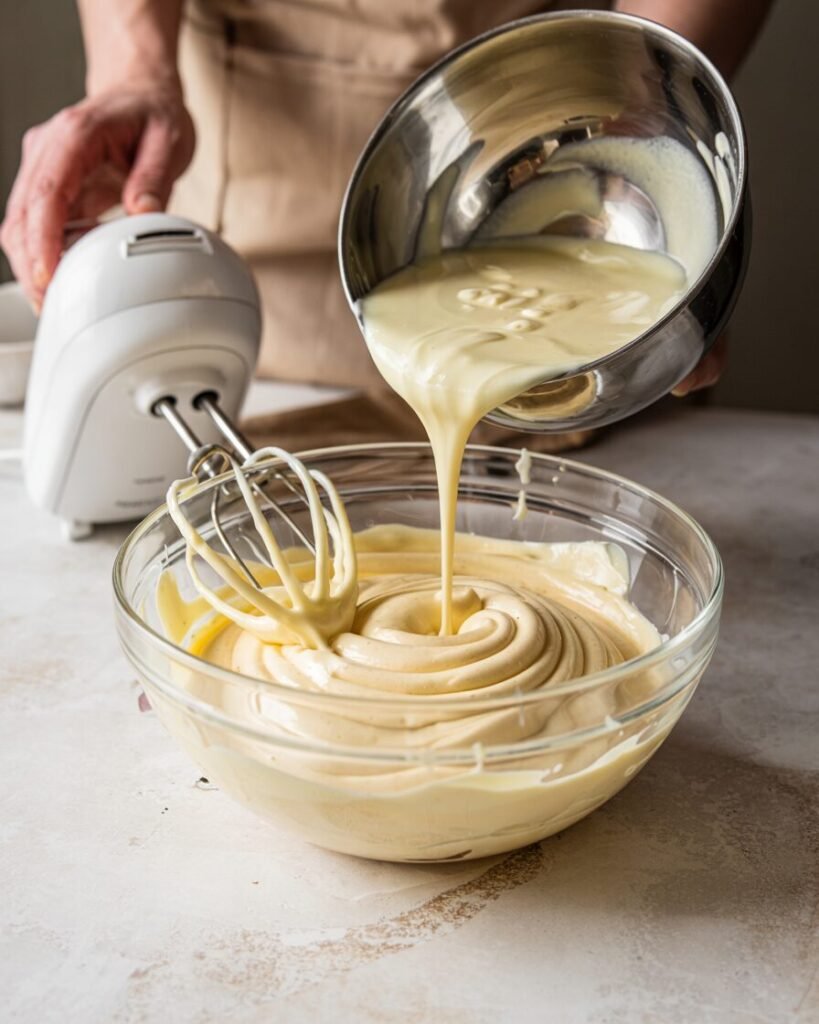
Pour the cooled melted white chocolate slowly into the butter mixture.
Beat on medium speed for 2 minutes.
Visual cue: Buttercream becomes glossy and creamy.
If the mixture looks slightly loose at first, keep beating—it will thicken.
Step 5: Add flavor and adjust texture
Add:
- 2 tbsp cream
- 1 tsp vanilla
- ¼ tsp salt
Beat another 1–2 minutes until fluffy.
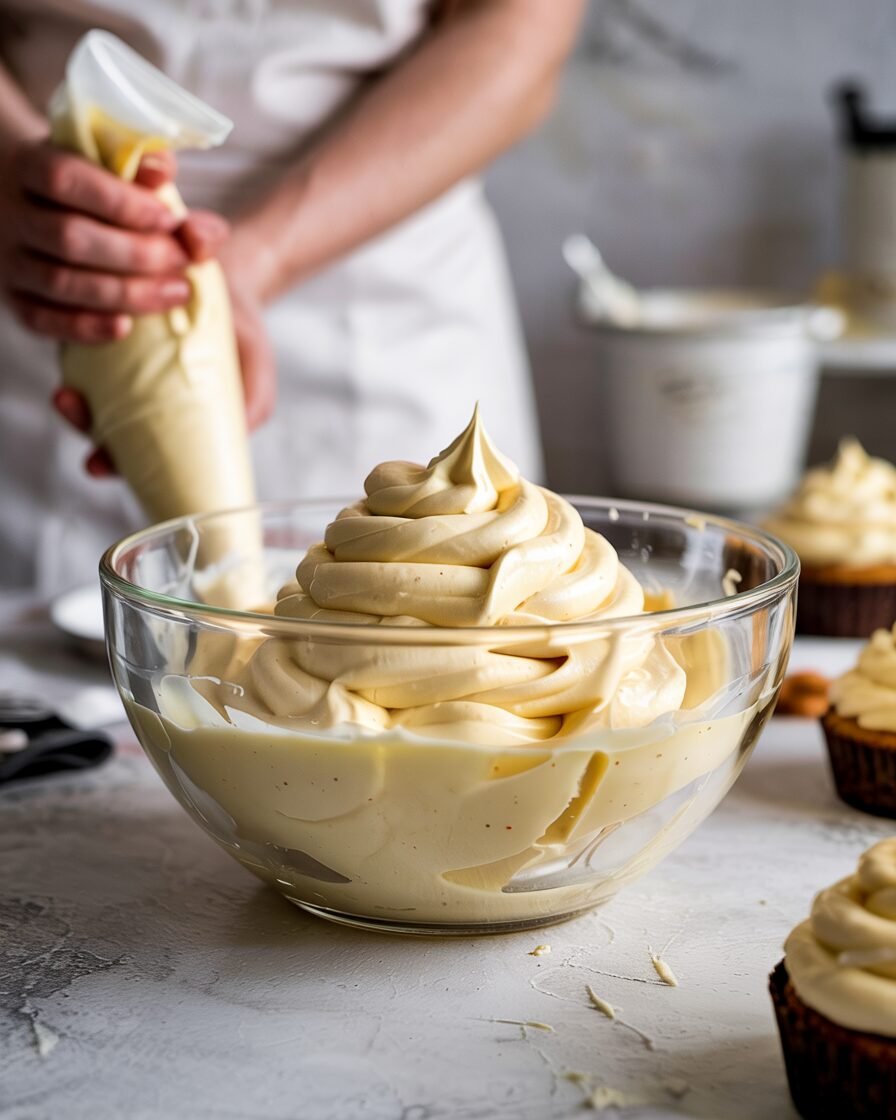
Texture test: When you lift the whisk, the frosting should form soft peaks that slowly bend.
Step 6: Final whip
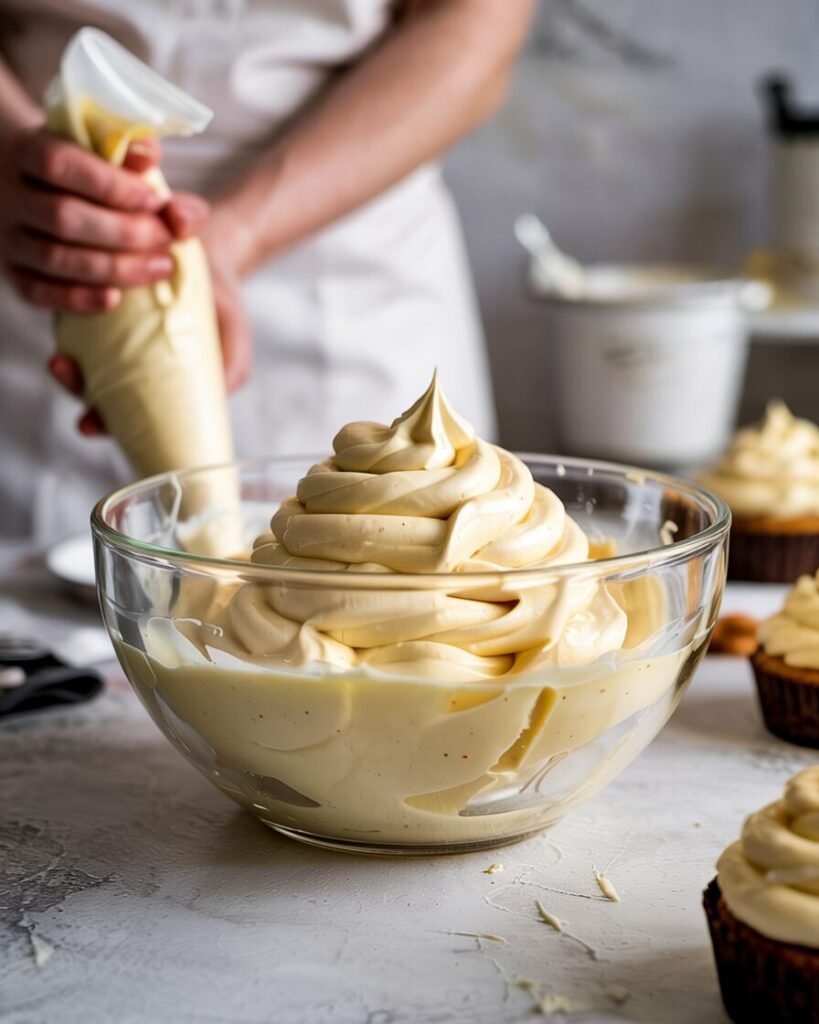
Beat the buttercream on medium-high speed for 30 seconds.
This step adds air and gives the frosting its final fluffy texture.
Troubleshooting Common Failures
Buttercream looks grainy
Cause: Chocolate seized or cooled too quickly.
Fix: Rewhip and add 1 tsp warm cream.
Frosting is too runny
Cause: Chocolate was too warm or butter too soft.
Fix: Chill bowl 10–15 minutes, then rewhip.
Buttercream tastes too sweet
Cause: Powdered sugar ratio too high.
Fix: Add extra pinch of salt or 1 tbsp cream.
Buttercream splits
Cause: Temperature imbalance.
Fix: Warm the bowl slightly and rewhip.
Frosting too stiff for piping
Fix: Add 1 tsp cream at a time until smooth.
Frosting melting on cake
Cause: Warm kitchen or butter too soft.
Fix: Chill frosting 15 minutes before piping.
Substitutions and Variations
Dairy-Free Version
- Replace butter with plant-based butter (227 g)
- Replace cream with coconut cream
Flavor will be slightly coconut-forward.
Less Sweet Version
Use 250 g powdered sugar instead of 300 g.
The frosting will be softer but less sweet.
Flavor Variations
Try adding:
- Lemon zest for citrus cakes
- Freeze-dried raspberry powder (1 tbsp)
- ½ tsp almond extract
Scaling the Recipe
| Cake Size | Butter | White Chocolate | Sugar |
|---|---|---|---|
| 6-inch cake | 170 g | 120 g | 220 g |
| 8-inch cake | 227 g | 170 g | 300 g |
| 9-inch cake | 300 g | 225 g | 400 g |
Storage, Make-Ahead, and Freezing
Room temperature:
Up to 1 day in a covered container.
Refrigerator:
Store for 5 days. Bring to room temperature and rewhip before use.
Freezer:
Freeze up to 2 months in airtight container.
Thawing:
Thaw overnight in fridge, then beat again until fluffy.
Avoid freezing decorated cakes with delicate piping—it can distort texture.
Serving Suggestions
White chocolate buttercream pairs beautifully with:
- Vanilla sponge cakes
- Lemon layer cakes
- Strawberry cupcakes
- Almond cakes
It also works well as a filling for macarons or sandwich cookies.
The frosting’s gentle sweetness balances tart fruits like raspberries or passionfruit.
FAQs
Can I use white chocolate chips?
You can, but results vary. Many chips contain stabilizers that make them harder to melt smoothly. Bar white chocolate works best.
Why is my buttercream yellow?
Butter naturally has a yellow tint. Using pale butter and high-quality white chocolate keeps the frosting lighter.
Can I make this without a mixer?
Yes. Whisk the butter vigorously until creamy, then mix ingredients by hand. It takes longer but works.
How do I double the recipe?
Simply double all ingredients. Use a large bowl and beat slightly longer for proper aeration.
Can I use this for piping decorations?
Yes. Chill the frosting 10 minutes before piping for sharper designs.
Notes From My Kitchen (Testing Log)
Batch 1:
I added melted chocolate while it was still hot. The buttercream became runny and greasy.
Adjustment: Let chocolate cool longer.
Batch 2:
Chocolate cooled too much and hardened into tiny bits.
Adjustment: Warmed slightly before mixing.
Batch 3:
Reduced powdered sugar by 50 g for less sweetness. Texture became softer but still spreadable.
Final version:
Cooling chocolate to lukewarm and whipping longer gave the best fluffy texture and stability.
Nutrition and Disclaimer
Approximate per serving (2 tbsp):
- Calories: 180
- Fat: 12 g
- Carbohydrates: 18 g
- Sugar: 17 g
Values are estimates and vary by ingredient brand and portion size. Always follow safe food-handling practices when storing buttercream.
Conclusion
White chocolate buttercream is one of the easiest ways to elevate a homemade cake. When made correctly, it’s smooth, lightly sweet, and incredibly versatile.
The key steps are simple: cool the chocolate properly, whip the butter well, and balance the sugar and cream for the right texture.
Once you master this recipe, you’ll have a frosting that works for everything—from birthday cakes to elegant desserts.